Gut microbes sound the alarm during #sleep loss
https://t.co/8WA2Vv4SZF
Erin C. Hanlon & team @UChicago find short-term sleep restriction in healthy humans alters 24-hour rhythmic profiles of circulating microbially derived metabolites, including butyric acid and tryptophan catabolites, relative to habitual sleep.
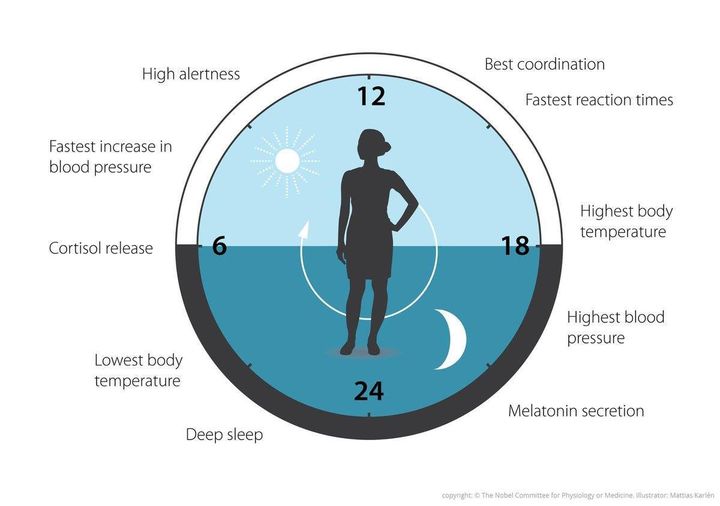
For many years we knew humans have an internal, biological clock that helps them anticipate and adapt to the regular rhythm of the day. But how does this clock actually work?
Laureates Jeffrey Hall, Michael Rosbash and Michael Young found out how: https://t.co/OTjnfitsEC
Ask Well @nytimes article on the timing of food intake with Frank Scheer, Marie-Pierre St. Onge (@MPStOngePhD), and I #sleeppeeps
https://t.co/wXrVmjPvyC
@matthorsnell@project_sleep @IsiahThomas She is a super star and an awe-inspiring person, as are you! I knew of her involvement with @project_sleep and am thrilled to see you two power houses advocating together. Yay #sleeppeeps!
The recipient of the 2023 SRS Distinguished Scientist Award is Chiara Cirelli, MD, PhD. Dr. Cirelli is a professor and vice chair for research in the department of psychiatry at the University of Wisconsin-Madison.
https://t.co/yeKKQ4DiEb @UWMadison
Looking forward to presenting at this @nih_nhlbi workshop tomorrow. Workshop is virtual and open to all. Keynote address by @martagaraulet. Join us!
Chrononutrition: Elucidating the Role of Circadian Biology and Meal Timing in Cardiometabolic Health https://t.co/WnrzJQFUDb