🚨🧠🦇🦯 Support research advancing #BLV#accessibility!
The Teng Lab (@echodislocation) at @SKERIResearch is studying how to optimize slowed-down bat-like echoes from a wearable to help people navigate without vision.
To learn more, visit: https://t.co/Cskd1mHzfm
Interested in vision science, accessibility, eye movements, mobility or related fields? SKERI’s 2025 Postdoctoral application cycle is now open! For more information visit our site:
https://t.co/YGqC3LeAuU
#eNeuro: Findings from García-Lázaro and Teng show that the brain distinguishes between real and synthetic reverberation. This provides insights for enhancing realism in immersive virtual reality, music, and film production and using reverberation to guide navigation for blind and visually impaired people. @SKERIResearch
https://t.co/F1LAo8cbqt
The spatiotemporal dynamics of these representations suggest that "visual" occipital cortex in early-blind readers serves as an intermediate region as braille dots evolve into more abstracted formats en route to multimodal text-sensitive regions in the left ventral stream.
🚨 What happens to a #braille letter after it enters the somatosensory periphery through a #blind reader's fingerpad? In our new preprint 👇🏼 we showed braille and print alphabetic letters to blind and sighted readers, respectively, while recording #MEG.
https://t.co/2PfsAYtir5
Pairwise decoding timecourses compared with #RSA representational similarity models shows a progression from early somatosensory afferents (blind) or low-level visual features (sighted) to a high-level representation consistent with letter distributions in text.
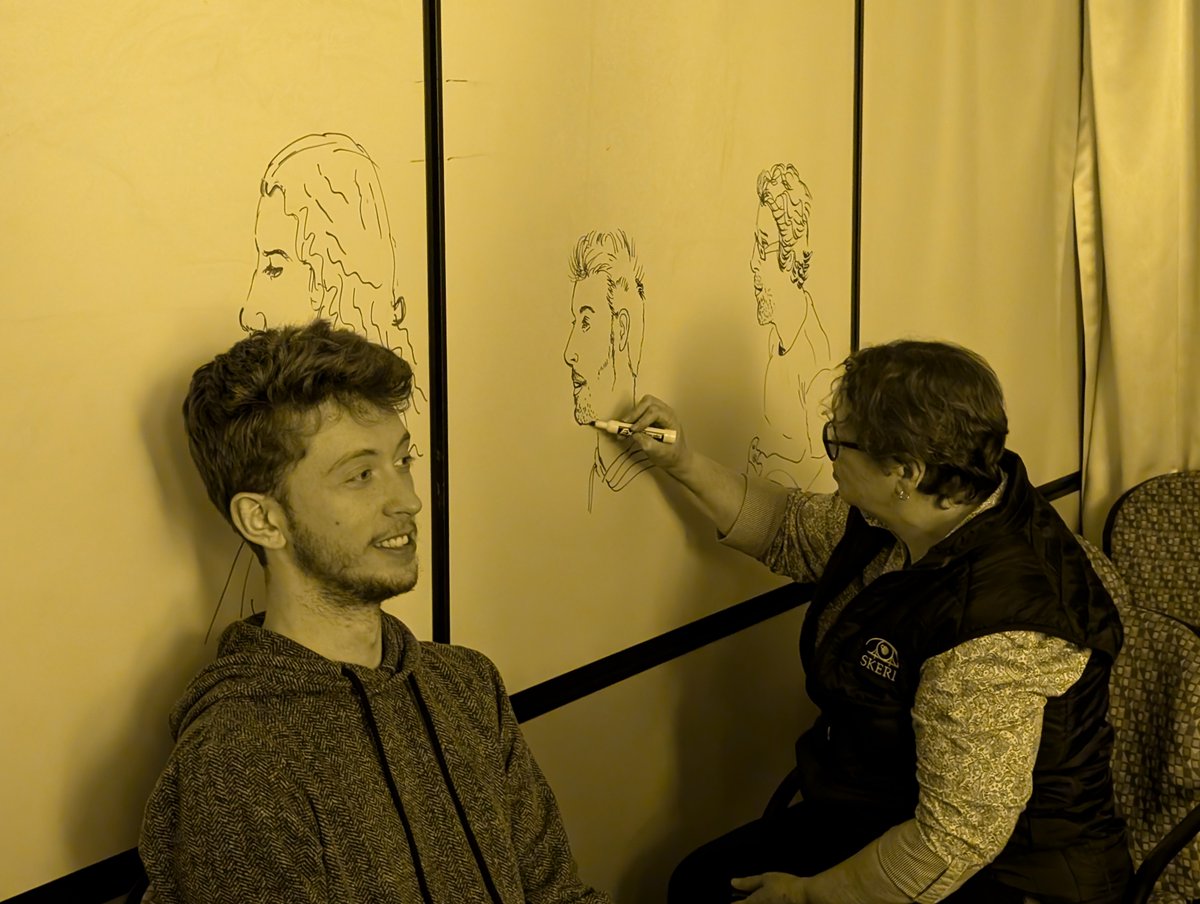
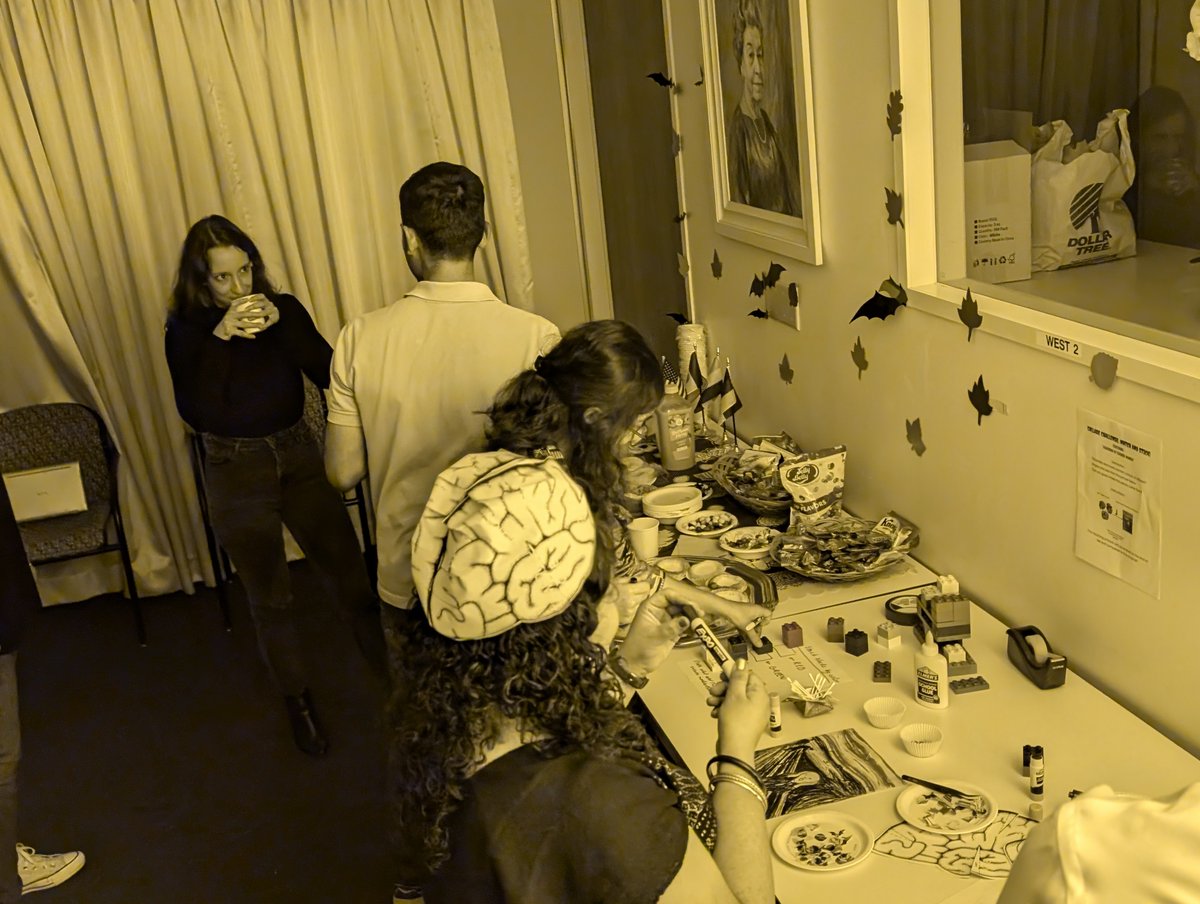
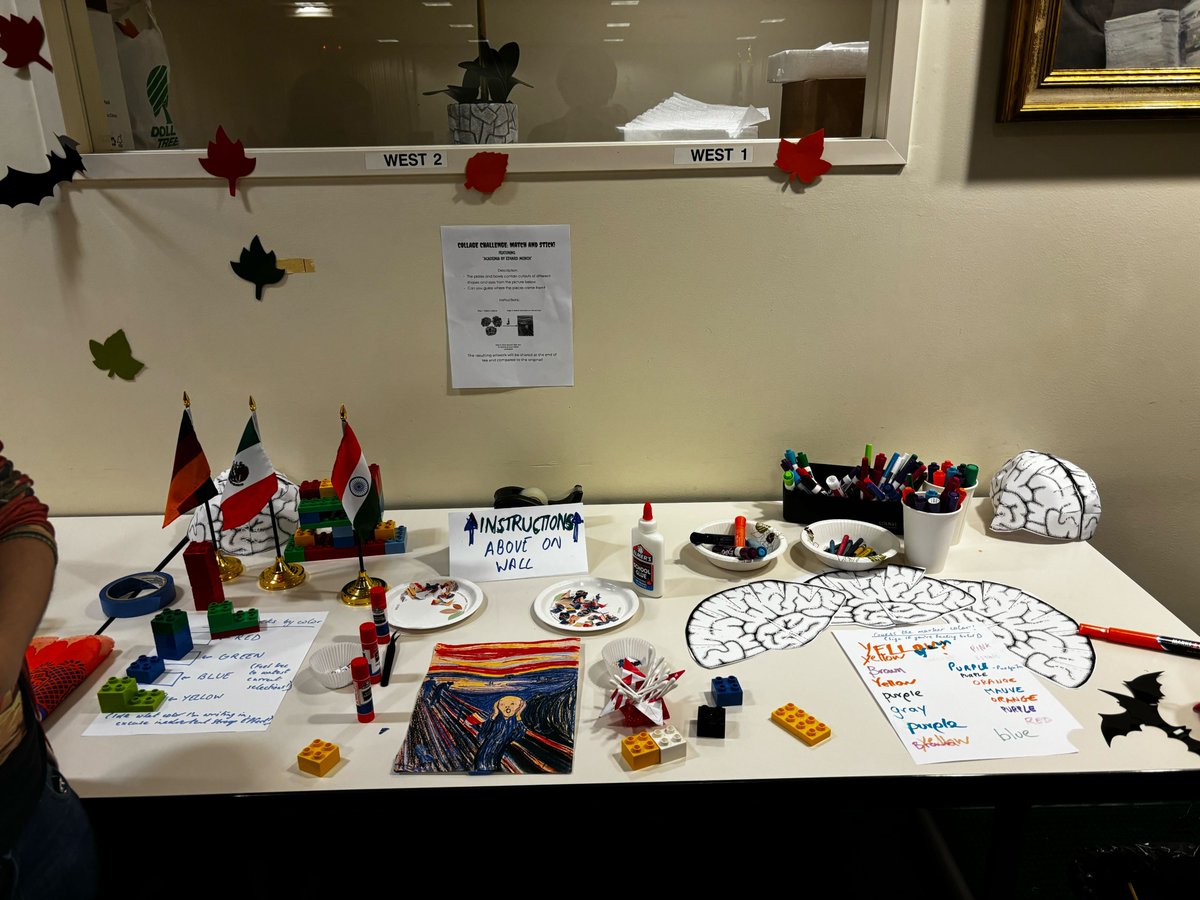
👻 Happy Halloween from Smith-Kettlewell Research Institute! 🎃 Here's a throwback to the S̶K̶E̶R̶I̶ scary-themed tea gathering hosted by the Teng Lab (@echodislocation )! Decor included a sodium vapor lamp casting a distinct yellow wavelength, making the room oddly colorless!
I learned so much from @UwOptometry students and faculty, from recalibrating athletic classification to motor-amblyopia interactions in children to ocular somatosensation to chicken tetrachromacy. And the best pretzels I've had outside of Germany! 🥨
What a great visit to @BMI_WesternU to share recent and ongoing #braille research from our lab and @marleenhaupt! Thanks to @Yalda_Mhz and everyone in the CNAI lab for being such great hosts. 🙏🏼🧠
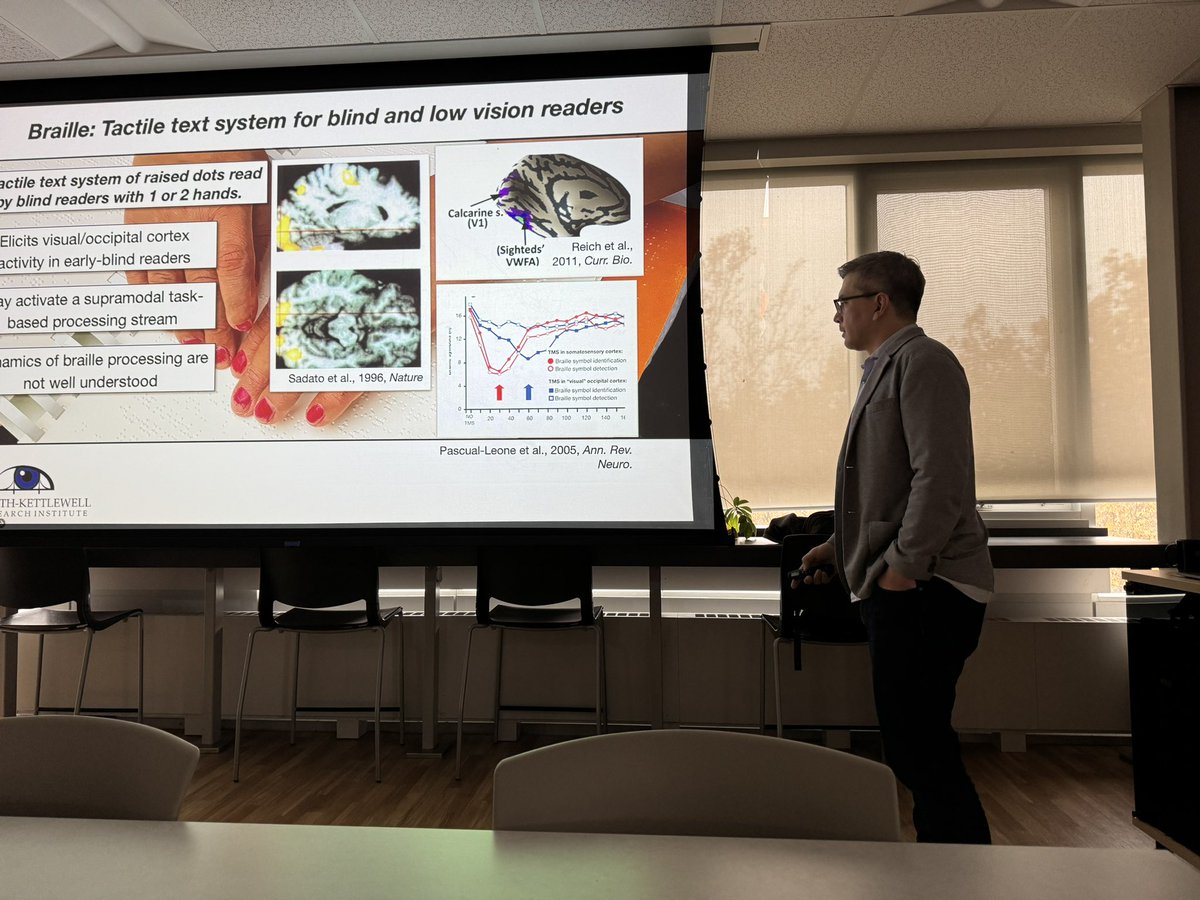
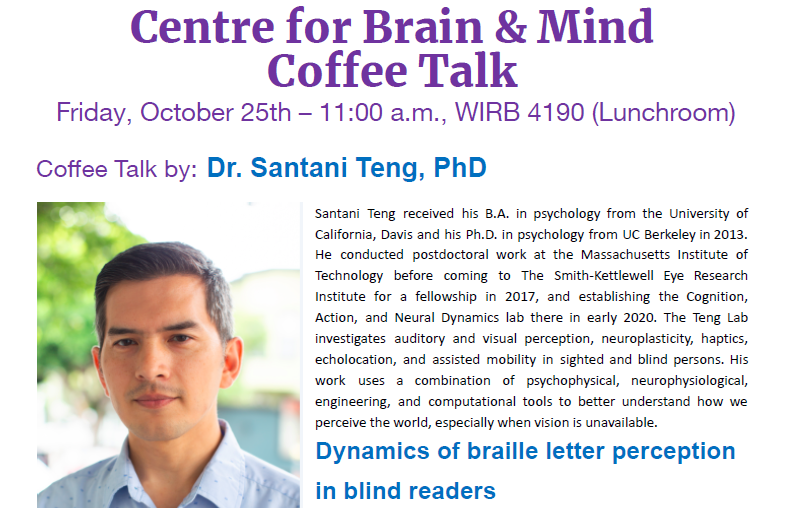
It was a great pleasure to host @echodislocation from @SKERIResearch in our @BMI_WesternU talk series! His insightful talk on the dynamics of Braille letter perception in blind readers sparked an engaging discussion with the audience.
Centre for Brain and Mind (@BMI_WesternU) coffee talks are on a roll! Last week we heard about the esteemed @ejmuraki's research on object imagery and aphantasia. And today we have @echodislocation talking about Braille letter perception.
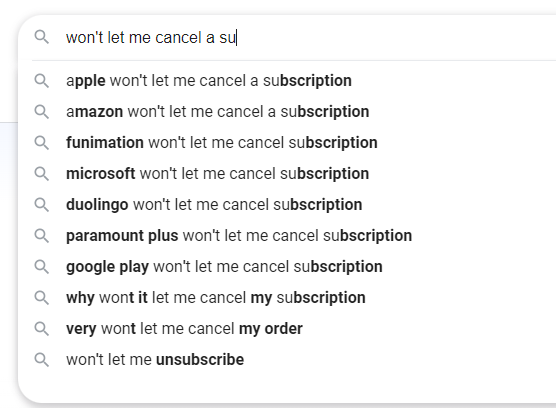
No more searching for how to cancel your subscriptions.
Today, the FTC finalized a "Click-to-Cancel" rule to make it as easy to cancel a subscription as it is to sign up for one.
Thank you, @linakhanFTC!
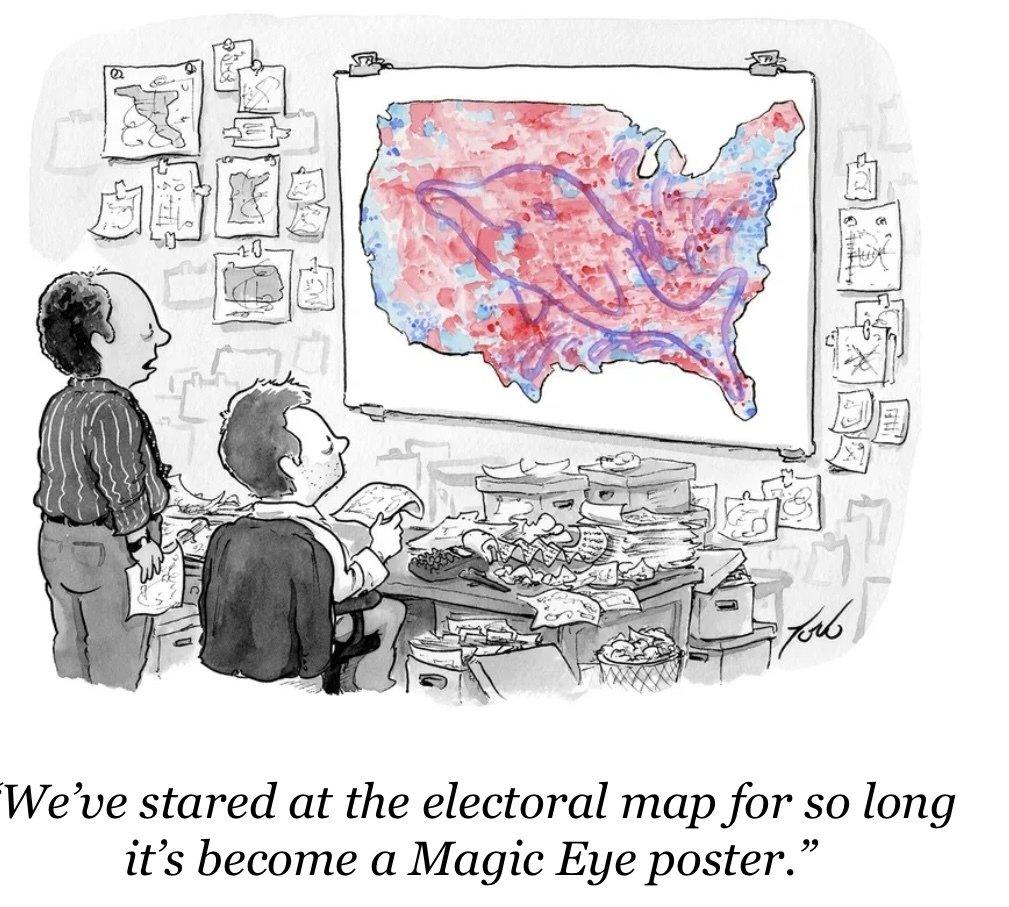
Visual illusions enter the political arena in this allusion to the scramble of 3D Magic Eye field emerging into a clear 3D image. The Magic Eye concept was developed @SKERIResearch by Dr. Christopher Tyler and is still providing popular and scientific insights today. 🗳️
Talking optimal signal properties for assisted #echolocation at @UCBerkeley's #BAVRD conference, where our lab was among the @SKERIResearch contingent. TLDR: in biomimetic sonar as in life, slowing down clears things up 🔊, in this case for object echo discrimination!
Please RT: I am looking to hire a research assistant to help recruit, schedule and run human participants in auditory perception experiments at MIT. Preferably full-time, but could be part-time. Ideal for someone looking to get more research experience in advance of grad school.