Those who have read the book know what I'm talking about. Those who haven't need the explanation below.
The brain operates through two main systems for mental tasks and physical commands.
System 1 is very fast and economical, predominating most of the time. It rapidly analyzes shapes and symbols, arriving at practical and routine conclusions without room for reflection. An example is driving a familiar route with no traffic or delays.
System 2 is energy-demanding and lazy, used for more elaborate, deliberate thinking—such as calculating 124 \times 14 or choosing which candidate to vote for based on their government platform's ideology.
On an ordinary day, contrary to what many believe or accept, you use System 1 about 95% of the time.
An experienced echocardiographer can perform a routine exam using exclusively System 1.
Especially in routine check-up and low-complexity clinics.
In this way, they achieve extraordinary speed, completing an exam in under 20 minutes.
However, if a case of severe aortic stenosis appears, they will need to switch to System 2, take unusual measurements, and reflect deeply on the findings.
Their examination time might extend to 40 minutes or more.
The accuracy rate of System 1 is very high among well-trained examiners. It does not deserve criticism based solely on the short duration. Even if they spent 45 minutes, the conclusion would be the same.
Still, the echocardiographer must be capable of recognizing cases that require System 2 and more time.
The worst mistake is treating everything with System 1 and failing to deliver accurate reports in certain cases.
Always using System 2 also offers no benefit to the system, as it creates unnecessary delays and unjustifiable backlogs.
A resident in the early stages of training may spend 45 minutes relying on System 1, but they are still training that System 1 for efficient use.
Are people with obesity and HFpEF getting better with glp1 drugs because their hearts are better, or is it just feeling better from wt loss? Two companion papers @NatureMedicine from placebo controlled RCT show that their HF really is better with pcwp and LA strain by MRI.
Dr. Barry Borlaug and Dr. C. Michael Gibson discuss the new semaglutide trial: Weekly SC administration of semaglutide reduced exercise pulmonary artery wedge pressure by -10.6 mmHg at 52 weeks among patients with obesity-related HFpEF, providing evidence of hemodynamic improvement.
Watch video here: https://t.co/KuWDxFWUBN
📅 Save the date! 10th Hybrid Symposium on Exercise Echocardiography
🗓 Saturday, March 13, 2027
📍 Hasselt, Belgium + online
🎤 Keynote: Barry Borlaug (@MayoClinic) on exercise hemodynamics in HFpEF
Registration soon!
#HFpEF#CPETecho
I disagreed with the previous diagnosis of asymmetric septal hypertrophy in a 45-year-old male patient. There appears to be an anomalous tendon-like separation adjacent to the septum.
Rare congenital anomaly(I’ve never seen)
rudimentary aortic chordae tendineae #echofirst
seen as ruptured fibrous strand attached to RCC free edge w partial flail causing severe aortic regurgitation OR confirmed https://t.co/3ojkUClQ67
🎥 The #EACVI Stress Echo tutorial series is now online!
Happy to contribute a case-based tutorial on #HFpEF & #CPETecho.
When resting evaluation is inconclusive, exercise may reveal the answer.
Explore the full series! 👇
https://t.co/XeSNeXBcaB
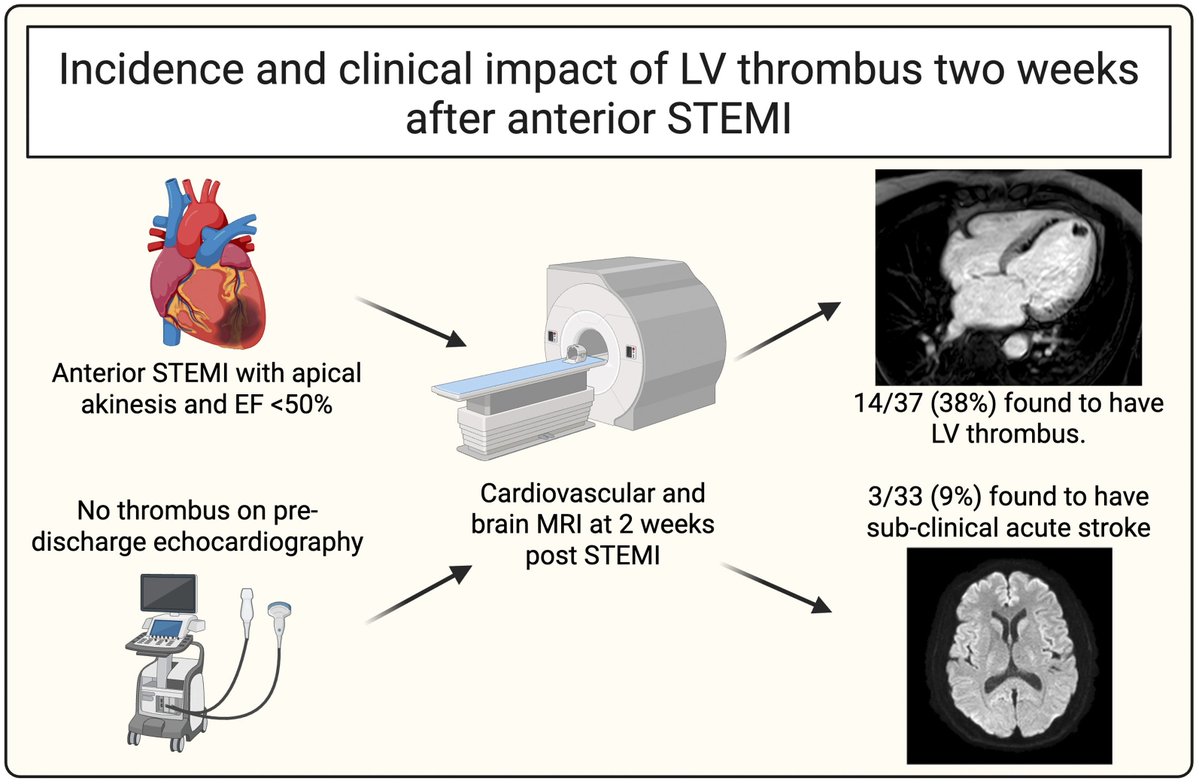
A small but interesting study. Supports the prior observation that the incidence of left ventricular thrombus peaks at around 2 weeks post-MI. Would this change your practice?
https://t.co/T07xDOGiIf
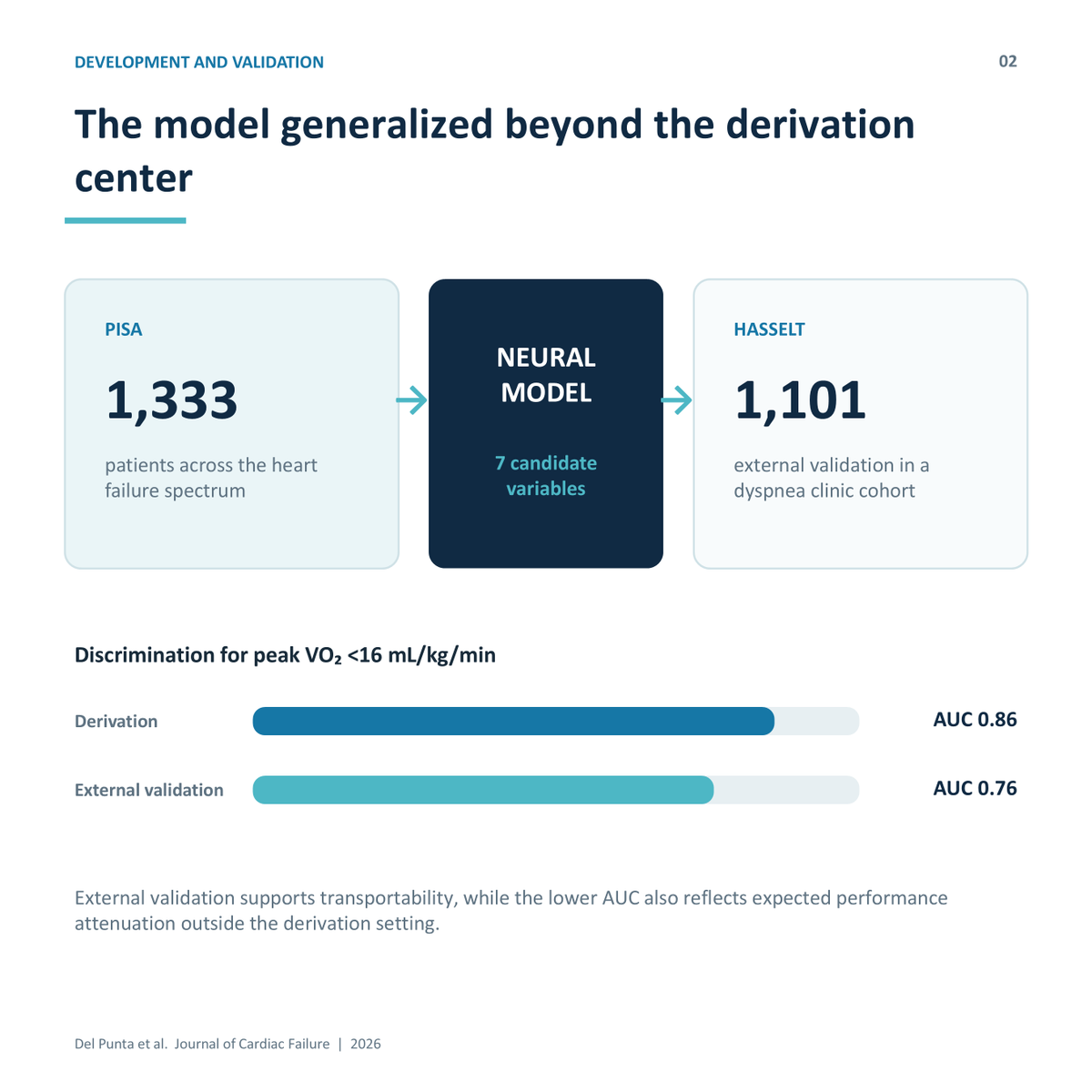
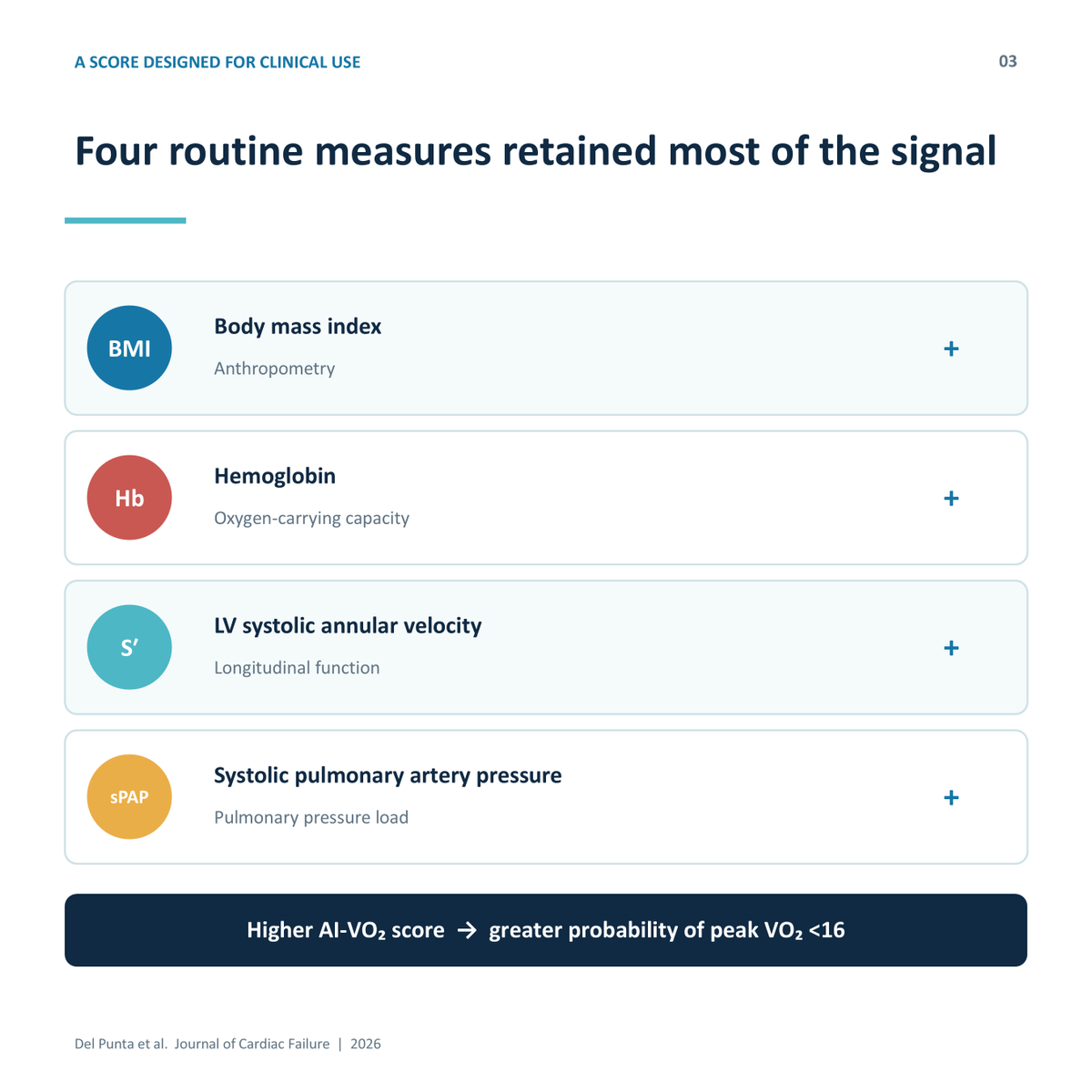
2/4 AI selected 7 variables. We translated these into a practical score using:
• BMI
• Hemoglobin
• Average LV S′
• sPAP
AUC: 0.79 in derivation and 0.73 in external validation.
🧮 Calculator: https://t.co/9srgBSeh6H
@Hragy It appears to be a more significant subvalvular component than commissural fusion. The stress echo will certainly reveal exercise-induced pulmonary hypertension.
This is a confusion in usage that is difficult to undo following the American directive. I am very pleased with your decisive role in this inappropriate use of LASr.
Echo NY this Saturday — great talks, strong engagement, and lots of interest.
Practical insights to sharpen your echo skills and improve your practice, at every level.
https://t.co/RK6nr4qfri
When performing a bicycle stress echo, we see the E wave try to increase rapidly due to the elevated venous return from exercise. This increase is counteracted by a stronger e' wave. When the e' wave fails to respond, the E wave is free to increase significantly, elevating the E/e' ratio. I believe