How to add an EXTRA 25% - 50% to your bottom line without spending money on ads?
I'm going to cover everything you need to know to put in place a killer email marketing & retention system.
It's gonna be a monster THREAD so make sure to RT and like if you find value!
🧵
@jrvmz You stop looking at "what % of all customers repurchased this month" and start looking at "what % of customers acquired in Month X repurchased within 30, 60, 90D
That way you're comparing apples to apples
If your retention agency's main value prop is "we'll send more emails and make them look better," that should worry you.
I've seen brands come to us after working with agencies that were sending 4 campaigns a week, had every flow built out, beautiful designs across the board. And retention was still flat. Repeat purchase rate hadn't moved. Churn was the same. LTV was stagnant.
Because sending more emails and making them prettier isn't a retention strategy. It's email production.
The questions a real retention partner should be obsessing over aren't "what campaign should we send Tuesday" or "should the CTA button be green or white." They should be asking things like why are 68% of first-time buyers not coming back for a second order? Why is subscription churn spiking at month 3? Which acquisition channels are bringing in customers with the worst LTV? Is the product adoption rate in the first 14 days actually improving or declining? Are we attracting buyers or discount hunters?
Those questions lead to completely different work than just cranking out more emails. Sometimes the answer is a flow rebuild. Sometimes it's a popup offer change. Sometimes it's a conversation with the founder about their product experience or their pricing structure. And sometimes, honestly, the answer has nothing to do with email at all.
The retention agencies that actually move the needle measure themselves on business outcomes. LTV trending up over 90 days. Repeat purchase rate improving quarter over quarter. Subscription churn declining. Revenue per subscriber increasing. Not just Klaviyo attributed revenue screenshots that look impressive but don't tell you whether the business is actually healthier.
If you're evaluating a retention partner, ask them what metrics they optimize for. If the answer is mostly about open rates, click rates, and attributed revenue, they're optimizing for their own reporting, not your business.
The best rtention work often doesn't look like email marketing at all. It looks like understanding the business deeply enough to know which lever to pull and when.
Whenever I speak to founders about retention, I find the most interesting questions rarely live inside Klaviyo.
Questions like:
Why do 70% of first-time buyers never place a second order?
Why is churn concentrated around month 3?
Which acquisition sources produce the worst long-term customers?
Are customers actually using the product?
Has product adoption improved or declined?
Those questions eventually influence email strategy.
But they're business questions first.
A retention partner should understand the business well enough to identify the bottleneck before recommending the tactic.
One mistake I see all the time with higher-ticket brands: they hear "build trust first" and accidentally stop selling entirely. Their emails turn into a content blog. Educational content everywhere, CTAs nowhere.
That's not the move.
If you sell high-AOV products, email is still a sales channel. The difference is how you drive the sale. You're not pushing impulse purchases. You're reducing the risk of a big decision. Every email should answer at least one buying question: "Is this worth it?" "Is this right for me?" "Why this over cheaper options?" That is selling. Just with confidence as the lever instead of urgency.
Here's how I think about email strategy when price points are high:
1. Welcome flows should sell the decision framework before the transaction. Not just deliver a coupon. Early emails should actively make the case for why your product costs more, what problem you solve better than anyone else, and who gets the most value from it. CTAs still exist, they just point to "explore the collection" or "compare options" instead of "buy now 20% off."
2. Campaigns should sell ownership, not just deadlines. Urgency works, but it shouldn't be your only lever. The best performing campaigns for high-ticket brands sell the experience of owning the product, the long-term upside, and the cost of choosing the wrong option. "Why customers upgraded." "What changed after buying." "What most people get wrong before purchasing." You're selling a better outcome.
3. Discounts should be a tool, not the strategy. Discounting high-ticket products constantly trains people to wait. Use them sparingly, tie them to real moments like launches or seasonal shifts, and always explain why now. That keeps the brand premium while still driving action.
4. Post-purchase emails still sell even when repeat purchases are rare. They sell validation ("you made the right choice"), advocacy (reviews, referrals), and complementary products. This protects brand equity and unlocks future revenue.
And measure correctly. If you only judge success by immediate campaign revenue and click-through rate, you'll underinvest in what actually converts high-ticket buyers. Track lead-to-purchase conversion rate, time to conversion, and revenue per subscriber over 60 to 90 days. These sales often happen after multiple touches, not from a single email.
High-ticket email strategy comes down to selling with logic instead of pressure and guiding decisions instead of forcing clicks. When you do that, email stops pushing and starts supporting the sale.
One mistake I see all the time with higher-ticket brands: they hear "build trust first" and accidentally stop selling entirely. Their emails turn into a content blog. Educational content everywhere, CTAs nowhere.
That's not the move.
If you sell high-AOV products, email is still a sales channel. The difference is how you drive the sale. You're not pushing impulse purchases. You're reducing the risk of a big decision. Every email should answer at least one buying question: "Is this worth it?" "Is this right for me?" "Why this over cheaper options?" That is selling. Just with confidence as the lever instead of urgency.
Here's how I think about email strategy when price points are high:
1. Welcome flows should sell the decision framework before the transaction. Not just deliver a coupon. Early emails should actively make the case for why your product costs more, what problem you solve better than anyone else, and who gets the most value from it. CTAs still exist, they just point to "explore the collection" or "compare options" instead of "buy now 20% off."
2. Campaigns should sell ownership, not just deadlines. Urgency works, but it shouldn't be your only lever. The best performing campaigns for high-ticket brands sell the experience of owning the product, the long-term upside, and the cost of choosing the wrong option. "Why customers upgraded." "What changed after buying." "What most people get wrong before purchasing." You're selling a better outcome.
3. Discounts should be a tool, not the strategy. Discounting high-ticket products constantly trains people to wait. Use them sparingly, tie them to real moments like launches or seasonal shifts, and always explain why now. That keeps the brand premium while still driving action.
4. Post-purchase emails still sell even when repeat purchases are rare. They sell validation ("you made the right choice"), advocacy (reviews, referrals), and complementary products. This protects brand equity and unlocks future revenue.
And measure correctly. If you only judge success by immediate campaign revenue and click-through rate, you'll underinvest in what actually converts high-ticket buyers. Track lead-to-purchase conversion rate, time to conversion, and revenue per subscriber over 60 to 90 days. These sales often happen after multiple touches, not from a single email.
High-ticket email strategy comes down to selling with logic instead of pressure and guiding decisions instead of forcing clicks. When you do that, email stops pushing and starts supporting the sale.
One mistake I see constantly with higher-ticket brands:
They hear "build trust first" and accidentally stop selling.
Their emails become educational.
Informative.
Insightful.
And completely detached from a purchase decision.
Trust isn't the alternative to selling.
Trust is what makes selling possible.
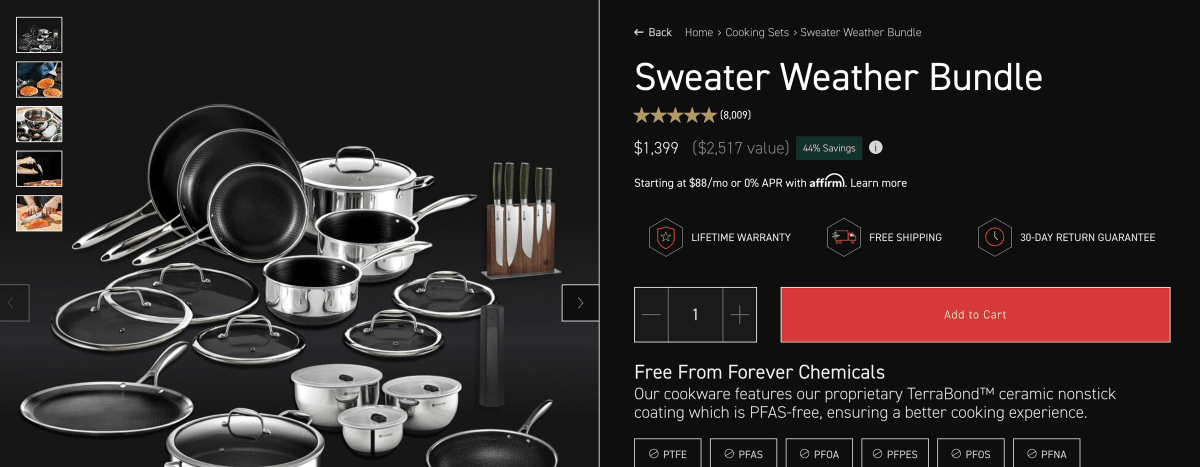
If someone is considering a $1,500 sofa, a $2,000 wellness device, or a premium furniture piece, they're still evaluating whether to buy.
The difference is that they're not asking:
"Do I want this?"
They're asking:
"Am I making the right decision?"
Good high-ticket email strategy helps answer that question.
Claude writes MUCH better email copy than ChatGPT now.
And trust me, I didn't want to admit this.
I've been ride or die for ChatGPT for over a year. It's fine. It gets the job done. I had my prompts dialed in.
Then Opus 4.6 and 4.7 dropped and I figured I'd run some tests. Same brief, same format, same prompt, both tools.
Claude won. Not by a little. By a lot.
The copy comes out way more usable on the first try. Less editing, less "why does every intro sound like a LinkedIn post," less of that smell.
Lesson I keep relearning: whatever was working 3 months ago probably isn't the best option anymore. The tools move quicker than most people want to admit.
Stay flexible. Test everything. That's the whole job.
P.S. Want the master prompt and SOP we actually use to run Opus 4.6 and 4.7 at scale? Drop "COPY" and I'll send it over 👇
If you’re an email marketer do yourself a favor and create a brand new gmail account.
Then create a swipe file by subscribing to brands’ newsletters.
You’ll never run out of inspo. Trust me
The question I always ask is:
Where are you spending your optimization effort?
Many brands are running:
→ Endless welcome flow tests
→ Subject line experiments
→ Creative iterations
→ Minor conversion tweaks
While ignoring:
→ Product onboarding
→ Habit formation
→ Subscription retention
→ Cross-sell strategy
→ Product adoption
→ First-to-second purchase rate
A great retention system isn't a collection of flows (even if your agency tells you that)
It's a system that increases the probability customers get results, stay longer, and buy again.
Everything else is just activity.
One thing that always surprises me during audits:
Brands have incredibly sophisticated pre-purchase journeys.
Then almost nothing after purchase.
Before purchase:
→ Welcome flow
→ Browse abandonment
→ Cart abandonment
→ Popup optimization
→ Subject line testing
→ Personalization
After purchase:
"Your order has shipped."
Maybe a billing reminder.
Maybe.
The customer has already trusted you with their money and that's when the communication becomes weakest.
The priorities feel backwards.
The biggest retention gains rarely come from perfecting welcome email 5!!!
They come from helping customers actually get value from what they bought.
I think welcome flows are one of the most over-optimized assets in ecommerce.
Not because they don't matter.
Because most brands spend weeks debating email 4 while completely ignoring what happens after someone buys.
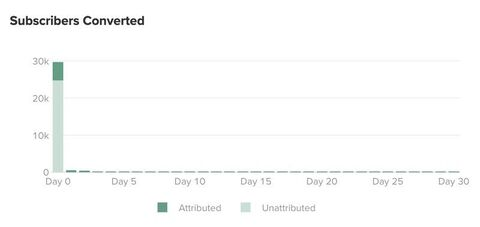
The reality is that the majority of welcome flow revenue happens immediately.
Someone signs up.
They were already considering buying.
They receive the discount.
They purchase.
A large percentage of those customers were probably going to buy anyway...
Yet founders will spend hours discussing button colors, infographic layouts, and founder stories while customers who already paid are left completely unsupported.
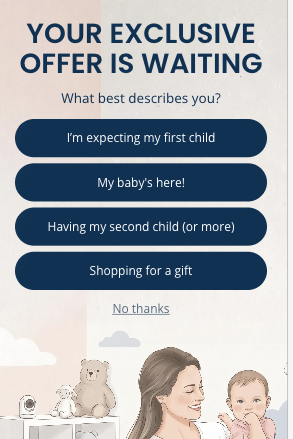
The goal of a popup shouldn't be maximizing opt-in rate.
It should be maximizing customer understanding.
Most brands obsess over:
→ Signups
→ Conversion rates
→ List growth
What they should be asking is:
→ Why are people interested?
→ What problem are they trying to solve?
→ What product category attracted them?
→ What objections do they have?
A popup can do more than grow your list.
It can teach you how to acquire better customers.
That's infinitely more valuable.
Brands spend thousands driving traffic to their site.
Then someone finally raises their hand and says:
"I'm interested."
And the brand responds with:
"Cool. What's your email?"
That's it.
No context, mo qualification, no learning, no insight. Just an email address.
The signup itself is one of the highest-intent moments in the entire customer journey. Treating it like a data collection form instead of a research opportunity is leaving value on the table.