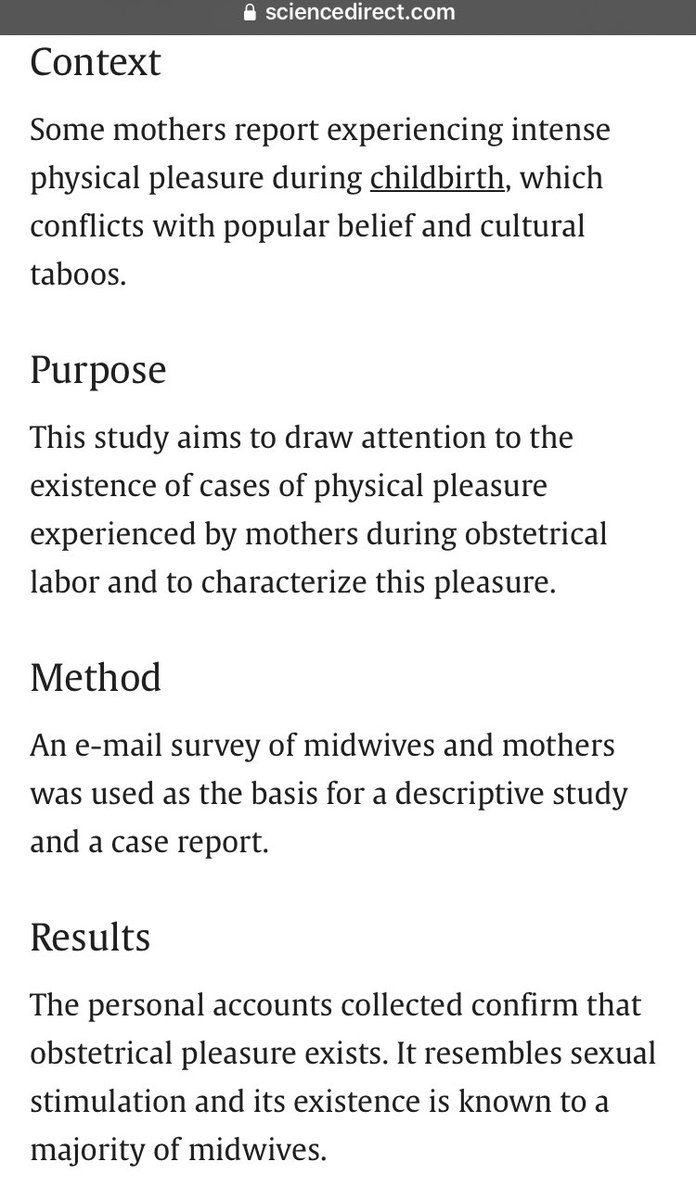
@MariaNordin Sitä esiintyy, tosin tässä datasetissä vain 0,3%:ssa synnytyksistä. Kätilöille tuttu ilmiö, tosin paperissa todettiin ettei nautinnon kokemista mielellään tunnusteta.
Olisiko tässä pronatalisteille & feministeille työsarkaa?
https://t.co/ISYmowN4gS
Reformed Manosphere Members Are Infiltrating Online Spaces To Deradicalise Other Men
As more men get sucked into the manosphere, reformed members are infiltrating such spaces and sharing tips on how to detox and deradicalise
By Kathryn Madden, Marie Claire
https://t.co/BdItkjcHOF
In 1986, a Texas psychologist told 46 students to write about the worst thing that ever happened to them, 15 minutes a day for 4 days straight. Over the next 6 months, those students went to the doctor half as often as the kids in the control group.
The psychologist was James Pennebaker. He repeated the experiment, and so did other labs. Same answer every time: writing about pain in a notebook was changing something inside the body. Follow-up studies found improved immune cell counts, faster wound healing after surgery, lower HIV virus levels in blood tests, and better lung function in people with asthma.
For years the mechanism was a puzzle. Pennebaker had stumbled onto a much bigger pattern than he realized. Making things of any kind does something to the body.
Take painting. A 2016 study at Drexel University handed 39 random adults some markers, clay, and collage paper and told them to make whatever they wanted for 45 minutes. No rules, no skill required. 75% of them walked out with lower cortisol (the main stress hormone) in their saliva. Beginners and experienced artists got the same drop.
Take dancing. Doctors at Einstein College of Medicine tracked 469 seniors over a 21-year period in a study published in the New England Journal of Medicine in 2003. People who danced a few times a week were 76% less likely to get dementia than people who rarely did. That was the largest protective effect of anything they tested. Crosswords came in at 47%, reading at 35%. Swimming and cycling did nothing for the brain at all.
Take singing. In 2004, researchers in Germany measured antibodies in a choir's saliva before and after rehearsal. The antibody count (the stuff that fights off colds and flu) rose significantly. A follow-up study on cancer patients and their caregivers found that one hour of group singing dropped cortisol and switched on their immune systems at a measurable, blood-test level.
And just going to see art helps. University College London tracked 6,710 British adults over age 50 for 14 years. People who went to the theatre, a museum, or a concert every few months were 31% less likely to die during that window. Even going once or twice a year dropped the risk by 14%. Wealth, education, and starting health were all accounted for.
The mechanism seems to live in a brain circuit called the default mode network, the part that wanders when you daydream. When you fall into the zone of making something, that network hooks up with the one that holds your attention, and the brain's stress system quiets down. Cortisol falls, dopamine climbs, and the slow-burn inflammation that eventually kills most of us calms down too. None of it depends on the quality of what you make.
The Spanish tweet sounded like hyperbole. 40 years of peer-reviewed data says it's roughly right.
In this episode, Dr. Lenny Wiersma and I get into how self-talk actually works in high-pressure moments, why distanced self-talk (referring to yourself by name or nickname) consistently outperforms first-person thinking, and how confidence and belief are not the same thing. We also cover visualization, what most people get wrong about it, and why the coping version may matter more than the version where you picture everything going right. https://t.co/FW9RZx1qcm
@Tomaldestrom @HagelinHeidi Hiilien isotoopeilla, ilmakehäfysiikalla ja ihan arkilogiikalla päätletynä on selvää kuin pläkki, että ihmiskunnan päästöt ovat syypää havaittuun lämpenemisen trendiin.
@BldDlb29006@HagelinHeidi Hiilien isotoopeilla, ilmakehäfysiikalla ja ihan arkilogiikalla päätletynä on selvää kuin pläkki, että ihmiskunnan päästöt ovat syypää havaittuun lämpenemisen trendiin.
@LuttinenL@HagelinHeidi Hiilien isotoopeilla, ilmakehäfysiikalla ja ihan arkilogiikalla päätletynä on selvää kuin pläkki, että ihmiskunnan päästöt ovat syypää havaittuun lämpenemisen trendiin.
Miksi odottaa 500 vuotta kun negatiiviset seuraukset ovat näkyvillä jo nyt?
@Nesthori@HagelinHeidi Hiilien isotoopeilla, ilmakehäfysiikalla ja ihan arkilogiikalla päätletynä on selvää kuin pläkki, että ihmiskunnan päästöt ovat syypää havaittuun lämpenemisen trendiin.
@HeikkalaTimo@HagelinHeidi Hiilien isotoopeilla, ilmakehäfysiikalla ja ihan arkilogiikalla päätletynä on selvää kuin pläkki, että ihmiskunnan päästöt ovat syypää havaittuun lämpenemisen trendiin.
@Isolohkojuha@HagelinHeidi Hiilien isotoopeilla, ilmakehäfysiikalla ja ihan arkilogiikalla päätletynä on selvää kuin pläkki, että ihmiskunnan päästöt ovat syypää havaittuun lämpenemisen trendiin.