"We borrow Plato’s famous allegory of the cave to introduce the predictive coding framework. Plato describes a group of prisoners who have spent their entire lives chained to the wall of a cave...
Under predictive coding theory, the mind, like Plato’s prisoners, is cast as secluded from the external, physical world and must, therefore, rely on streams of ambiguous sensory signals (in the form of electrical signals) to build a mental representation of the world..."
Our brains use prediction in two seemingly contradictory ways. Our latest paper, just published in
@natureneuro, shows how expectations both bias and sharpen perception at the same time. 1/n
https://t.co/idMwDjlq0i
11 Şubat Uluslararası Bilimde Kadın ve Kız Çocukları Günümüz kutlu olsun.
İster öğrencim, ister çalışma arkadaşım olsun birlikte çalışıp ürettiğim tüm bilim kadınlarına sevgi ve saygılarımla ❤️🌸
We began our journey studying twins to understand what makes them different, and along the way, we became soul twins—exploring what made us so alike. Your undeniable sparkle has always amazed me. Congratulations, Dr. Didenur, on defending your thesis!
My officemate got me this because I’ve been failing to keep the plants on my desk alive for two years of my PhD... Just like my motivation. 🌱💀🌸
So, we've decided to keep things artificial in every way possible. Artificial intelligence, artificial motivation, artificial plants.
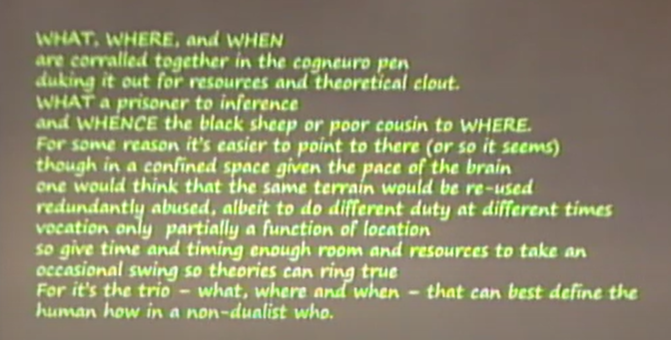
"Don't forget whatever you see, it's an illusion. Your mind and brain are in collusion. A depicted fiction, some reality, some prediction. So don't believe everything with such conviction. There's always room for some confusion inside, contusion aside." Marta Kutas