I thought about doing this without any jokes, something I've never done here in 23 years, to impress upon people how much different I feel this issue is from any I have ever covered.
@BreeSolstad I no longer believe in coincidences. Just this morning my daughters and I started listening to the @SAliveTheatre episode on St. Clare of Assisi. God bless you and help you on your journey!
@CSW_Hoosier “It is at times unpleasant. But God calls us to worship Him in the manner in which HE chooses. Worship isn’t about us. Church isn’t about us.”
this!
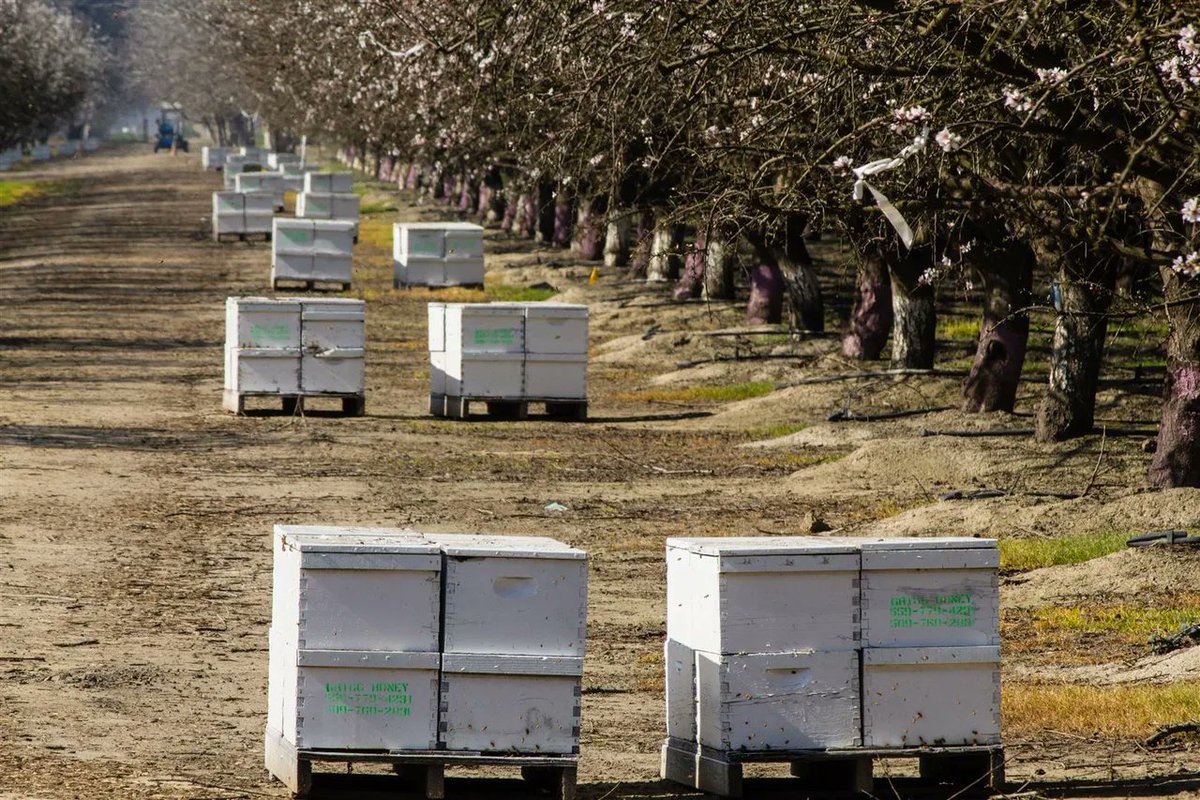
Every February, 70% of the commercial honey bees in the United States, roughly two million colonies, are loaded onto lorries and driven to California. They are going to pollinate the almonds.
80% of the world's almonds come from one valley in California. Over 1.3 million acres of nothing but almond trees, blooming for three weeks in monoculture, requiring more pollinators than the state can produce on its own. So the bees are trucked in from every corner of the country. Florida. New York. Montana.
The bees are fed sugar water for the journey because their own honey has been removed to lighten the load.
They arrive in the Central Valley to a landscape that is, for three weeks, pink and white blossom, and for the other forty-nine weeks of the year, dead. Nothing to eat. No forage. No diversity. Just almond trees and bare dirt, sprayed regularly with fungicides and insecticides that were deemed bee-safe in adult bees but turn out to be lethal to larvae when combined.
In February 2025, commercial beekeepers reported the worst die-off on record. Around 60% of commercial honey bee colonies in the United States dead in a single pollination season. Financial losses estimated well over $139 million. Some beekeepers lost 90 to 100% of their colonies.
The almonds are marketed as plant-based. Clean. Ethical. The preferred alternative.
The preferred alternative requires the single largest managed pollination event in human history and it is quietly killing the pollinators faster than they can be replaced.
Every glass of almond milk is, statistically, a small contribution to the largest pollinator die-off on record.
This is not in the advertising.
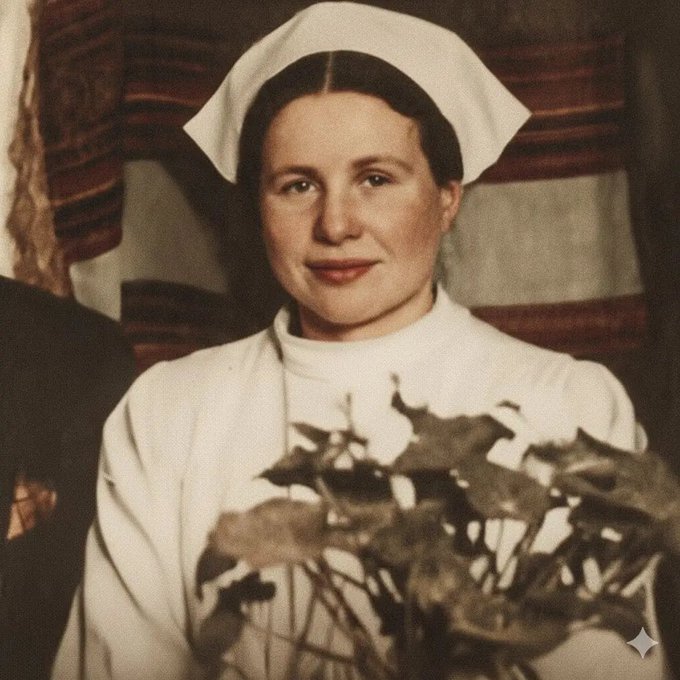
In the autumn of 1942, a slight, 32-year-old Polish social worker named Irena Sendler passed through the gates of the Warsaw Ghetto with a carpenter’s toolbox in her arms. Beneath the hammers and nails lay a drugged six-month-old infant, breathing softly, utterly silent. One cry would have meant instant death for both of them. Irena smiled at the guards; they waved her through. They never suspected that this quiet woman would repeat the journey 2,499 more times.
The ghetto was a slow-motion extermination. Starvation, disease, and random murder stalked every street. Jewish parents faced a choice no human being should ever have to make: keep their child and watch them waste away, or hand them to a stranger who promised a chance—however thin—at life.
Irena came officially to inspect for typhus. In reality, she came to steal children from death.
Babies left in toolboxes or ambulances under false bottoms. Toddlers sedated and tucked into potato sacks. Older children led by the hand through the stinking, lightless sewers while German boots marched overhead. “Not a sound,” she whispered as rats scurried past their feet.
She knew that the rescued children would be given new names, new religions, new families. Their pasts would vanish unless someone remembered. So, on fragile scraps of tissue paper, Irena wrote each child’s real name, their parents’ names, and their new hiding place. She rolled the papers tight, slipped them into glass jars, and buried them beneath an apple tree in a neighbor’s garden. If she were caught and killed, the truth might still survive.
She was caught.
On October 20, 1943, the Gestapo kicked in her door. They took her to Pawiak Prison and demanded the list. When she refused, they smashed both her legs with iron bars. Then her feet. Then her arms. For weeks the beatings continued. She never spoke. They scheduled her execution. On the appointed morning, guards dragged the broken woman from her cell.
Instead of a firing squad, she found herself outside the prison walls—alive. The Polish underground council Żegota had bribed a guard to mark her file “shot while trying to escape.” Officially dead, Irena Sendler limped back into the shadows to keep working.When the war finally ended, the first thing she did was dig up the jars under the apple tree. She spent years trying to return the children—now scattered across convents, farms, and foster homes—to whatever family might remain.
Almost no parents had survived. But the children had. Because of her, 2,500 Jewish boys and girls lived to grow up, to marry, to have children and grandchildren of their own—an entire secret branch of the human family tree that the Nazis never managed to cut down.For decades her story stayed buried deeper than the jars themselves. Then, in 1999, four high-school girls in rural Kansas stumbled across a brief mention of her name. They found the old woman still living quietly in Warsaw and brought her courage back into the light.
Journalists called her the greatest rescuer of the Holocaust. Irena only shook her head.“I could have saved more,” she said. “That regret follows me to the grave.”Irena Sendler—armed with nothing but a ghetto work permit, a toolbox, and a refusal to look away—proved that even in the heart of the worst evil humanity has ever devised, one determined person can still keep the darkness from winning completely.
@CptAncapistan “I got my identify from being a good person and being on the right side of history”
That’s it. It becomes a moral issue…not too far from religion…so when you assume it as a moral issue…that’s why you can’t tolerate the other opinion because then it’s inherently bad/evil.
In November 1937, a young entertainer walked into a church in Detroit with seven dollars in his pocket and a hospital bill he could not pay. Danny Thomas had just become a father. His daughter had been born, and steady work in radio was uncertain. Standing before a statue of Saint Jude Thaddeus, he made a private vow. If shown a path to success, he would build a shrine in the saint’s honor.
The next day he secured a job that paid far more than the money he had given away. The improvement did not make him famous overnight, but it marked a turn. Over the next two decades, Thomas built a national career in radio, film, and television. His program, later known as The Danny Thomas Show, brought him financial stability and a wide audience. The vow he made in Detroit remained with him.
By the late 1950s, Thomas began translating that promise into a concrete plan. Rather than constructing a small devotional site, he envisioned a medical center dedicated to catastrophic childhood illnesses. At the time, survival rates for many pediatric cancers were low. Families often traveled long distances for treatment and faced overwhelming expenses. Thomas believed a hospital could combine research and patient care while removing the burden of payment from parents.
On February 4, 1962, St. Jude Children's Research Hospital opened in Memphis before thousands of supporters. It was established as a fully integrated hospital during a period when segregation still shaped much of the American South. Thomas declared that no family would receive a bill for treatment, travel, housing, or food. The institution would rely on donations, organized through fundraising efforts that eventually became national in scale.
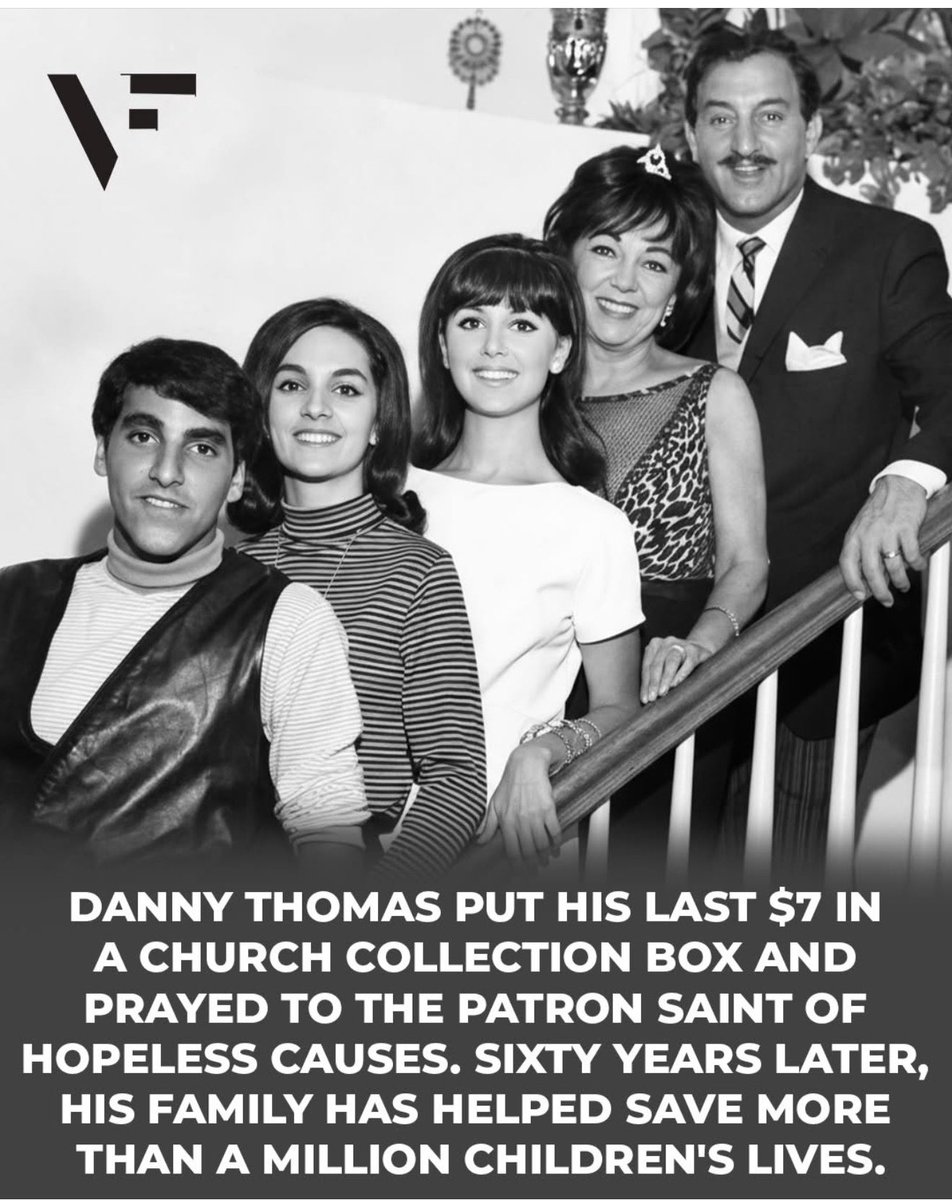
Thomas did not work alone. His wife, Rose Marie Thomas, traveled extensively to raise money and awareness. Their children were present at public events, reinforcing the personal dimension of the mission. A 1966 family portrait shows Thomas with Rose Marie and their children, including Marlo Thomas, Terre Thomas, and Tony Thomas. The image captures not only a successful entertainer but a family tied to a growing institution.
Over time, advances in research conducted and shared by St. Jude contributed to major improvements in survival rates for certain childhood cancers. Treatments developed there were published and distributed widely, influencing pediatric oncology beyond Memphis. The hospital’s fundraising arm built a broad donor network, allowing the founding principle to remain intact.
Thomas died in 1991, shortly after marking the hospital’s twenty ninth anniversary. He was buried on the grounds of the institution he founded. Rose Marie was later buried beside him. Their children continued involvement in fundraising and governance, maintaining a public connection between the family name and the hospital’s work.
The promise made in a Detroit church in 1937 was personal and uncertain. Its fulfillment became institutional and enduring. In transforming a private prayer into a research hospital, Thomas linked faith, entertainment, and medicine in a way that reshaped pediatric care. The family portrait from 1966 reflects more than domestic life. It records a moment when a vow had already grown beyond its origin, anchored not in a statue, but in an operating hospital whose work would outlast its founder.
@benditochico@ChristopherHale Last year they did Josemaria Escriva’s “the way” (amazing book…buy it…today) and A song For Nagasaki (about a catholic in Japan during the war). The year before they followed Father Walter Cishek “he leadeth me” another amazing book. Can’t recommend any of these enough
@fan_cornell@jonmsweeney Been using it for over a year. There’s SOOOO much more to
It than any celebrity stuff. Daily rosaries. Homilies. Angelus. Programming for kids. Etc. it’s by far the best money I’ve spent.
Santiago Schnell, former Notre Dame science dean turned Dartmouth provost, says that Catholic univs must stop imitating secular schools and should instead be excellent at what makes them truly distinct.
His proposal for Catholic higher ed? Cultivate future Doctors of the Church