Former ELA teacher, certified K-12 reading specialist, current instructor of ELA teacher candidates. Interested in all things literacy, edtech, and school.
Some key findings from an important meta review of AI in Higher Ed, published a few days ago:
1. Adaptive Systems and Personalization: We're seeing a broader rollout of personalized instruction and support that use AI to adapt to individual needs.
2. Chatbots/virtual assistants to enhance accessibility: Students are using these AI in the form of automatic speech recognition, text-to-speech, and sign-language interpretation.
3. Early Detection: Campuses are also using AI to help with early intervention, such as detecting anxiety and depressive symptoms (yes this raises ethical considerations, a major theme in the study). Globally, higher ed institutions are starting to use motion tracking to assess student behavior--including attention and emotions. Admins are also using profiling & prediction tools to manage retention, academic achievement, and student satisfaction. Some studies look at the use of AI to identify study readiness.
4. Assessment and Evaluation: This is the most common use of AI in higher ed. Faculty are using AI in student assessment, feedback, and evaluation of learning outcomes. Automatic AI-assessment is becoming more common. Automated feedback is increasing as well.
5. Evaluation of teaching: Some institutions are using AI to "identify low-quality feedback given by educators" and "flag repeat offenders."
TOP 6 BENEFITS
- personalized learning
- insight into student understanding
- impact on learning outcomes
- reduced planning & admin time for teachers
- greater equity
- assessment & feedback
TOP 5 CHALLENGES
- lack of ethical considerations during implementation
- curriculum dev
- infrastructure
- lack of teacher technical knowledge
- shifting authority
This is an important update, IMO.
I like to use the prompt: “Here’s a draft of my writing. Ask questions about what confuses you or makes you curious.” Then paste in the writing. @Larryferlazzo https://t.co/xaRA1A611J
Ali, J. K. M., Shamsan, M. A. A., Hezam, T. A., & Mohammed, A. A. (2023). Impact of ChatGPT on learning motivation: teachers and students' voices. Journal of English Studies in Arabia Felix, 2(1), 41-49.
AI Literacy: Knowing the limitations, understanding best use, applying prior knowledge and other resources to evaluate output accuracy. What else? #edtech#chatgpt#ailiteracy
Students are thinking much more about AI and its impact on their futures. It’s already changing how they interact with each other on social media, what and how they’re learning in school, and how they are thinking about their careers.
https://t.co/CJWonttcWa
Increasingly finding that the one thing that most makes managers panic about AI is showing them, not the advanced features of GPT-4, but rather the fact that Copilot for Office can create an OK PowerPoint with speaker notes from a document in 47 seconds.
This is all real time.
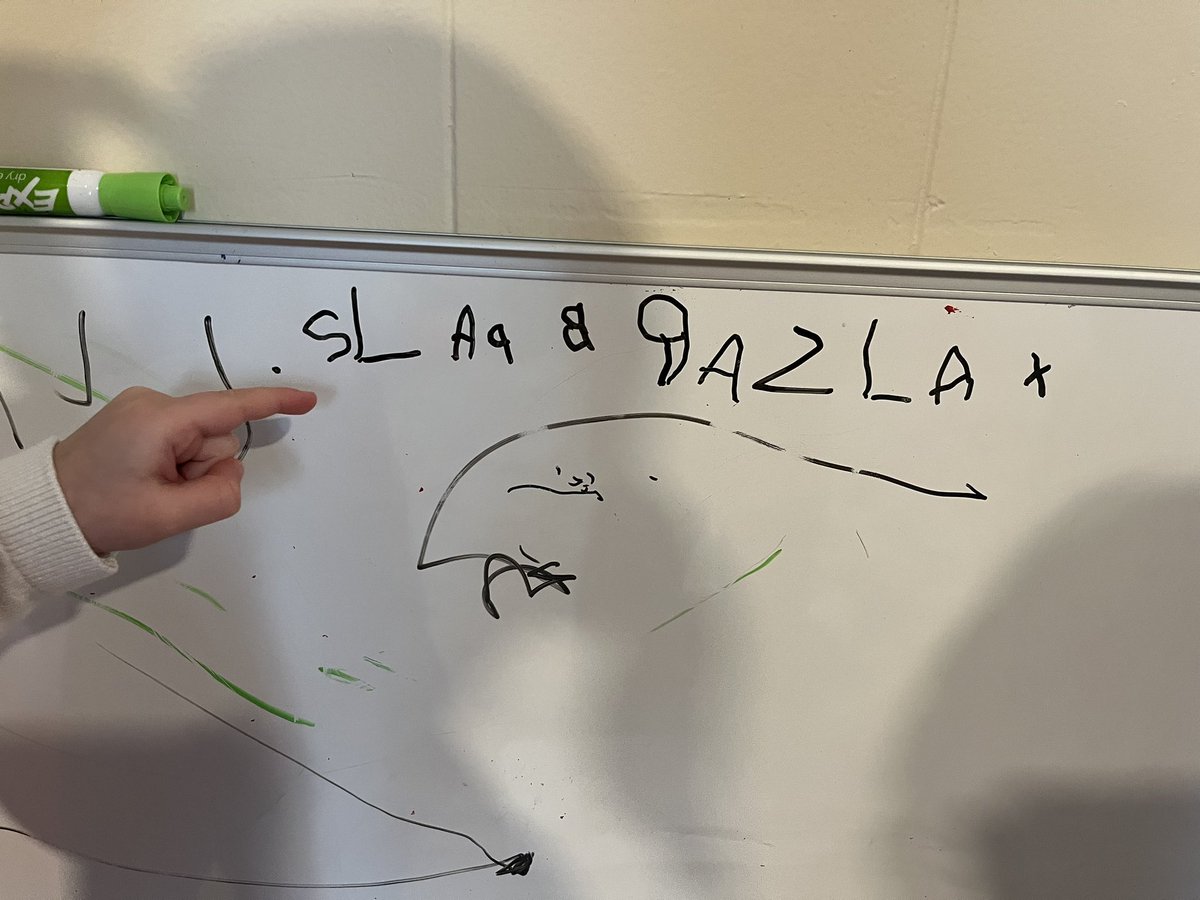
Can anyone guess what my emergent speller is spelling? Hints: invented by a teacher, highly popular in the 90s, banned by lots of schools 🧐
#literacy#teachertwitter
@heymrsbond A lot of inferring based on statistics and data visualizations when reading informational texts. I’d explicitly teach math words that are used in those texts, like “majority” “proportion” “share” “half” etc. I’d also teach numbers like 50%, one-third, etc.
Students love to consume media, so why not have them produce their own? 🎬 🎤 📹
Check out these media-making projects—interviews, advice columns, newscasts, movie trailers, and more—that increase learning *and* meaningful fun:
https://t.co/7K1CltVIRz
My 4 year old has been in school for <4 months (2days/week) and is already tired of reading responses. Why do we have to write (draw) about every book we read? Trying to make it cool…
#earlyliteracy#earlychildhood#booklovers
Sharing slides for "Teaching Critical AI Literacy and Using AI for Learning," a presentation for the San Mateo Community College District AI-AR-VR Conference.
Microlessons to use with students and principles for AI pedagogy.
https://t.co/5X5A7j0UOO