Co-Founder & CEO @Stockopedia.
Stock market insights, data-driven investing, playing the odds… 🎲🃏
Read me for data-informed principles. Not advice. DYOR.
I studied the last ten years of UK stock market history to identify the top 🔟 multi-baggers.
I wanted to assess their common traits to raise the odds of buying potential multi-baggers over the next decade.
Here's a 🧵 with some key insights. 1/
Why do the powers that be do everything they can to talk people out of shares?
The FTSE All Share is on a P/E of 13.8x.
2 years ago it was on 14.8x.
Yes, prices are up, but valuation is down.
"stock markets are too high" - bbc clickbait
https://t.co/Oi8WqOC3WS
Would be a more exciting release to offer terminal sidebar in Obsidian so you can more easily use Claude Code etc on notes. I've moved to Zed for PKM for this reason. Most people don't like seeing md files - but obsidian would be a v popular way in given wysiwyg. Am sure you know all this though.
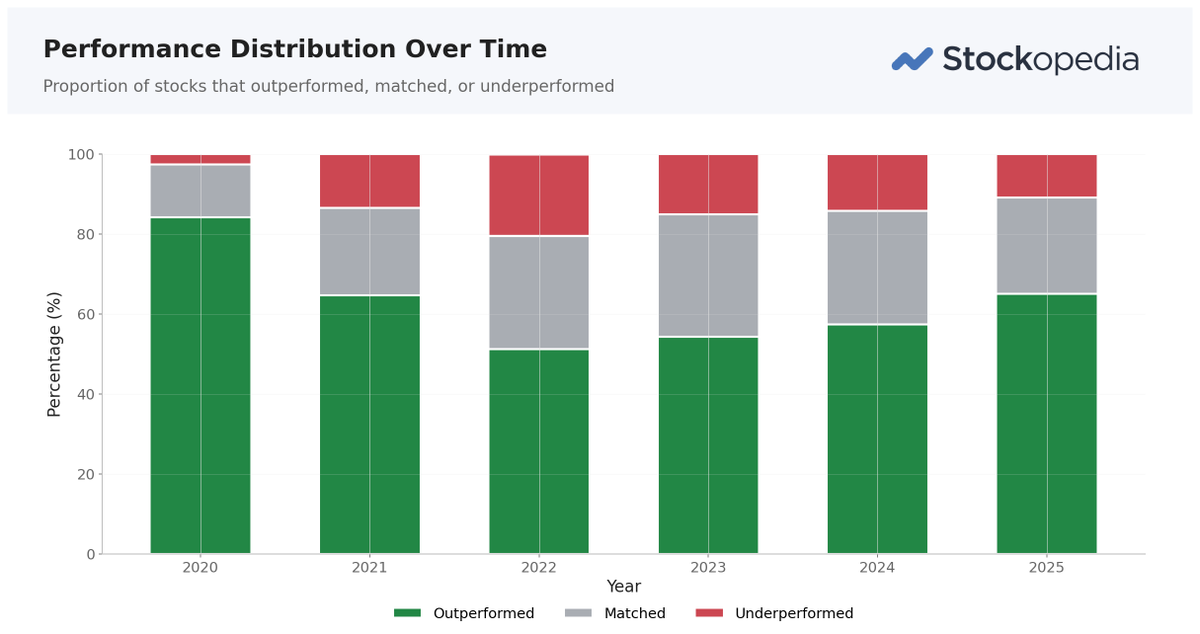
86% of our subscribers beat or matched a strong UK market in 2025.
But it wasn't the returns that impressed us most in our latest Subscriber Performance Survey.
It was something much more valuable than pure profit... 🤔 🧵
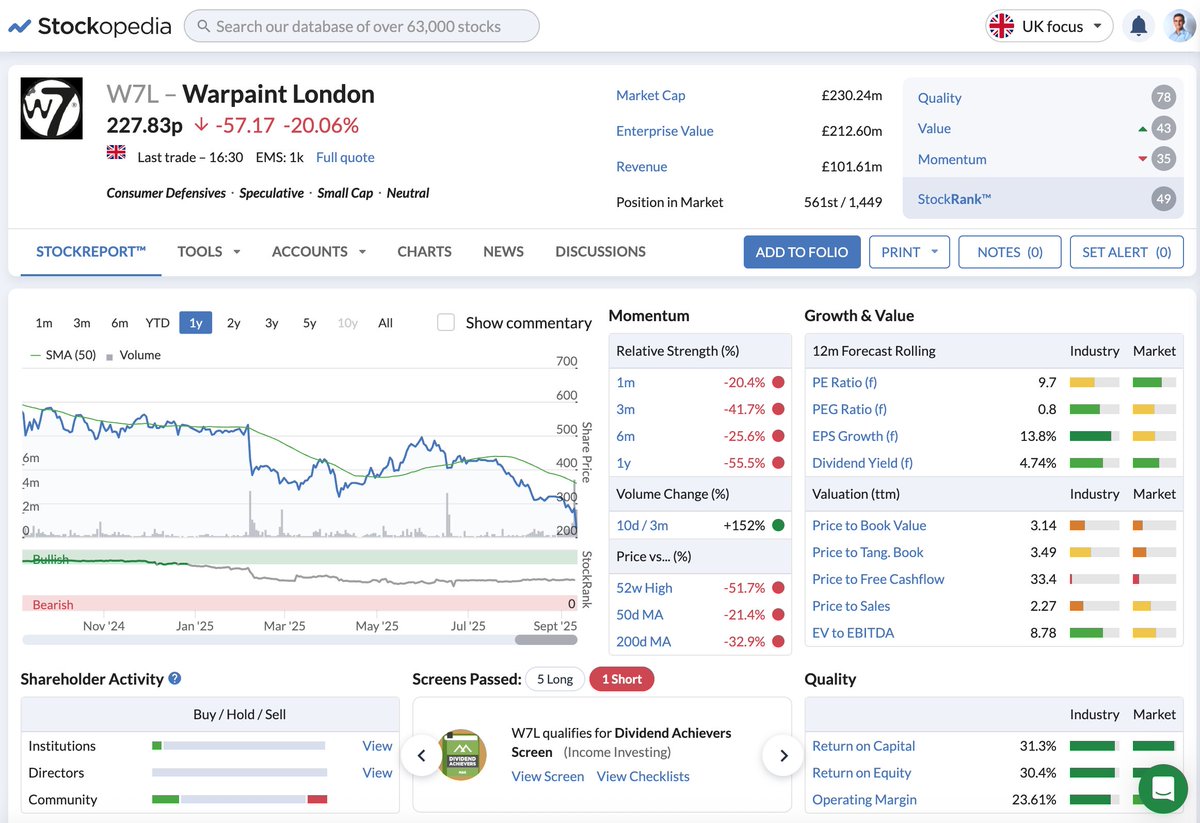
📉 How a simple rule could have saved you from Warpaint’s 54% collapse…
Today, Warpaint London (#W7L), issued its second profit warning of 2025:
• Profit before tax: £6.4m (-41%)
• EPS: 8.5p (-13%)
• Guidance cut for FY25
• Share price down ~20% today
But investors who followed the 90/70 StockRank rule could have avoided the pain. 🧵
I'll be writing up some new insights next week on this topic on @Stockopedia which explains why this happens. So stay tuned.
In the meantime, if you missed my thread from yesterday - here's more on this topic.
https://t.co/LRICPrRJ1Q
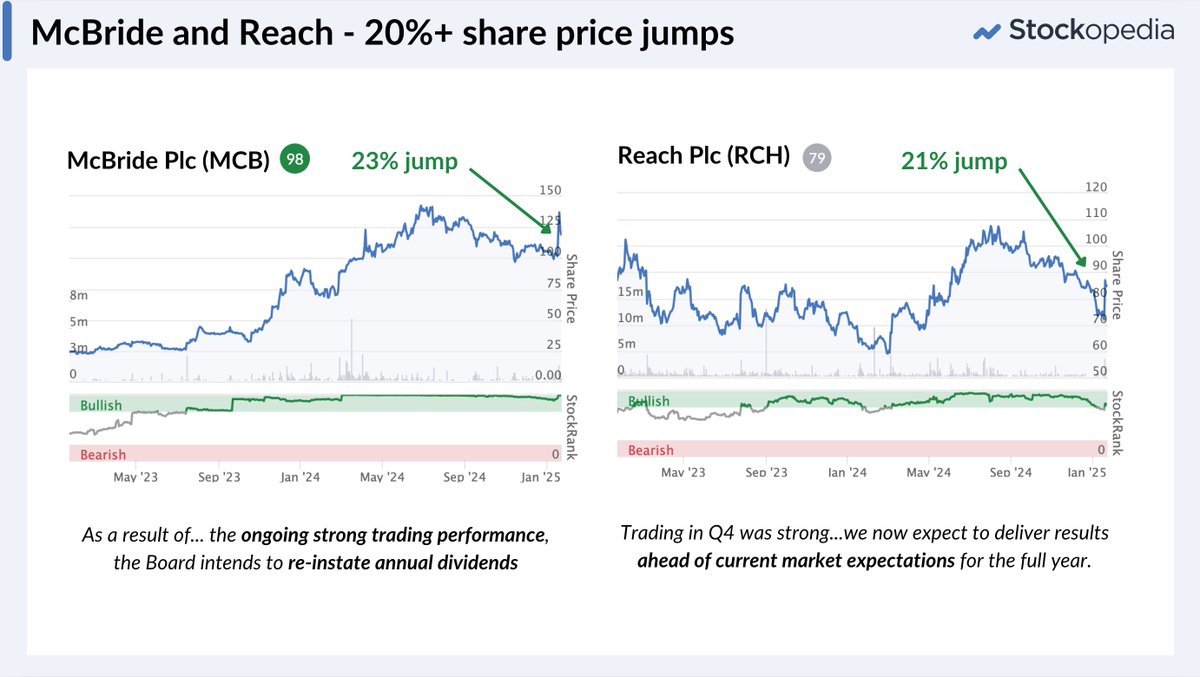
It's Trading Statement season.
What should you do if a company announces ahead or below expectations?
I've rummaged through 2,699 trading statements in the last 2 years to find out...
Here are some key insights: 📈👇
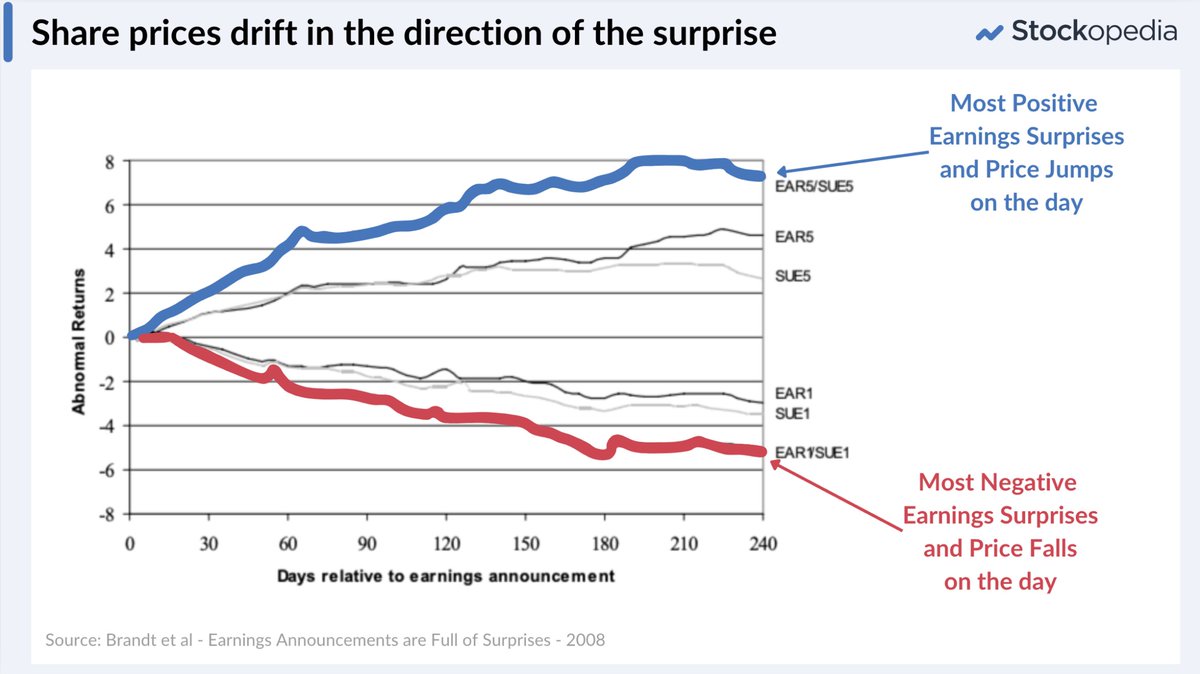
As trading statement season continues, it's important to understand the power of the "drift".
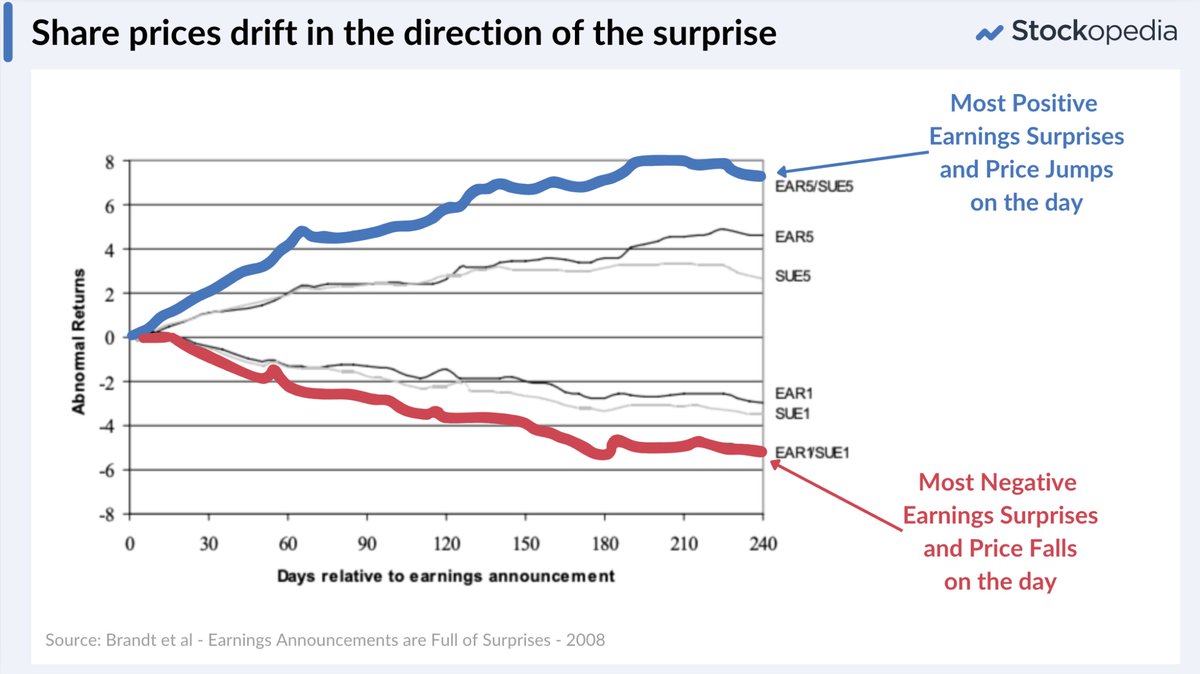
This is the tendency of share prices to continue in the direction of earnings surprises.
Resarch by Brandt et al "Earnings Announcements are Full of Surprises" illustrates
Share prices tend to continue to drift in the direction of the surprise over 6 months or more.
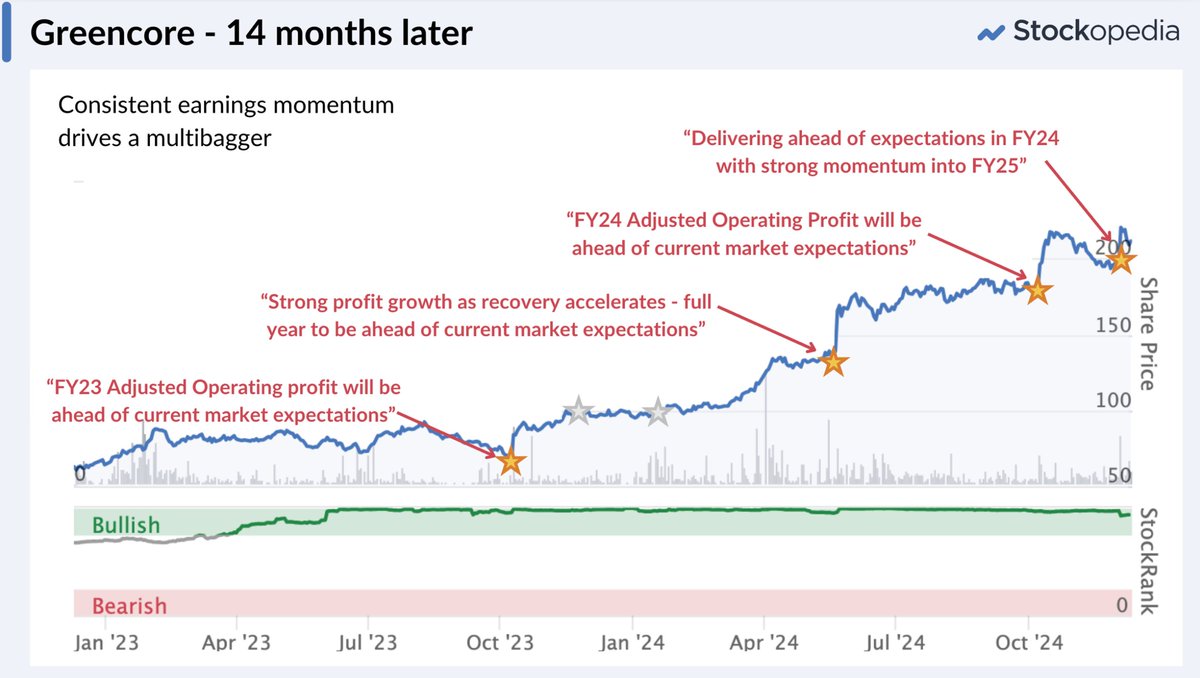
You also see a tendency for stocks to announce multiple "ahead of expectations" announcements after their first.
Here's an example from Greencore in 2024:
It's Trading Statement season.
What should you do if a company announces ahead or below expectations?
I've rummaged through 2,699 trading statements in the last 2 years to find out...
Here are some key insights: 📈👇
@damianbcannon @damianbcannon - yes the 6 month return excludes the first day. It's from that day's close onwards.
It backs up the findings from a paper I wrote up before Xmas - which says that the "earnings announcement return" (EAR) is a better predictor than earnings surprise (SUE).
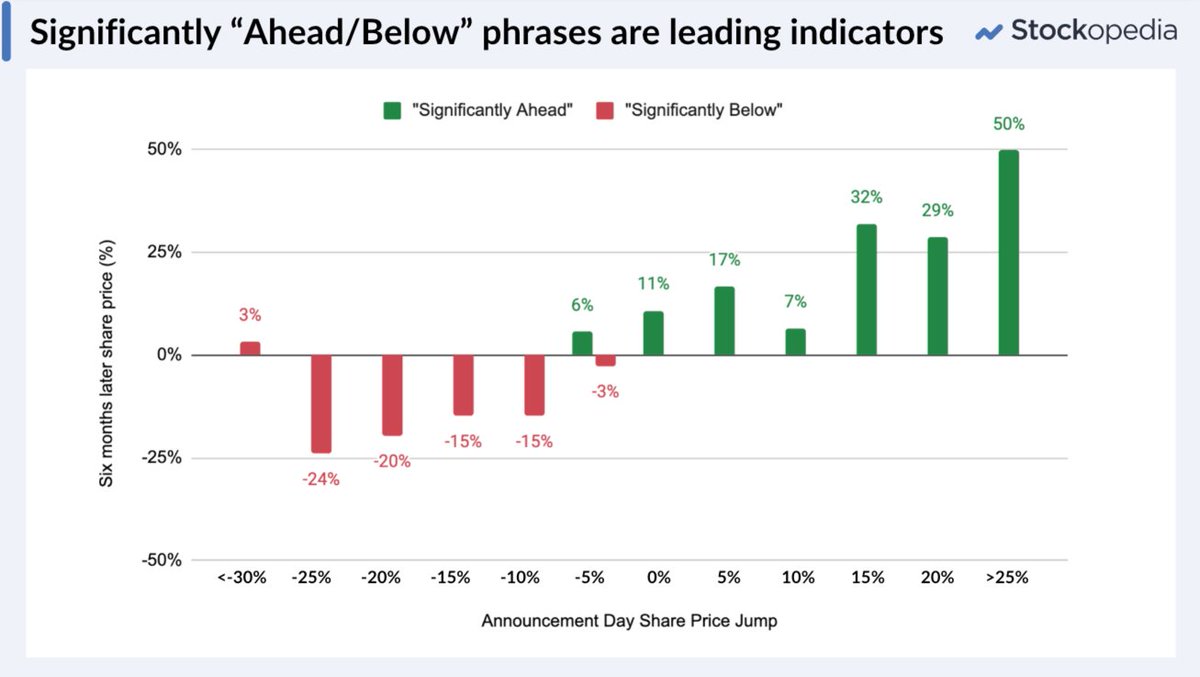
2. “Ahead/Below Expectations” Phrases Matter
Companies reporting “significantly ahead of expectations” on average jump the most on the day, and they experience the strongest continued share price drift in the same direction.
@lesguersten Yes - this is more the "compounding portfolio" approach, rather than "individual compounding stock" approach.
If you can pick stocks like Munger, then higher concentration works.
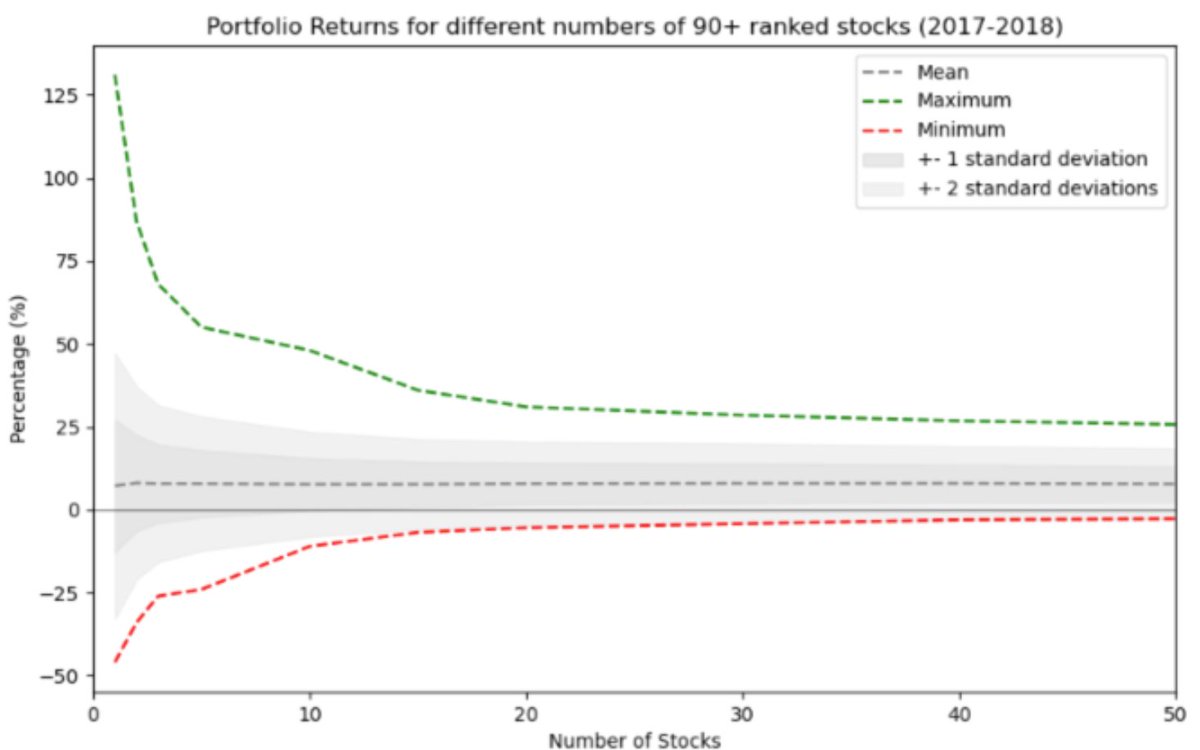
I'm always interested in the question "how many stocks should you own?"
This chart is from one time period (April 2017 to April 2018), but it's indicative.
< 5 stocks - massive variability
10 stocks - much diminished downside
20 stocks - tighter range of outcomes
This was a period in which the FTSE All Share fell by 2.5%. You could take any cohort (or all stocks in the market) and you'd see a similar kind of spread.
All would have an upside skew (you can only lose 100%, but can double/treble in an individual stock).
For low ranked shares you'd see much wider variability on upside and downside, but with the average returns lower.