🚨🇺🇸BREAKING: DOGECOIN TO QUALIFY FOR HOME MORTGAGES IN THE US!
FHFA Director Bill Pulte (@pulte) has ordered Fannie Mae and Freddie Mac to prepare to recognize cryptocurrency, including Dogecoin, as a legitimate asset for mortgage applications, marking a historic shift in U.S. housing finance.
This move will help unlock homeownership for the growing Dogecoin community as early as 2025, once rates drop.
Mortgage rates are expected to recede eventually as the Federal Reserve cuts interest rates, and that should result in downward pressure on mortgage rates. However, that is unlikely to occur until the spring home-buying season is well under way. Punxsutawney Phil predicted that spring would come early this year, but it’s looking more and more like a big spring home-buying boost to sales from lower mortgage rates may have to wait.
Read on from our new Existing-Home Sales Outlook Report!
https://t.co/FrA0MmT1cZ
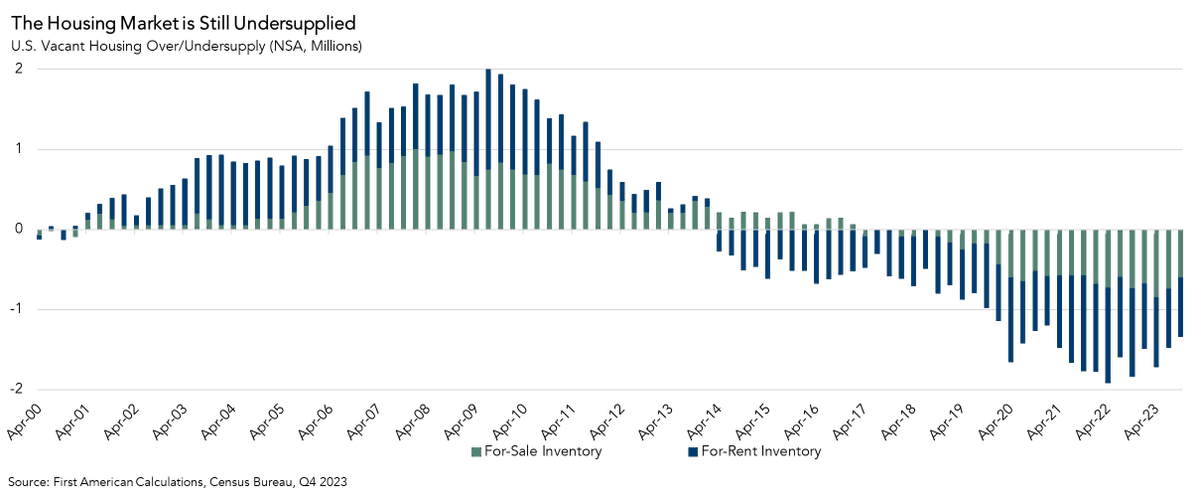
The rental vacancy rate is the proportion of the rental inventory which is vacant for rent. The homeowner vacancy rate is proportion of the homeowner inventory which is vacant for sale. The lower the vacancy rate the more limited the supply.
Using those vacancy rates, we can calculate a housing deficit. It requires choosing a time when we consider vacancy rates to be relatively “normal”, then we can compare the average vacancy rate during “normal” period to the current vacant housing stock.
The deficit as of Q4 2023 is ~1.34 million units, down from Q3 2023 (1.48 million). The housing market remains structurally undersupplied.
Goldman Sachs chief economist Jan Hatzius:
"We are cutting our probability that a US recession will start in the next 12 months" to 20% from 25%.
"The recent data have reinforced our confidence that bringing inflation down to an acceptable level will not require a recession."
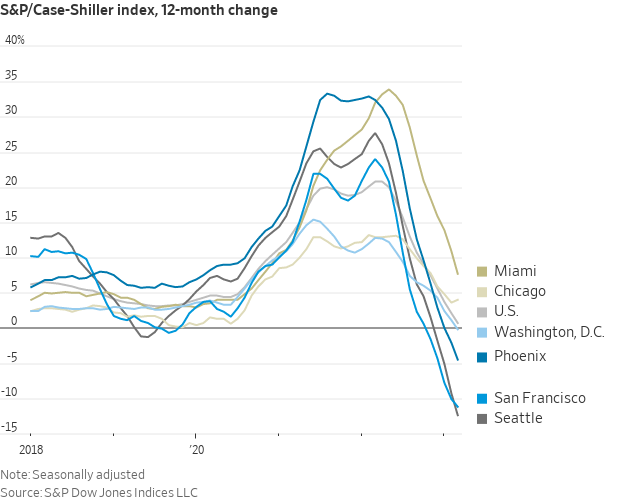
Pandemic home price bubble deflating
U.S. home prices rose 0.7% for the year ending March, the smallest 12-month increase since 2012 https://t.co/S7BhlqAC6R
YoY declines in:
Seattle (-12%)
San Francisco (-11%)
Las Vegas & Portland, Ore. (-5%)
Phoenix & Denver (-4%)
LA (-3%)
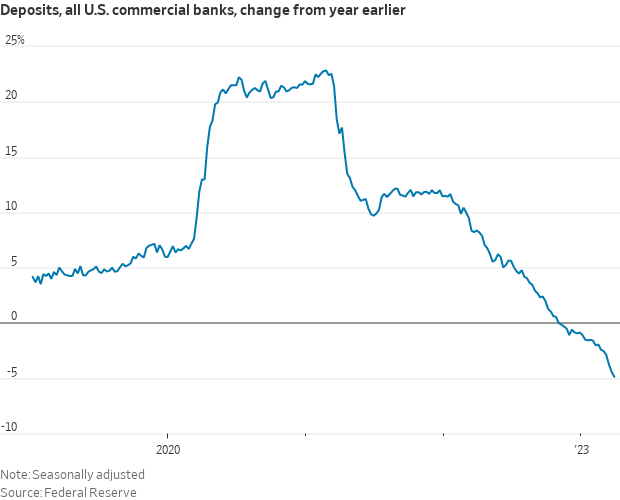
Year-over-year deposit growth was already negative before the runs on SVB and Signature one month ago, and erosion has continued since then.
Bank deposits, year-over-year change
2/15: -2.0%
2/22: -2.4%
3/01: -2.5%
3/08: -2.9%
3/15: -3.7%
3/22: -4.4%
3/29: -4.9%
I am baffled by the decline in labor force participation. Peaked at 62.4% in March & has fallen nearly continuously since--despite tons of job openings, lots of jobs added, dwindling cash balances, mostly improving COVID, recession talk scaring people into accepting jobs, etc.
'Big Short' investor Michael Burry warns inflation will soar even higher — and flags mounting pressure on the housing market https://t.co/Ta3knn9Fz1 via @mktsinsider
"The COVID-19 #foreclosure tsunami that some expected is clearly not happening," according to @RealtyTrac EVP @ricksharga. All the details on historically low levels of foreclosure activity in this report from @attomdata. https://t.co/56LXuwfbdy
"The @FHFA should take some of the money generated from these higher fees and use it to reduce loan level price adjustments on mortgages to first-time and low/mod borrowers,” — @MBAMortgage CEO Bob Broeksmit.
By @NMNBrad https://t.co/dOLCD9OiC3
Agree with @tim_rood_ while adding, we are operating in an altered "bizarro" marketplace where 90 day delinquencies exceed 30 day DQ. A dangerous condition to monitor in the year ahead ...
“My fear is that if we continue to extend these policies, they will eventually erode the confidence of investors and insurers, and imperil the integrity of the mortgage and real estate markets."