🌕 Real question… why doesn’t our Moon have a real name? 🤔 What name would you give it?
Every planet in our solar system has a name.
Even their moons have names — Titan, Europa, Ganymede, Io, Enceladus… the list goes on.
But ours? Just “The Moon.”
Why didn’t we name it something epic like the others?
Was it the first? Did we just stop trying? Or is there more to the story?
👇 Drop your thoughts — or name suggestions — in the comments.
I wanna hear the best Moon names you can come up with. 🌌
#SpaceTalk #WhyNoName #LunarMystery #OurMoon #ScienceCuriosity #galaxy #universe
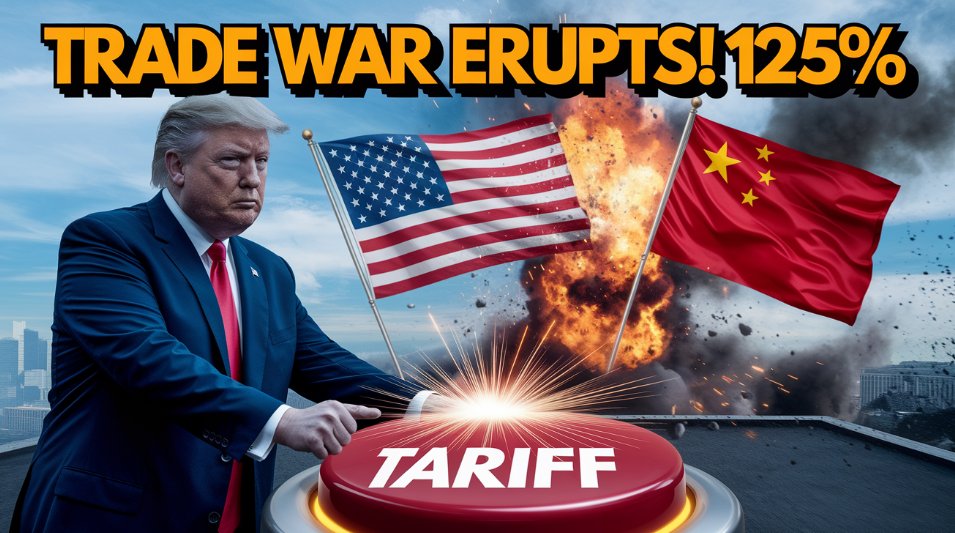
Trump Imposes 125 Percent Tariff on Chinese Imports, Escalating Trade War
April 9, 2025 – Washington, D.C.
President Donald Trump today enacted a dramatic escalation in the U.S.-China trade war, raising tariffs on all Chinese imports to 125 percent effective immediately. The move, announced via Truth Social and confirmed by White House officials, builds on an already steep 104 percent tariff that took effect at midnight and marks the highest levy imposed on a single trading partner in modern U.S. history. Alongside this, Trump declared a 90-day pause on tariff increases for 75 other countries, signaling a dual-track strategy of punishing China while offering breathing room to nations willing to negotiate.
A Sharp Response to Beijing
The tariff hike follows a rapid tit-for-tat exchange with China. On April 2, Trump signed an executive order imposing a 10 percent baseline tariff on all imports, with “reciprocal” rates ranging from 11 to 50 percent for 57 countries, including a 34 percent levy on China atop existing duties. Beijing retaliated on April 8 with a matching 34 percent tariff on U.S. goods, prompting Trump to threaten an additional 50 percent hike unless China backed down by midnight. When China’s Commerce Ministry refused, calling the U.S. actions “economic coercion,” Trump followed through, pushing the total rate to 125 percent—combining the 20.8 percent average from prior administrations, the 34 percent reciprocal tariff, and a new 70 percent punitive layer.
“China has shown zero respect for world markets and our workers,” Trump posted on Truth Social at 10:15 a.m. EDT. “They didn’t blink, so we’re hitting them with 125%—effective NOW. Time to bring jobs back home!” White House Press Secretary Karoline Leavitt later clarified that the increase aims to counter China’s trade surpluses, alleged currency manipulation, and refusal to curb fentanyl precursor exports.
Economic Ripples and Market Turmoil
The announcement triggered immediate market reactions. The Dow Jones Industrial Average fell 800 points by noon, extending a week-long slide that has erased nearly $6 trillion in U.S. stock value since the tariff rollout began. Oil prices dipped below $60 per barrel—a three-year low—reflecting fears of a global slowdown, while the U.S. dollar strengthened against the yuan. Retailers like Walmart and Amazon, heavily reliant on Chinese goods, saw shares drop 5 percent as analysts predicted price hikes on electronics, clothing, and toys by summer.
Economists warn of broader fallout. The Tax Foundation estimates that the tariffs, if permanent, could shrink U.S. GDP by 0.9 percent long-term, with American households facing an average cost increase of $3,800 annually—before accounting for the latest 125 percent rate. “This is a sledgehammer approach,” said Michael Strain of the American Enterprise Institute. “It’ll hurt China, but U.S. consumers and exporters will feel the pain too.”
China, the U.S.’s second-largest trading partner, exported $439 billion in goods to the U.S. in 2024. The new tariffs threaten to disrupt this flow, with Beijing vowing “resolute countermeasures” such as higher duties on U.S. soybeans, poultry, and tech exports. Some Chinese firms are already shifting production to Vietnam and Mexico, a trend Trump claims as a victory for his “reshoring” agenda.
A Pause for Negotiators
In a surprising twist, Trump paired the China escalation with a 90-day tariff pause for 75 countries previously facing reciprocal rates between 11 and 50 percent. Announced concurrently on Truth Social, the pause lowers their tariffs to the 10 percent baseline, effective immediately, for nations that “come to the table.” Japan, facing a 24 percent rate, and Vietnam, at 46 percent, have already signaled interest in talks. “Smart countries get a deal,” Trump said in a brief Rose Garden address. “China didn’t, so they pay.”
The pause spares allies from immediate escalation, a move analysts see as both carrot and stick. Canada and Mexico, exempt from reciprocal tariffs for USMCA-compliant goods, remain under separate 25 percent duties tied to immigration and fentanyl concerns, though negotiations with Mexico’s President Claudia Sheinbaum have softened some tensions.
Political and Global Reactions
Domestically, Trump’s base lauded the move as a fulfillment of his “America First” pledge, with supporters like Senator Rick Scott (R-FL) tweeting, “China’s had it coming—Trump’s delivering.” Critics, including Senate Minority Leader Chuck Schumer (D-NY), decried the tariffs as “reckless,” pointing to potential job losses in export-heavy states like Iowa and Texas. On Capitol Hill, a bipartisan push to curb Trump’s tariff authority under the International Emergency Economic Powers Act (IEEPA) gained traction but faces long odds.
Globally, the European Union, facing a 20 percent tariff, finalized retaliatory duties on $21 billion in U.S. goods—targeting almonds, yachts, and Republican-state products—set to begin April 15 unless talks succeed. German Economy Minister Robert Habeck called for a united front, predicting Trump “will buckle” under pressure. China, meanwhile, hinted at restricting rare earth exports, a move that could jolt U.S. tech and defense sectors.
What’s Next?
With the 125 percent tariff now in force, attention turns to enforcement and fallout. U.S. Customs and Border Protection, already collecting billions from earlier levies, faces a logistical challenge as importers scramble to reroute supply chains. Trump hinted at further action, telling reporters, “This is just the start—wait till you see what’s coming.”
As the 90-day clock ticks for other nations, and China digs in, the global economy braces for a turbulent spring. Whether Trump’s gambit forces concessions or sparks a deeper trade war remains an open question—one that could define his second term.
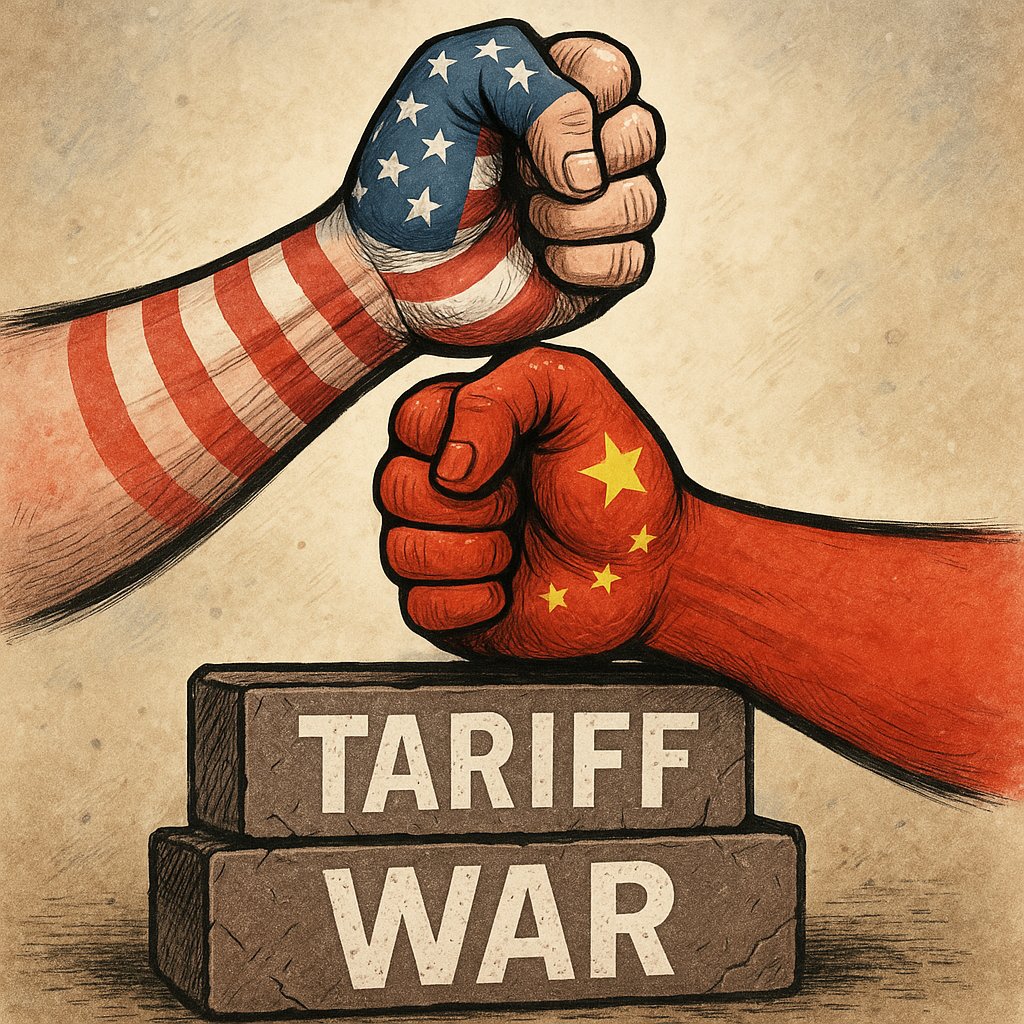
#tariffs #TariffWar #TradeWar #trump #TradeWars
As of April 9, 2025, between China and the United States, China would likely suffer more from tariffs in a direct economic sense. Here’s why:
The U.S. has imposed steep tariffs on Chinese goods, with rates reaching up to 104% according to recent reports. This includes a baseline 10% tariff on all imports, plus an additional 34% "reciprocal" tariff on China, layered on top of a pre-existing 20% tariff from earlier in 2025. China exports over $400 billion worth of goods annually to the U.S., its largest single export market, even though that share has dropped from 19.2% in 2017 to 14.7% recently. These tariffs hit Chinese exporters hard, raising costs and potentially shrinking their U.S. market share. Estimates suggest China’s GDP could take a hit of 0.6 to 2.5 percentage points over 2025–2027, depending on how high tariffs climb and how China responds. Smaller economies like Vietnam (46% tariff) or Cambodia (49%) face higher relative rates, but China’s sheer trade volume with the U.S.—$295 billion trade deficit in 2024—means the absolute impact is massive.
The U.S., on the other hand, isn’t unscathed. American importers pay these tariffs, not China directly, and often pass costs to consumers, potentially hiking prices for everything from electronics to clothing. Economists predict U.S. inflation could rise to 5% and GDP might drop by 1.5–2% if tariffs stick. Retaliation from China, like its 34% tariff on U.S. goods or rare earth export curbs, could squeeze American farmers, energy sectors, and tech firms. But the U.S. economy is less export-reliant—exports to China are only 6.9% of total U.S. exports—and its domestic market can absorb more shock. Plus, the U.S. runs a $918 billion global trade deficit, giving it leverage to weather a trade war better than China, whose growth hinges more on exports.
China’s options are limited. It can’t match tariffs dollar-for-dollar due to its trade surplus, so it leans on non-tariff measures like currency devaluation or export restrictions. Redirecting trade to Europe or Southeast Asia is possible, but no market rivals U.S. demand. The U.S., while hit, has more room to maneuver. Between the two, China feels the deeper burn right now.
@FanJDVance Arizona Governor Katie Hobbs says she will NOT allow Tom Homan to conduct mass deportations in Arizona. “That's not going to happen on my watch!”
Ok, so she is going to break the law. Let's see who wins...
@DJR4565@ELonMuskNewssX And yet... you're still your using X which he owns and every other democrat who hates him, imagine that. Oh, he's not just a car salesman, we owns rockets too...