New Cambridge Element with Kai Quek: "Deescalating a Trade War" (https://t.co/9tUwlRmLb6).
We ask: when a rival state extends an olive branch, how should you reciprocate, and does the public even want you to? Especially relevant as the US-China trade war continues today. 🧵
I'm presenting at PIPCOSS on 11/12 - please join if interested!
More Equal than Others: Race and Religion Alter Support to Countries in Conflict
Lucky to have @EddySFYeung and @jrenshon discussing! Registration link ⬇️
https://t.co/4gkina5Ccu
Delighted to have our chapter on #propaganda out in the Oxford Handbook of Authoritarian Politics (w/@xiyingxingchen). We highlight roles beyond persuasion—signaling regime power, shaping collective beliefs, upward messaging—and offer a broader definition. https://t.co/5hHSIykWrk
🗓️ 𝐃𝐨 𝐲𝐨𝐮 𝐨𝐫 𝐲𝐨𝐮𝐫 𝐬𝐭𝐮𝐝𝐞𝐧𝐭𝐬 𝐝𝐨 𝐬𝐮𝐫𝐯𝐞𝐲 𝐞𝐱𝐩𝐞𝐫𝐢𝐦𝐞𝐧𝐭𝐬?
On 12/3, I'm hosting a free, 1 hr. online seminar called, "Doing Better Survey Experiments" from 1pm - 2pm (ET). Please help spread the word if you can! 🙏
https://t.co/oN5qMQHwTU
1/ Very excited to share my latest publication, co-authored with Joey Glasgow (@j_glasgow_ ), at The Journal of Politics (@The_JOP)! 🧵
Paper: https://t.co/Gevocq7R84
7/ I hope these insights help policymakers and scholars understand when political communication can improve intergroup relations!
DOI: https://t.co/Gevocq7R84
6/ This project is personal to me as a long-term beneficiary of public housing in Hong Kong, and as an international scholar constantly navigating the immigration process in the UK/US.
🚨 New article alert! 📈
"Partisan Wishful Thinking in Polarized Times" is now out at @PolBehavior. Nearly 90% of today's voters expect their party to win, a sharp increase from two decades ago. Rising partisan animosity can explain much of the increase!
https://t.co/aAsj4ruqab
Our article with @efetokdemir is now out at Journal of Conflict Resolution! Using an LLM to classify presidential speeches, we examine how leaders’ rhetorical emphasis on foreign policy helps explain the relationship between economic hardship and the diversionary use of force.
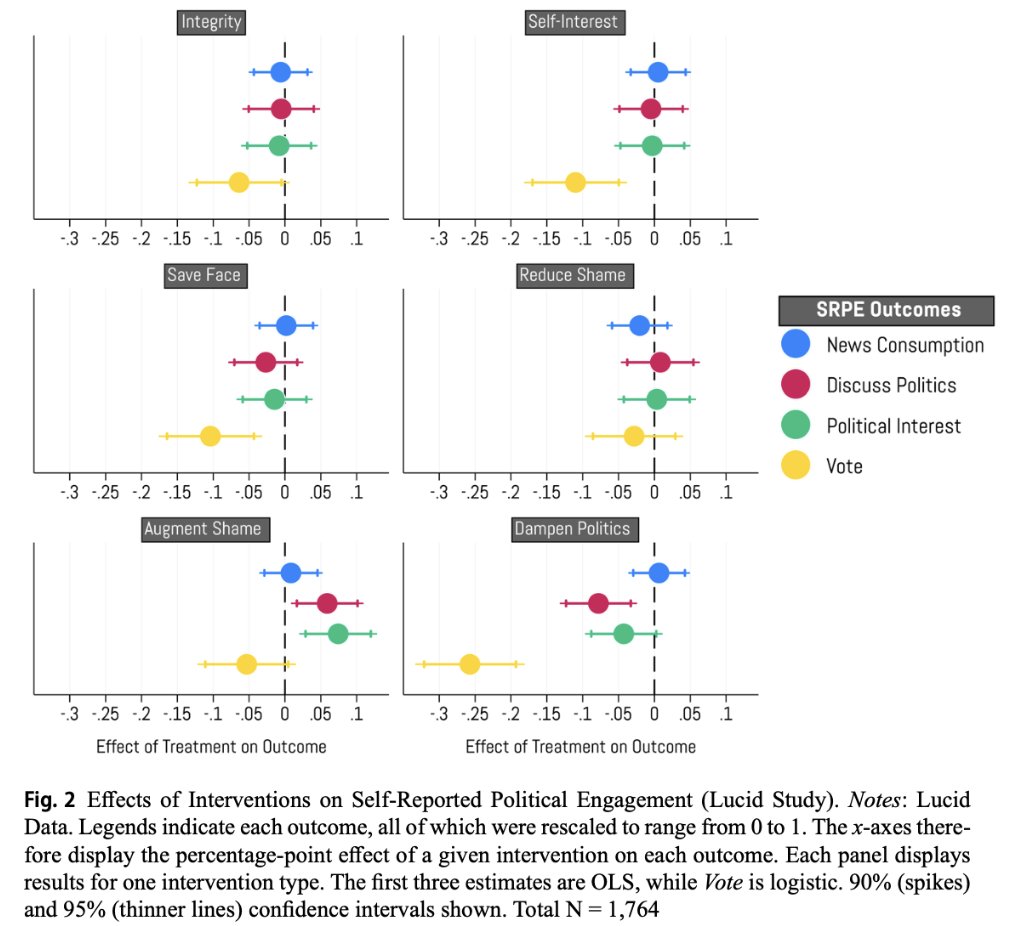
🥳 Wow am I excited to FINALLY be sharing this co-authored article with @littleconnors out today in @PolBehavior!
We show that people feel social pressure to overreport political engagement, but that this pressure can be reduced in surveys by "un-priming politics" 👍
Given where things currently stand between Washington and Beijing, we think this has direct implications for what deescalation could look like in practice. For more discussion, please read our Element!
New Cambridge Element with Kai Quek: "Deescalating a Trade War" (https://t.co/9tUwlRmLb6).
We ask: when a rival state extends an olive branch, how should you reciprocate, and does the public even want you to? Especially relevant as the US-China trade war continues today. 🧵
The findings push back on the pessimistic assumption that US-China cooperation is domestically infeasible, while showing that how a country reciprocates matters as much as whether it does.