🤘 Retweet, Create Content & Refer to win 1000 SOL Prizes!
- Create content, memes or stream to win SOL
- Don't forget to get your ref link at BullX
👇 Tips & Tricks on how to win below
Buffalonians —
I must pen this missive. Pay no heed to the chatter regarding the worth I contribute to the platoon. Serves no matter. As ever, it is the winter months that shall dictate our true destiny.
- 𝙻𝚝. 𝙶𝚎𝚗. 𝙹𝚘𝚜𝚑𝚞𝚊 𝙿. 𝙰𝚕𝚕𝚎𝚗
Hockey Parents:
I had a call last week with a youth hockey player who is still…in the spring…practicing twice a day.
This is not the time to have the foot on the gas pedal. This is a time for rest and recuperation.
Burnout is a very real thing in youth sports and particularly youth hockey, which is becoming a twelve month a year sport.
Overuse injuries have become a very real problem in youth sports and particularly youth hockey with kids having hip and groin issues due to skating too much.
Now is the time to recharge the battery, play other sports, hell go on vacation. It's not the time to continue to pound it and work work work.
In a typical game of hockey, about 25% of the game your team has the puck on their stick. Another 25% of the game, your opponent's going to have a puck on their stick.
And the other 50% of the game neither team will have possession.
Which means so much of the game is about races and battles to get possession.
So coaches, when you are putting your practice plans together, please make sure there are a ton of races and battles in your drills.
If we’re looking at practice to game transfer from a team standpoint - how often do we start a play with a puck on our stick? Very rarely. But we start a lot of plays by winning a race to the puck or winning a battle for possession.
And that’s not all.
The best teams…they are quickest to support the players who are in the 1on1 battle for the puck.
How fast can your players get to spots of support to help their teammate win possession? And how quickly can they make the next play with the puck?
That is what today's game is all about.
HOCKEY PARENTS: Something really interesting we noticed when I was coaching at the college level was a huge correlation between the confidence of a player to walk into our office and initiate a hard conversation…and their overall confidence as a player AND a person.
The kids that had an issue and knocked on our door to speak their mind…they were the ones most confident in themselves. It was really amazing to see.
Please stop fighting battles for your kids.
If they have an issue with their coach, they need to be the one that's going in and having the conversation.
Hard conversations are going to happen more and more each level that they go up. And if they have the confidence to go in and advocate for themselves, it's going to prepare them for the higher levels of hockey more than potentially anything else they'll do off the ice.
And not only does that lead to more confidence…
But if we as recruiters hear from a coach that mom or dad are an issue and helicopter parenting their kid…RED FLAG.
So please, let your kids go in and talk to the coach when they have a problem. Stop fighting their battles for them. It’s going to help them in so many ways in the long run.
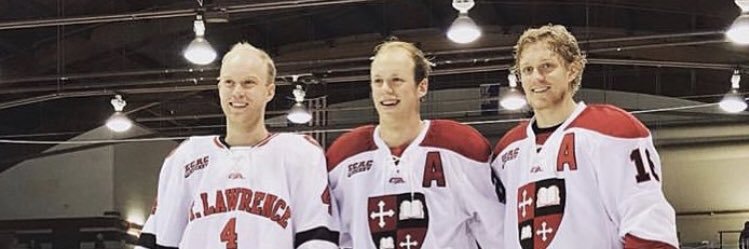
In Defeat, St. Lawrence Showing What's Been Built ... Brekke May Have Lost a Title to Long-Time Mentor and Friend, But Saints' Day is Coming - https://t.co/pl7DS6rgDx @SkatingSaints
I just got off the phone with one of the best hockey directors in the North America. Just does things the right way and really cares about the kids and families in his and other organizations.
Their teams are always ranked at the top of the country on @MYHockeyRanking at the Tier 1 level too so hopefully that keeps the crazies reading.
And if you are one of those crazies who got more excited about that statement than the one about him doing things the right way, I hope what I’m about to say will resonate.
I asked him about the different successes at different birth years he’s seen in his area. What was it about certain birth years that lead to more successful years and more players moving on as they got older?
Were there any striking differences between the coaches, philosophies, standards between the ones that did well and the ones that didn’t?
His answer was awesome. And it goes against what so many believe about youth hockey development.
His answer?
The years that had more success and moved more kids on were the ones that didn’t create the super teams early. The talent was spread out amongst more teams in the area longer. There was a resistance to the urge of shortening the talent pyramid too early.
Amen.
For everyone out there that thinks Mite AAA is a good idea (I’d even say Squirt AAA), or who think that if a kid doesn’t make the Brick their career is over, or who pray on parents selling them on the premise they need to play on a super team before puberty or their development is gonna be left behind…
Retire from the game. You have no clue what you are talking about.
“As many as possible, for as long as possible.”
It’s a standard that I’ve researched from other countries that are top in the world in youth development. It’s an amazing motto they’ve lived by and promoted with their development models.
We do the opposite.
We structure things that drive people out of the game, with super elite AAA stupid crap at the youngest ages being Exhibit A.
Why does Minnesota always send out the most elite players?
“As many as possible for as long as possible.”
Rant done.
For all the hockey players out there, communication is one of the most important habits that you can develop if you want to play hockey at the highest levels.
If you go and watch an NHL game and you sit in the lower bowl, you'll hear talk the entire game. Not just on the ice…but watch the bench too. Pros are always communicating with each other in between shifts.
So next time you go to practice, make sure you're calling for every puck. Make sure you're talking with your linemates between reps. Make sure you're really developing that habit of talking all the time on the ice.
It makes the game so much easier for yourself, it makes the game so much easier for your teammates, and it's a necessary skill if you want to play hockey at the highest levels.
KIDS: Sidney Crosby will go down as the best player of my generation. I've gotten to see him a few times in person and he is hands down the best player in person I've ever seen.
His gift?
I think he does the little things better than anybody else. Puck battles, being in the right place for support, puck protection...the little things that may go unnoticed to the casual fan he is consistently great at.
One of those habits is being around the net with his stick on the ice. He is always getting to the dirty areas of the ice ready to score. In his career he's scored close to 600 goals...most of the time by getting to the net, winning battle for position, and having incredible in tight skill.
So if you want to score goals - get to the net. It's not easy, it takes pride, but it's where the goals are scored.
Check out Crosby on this one. It won't go down in the highlight column but it's amazing in it's simplicity. Go to the net with your stick on the ice. It's a staple for Crosby, who will go down as one of the best players of all time.
Don't confuse being confident and loud with being correct and proficient, and don't confuse being quiet with not having the answers. Many emboldened coaches are idiots, and many bright ones are very reserved. Just because someone has a megaphone doesn't mean you have to listen.
A elite strength coach is VITAL to a hockey program's success. Brijesh Patel is a big reason for Quinnipiac's success and being alert, ready and on their toes to win a National Championship in OT last April #CawlidgeHawkey