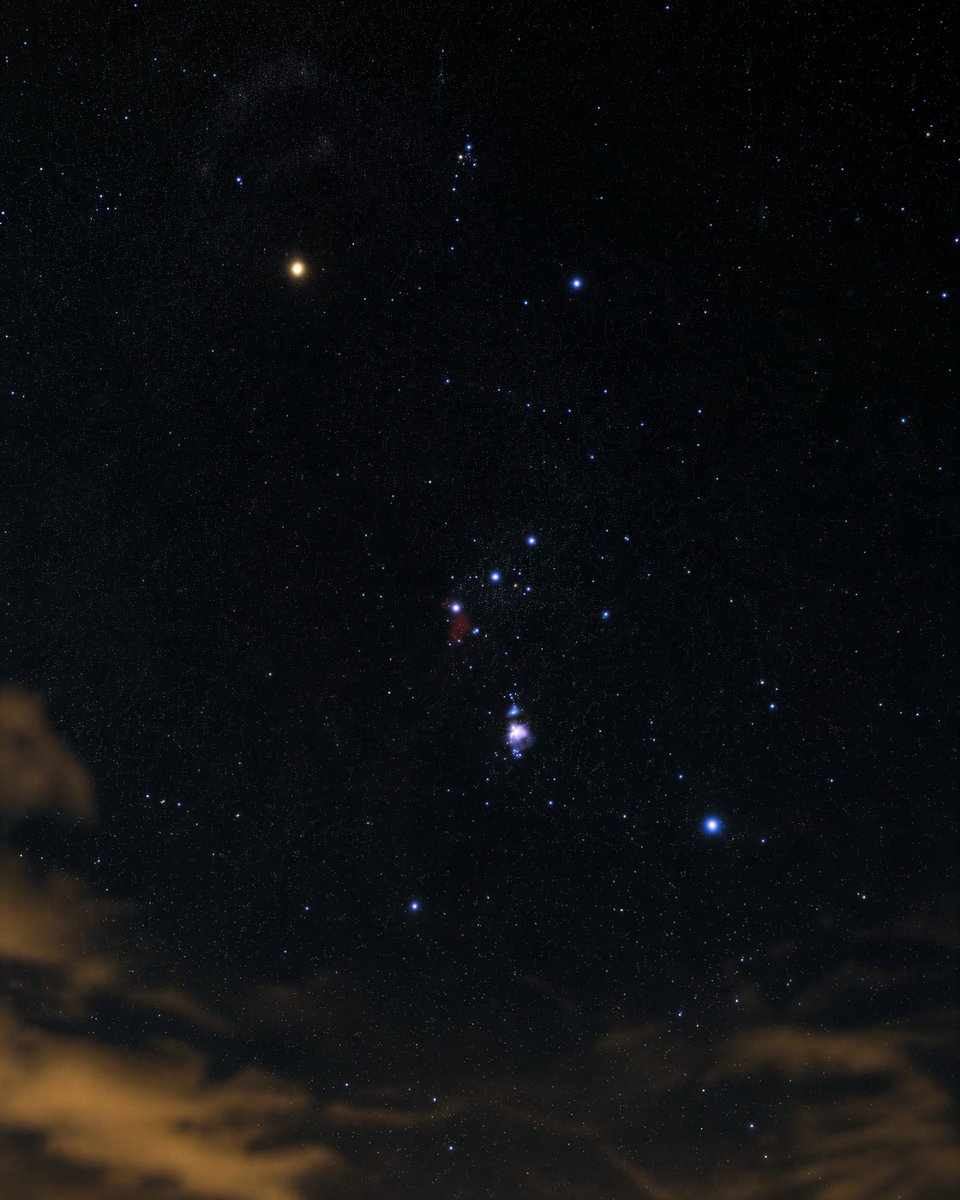
Happy Birthday, Carl.
You taught millions of us that being small is not the same as being unimportant. You taught us to be citizens of the cosmos, to be curious, to doubt loudly, and to be gentle with each other on this pale blue dot we call home.
We are still looking up. We are still asking. And in this cold, indifferent universe, your voice is one of the warmest things we return to, again and again. It reminds us to be kind, to hold on to our humanity, to keep the candle from guttering out in the dark, and to keep reaching until one day we stand among the stars.
Happy Birthday, and thank you for everything. 💙
Aquí estoy, en la Cámara de Diputados, presentando a título personal la denuncia de juicio político contra Guadalupe Taddei, acompañada de más de 13 mil firmas ciudadanas. Y el número sigue creciendo.
Lo hago porque la corrupción, los conflictos de interés, el tráfico de influencias y el uso patrimonialista del INE no pueden quedar impunes. Porque hay que defender la autonomía de una institución que Morena ha buscado colonizar. Porque la democracia no se defiende sola.
Y aquí va un reto para Morena: si Guadalupe Taddei realmente no es suya, como ahora pretenden deslindarse, tienen los votos suficientes para impulsar el juicio político en la Cámara de Diputados. Que lo demuestren con hechos, no con discursos.
No a la impunidad. No a la captura del INE.
Durante el fin de semana, la autarquía de la 4T autorizó a través del congreso, una deuda adicional de 2 billones de pesos, en la inteligencia que el 70% se destinará al pago de intereses derivados de la deuda ya contratada.
Es claro, que cuando una empresa o un gobierno pide prestado para pagar intereses, la quiebra es inminente, porque no se pueden pagar los intereses con el sistema productivo o con recaudatorio.
En otro orden de ideas, la propia 4T autorizó un gigantesco disparo del impuesto predial, algo parecido al 142%, sin explicar el destino de esos recursos, que claramente se destinarán, en su mayoría, a comprar la voluntad electoral de la nación.
Finalmente, no es difícil suponer que van a echar mano de las Afores, del ahorro de los mexicanos, para evitar una ruina inminente antes de las elecciones intermedias de junio del año próximo.
Sin embargo, nadie protesta mientras desfalcan el tesoro público.
¿Dónde termina la culpa del gobierno y comienza la culpa de la sociedad pasiva, anestesiada y adormecida? ¿Y el México bronco que nadie quisiera volver a ver?
"Once we overcome our fear of being tiny, we find ourselves on the threshold of a vast and awesome Universe that utterly dwarfs — in time, in space, and in potential — the tidy anthropocentric proscenium of our ancestors. We gaze across billions of light-years of space to view the Universe shortly after the Big Bang, and plumb the fine structure of matter. We peer down into the core of our planet, and the blazing interior of our star. We read the genetic language in which is written the diverse skills and propensities of every being on Earth. We uncover hidden chapters in the record of our origins, and with some anguish better understand our nature and prospects. We invent and refine agriculture, without which almost all of us would starve to death. We create medicines and vaccines that save the lives of billions. We communicate at the speed of light, and whip around the Earth in an hour and a half. We have sent dozens of ships to more than seventy worlds, and four spacecraft to the stars. We are right to rejoice in our accomplishments, to be proud that our species has been able to see so far, and to judge our merit in part by the very science that has so deflated our pretensions."
- Carl Sagan
Satellite images reveal the colossal scale of our water planet and its endless oceans.
All the oceans, lakes, rivers, and glacial ice combined occupy 75% of the Earth's surface. It is the brooding inertia of the oceans that forms the ancient engine room of global climate—a massive fluid flywheel that dwarfed human industrial activity long before our first chimneys began to smoke.
The oceans have an average depth of 2.3 miles and weigh 1,000 times more than the atmosphere. Deep ocean currents dictate levels of water vapor and cloud cover across 68% of the skies at any given moment, while the interplay of seas, landforms, and latitude drives the trade winds and storm tracks.
Crucially, the oceans hold 86% of the world's carbon reservoir and 91% of its mobile heat energy, which currents transport toward the frigid poles to temper the planet’s cold extremes. The thin envelope of atmosphere above holds only a fraction of a percent of each.
Because of this tremendous thermal capacity, the oceans don't react on political timelines; they absorb, smooth and delay thermal changes over centuries, acting as a planetary buffer against rapid atmospheric shocks.
We live in an ocean-dominated, ice-age world. Earth is still technically in the Late Cenozoic Ice Age, which began 34 million years ago with the glaciation of Antarctica. Roughly 10% of the world's total land area remains permanently capped by glacial ice—spanning 15 million square kilometres.
Antarctica alone holds roughly 90% of global ice volume and stands as the largest single source of freshwater on Earth. Spanning 14 million square kilometers—8.3% of the world's land surface—its ice sheet extends up to 4.8 kilometers (3 miles) deep.
All human civilisation, agriculture and technological progress—every written word, every skyscraper—unfolded within the past 11,700 years of the warm Holocene interglacial period. This brief warm period is merely one episode among more than 30 glacial and interglacial cycles over the broader Quaternary Glaciation of the last 2.58 million years.
Today's modest warming of 1.1°–1.4°C over 250 years is an incremental drift within a vast geological system. The world is not enduring stifling heat reminiscent of past hothouse peaks; instead, we inhabit a benign global average temperature of 15°C—well below the 18°C to 26°C baselines that characterised most of Earth’s biological history. Deep time puts modern atmospheric alarm out of sync with physical reality.
Yet, ignoring this vast planetary flywheel, global policy over the last four decades shifted from managing tangible conservation to attempting economic micro-management of the atmosphere itself. Led by an alignment of unelected powerbrokers, financial institutions, and corporate leaders, the narrative demanded an immediate, total restructuring of human infrastructure.
Nations were urged to replace energy-dense coal, oil, and gas with intermittent wind turbines and solar collectors. Yet after 40 years of heavy subsidies and mandates, hydrocarbon fuels still supply 81% of all global primary energy, while wind and solar account for just 6.5%.
Attempting to engineer a complete retreat from high-density fuels while ignoring the sheer physical scale of the earth system carries a staggering cost. The predicted price tag to transform the global grid and force this transition stands at $275 trillion (McKinsey, 2022)—roughly 2.5 times total global annual GDP.
It represents an unprecedented financial commitment to re-engineer civilisation, driven by an economic plan that continuously underestimates the vast physical realities of the planet it seeks to control.
"¡ME QUIEREN QUITAR DEL CAMINO!"
Como lo decía Carlos, para quienes decidimos mantenernos firmes, libres y transparentes en esta lucha, solo parecen quedar tres caminos:
1. La muerte.
2. La cárcel.
3. El éxito.
Y como hoy los números ya no les salen, como las encuestas empiezan a reflejar lo que muchos no quieren aceptar, han comenzado a utilizar todo lo que tienen a su alcance: auditorías, denuncias, recortes presupuestales, reformas de ley, campañas de desprestigio y ataques sistemáticos.
No les sorprenda que mañana intenten fabricar cualquier acusación para tratar de llevarme a la cárcel.
Y tampoco les sorprenda que quienes hoy señalan, atacan o denuncian, mañana aparezcan premiados con una candidatura, un cargo o algún favor político.
Solo observen. El tiempo pone a cada quien en su lugar.
Pensaron que asesinando a Carlos Manzo terminarían con su lucha.
Se equivocaron.
"Mientras yo tenga voz, fuerza y vida, jamás voy a permitir que su causa sea enterrada" GQ
Porque todavía no entienden algo: esta lucha nunca ha sido de una sola persona.
Carlos encendió una esperanza, pero esa esperanza ya vive en miles de ciudadanos.
Y si algún día me pasa algo, si pretenden silenciarme o quitarme del camino, esta bandera no se va a caer.
La va a levantar el pueblo.
Porque han lastimado demasiado a nuestra gente. Porque durante años quisieron acostumbrarnos al miedo, al silencio y a la injusticia.
Pero este pueblo ya despertó.
Y un pueblo que despierta, que pierde el miedo y que decide sanar sus heridas, ya no vuelve a agachar la cabeza.
A Carlos no pudieron callarlo.
A nosotros tampoco.
Podrán atacar personas.
Podrán perseguir nombres.
Podrán intentar cerrar caminos.
Pero no van a detener una causa que ya le pertenece al pueblo
Y si por alguna razón me llega a pasar algo, solo les pido una sola cosa: NO ABANDONEN ESTA LUCHA Y NO SE RAJEN
¡La lucha sigue!
¡Tope donde tope!
AYÚDENME A COMPARTIR PARA QUE ESTÁ INFORMACIÓN PUEDA LLEGAR A MÁS PERSONAS
Carl Sagan : ‘What happens if the doctrine of a religion—Buddhism let’s say—is contradicted by some finding, some discovery—in science, let’s say—what does a believer in Buddhism do in that case?’
Dalai Lama: ‘For Buddhists that is not a problem. The Buddha himself made clear that the important thing is your own investigation. You should know the reality, no matter what the scripture says. In case you find a contradiction—opposite of the scriptures’ explanation—you should rely on that finding, rather than scripture.’
Carl Sagan: ‘So, that is very much like science?’
Dalai Lama: ‘Yes, that’s right. So I think that the basic Buddhist concept is that at the beginning it is worthwhile or better to remain skeptical. Then carry out experiments through external means as well as internal means. If through investigation things become clear and convincing, then it is time to accept or believe. If, through science, there is proof that after death there is no continuity of human mind, of life, then—theoretically speaking—Buddhists will have to accept that.’
— Carl Sagan's Interview with The Dalai Lama, 1991
“There is no other species on Earth that does science. It is, so far, entirely a human invention, evolved by natural selection in the cerebral cortex for one simple reason: it works. It is not perfect. It can be misused. It is only a tool. But it is by far the best tool we have, self-correcting, ongoing, applicable to everything.
It has two rules. First: there are no sacred truths; all assumptions must be critically examined; arguments from authority are worthless. Second: whatever is inconsistent with the facts must be discarded or revised.
We must understand the Cosmos as it is and not confuse how it is with how we wish it to be. The obvious is sometimes false; the unexpected is sometimes true. Humans everywhere share the same goals when the context is large enough. And the study of the Cosmos provides the largest possible context.
Present global culture is a kind of arrogant newcomer. It arrives on the planetary stage following four and a half billion years of other acts, and after looking about for a few thousand years declares itself in possession of eternal truths.
But in a world that is changing as fast as ours, this is a prescription for disaster. No nation, no religion, no economic system, no body of knowledge, is likely to have all the answers for our survival. There must be many social systems that would work far better than any now in existence. In the scientific tradition, our task is to find them.”
— Carl Sagan
J. Robert Oppenheimer in personal letter to a friend (1950s).
"The public sees the medals, the banquets, and the applause. They think it is a grand parade. They do not see the thousands of hours spent staring at a blank wall, the suffocating silence of an office at three in the morning, or the terrible fear that you have wasted your entire life chasing a shadow that doesn't exist. The true life of a physicist is lived in absolute, terrifying solitude."
"The idea that our sense of self worth comes not from anything that we’ve done, not from anything worthy, but by an accident of birth, is where the crux of the humiliation is, in my opinion. I would say those of us worried about being demoted, those of us who wish for us to be important, should do something important. We should make an easily understandable, achievable, and inspiring goal for the human species, and then set out and do it. That would give us the confidence that we sorely lack by being dependent on our self esteem being based on nothing we do.
We want to have self esteem? Let’s make a planet in which nobody is starving. Let’s make a planet in which men and women have equal access to power. Let us make a planet in which no ethnic group has it over another ethnic group. Let’s have a planet in which science and engineering is used for the benefit of everybody on the planet. And my personal idiosyncrasy, let’s have a world in which we go to other worlds."
— Carl Sagan
The Largest Machine Ever Built: The Large Hadron Collider at CERNIt’s not just a machine. It’s a 27-kilometre ring of pure engineering ambition buried beneath the Swiss-French countryside — the biggest, most complex device humans have ever constructed.Weighing in at 10,000 tonnes of superconducting magnets, the LHC operates at an astonishing -271.3°C — colder than the vacuum of outer space itself. In fact, it is the coldest extended region anywhere in the known universe.This extreme chill is non-negotiable. The superconducting magnets must hover just a fraction of a degree above absolute zero to completely eliminate electrical resistance. Even the slightest warming, and the entire system fails in a spectacular “quench” — a runaway release of stored energy powerful enough to melt the magnets https://t.co/E7OPBINxTB 2008, one such quench caused $40 million in damage and kept the collider offline for 14 months. A brutal reminder of just how unforgiving this technology is.Yet when the LHC is firing on all cylinders, the numbers become almost unbelievable:Protons race around the ring at 99.9999991% the speed of light
They complete 11,245 laps every single second
Up to 600 million collisions occur each second inside the detectors
The experiments generate 15 petabytes of data every year
Keeping a 27-kilometre machine at near-absolute zero, year after year, while orchestrating hundreds of millions of particle collisions per second is an engineering triumph that borders on the miraculous.The physics discoveries are legendary.But the sheer audacity and precision required to make it all work might be the most impressive achievement of all.
The Universe Just Dropped Its Biggest Flex Yet
Astronomers have discovered the single largest structure ever found in the known universe — and its scale is so absurd it breaks the https://t.co/bpsmVLgYZI Quipu: a colossal cosmic web stretching 1.3 billion light-years across, with a total mass of nearly 200 quadrillion times that of our Sun.This isn’t just one galaxy. It’s not even a supercluster. It’s a superstructure — a mind-bending network of thousands of galaxy clusters, bound together by gravity and invisible dark matter, forming a giant filament in the cosmic https://t.co/ATGlLoOVhP put that into perspective:Our Milky Way is about 100,000 light-years wide.
Quipu is over 13,000 times longer than that.
Light itself would take 1.3 billion years to travel from one end to the other.
Inside this monster are countless galaxies, each potentially hosting hundreds of billions of stars, planets, and who knows what else — all woven into one unimaginable structure.This discovery doesn’t just rewrite the record books. It gives us a deeper look at how the universe is organized on the grandest scales, revealing the hidden scaffolding of galaxies, dark matter, and the mysterious forces shaping everything we see.We are tiny. Our planet is insignificant. Yet here we are, using our brief spark of consciousness to map structures so vast they challenge the limits of imagination.
Look at this number: 3,200,000,000,000.
That's how many planets exist in our galaxy alone.
If you tried to count them — one per second, every second, never stopping — it would take you over 100,000 years.
That's just in one galaxy.
There are 2 trillion more galaxies.
“I do agree with the premise that there is something wrong with us, something we must work to overcome. It’s our xenophobia, authoritarianism, and violence. When we lived in small bands of only a few dozen people there might have been some selective advantage to these terrible qualities. But now we live in a tribe of seven billion. We are, more than ever, all in it together. Science and technology have allowed us to see one another’s lives, to speak one another’s languages, to learn one another’s customs. They’ve also given us a view of our small world in the vastness. This should breed kindness. As my dad once said, “If a human disagrees with you, let him live. In a hundred billion galaxies, you will not find another.” I believe our cruelty toward one another, not sex or love of knowledge, is our original sin. It’s that for which we must really atone. In small instances as well as large ones.”
― Sasha Sagan, For Small Creatures Such As We
April 19, 2026 — Our Galaxy Just Unleashed Its Largest Energy Flash in a Generation![Cosmic Alert] A titanic explosion of raw power has ripped across the Milky Way!In a rare and spectacular event, a magnetar — one of the most extreme objects in the universe — suffered a violent "starquake." This ultra-dense neutron star, with a magnetic field trillions of times stronger than Earth's, suddenly cracked and released a colossal high-energy gamma-ray https://t.co/MynXiAcGJh a single millisecond, it unleashed more energy than our Sun produces in 100,000 years.The blast was so intense that it lit up detectors across the solar system almost instantly: NASA’s Fermi, Swift, and ESA’s INTEGRAL all captured the ferocious spike. The source lies deep within the Milky Way’s disk, turning our own galactic neighborhood into a natural laboratory for extreme physics.This burst didn’t just flash and fade — it slammed into the surrounding interstellar medium, creating a glowing shockwave that lets astronomers map invisible clouds of gas and dust with unprecedented clarity.What to watch next:An afterglow that could linger for days as the energy echoes through galactic dust — detectable by radio telescopes.
Real-time light curves on NASA’s Fermi Public Data Portal.
Use Stellarium to locate the exact coordinates in the sky.
Keep an ear on space weather radio frequencies for signs of increased atmospheric ionization.
These magnetar flares are the universe’s most violent heartbeats — reminders that even in our “quiet” galaxy, colossal forces are at work, pushing the laws of physics to the breaking point.We are all made of stardust… and today, a distant, hyper-magnetized star just reminded us how powerful that heritage truly is.The cosmos never sleeps.
“If the Universe really were made for us, if there really is a benevolent, omnipotent, and omniscient God, then science has done something cruel and heartless, whose chief virtue would perhaps be a testing of our ancient faiths.
But if the Universe is heedless of our aspirations and our destiny, science provides the greatest possible service by awakening us to our true circumstances. In accord with the unforgiving principle of natural selection, we are charged with our own preservation—under penalty of extinction.
And yet we go from massacre to massacre; and as our technology becomes more powerful, the magnitude of the potential tragedy grows.
The many sorrows of our recent history suggest that we humans have a learning disability. We might have thought that the horrors of World War II and the Holocaust were enough to inoculate us against the toxins there revealed and unleashed. But our resistance quickly fades.
A new generation gladly abandons its critical and skeptical faculties. Old slogans and hatreds are dusted off. What was only recently muttered guiltily is now offered as political axiom and agenda.
There are renewed appeals to ethnocentrism, xenophobia, homophobia, racism, sexism, and territoriality. And with a sigh of relief we are apt to surrender to the will of the alpha, or long for an alpha we can surrender to.”
— Carl Sagan
The Cosmic Road Trip:
Why Every Star Is a Glimpse into the Past Look up at the night sky tonight.That twinkling speck of light — whether it’s a planet, a distant star, or an entire galaxy — isn’t just incredibly far away in space.
It’s also far away in https://t.co/OTZWBhs5Cx travel is the ultimate long-haul journey.
A trip to the Moon? A quick three-day sprint .
Heading to Mars? You’re signing up for months of deep-space cruising.
And if you set your sights on Neptune, the icy blue giant at the edge of our solar system… buckle up. Even with today’s best technology and clever gravity assists, you’re looking at a voyage lasting over a decade.But here’s the truly mind-bending part:While our spacecraft crawl across the solar system, light itself races toward us at 300,000 km/s — yet it still takes time. When you peer through a telescope at Saturn’s majestic rings, you’re seeing them as they existed more than an hour ago.
Gaze at the closest star system to our own, Alpha Centauri, and the light hitting your eyes left those stars over four years earlier.Every single star you see is a time capsule.The farther away the object, the deeper into the past you’re looking. The Andromeda Galaxy? You’re witnessing it as it was 2.5 million years ago — long before modern humans even https://t.co/eWS3jTqWrn the next time you step outside on a clear night, shift your perspective.
You’re not just admiring distant lights across space.
You’re staring backward through cosmic history.Every flicker of starlight is a story from the past — a frozen moment in the universe’s grand, unfolding narrative.The vastness of space isn’t a barrier.
It’s the greatest history book ever written… and we’re only just learning how to read it.
¿El universo ha existido desde siempre o tuvo un inicio? ¿Tiene un tamaño determinado o es infinito? Estas preguntas existen desde épocas muy remotas, pero sólo durante el último siglo que la astronomía ha comenzado a proporcionar respuestas. Este será un ciclo para conocer algunas respuestas desde la ciencia.
🗓 Viernes 24 de abril · 18 h
🌐 ACTIVIDAD VIRTUAL
️🎙 Coordinan: Susana Lizano y Luis Felipe Rodríguez Jorge
👥 Imparte: Luis Felipe Rodríguez Jorge
👉 https://t.co/l6fLuJmalA
#LibertadPorElSaber @IRyAUNAM@inaoe_mx@IF_UNAM@Ciencia_UNAM