Your first prototype probably shouldn't have a custom PCB. Dev boards and modules answer the early questions and let you change your mind in an afternoon. Go custom when the kit can't teach you anything new.
Before you hire anyone to engineer your product, ask who owns the design files, the firmware source and anything invented along the way. Find out before you sign, not during due diligence.
Before you order thousands, build a few dozen on the real production line. Fiddly connectors, slow test jigs and substituted parts are cheap to fix at fifty units and painful at five thousand.
Plan for at least two PCB revisions. Rev A powers up and shows you what you couldn't have known: a noisy sensor next to the radio, an awkward connector, a hot regulator. Rev B fixes them. Budget for both.
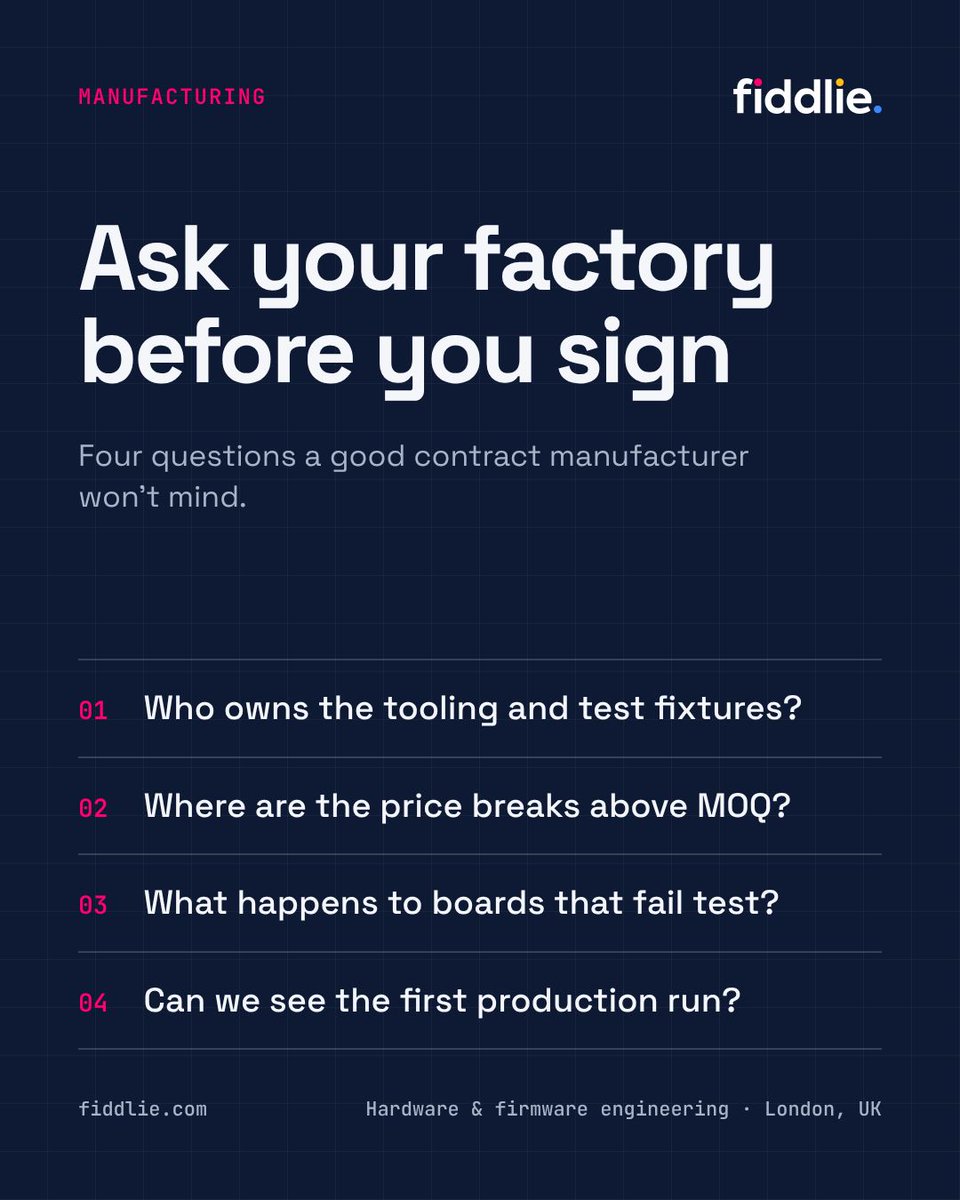
Before signing with a contract manufacturer, ask: who owns the tooling and test fixtures, where the price breaks are, what happens to boards that fail test, and whether you can see the first run. A good factory won't mind.
Budget for compliance testing on day one. Use a pre-certified radio module on v1, book a pre-compliance EMC scan on an early prototype, and put the formal test in the plan from the start. Finding out at the end means a respin.
When to file a patent: write it down and date it, search prior art once it works, file a UK application before any public disclosure, then decide on overseas filings within 12 months. Step 3 is the one founders miss.
Design for the factory you'll actually use. Get their DFM rules (part spacing, smallest package, panel format) before layout starts. Loosening rules later is easy. Tightening them means a respin.
Patent the problem you solved, not the product you built. Claims written around your exact design are easy to design around. Claims built on the principle can cover the versions you haven't made yet.
Four ways to protect a hardware product: patents for how it works, registered designs for how it looks, trade secrets for what you never show, trade marks for the name. Most products need a mix.
When a product fails in the field, check the connectors and cables before the chips. Rated mating cycles, proper strain relief, latching connectors where there's vibration. Boring parts decide your returns rate.
The cheapest enclosure change is the one you make before the mould tool is cut. After that every change means modifying steel, and the toolmaker's queue doesn't care about your launch date. Test the printed prototypes hard first.
Your BOM is a supply-chain plan whether you meant it or not. Check second sources, lifecycle status and lead times at schematic stage. Cheap parts are expensive when you can't buy them.
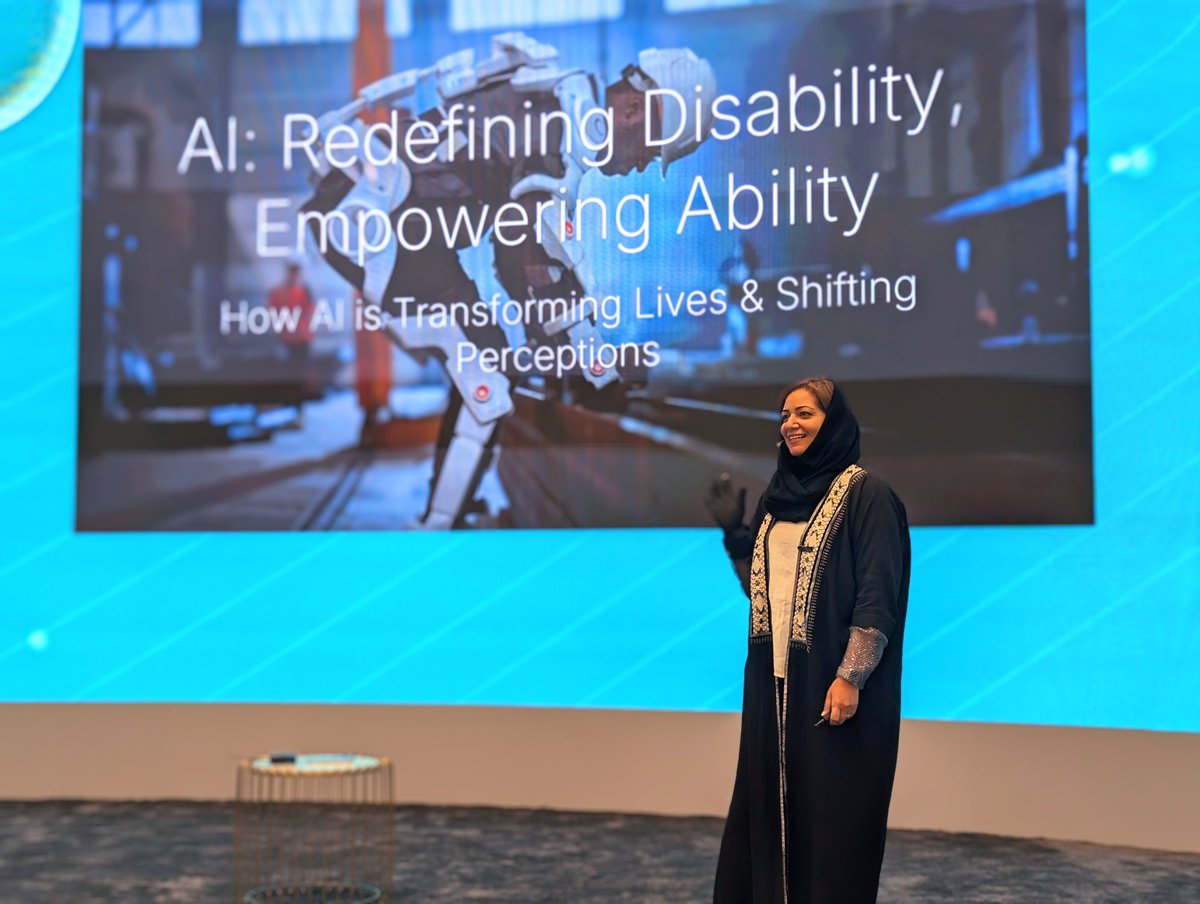
@fiddlietech started because Hadeel and I couldn't find anyone to build the electronics for a sign-language translation glove. So we learned to do it. Then other founders started asking who did our hardware.
If your pitch deck explains how your product works, file before you send it. In the UK there's no grace period for your own disclosure, and a forwarded deck is a disclosure you can't take back.
Big news. Fiddlie is growing and growing in a new direction. 🧪👩🔬
We are happy to share we are now taking on chemical engineering projects. This is an expansion long in the planning.
We've always believed that the most exciting innovations live at the intersection of disciplines and chemistry is no exception.
Adding chemical engineering to our capabilities means we can tackle harder problems, build more sophisticated products and contribute meaningfully to a field ripe for disruption
Check out our work on Orasonic's revolutionary new #toothbrush for pets 🐩 , allowing all of our furry friends to have a clinical quality clean at home! 🪥 🦷 https://t.co/GCdjCNpPZ0 #healthtech#medicaldevice
🚀 Final-year students & recent grads: Ready to kickstart your career? Fiddlie's Summer 2025 internships are open! 🌟 Work on cutting-edge tech projects in software dev, electronic engineering, & product design—all in our vibrant London office. 🌍
Applications are open now! Learn more: https://t.co/MvVyVbKGXW
#Internships #TechCareers #LondonJobs #Fiddlie