As Governor of Anambra State, Peter Obi took several actions to address gully erosion and petitioned the federal government for ecological support, though his record is viewed differently by political critics and supporters. [1, 2, 3]
Actions and Measures Taken During His Tenure
•Road Design and Drainage Policies: Obi blamed past poor road designs for worsening gully erosion and mandated that all new roads built by his administration include proper drainage systems linked directly to safe water discharge points. [1]
•
•Site-Specific Control Projects: His administration executed flood and gully erosion control works in specific communities, such as constructing a 6-kilometer network of concrete drains and a reinforced concrete channel in Adazi Nnukwu to route water safely into the Inway River, as well as undertaking interventions in Umo Equilobia and Amobia village. [1]
•
•Creation of NEWMAP (Nigeria Erosion and Watershed Management Project): According to former Environment Minister John Odey, Obi was instrumental in pushing for and helping establish NEWMAP, a World Bank-backed project designed to finance and manage gully erosion across affected Nigerian states. [1]
•
•Federal Intervention Advocacy: Obi repeatedly appealed to the federal government for ecological funds and special assistance to tackle the state's severe erosion crises, linking road construction projects with erosion mitigation efforts. [1, 2]
•
Political Debates and Criticisms
•Criticisms: Political opponents—including President Bola Tinubu—have criticized Obi's record, alleging that his administration did not do enough to permanently halt the thousands of active gully erosion sites across Anambra State. [1, 2]
•
•Supporters' Defense: Supporters maintain that Obi faced a massive, geologically fragile crisis with limited state resources, making structural interventions like drainage reform and championing the World Bank NEWMAP initiative significant steps for the region. [1, 2, 3]
•
‘Obi instrumental to erosion control’
https://t.co/FqAAomFyE9
A former Minister of Environment, Mr. John Odey, has said former Anambra State Governor Peter Obi was instrumental to the creation of the Nigeria Erosion and Watershed Management Project (NEWMAP).
Under the project, the World Bank will finance the control and management of erosion in some states.
The former minister recalled how Obi almost single-handedly pushed for the project, even when his colleagues were lukewarm.
Odey spoke yesterday in Abuja at the official launch of the project at the Transcorps Hilton.
He urged communities to key in into the project. The World Bank Country Director Marie Francois Marie-Nelly said there was need to seriously tackle erosion in Anambra, Imo, Ebonyi, Enugu, Abia, Edo and Cross River states.
She called for ownership and domestication of the project, especially in the affected states.
The World Bank chief hailed those implementing the project for their innovation, which emphasises reclamation and control.
Marie-Nelly said: “I have visited Edo and Anambra states. Under Peter Obi, I was pleased with his commitment, which he demonstrated by being the first to pay the state’s counterpart funds of N500 million for the project. Ebonyi, Cross River and Imo states have also paid theirs.”
Environment Minister Mrs Laurentia Mallam said erosion had caused havoc in several states and deprived the people of arable land.
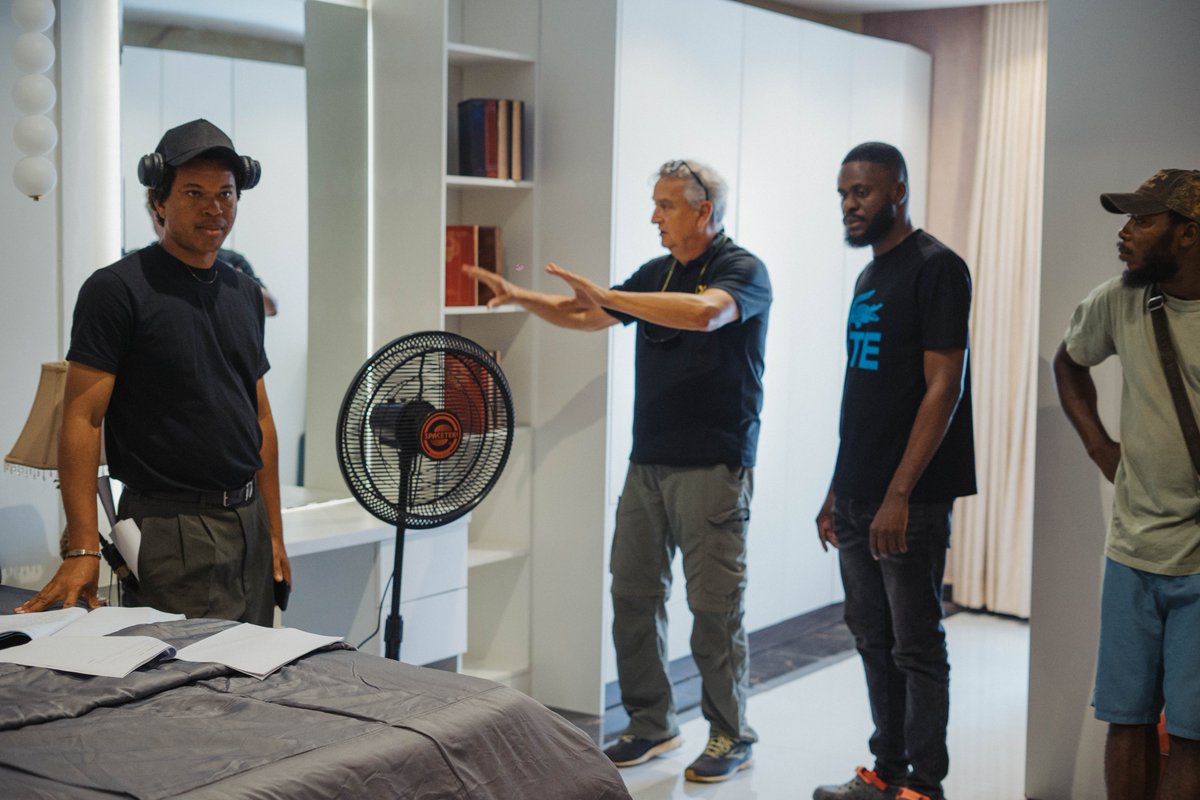
My name is Aniefiok Essien, professionally known as Aniee Essien and I am a filmmaker from Akwa Ibom State based in Abuja. I specialise in Directing, Assistant Directing, Associate Producing for feature films/TV and Producing for short films.
I'm available to work and travel.
This is the story everyone is talking about.
A small boy from Akwa Ibom is hawking sachet water (pure water) on the streets of Lagos.
After a football game on the streets, the footballer Kelechi Iheanacho bought water from him.
But when it was time to pay, Kelechi realized he had no money on him.
He told the boy.
The boy simply said, "It's okay, you can go."
Little did he know he was talking to Kelechi Iheanacho.
Later, when Kelechi got to his hotel, he couldn't stop thinking about the boy.
He called his team and told them:
"Go and look for that boy. Bring him and his parents to me."
That one act of kindness opened a door to a blessing beyond imagination.
When God wants to bless you, He does it in ways you never see coming!
Kindness costs nothing, but it can change a life forever.
Be kind today, you never know who God is watching.
Dear Young Nigerians,
One lesson from the 2023 elections, particularly in Lagos, should never be forgotten.
In the period following the presidential election and leading up to the governorship election, we witnessed a troubling shift in public discourse. Conversations that should have focused on competence, governance, development, and the future of our nation were gradually diverted towards tribal sentiments, ethnic divisions, and unnecessary suspicion among citizens.
Many sincere and well-meaning Nigerians participated in these conversations without realising that they were being drawn into narratives carefully designed by others.
Throughout history, whenever politicians find it difficult to compete on ideas, performance, character, or vision, some resort to exploiting the fault lines of ethnicity, religion, and identity. Their calculation is simple: a divided people are easier to manipulate than a united people.
Today, I see similar efforts emerging again, sometimes in more subtle and sophisticated ways. Narratives are planted, amplified, and circulated, often by individuals who genuinely believe they are defending a worthy cause, without recognizing the broader agenda behind such campaigns.
Let me state clearly that Pastor Enoch Adeboye remains one of the foremost fathers of faith in our nation. For decades, he has consistently preached the virtues of peace, prayer, love, reconciliation, and national unity. Even when faced with provocation, his response has always reflected humility, restraint, wisdom, and grace.
At 84 years of age, it would be unfair for young and able-bodied Nigerians to transfer to him responsibilities that properly belong to them. The task of building a better Nigeria rests primarily on the shoulders of the younger generation. It is their duty to lead the conversations, champion the reforms, and drive the positive change our nation urgently requires.
We must be careful not to become instruments in the hands of those who secretly nurture division while publicly preaching unity. In most cases, their target is not the individual being attacked; instead, it is the person who is attacking. Their real objective is to weaken the bonds that hold us together as one people and one nation.
I therefore urge all young Nigerians: do not allow anyone to recruit you into hatred. Do not allow anyone to weaponise your ethnicity, your faith, or your admiration for respected leaders.
Question every narrative. Verify every claim. Follow the facts. Resist manipulation.
The Nigeria of our dreams can only be built by citizens who refuse to be divided, who choose unity over hatred, and who place our collective future above narrow interests.
A New Nigeria is POssible. -PO