Winner, ASBPE Best Body of Work by a Freelance Journalist. Finalist, ASBPE Best Body of Work by a Staff Journalist. 2x Neal Award finalist #healthcare#finance
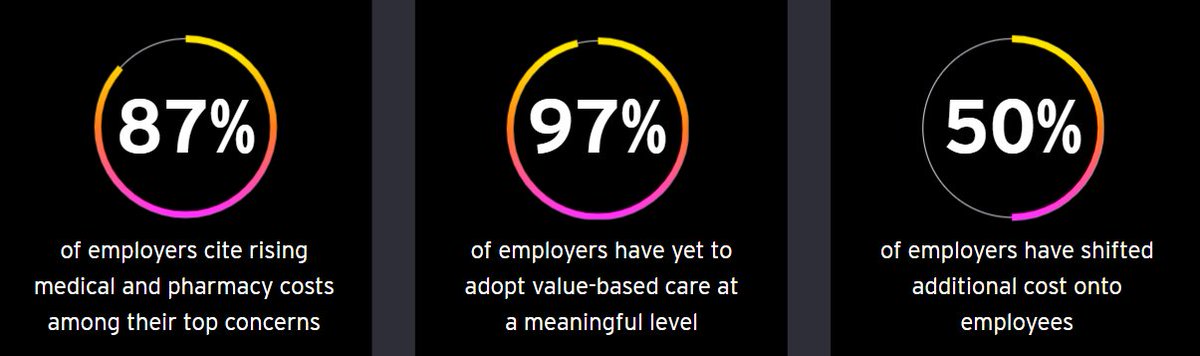
97% of employers have yet to adopt value-based care at a meaningful level.
Here's what the next wave of value-based care for employer populations looks like.
Includes targeted care for specific conditions, like those w/ high-cost interventions
@EYnews https://t.co/getOl3zilK
The pace of patient-facing innovation is testing conventional ROI thinking among healthcare leaders.
It's also changing the way in which #healthcare CFOs guide discussions about innovation w senior leaders & boards
Read the @hfmaorg article: https://t.co/vyV5paJjEp @TJUHospital
Intriguing story by @Loftus of @wsj on the medical influencers offering tips on ways to reduce their medical bills.
It's a growing trend, and one that Loftus says is especially prevalent among new mothers.
https://t.co/9XM578w3CS
What is the risk that #AI presents for #healthcare cybersecurity?
It's an important question given that 72% of healthcare organizations surveyed by @Imprivata have deployed AI tools or agents without formal IT approval.
Via @Axios https://t.co/AlmQYuHWw8
"But good writing doesn’t have to imagine everyone. It only has to imagine the truest thing about all of us, that exists in each of us."
Choking up, thanks to @tressiemcphd https://t.co/PKH2XeXnPL
This is the best article I've read in a long time:
"He lost everything. Then he found riches in a dumpster."
Long & extremely satisfying. Via @DPAQreport@washingtonpost
https://t.co/J3cbDioR6K
It's time for #healthcare revenue cycle leaders to consider: “What questions aren’t we asking about #AI in the revenue cycle that we should?”
I invited 3 #revenuecycle leaders to share their thoughts — and their answers were intriguing.
Via @hfmaorg
https://t.co/VuJeOBDkpN
One of my favorite @Cubs articles. Long & worth the read.
When my son was younger, he took pitching lessons from Bill Bryk at a facility owned by @JohnMallee. I still marvel at this & am grateful.
Via @ChicagoTribune
https://t.co/b0RLIcVEOT
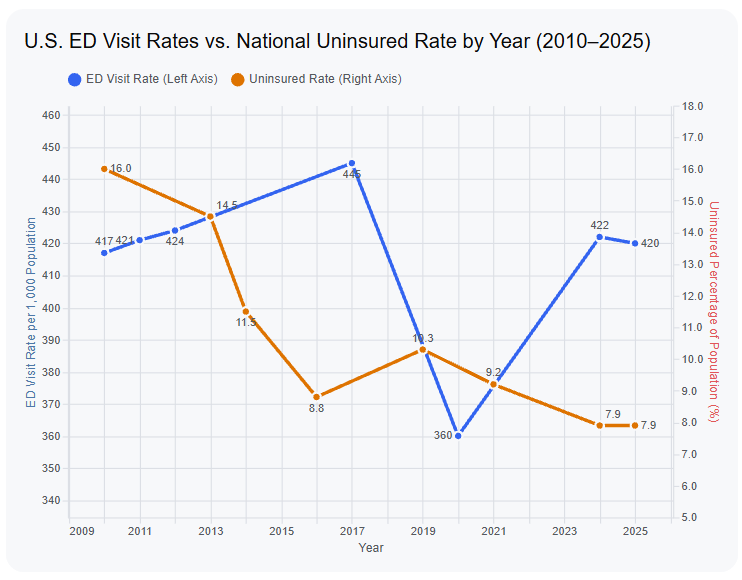
Reducing the number of #uninsured was supposed to decrease emergency room crowding. But as the uninsured rate fell to historic lows, emergency room use has repeatedly surged. More insurance coverage seems to correlate with higher #ED volumes.
Very excited to read this later:
The High-Stakes Pursuit of Smuggling Butter Home From Paris via @WSJ
I actually have a friend who did this
https://t.co/zpZg8Q1bRk
I'm really glad @OpenAI is releasing a framework for when things go wrong with #AI
My thought: AI governance is already something #healthcare struggles with. What does this look like in other industries?
Via @nytimes https://t.co/Plhj9Xapl6
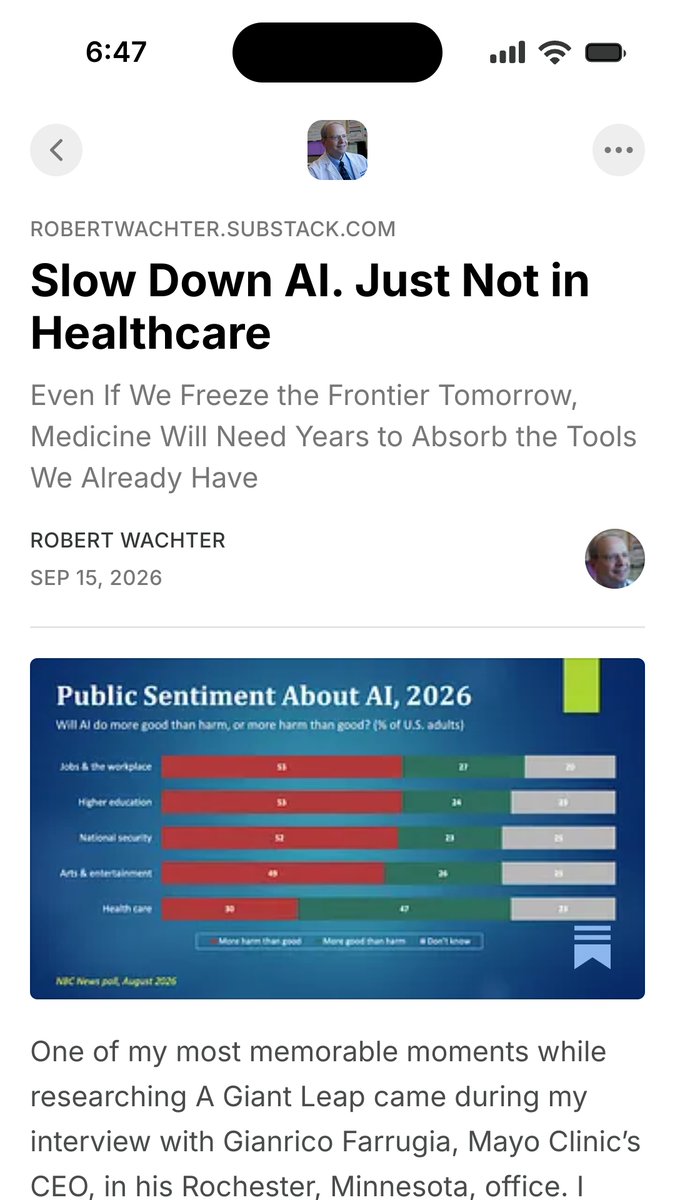
We're in the midst of a Category 5 AI backlash that will likely slow the progress of frontier models. Fine – the frontier can wait.
But given healthcare's problems with quality, safety, access, & cost, thoughtful adoption there can't.
My latest Substack:
https://t.co/MaFsolDXPm
"For Americans to get the best health care possible, we need to be willing to experiment with models that put AI in control": @ZekeEmanuel
It's a discussion I've had with a primary care doc this week.
Curious: What are your thoughts?
https://t.co/KOeSD38ZW2 #healthcare#AI
In #healthcare, "technologies like #AI, information systems and automation are increasingly widespread among the more than 200 hospitals surveyed globally.
"Deep implementation is not."
Via @Newsweek's Alexis Kayser https://t.co/vJ9X1PVKJO
@UPMC@KLASresearch And from a @MedCityNews article on the report:
- 63% of health systems describe their AI strategy as still developing or ad hoc
- Less than half have the infrastructure to properly test & validate #AI tools before they become embedded in patient care
https://t.co/72iddkS7hl
"AI adoption is outpacing governance": This is something I saw two years ago in writing this story for @hfmaorg:
"UChicago Medicine Grows into Role of #AI Innovator"
https://t.co/7XFikn7aoU #healthcare
Now, "Most respondents say AI governance is in place or being formalized, but the depth of oversight varies widely."
Via @UPMC & @KLASresearch https://t.co/cPeZojSgFu #healthcare#AI