Scott Cameron, @usbr, at Getches. $100 million on table for UCRC to put water in reservoirs. “Very uncomfortable” overriding prior appropriation in Upper Basin states
Getches Colorado River conference, @bradudall presentation, PowerPoint, lots of papers. He said IRA money spent on temporary DM was a waste, said make it permanent which is contrary to the DM “temporary” mantra
https://t.co/U2vWJKqUbJ
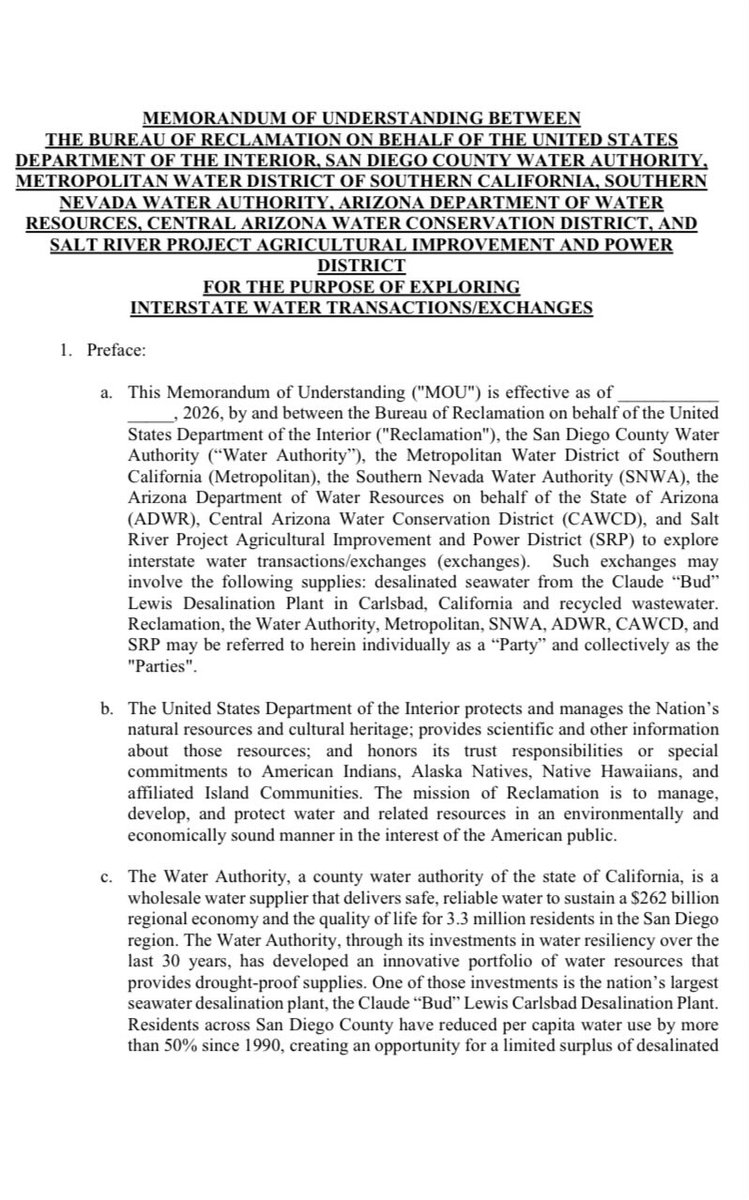
“This MOU is important because we are agreeing to discuss innovative ways to help each other and secure our future water supplies. When you have good partners, you can find collaborative opportunities that benefit all.” – Brenda Burman
https://t.co/qEwAd3jT1k
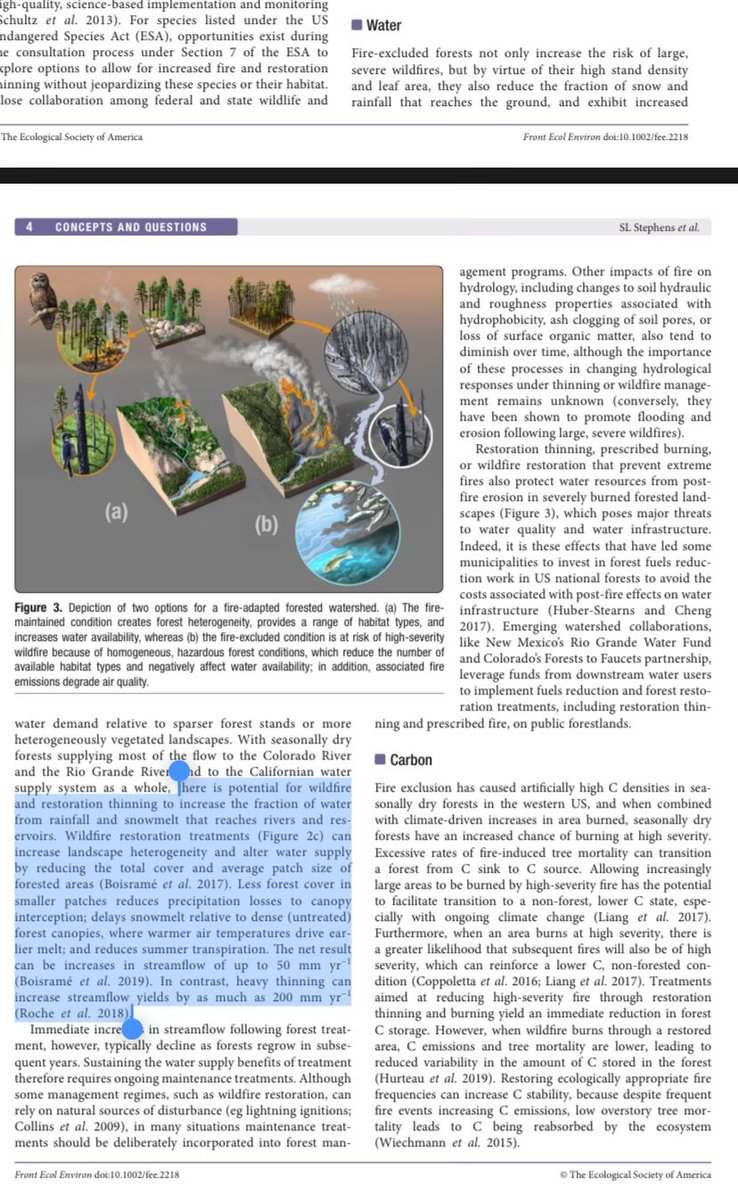
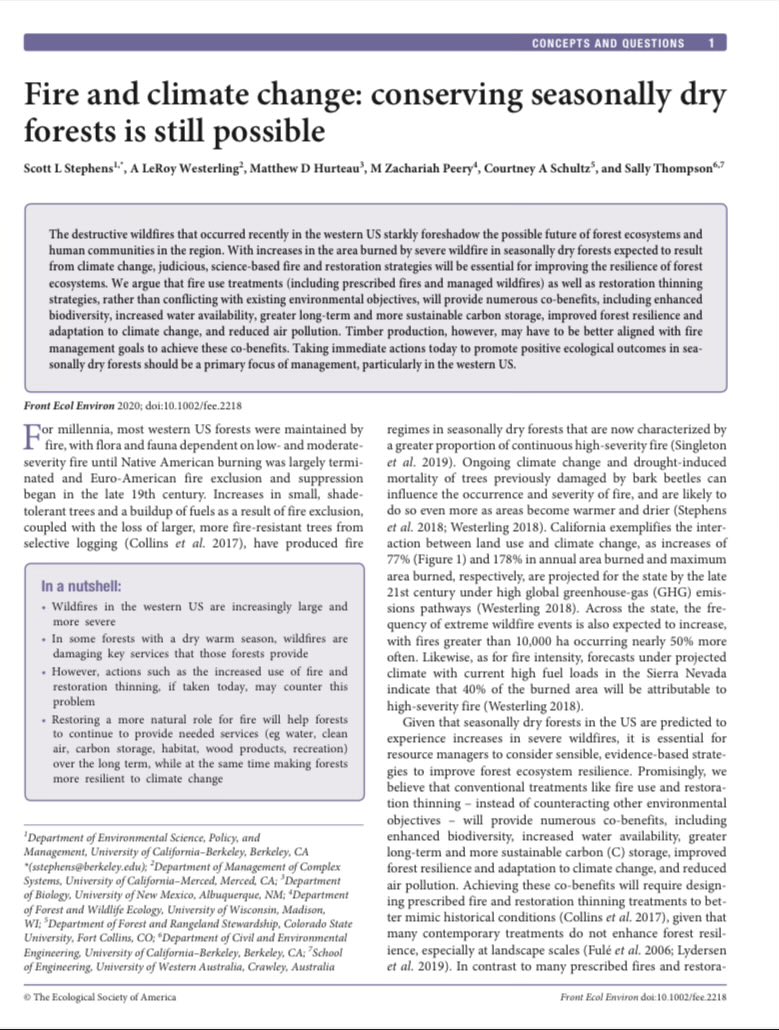
“With seasonally dry forests supplying most of the flow to the Colorado River
and the Rio Grande River, and to the Californian water supply system as a whole, there is potential for wildfire
and restoration thinning to increase the fraction of water from rainfall and snowmelt that reaches rivers and res-
ervoirs. Wildfire restoration treatments (Figure 2c) can increase landscape heterogeneity and alter water supply
by reducing the total cover and average patch size of forested areas (Boisramé et al. 2017). Less forest cover in smaller patches reduces precipitation losses to canopy interception; delays snowmelt relative to dense (untreated) forest canopies, where warmer air temperatures drive earlier melt; and reduces summer transpiration. The net result can be increases in streamflow of up to 50 mm yr−1 (Boisramé et al. 2019). In contrast, heavy thinning can increase streamflow yields by as much as 200 mm yr−1 (Roche et al. 2018)”
https://t.co/ABR5u8qgUE
Managed Wildfire Effects on Forest
Resilience and Water in the Sierra
Nevada (2017) Boisrame et al
“runoff ratio appears to be increasing or stable since 1973, compared to declines in runoff ratio for nearby, unburned watersheds” … meadows are good
https://t.co/fNWdAMjmYj
“Less water flowing through the Colorado River is expected to reduce hydropower generation at the Hoover Dam. Managers there say they may need to shut off 12 of 17 turbines by fall”
https://t.co/B1BN7l9VdX
“another dry year…it is likely that reasonably accessible storage in Lake Powell and LakeMead would be mostly depleted, even if consumptive uses and losses are at or near historic lows. Run-of-the-river operations would shortly ensue.”
https://t.co/1PNiTh6mbJ
“We didn’t expect them to be saving 20% right away,” said Greg Fisher, Denver’s manager of water supply planning. “It’s been 13 years since we were under mandatory drought restrictions. It takes a few months to get up and running on this.”
https://t.co/hEglRmkFfU
Awkward. 4 AZ water nerds try to explain crisis to normals. 2 praise AZ cities for putting water in aquifers to be ready for crisis caused by AZ taking water out of Lake Mead and putting it in aquifers
https://t.co/5KTx7R0JrI
“Mueller said he was pessimistic regarding Colorado’s future water rights post 2026, saying that state of Colorado lawyers feel “we’re prepared to fight and we think we can win in the Supreme Court,” while he thinks the opposite is true.”
https://t.co/AMEHUf9GjI
“I realized something was going on with the hydrology.” Areas that used to be dry forest had suddenly become a wet meadow because the forest has been removed by fire. As a result, more water leaves the watershed—and fewer trees die during droughts.”
https://t.co/8XwaPVn7YZ
2025 @usbr#ColoradoRiver Accounting
and Water Use Report: Arizona, California, and Nevada
Released May 15. I can update my Reservoir Reality graph, water in ICS hasn’t changed much since 2024, 3.327 MAF
https://t.co/4Sim4R8v7q
The Boring Company’s Prufrock is a full-on underground factory.....It's the most underrated tech in the world right now
It digs tunnels continuously while simultaneously installing tunnel walls, using multi-mile long continuous conveyor belts to remove dirt. (Traditional machines dig, stop, install walls, repeat. Prufrock never stops)
It’s designed to “porpoise” directly into the earth and back out again like a beast....no massive, expensive launch pits or cranes required. It even operates entirely remotely with zero people in the tunnel
The target is >1 mile per week. That’s 6x faster than their previous generation machine, and they are driving costs down to under $8M per mile
While the world is still stuck in traffic, The Boring Company is quietly building the infrastructure to go under it at a speed and cost that finally makes underground networks economically viable with 3d roads in a 3d city world