Africa’s ruling class isn’t a fully independent bourgeoisie, they’re intermediaries.
They manage extraction on behalf of foreign capital in exchange for personal accumulation
Nothing kills me like the financial gurus on Ghanaian twitter who keep importing foreign financial tips here.
No contextualisation, just rich dad poor dad ass nuggets
Most Ghanaians don't know the legendary status of @pazunre. Let me share a short story. While working at Google, a colleague, whom I had just met that week, scheduled for us to have lunch to get to know more about what we each did at work.
During our conversation at lunch, I got to find out he was a team lead for some projects covering Google translate. He spoke of the complexity getting their AI engines to understand the nuances embedded in translating African languages.
Knowing the momentous work @pazunre is doing with @GhanaNLP and Khaya app, I mentioned that I had a friend who had built an app for Ghanaian languages, and was expanding to other countries; he went to MIT and had a PhD. My colleague interjected with, "is it Paul? With the Khaya App?".
My colleague then mentioned that indeed Khaya App had the best translation on the market for Ghanaian languages and that Paul is someone who has an incredible reputation amongst the AI, ML research scientists at Google.
They knew who he was. And had such reverence for him. This guy spoke of Dr. Pushkin and @moorekwesi like some legends in the game. That was a very proud Ghanaian moment for me.
Where am I going with all this? Let's leverage such brains as a country. Cos others have seen what they have to offer and are seriously considering of poaching them.There many like Dr. Pushkin n Dr. Moore out there who can help shape the future fortunes of Ghana.
#GhanaMoments
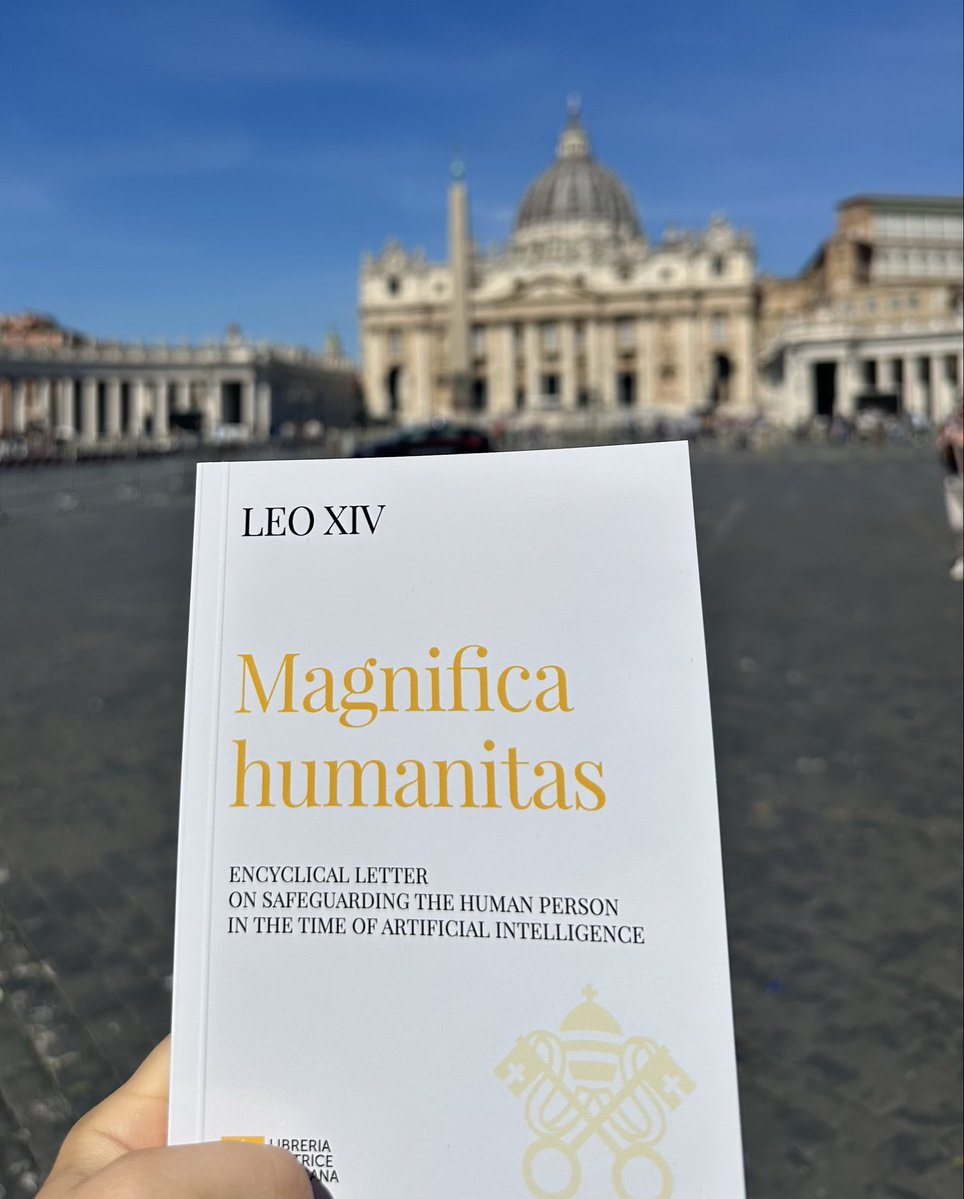
A note before I start. I am Catholic, and the Papal encyclical I reference shapes how I read this moment. I am not asking anyone to share my opinions or my beliefs. I am explaining how I see things.
The Pope just preserved many jobs and created many new job openings through the conversation around the encyclical - Magnifica Humanitas, his first encyclical. It is long, and I am still reading it.
The line that stays with me is his predecessor Leo XIII's response to objections that the Church should focus on eternal life rather than worldly matters. He said the proclamation of the Gospel cannot overlook the concrete lives of people. Leo XIV is making the same argument now, about AI.
I once had to give a presentation on behalf of the Nigerian Society for Corporate Governance to an audience of Nigerian directors and senior management in 2024. They were not fully sold on the impact of AI. A lot has changed in two years.
The transformative effect of AI will be felt not just in this era but for generations. The Church is worried for good reason. AI could alter the nature of society itself.
AI Ethics and Governance have moved from "nice to have" afterthoughts to imperatives if societies and organizations are going to survive and thrive. AI is shifting from a productivity tool to an adversarial and manipulative product.
Someone wrote this on Twitter: "Gunpowder used to be for entertainment, then it was used to kill. Drones used to be for entertainment, then they were used to kill. AI is used for entertainment."
Even in corporations, when AI is positioned as an augmentation tool rather than a means of labor replacement, organizations fail when they measure adoption rather than outcomes. Several large enterprise coding tool rollouts this year have shown exactly this pattern.
As the encyclical insists, the priority is to build a more human society rather than allow a few powerful people to use AI to destroy the social fabric we once knew.
The global policy contrast is now sharp. Chinese courts have begun ruling that companies cannot terminate employees solely to replace them with AI, though the mechanism is driven more by state direction than by worker dignity. The United States has no coherent worker doctrine, and its major AI labs are priced as if labor displacement is the business model. Europe has a doctrine but no platforms at scale. Africa has neither.
Africa has the largest number of young people entering the job market globally. Yet conversations and policies on the impact of AI on Africa and African jobs are still not taken seriously at the highest levels.
The African Union's continental AI strategy has existed on paper since 2024, but most member states have not operationalized it. Meanwhile, the slavery already inside the AI supply chain is African. Kenyan data workers sued OpenAI in 2023 over content moderation conditions that left some with diagnosed PTSD. Documented data labeling rates across the continent have been reported well below local minimum wages. The harms are not theoretical or future; they are here.
The goal should be to improve our societies by creating greater abundance for everyone. That means both increased capacity and full employment. They are not mutually exclusive. Africa needs both.
Three things make the math in Africa different from that in the West. Demand is not saturated; it is suppressed. The continent has doctor-to-patient ratios at fractions of WHO minimums, class sizes that swallow up learning, agricultural extension reach in single digits, and legal services most adults will never access. We have major problems with scale and access.
Many of the processes and workstreams needed in Africa to create more employment have yet to be developed. There is no scaled health insurance infrastructure to disrupt in most countries, no mass legal services market to compress, no formalized tutoring industry to replace.
The demographic math runs the opposite way from the West. Africa is adding roughly fifteen to twenty million people to the workforce every year through 2050. Aging Europe needs AI to cover work that fewer workers can do. Young Africa needs AI to create the work that more workers want to do. This will also help rebalance the migration equation.
The thesis, however, holds only if the value capture is local. If foreign AI platforms serve African demand without local workforce participation, capacity expands, but employment does not. You get extraction, not absorption.
Closing that gap requires policy. Local data sovereignty. Local language coverage as a structural moat. Regulatory requirements that AI deployment include local workforce participation. This is why the doctrine gap matters more than the platform gap, and why the policy work has to start now rather than later.
The narrow goal of profitability, which treats humans as expendable tools, is not the model we should import. This should be our priority in Africa, and we should be actively working towards how these new technologies can help us achieve it. The encyclical gives that work cover. The Catholic church is a major global institution lending its voice to this debate. The question is whether the continent's boardrooms, capitals, and policy desks will pick it up.
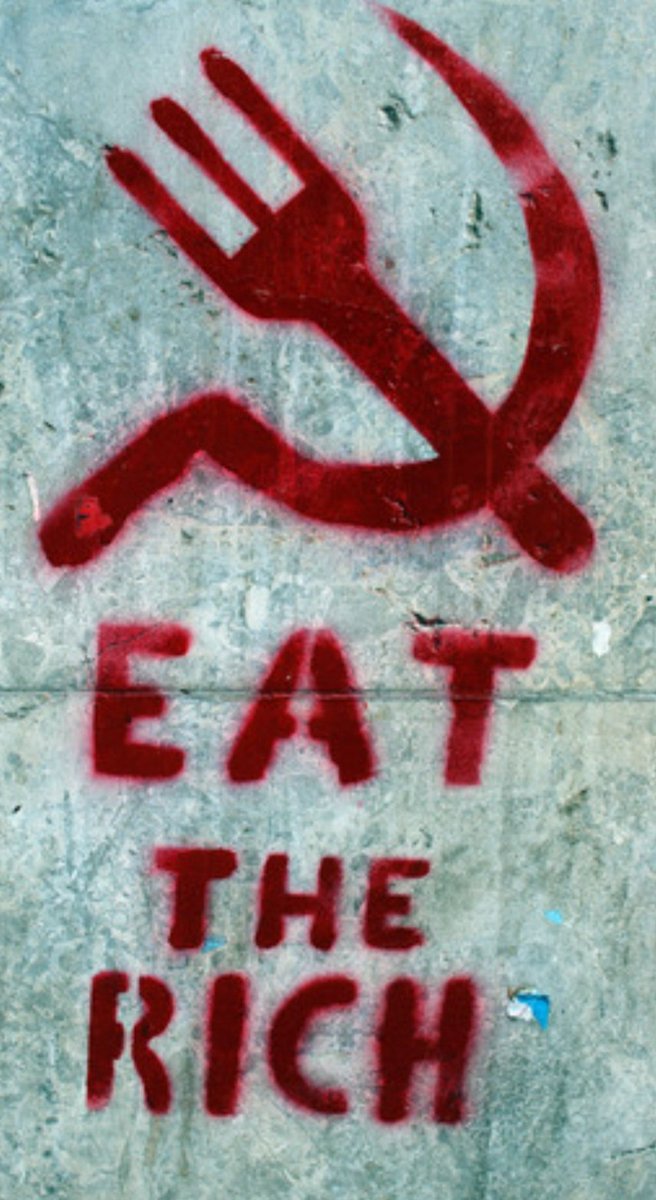
I used to be ambivalent about "Eat the Rich" ideologies and thought they were just humorous until 1998, the day Abacha died. I was at Apongbon in Lagos, driving a second-hand Mercedes E-Class, and behind a guy being mugged by rioters and waiting for my turn.
I had never known a fear as bad as that since I was born. The guy in front of me was stabbed and bludgeoned simply for driving a nice car. My car behind his own was nicer. I had to do two things: come out of the car and run, or run through the guys.
I saw an opening on the side and rammed through. They panicked when they saw me coming, and I could somehow weave my way into Marina. I stopped at the UBA building, where armed guards were posted, for a while before making my way back to Ikoyi against oncoming traffic. It was a chaotic day, and I survived meaningless mayhem.
Abacha was a dictator; everyone was afraid of him, including the rich guys. The rich guys were even more afraid of him as he seized their companies and took their wealth. He even murdered people like Kudirat Abiola, and his goons once attacked Olorogun Michael Ibru. I didn't understand why poor people who were celebrating his death were attacking those who also suffered from his tyranny.
This is the part of human behavior that scares me the most. When people are in pain, they go after convenient enemies rather than their true adversaries. The guy who was being attacked at Apongbon in front of me was a middle-class guy going back home from work. He had nothing to do with Abacha's tyranny. He almost paid for it with his life because he was an easy target.
This is why I believe it when they say that "Eat the Rich" is a myth. The poor will feast on the middle class first, while the rich escape. The poor are also likely to be weaponized by their truly wealthy adversaries to prevent the middle class from ever aspiring to become as rich as they are.
Yes, Femi Otedola and Dangote are very rich, but they are openly doing things that benefit the economy. Those you should fear and those whom people never see are those who are not doing anything to help the average person, but are weaponizing them to hate others.
I see Femi, Aliko, and even Tony more as hostages. They were wealthy before the current crop of politicians came into power and will likely remain so when this regime has done its time. I admit that they have a lot of flaws, but they are playing a survival game just like us, and people are attacking them like the mob at Apongbon.
These men are not raising money through government corruption but through institutions like Afrexim and others to build infrastructure that would benefit all of us and also keep them rich. That is the beauty of capitalism. They provide the platforms for others like them to build even better entities.
I didn't know how scared the rich in Africa were of bad government actors until I tried to raise a VC fund from local LPs in 2018. None of these guys had their liquid wealth in Africa. They kept the assets in safe havens where the governments could not impound them, as Abacha did in his time.
If you want to eat the rich, I can guarantee you that the corrupt politicians are tastier than the rich capitalists.
- Tolu stole N5,000 from her parents but she couldn’t just start spending it freely in school without teachers or classmates asking where she got the money from.
- So, on her way to school she bought pens and started selling them to her classmates.
- Now, the money appears legitimate because everyone believes Tolu is making money from selling pens. She can now buy food and snacks without suspicion.
And the same time too it was leveler.
Had one friend in tardi who had a kangaroo in his house-the house big forken.
Had one friend who lived in a big house in cantoments-they had an Alvaro dispenser in their house.
Just imagine being in the same class with the CEO of tullow’s son at the time. If ih no be school some of we where we go meet them for.
Imagine one of your friends loses his towel in the morning and then during school hours in the afternoon, one Land Cruiser come pack for your class dey come deliver towel to your friend because there isn’t “a single towel being sold in cape coast” so they had to bring it from Accra.
And then there is me Akua Nyarko’s son
The mental gymnastics you people do with these criminals is always funny"Wanted to put food on their momma table" who wants to put sawdust on the table for their mum?
One of the quietest guys in my office resigned last month.
Nobody really noticed him like that. He doesn't wear expensive clothes, hardly gives his opinions, and doesn't even post anything on social media.
While others would post about their accomplishments on LinkedIn, this guy doesn't care about that. On few occasions he talked, he'd just say:
“Forget LinkedIn jor.”
People mostly saw him as one struggling guy trying to survive Lagos. Others even think he's unserious with his life by being quiet and not making new connections.
On his last day, our manager jokingly asked him:
“So where you dey go now? Hope say no be another small company.”
That was when we found out he was relocating to Canada.
A fully sponsored job, with a far better salary than almost everybody there. Accommodation was also already sorted.
The silence in the office that day was something else.
You see...
People don't understand that not everybody advertises their life while building it. And the fact that someone is silent or not flashy doesn't mean they're not progressing.
Back in 2021, I met a lady who told me about this app where blind people could video call volunteers whenever they needed help with something.
Out of curiosity, I downloaded it and signed up.
I still remember how surreal it felt the first time I got a call. Someone was simply trying to decide what to wear and needed me to tell them if the colors matched. Another person needed help checking something on their TV screen.
And there I was, in my room in Nigeria, helping complete strangers from different parts of the world through a random video call.
It wasn’t paid or anything. It was just volunteering.
But I remember being so fascinated by the idea that technology could connect people in such a deeply human way. For a few minutes, you literally became someone else’s eyes.
Till today, that remains one of the most beautiful things I’ve experienced online.
@_GhChronicles Lol no brainer. even if they pitch an ant against bawumia, I will vote the ant cuz the ant at least knows how to gather for the lean season.
After graduation I had two offers.
I chose Dallas. Software Engineer at Bank of America.
I called my mom that day. We both cried.
But here’s what kept me up at night
How many students back home were just as capable as me and never got the chance?
That’s why I built GoScholar.
The tool I wish existed when I was applying.
Free. No consultants. Built for African students by African students.
🔗 https://t.co/pursEFinfC
RT tweet 1 if this helped. You might change someone’s life. 🙏🏾