During each workshop, students are served lunch and snacks - the best learning occurs on a full stomach! Students often provide feedback that they are grateful to "eat well" during their workshop visit to Mubare Biodiversity Conservation Apr 2024 #childnutrition@AlexNgabirano81
In another one of the workshop sessions/classes, students create gorilla/conservation artwork. Here young students from the Nina Waitts school enjoy some time outdoors, sketching gorillas (September 2023) #ruralengagement#steameducation#gorillaconservation#Uganda
During one of the sessions in our workshops, the students hear from Mubare Biodiversity Conservation founder, Alex Ngabirano, about mountain gorilla conservation and ecology @AlexNgabirano81
In 2023-2024, I continued my partnership with Mubare Biodiversity Conservation (MBC), and we ran day-long conservation and health workshops with groups of middle school children from 10 different schools in and around Bwindi. In July 2024, we completed our 10th workshop!
During the school year, 2023-2024, I collaborated with Mubare Biodiversity Conservation in Bwindi, Uganda, to pilot an educational program based on the workshop I co-developed as my capstone volunteering project after my time in Uganda in Oct/Nov 2021. #gorillaconservation
“More plants and animals are going extinct than at any other point in human history.”😩
Biodiversity targets may be slipping out of reach - study https://t.co/u3LrwGiDSa
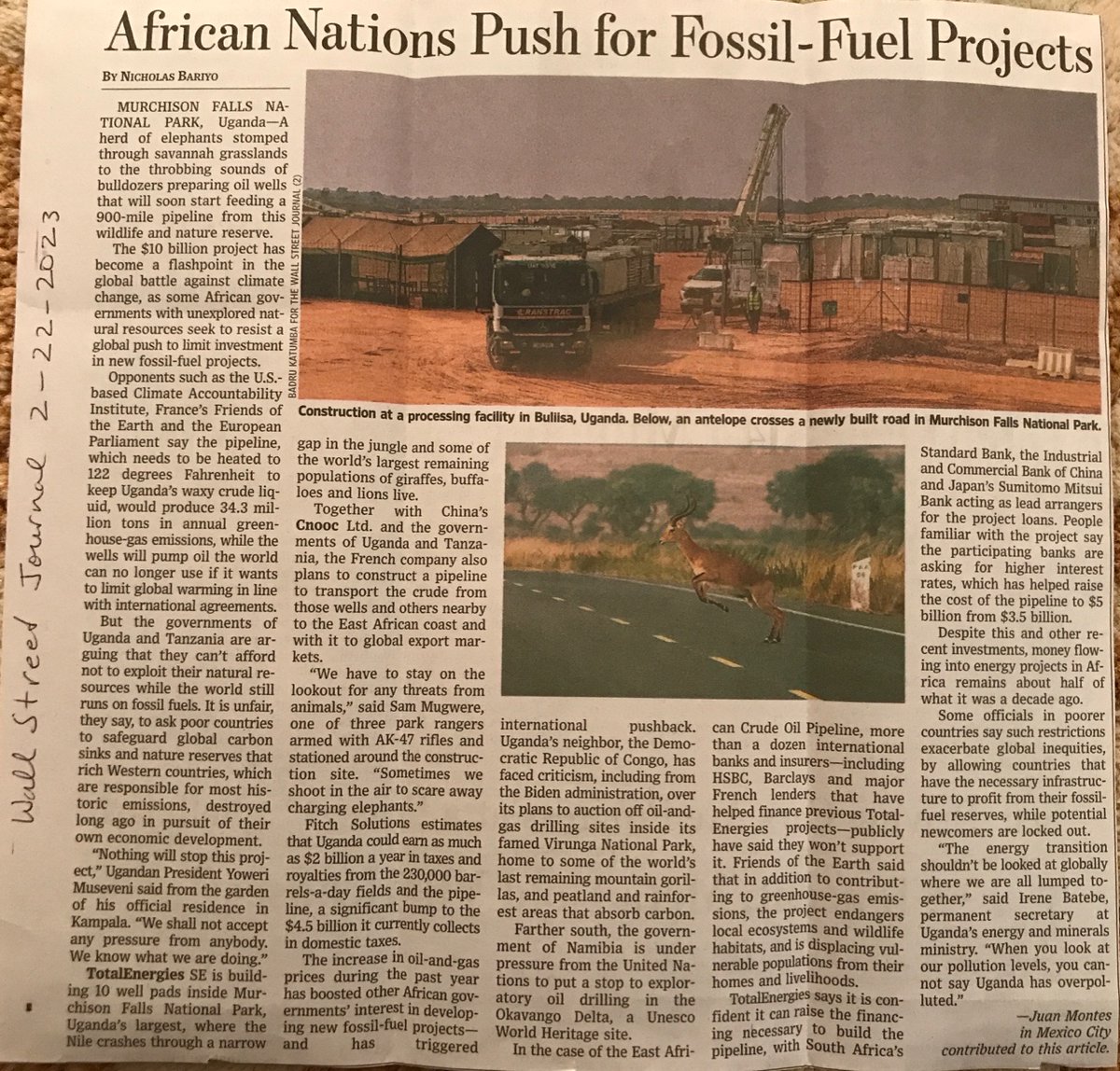
3.) 2 questions: a.) will the communities who need this development money see a significant portion of it? b.) will future generations even miss what they never had? Perhaps my sadness is just personal because I have had the privilege of enjoying many of these precious places ❤️
2.) While I understand the desire to develop and the global inequity around fossil fuel resource exploitation outlined in the article, I find it tragic that these areas will never be the same for future generations.
1.) It feels so disheartening to hear that jewels of African wilderness are being pressured by fossil-fuel projects: Murchison Falls (Uganda), the Okavango River Delta (Botswana), Virunga National Park (DRC) 😔😢
4.) Interview with @DoctorGladys: thank you also to @CTPHuganda and @ctph_camp (Martin, in particular) for co-producing this video, namely providing the venue, helping schedule time with Dr. Gladys, and facilitating the connection with @ride4awoman 🙏🙏
https://t.co/FBlitWW0kL
3.) Interview with @DoctorGladys: I'll be posting more on the highlights and wisdom of the interview in the near future. For now, please enjoy and also be sure to check out the great music and dancing by @ride4awoman in the last 7 minutes!
https://t.co/FBlitWW0kL
2) Interview with @DoctorGladys: I know that a LOT of students, both in Uganda and across the world, will benefit from hearing about the steps you took to advance your education and your career, and how you overcame various barriers with determination.
https://t.co/FBlitWVsvd
1) I'm pleased to post my full interview with @DoctorGladys from November 2021! Thank you so much for sharing your inspiring path with me - the successes, the challenges, and many other wonderful stories from along the way.
https://t.co/FBlitWW0kL
I came across an interesting paper while doing some research for my lessons the other day. Seems very relevant to the work around Bwindi of @GCCoffee1, @CTPHuganda, and @Joelmuwonge4:
https://t.co/6XUhsG38zN
#onehealth concerns certainly include environmental pollutants!
While conducting some background research for Lesson 6, I came across the work of @CornellBirds in Columbia, investigating how shade-grown, sustainable coffee cultivation can benefit both local communities as well as populations of migratory birds.
https://t.co/wQpRl6opIS
Thank you to @CTPHuganda and @GCCoffee1 for showing me around the coffee farms in Bwindi and welcoming me to the Gorilla Conservation Cafe in Entebbe. Both of these experiences helped inspire lesson #6!
A coffee farmer in Bwindi nurtures coffee plant seedlings.
The experiment in Lesson 6 involves students tasting teas with different levels of caffeine (only with a permission slip from home) and observing the impact of caffeine on levels of alertness and awakeness. Teachers are encouraged to purchase African teas! (some examples below)
Through class discussion, videos, and a concept map, Lesson 6 also uses the case study of sustainable coffee cultivation in Bwindi, Uganda, to guide students towards understanding that gorilla and human health is intricately connected to community economic wellbeing.
#onehealth