Breaking: We reveal that hidden in Sections 34 and 35 of the Finance Bill 2026 is a proposal that could have major privacy implications for every Kenyan.
Most people think it's just a tax on phones.
It's not that simple.
The Bill moves excise duty on mobile phones from the point of importation or sale to the point of activation.
It also states that the excise duty must be paid to the Commissioner by the time the phone is activated.
But here's the problem, and I have attached all evidence in the replies.
The Bill never explains how that system will actually work.
For the government to enforce such a tax, it must somehow know:
✅ Which phone is being activated
✅ whether tax has been paid
✅ and potentially who is activating it
And that's where the concern begins, because it might involve collecting your phone number, names etc.
Every phone has a unique IMEI number.
Last year, dealers were already required to submit IMEI details of devices supplied to them.
Now the government wants taxes to be collected at activation.
To make such a system work, the phone, the IMEI number, the SIM card/ phone number, and the tax payment must somehow be linked.
Will sellers collect the tax and remit it?
Will telecom operators verify payment before activation?
Will buyers have to pay directly to KRA through eCitizen or M-Pesa before a phone can be activated?
The Bill is silent.
And if payment ends up being made through M-Pesa, eCitizen, or another digital platform, that creates another trail of personal data, including names, phone numbers, and transaction records.
Piece all that together and you have more than a tax system.
You have the foundation of a database capable of linking a specific phone to a specific Kenyan and be misused against anyone.
Today, it is being introduced as a revenue collection measure.
Tomorrow, it could become a powerful surveillance and tracking tool.
Your phone is not just a gadget.
It contains your contacts, conversations, location history, financial transactions, and much of your daily life.
The most effective surveillance systems are rarely introduced as surveillance systems.
They are introduced as administrative measures that sound harmless at first.
There are more details we have found that we will share, so follow me here -Sholla Ard - as we expose everything
Most Kenyans are focused on the tax.
The bigger story may be the hidden agendas. Reject the Finance Bill 2026
I know we are all heavy on Finance Bill 2026 & submissions but the Central Bank of Kenya (Amendment) Bill, 2026 introduced in the National Assembly this afternoon is extremely consequential.
What are we seeing here?
· There's a proposal to widen the window for CBK's accumulation of precious metals.
1. Currently, the law provides for "buying, selling, importation, export, hold or otherwise dealing in gold or foreign exchange under such terms and conditions as it shall determine".
2. The new Bill proposes to widen this by providing for "buying, selling, importation, export, transfer, hold, refine, or otherwise deal in gold, gold coins & bullion, silver, platinum, any other precious metals or foreign exchange under such terms & conditions as it shall determine.
· There's a proposal to extend the period during which the CBK may extend emergency liquidity assistance to banks or microfinance institutions from the current 6 months to 12 months
· There's a proposal to create a window for CBK to grant loans or advances for fixed periods, not exceeding 3 years, to the Kenya Deposit Insurance
Corporation (KDIC) on the security of Treasury Bills
or other Government securities specified by
the Bank
· Important to observe the widening of the mandate around liquidity, solvency and proper functioning of a stable market-based financial system. The new bill unbundles this into two:
1. Liquidity, solvency, proper functioning &
integrity of a market-based financial system
2. Soundness, safety, and effective regulation of
the banking system
Musings:
· This Bill is a statement around banking sector stability in the country. It is important to read it against the backdrop of the ongoing recapitalisation that has entered its year 2 hurdle in 2026 (i.e. Kes 5.0 billion from Kes 3.0 billion as at close of 2025)
· The Microfinance sector has been haemorrhaging quite a bit with about a decade now of heavy losses registered. Extending that window for emergency liquidity from 6 to 12 months speaks to this reality
· On precious metals & the widened scope, I read here a signal around the growing quest to de-risk the apex bank's portfolio away from US$ & Gold concentration. Curious to see how much of the "foreign currency" bit will be CN¥ denominated given the swap in the SGR facility from US$ to CN¥
My second submission, on behalf of the Tax Research Centre at @StrathU, before the National Assembly's Finance & Planning Committee was on the proposal to amend Sec37E of the Tax Procedures Act & revive the tax amnesty programme.
I made a few points here:
· An amnesty programme is certainly welcome given the rigours taxpayers are undergoing with Incomes & Expenses validation & the fact that many well meaning Kenyans may be inadvertently caught in non-compliance errors they simply couldn't avoid
· In view of bullet point 1 above, why not amend the section to provide for an amnesty programme that runs through the full financial year (i.e. has June 30th, 2027 as its sunset date as opposed to Dec 31st, 2026 as currently proposed)
· Another reason for extending the amnesty programme to June 30th, 2027 is that fact that many taxpayers are still navigating what has been undeniably a far from tidy migration of ledger balances from the legacy system to iTax. Doesn't this present an opportune moment for a clean up?
Should the taxpayer still bear the burden of proof in instances where a tax dispute with the Revenue Authority is based in pre-populated & third party data?
In my submission before the National Assembly's Finance & Planning Committee on behalf of the Tax Research Centre at @StrathU, I argue that Finance Bill 2026's proposals seeking to anchor Incomes & Expenses Validation in law will be incomplete if they do not include a proposal for the the Revenue Authority being saddled with the burden of proof in such instances.
Here's why:
· Finance Bill 2026 proposes to amend Sec75 of the Tax Procedures Act to provide that the Revenue Authority may use technology to pre-populate tax returns on behalf of a person required to submit or lodge a tax return
· Finance Bill 2026 further proposes that a person required to submit or lodge a tax return may rely on pre-populated return generated by the Revenue Authority to file their return
· Finance Bill 2026 proposes to amend Sec112 to provide that the Cabinet Secretary of the National Treasury may make Regulations for the procedure for the submission or lodging of returns based on pre-populated tax returns generated by the Revenue Authority
Here's where the problem is:
· In all this, Sec56(1) which provides that "In any proceedings, the burden shall be on the taxpayer to prove that a tax decision is incorrect" remains unchanged
· Sec56(1) is predicated on the fact that Kenya has been running on a self-assessment based regime & the data upon which tax disputes emerges was held by the taxpayer
· With Incomes & Expenses Validation & the onset of a Dual Assessment regime in Kenya, taxpayers are now exposed not just to errors of judgement & data on their part, but also errors of technology & transmission which are out of their control
· Can we really still have the burden of proof lying exclusively with the taxpayer in an environment where tax compliance has shifted from a function of record keeping to one where system integration reliability is now a key factor?
Instead of spending 2 hours on Netflix, watch this Stanford lecture.
It will teach you more about how LLMs like ChatGPT and Claude are actually built than most people learn working inside top AI companies for years.
One of the best free deep dives into modern AI on the internet.
Save this.
INSTEAD OF WATCHING AN HOUR OF NETFLIX TONIGHT.
This 1 hour Stanford lecture by Joel Peterson will teach you more about negotiation and getting what you want than most people learn in years.
Bookmark it and give it an hour, no matter what.
Africa Forward Summit was so chaotic that President Kagame was stranded outside at some point. Total’s Global CEO was also blocked, and was seen yelling at security.
Some presidents & dignitaries left without speaking as things spiraled. Kenya (or France?) dropped the ball bigly
Pale Barabarani mambo Yamechemka! An angry Son of Adam on a road rage decided to show Trailer cha mtema kuni and teach the owner a lesson. Mlimwengu akachomoa silaha and went for the tyres. No sooner had he.. than he was flying in the air like a bird before kissing the ground. Pumzi ya tyre karibu impumzishe pahali pema Barabarani. Ameachwa akiwa paralyzed. Ata wahenga hawaamini hasira ya mkizi na kisu furaha ya tyres. Huyu atakuwa anaona tyre ya gari anatoka mbio. Awuoro!
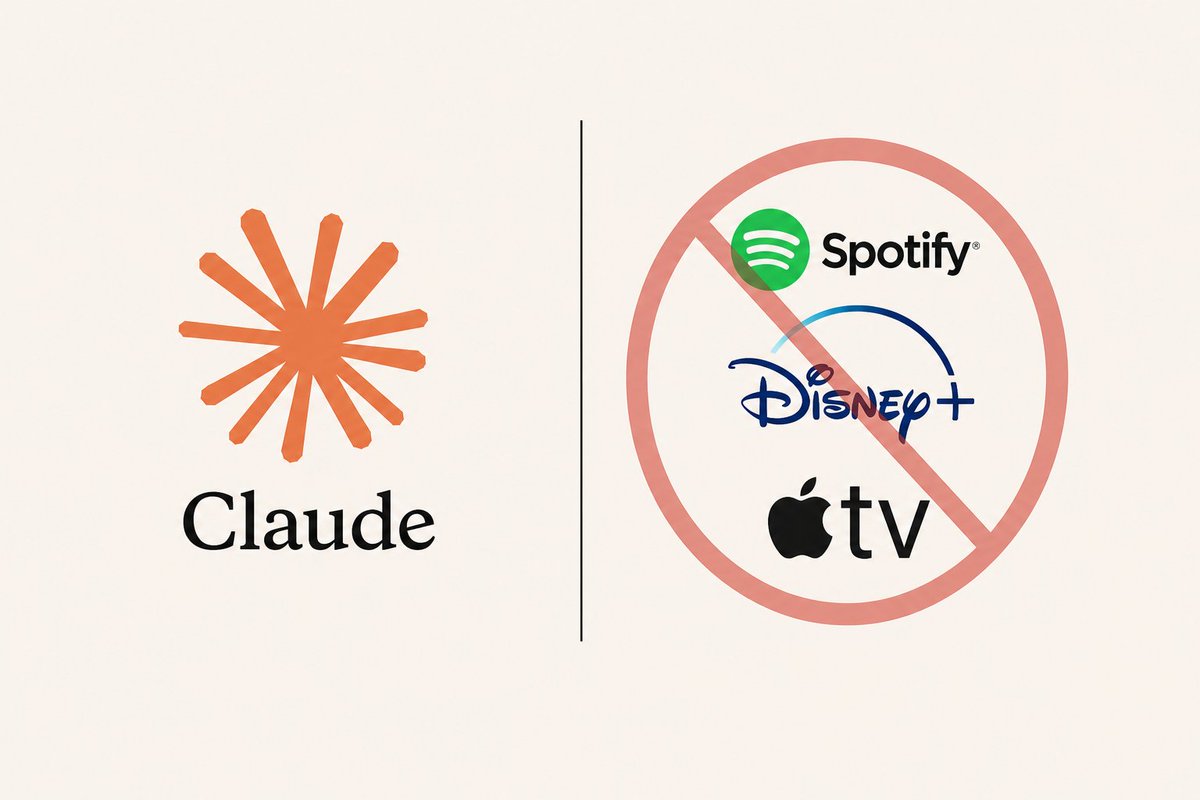
I canceled Spotify.
I canceled Disney+.
I canceled Apple TV+.
No more monthly payments.
Claude turned my laptop into a free entertainment hub that’s better than all of them *combined*.
Here are 9 prompts that rebuild the whole system for free (Save this).
Kenyan Commercial banks average lending rates in March 2026:
▸ Equity Bank only tier 1 bank to raise rates YoY
Cheapest to Most expensive:
● Citibank N.A. Kenya ➠ 10.80%
● Stanbic Bank Kenya ➠ 11.75%
● Standard Chartered Kenya ➠ 11.87%
● Habib AG Zurich ➠ 12.66%
● Guardian Bank ➠ 13.50%
● Bank of Baroda ➠ 13.56%
● Absa Bank Kenya ➠ 13.75%
● Consolidated Bank ➠ 14.00%
● Paramount Bank ➠ 14.01%
● Prime Bank ➠ 14.08%
● Gulf African Bank ➠ 14.09%
● Bank of India ➠ 14.13%
● Diamond Trust Bank ➠ 14.24%
● GTBank Kenya ➠ 14.24%
● Victoria Commercial Bank ➠ 14.44%
● M-Oriental Bank ➠ 14.48%
● Premier Bank ➠ 14.68%
● I&M Bank ➠ 14.81%
● Equity Bank ➠ 15.00%
● KCB Bank ➠ 15.02%
● CIB Kenya ➠ 15.09%
● Ecobank Kenya ➠ 15.22%
● NCBA Bank ➠ 15.28%
● Sidian Bank ➠ 15.37%
● Co-operative Bank ➠ 15.42%
● African Banking Corporation ➠ 15.52%
● UBA Kenya ➠ 15.67%
● National Bank of Kenya ➠ 15.72%
● Family Bank ➠ 15.92%
● Middle East Bank Kenya ➠ 16.07%
● Development Bank of Kenya ➠ 16.16%
● DIB Bank Kenya ➠ 16.40%
● HFC Limited ➠ 17.09%
● Kingdom Bank ➠ 17.43%
● SBM Bank Kenya ➠ 17.65%
● Access Bank Kenya ➠ 17.83%
● Bank of Africa Kenya ➠ 18.57%
● Credit Bank ➠ 18.87%