@sofaissues Jajaj si se discuten y se llaman trastornos del sueño. Tienen que ir a hacerse estudios especiales para descartar Apnea Obstructiva ó trastornos del sueño REM como Piernas Inquietas. 🥱😴💤
#Urgente |
Habitantes de San José de Las Manzanas, San Luis Ayucan y Rancho Blanco, en #Jilotzingo, @Edomex, piden apoyo de autoridades @delfinagomeza, ya que desde hace 4 días se encuentra activo el incendio de comunal de Mazatla y el fuego está llegando a las casas, aseguran que hasta ahora no hay personal de emergencia trabajando.
Cada año, miles de estudiantes de medicina salen a zonas rurales para hacer su servicio social. Se enfrentan a la inseguridad, el crimen y la falta de supervisión. @Fer_Caso nos explica.
Míralo completo en nuestro canal de YouTube: https://t.co/o4TnZJSrJ9
After years of wanting to play in Mexico City, just got to play 4 of the most unforgettable shows for the most beautiful and generous fans. Feeling so grateful for the memories we’re making together on this tour 🥹 TE AMO. 🇲🇽
📷: @hvivas24@GettyImages
No sé por qué se ha vuelto tan común grabar lo que dice un #Médico sin su consentimiento. La relación Médico-Paciente está fundamentada en la buena fe de ambas partes. Es una bandera roja 🚩 que anticipa conflictos.
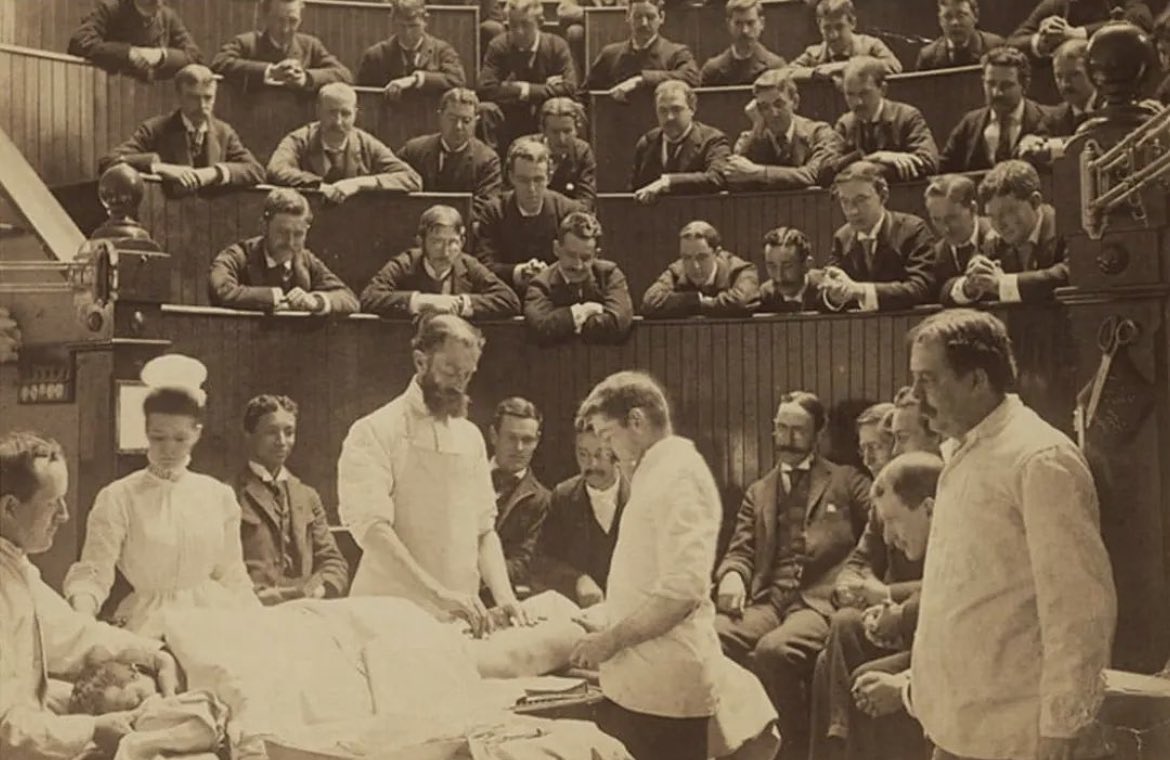
This photograph captures a surgery in progress at the Boston City Hospital operating theater in 1890. Notable features and historical context can be observed, shedding light on the medical practices of the time.
Firstly, it is evident that the surgeons in the photo sport facial hair and are not wearing masks and gloves, which were not commonly utilized during that period.
Secondly, the bag being held against the patient's mouth likely contains ether, a popular anesthetic during that era. Before ether gained popularity, nitrous oxide was widely used and readily available, especially during the Civil War.
The patient is lying face down, with a possible incision on the back of their leg, suggesting a knee operation or procedure related to the leg.
This photograph was taken only a couple of decades after Joseph Lister's pioneering efforts in antiseptic surgery. Lister's progressive ideas faced controversy during his time, with doctors warned in 1869 to disregard his advice on hand and equipment sterilization. One can only hope that the surgeons depicted here were adhering to more advanced and hygienic practices.
Additionally, although not visible in the photo, it is interesting to note that the operating room's ceiling is a glass dome. This architectural feature necessitated surgeries to be performed on sunny days, as artificial lighting was limited to candlelight during this period.