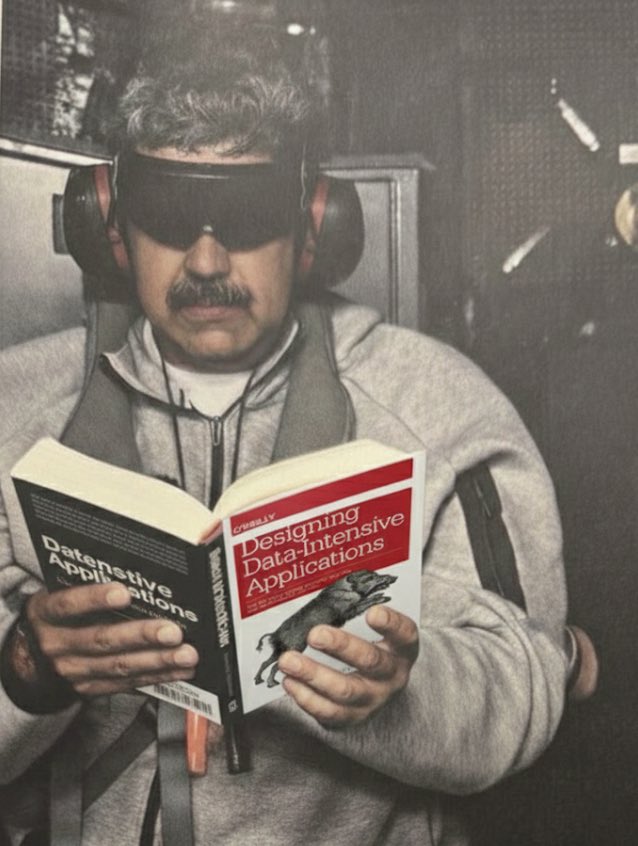
This 2 hour Stanford lecture will teach you more about how LLMs like ChatGPT & Claude are built than most people working at top AI companies learn in their entire careers.
Bookmark this & give 2 hours today, no matter what. It'll be the most productive thing you do this week.
>be Naval Ravikant
>spawn in New Delhi
>poor immigrant family
>father leaves shortly after they land in Queens, New York
>mother works menial jobs by day, night school after
>age 9, alone in a country you don't understand
>no friends
>no safety net
>no connections
>the library becomes your entire world
>get into Stuyvesant High School
>yes, that Stuyvesant
>the public school that produced four Nobel laureates
>one entrance exam changes the trajectory of your life
>go from blue collar to white collar in a single move
>graduate and land Dartmouth
>double major
>computer science and economics
>pay your way through by washing dishes, delivering newspapers, tutoring, fixing computers
>move to Silicon Valley with nothing but a degree and a bet on yourself
>join @Home Network
>watch a $20 billion company go to zero in the dot-com crash
>work on Intrinsic Graphics
>the thing that eventually becomes Google Earth
>co-found Epinions in 1999
>a consumer review site before Yelp and TripAdvisor existed
>raise $45 million in venture capital
>get screwed by your own co-founder and VCs
>they hide the company's real value during a merger
>the company IPOs at $750 million
>you walk away with $0
>not a typo
>zero
>sue Benchmark Capital and August Capital
>everyone in Silicon Valley calls you radioactive
>one VC tells the press you'll never work in the valley again
>settle the case
>learn the game from the inside out
>instead of quitting, you decide to rewrite the rules
>start Venture Hacks in 2007
>a blog that tears the veil off VC term sheets
>give founders the playbook that VCs never wanted them to have
>launch a $20 million fund called Hit Forge
>back Twitter before anyone cares
>back Uber before anyone believes
>back Stack Overflow, Notion, Postmates, Opendoor, Yammer
>turn Venture Hacks into AngelList in 2010
>50 angel investors
>$80 million committed in year one
>100 new startups signing up per day
>build the https://t.co/WLqfUQ0o7R for founders and investors
>do what LinkedIn tried and failed to do
>actually get people to transact
>realize US securities law is blocking everything
>fly to Washington DC
>spend six months lobbying Congress
>rally 5,000 investors and entrepreneurs for an online petition
>call in 100 favors
>get the JOBS Act signed into law by Barack Obama in 2012
>single-handedly open startup investing to ordinary Americans
>the entire equity crowdfunding industry exists because of this
>AngelList hits $4 billion valuation
>over $3.5 billion invested through the platform
>200+ unicorns funded
>spin off Product Hunt, Republic, CoinList
>companies like Neuralink and Rippling get backed through your Spearhead fund
>co-found MetaStable Capital in 2014
>a crypto hedge fund backed by Andreessen Horowitz and Sequoia
>bet on Bitcoin and Ethereum before it's fashionable
>earn a penny on every Uber ride taken on the planet
>invest in 200+ companies across your career
>drop a 40-tweet storm on May 31, 2018
>"How to Get Rich (without getting lucky)"
>it goes more viral than most product launches
>turns into a podcast series, then a global movement
>Eric Jorgenson compiles your tweets and interviews into The Almanack of Naval Ravikant
>it becomes a perennial bestseller
>you didn't even write the book
>your ideas were so good someone else did it for you
>go on Joe Rogan, Tim Ferriss, Shane Parrish, Chris Williamson
>every episode becomes a top-10 all-time listen
>millions of people re-read your tweets like scripture
>you become the most quoted man on the internet who isn't dead
>launch Airchat in 2023
>voice-first social media with AI transcription
>because you think text-only platforms made us forget humans can get along
>here is what Naval actually taught the world
>you're not going to get rich renting out your time
>own equity or stay a renter forever
>specific knowledge is the stuff that feels like play to you but looks like work to others
>leverage is a force multiplier for your judgment
>code and media are permissionless leverage
>you don't need anyone's approval
>10,000 iterations is not 10,000 repetitions
>one is mastery, the other is a treadmill
>if you can't decide, the answer is no
>when two choices look equal, pick the harder one short term
>stress is an inability to decide what's important
>desire is a contract you make with yourself to be unhappy until you get what you want
>inspiration is perishable
>act on it immediately
>the three big decisions: what you do, where you live, who you're with
>people spend years optimizing careers but pick partners and cities on autopilot
>not optimizing for wealth
>optimizing for sovereignty
>win the game fast enough that you get to stop playing
UM POUCO DA HISTÓRIA DO ELON MUSK PARA VOCÊS!!
Elon Musk fala sobre a criação de sua primeira startup, a Zip2.
Em 1995, quando tinha apenas 23 anos, Elon abandonou o programa de doutorado em física de Stanford para fundar a Zip2 com seu irmão Kimbal Musk.
Naquele verão, Elon Musk escreveu pessoalmente os primeiros mapas nacionais, indicações, listas telefônicas e páginas brancas da internet, em linguagem C com um pouco de C++.
Nesta entrevista à CBS, Elon Musk, aos 27 anos, descreve como era viver em um escritório que custava US$ 200 por mês e tinha um telhado com goteiras:
“Descobrimos que um escritório era, na verdade, mais barato do que um apartamento no Vale do Silício, e conseguimos um escritório minúsculo com goteiras. Era o pior lugar que você pode imaginar. Eu morava lá e tomava banho na YMCA. Isso durou uns três ou quatro meses, e o motivo de termos escolhido esse escritório — além de ser muito barato — foi que havia um provedor de internet no andar de baixo. Então, conseguimos acesso à internet bem barato fazendo um buraco no chão e nos conectando diretamente ao servidor deles.”
Em fevereiro de 1999 — menos de um ano após esta entrevista — a Compaq compraria a Zip2 por 307 milhões de dólares em dinheiro.
O entrevistador também pergunta a Elon qual ele acha que será o futuro da internet, ao que Elon responde:
“Acredito que a internet seja o superconjunto de todas as mídias. É o alfa e o ômega da mídia. Veremos a mídia impressa, a radiodifusão, o rádio — essencialmente todas as mídias — convergindo para a internet. A internet, em essência, é o primeiro meio de comunicação bidirecional inteligente. Ela permite que os consumidores escolham o que querem ver e quando querem ver.”