EDYU Engineering | Licensed Civil Engineer practicing structural engineering (20+ yrs) on all things wood but mostly custom homes & sometimes TI's + Retail.
When it comes to earthquake size, what the public most recognizes is known as the Richter scale which basically is a measure of the earthquake magnitude. The Richter scale does have limitations so there are now other magnitude scales to describe the magnitude of an earthquake. A 4.0 to 5.0 magnitude earthquake can be characterized as a light to almost moderately strong earthquake which in general may lead to minor structural damage. Structures designed and constructed in the last 30 years should respond very well to a 4.0 to 5.0 magnitude earthquake. The actual seismic force that any structure may experience in reality is based on many factors, including but not limited to, the magnitude of the earthquake, the earthquake depth, the earthquake duration, distance to the epicenter, peak ground accelerations, on-site soil characteristics, the type of foundation and the soil-structure interaction, structure type and the period of the structure, etc.
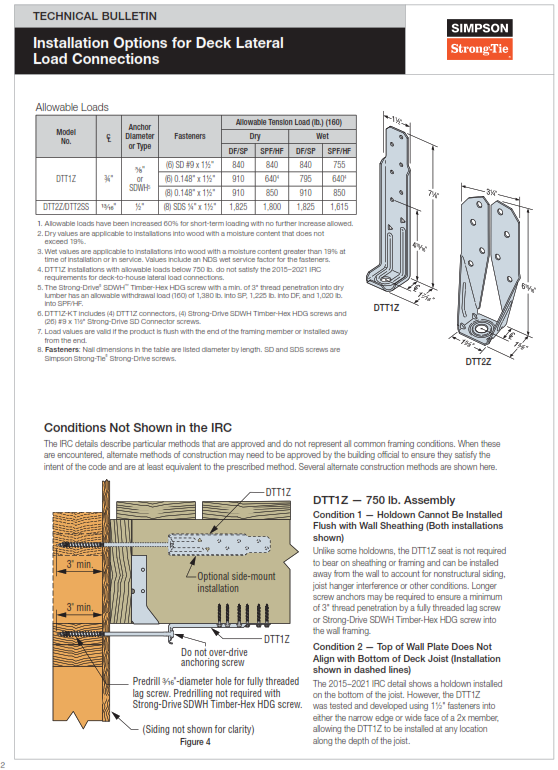
With all that said, for a deck of this size and its fairly elevated position based on the elevation photos, this deck needs to be laterally tied back to the main structure via the floor framing. Per the 2022 California Residential Code, the following is the current code provision to satisfy the lateral connection. (Photo 1)
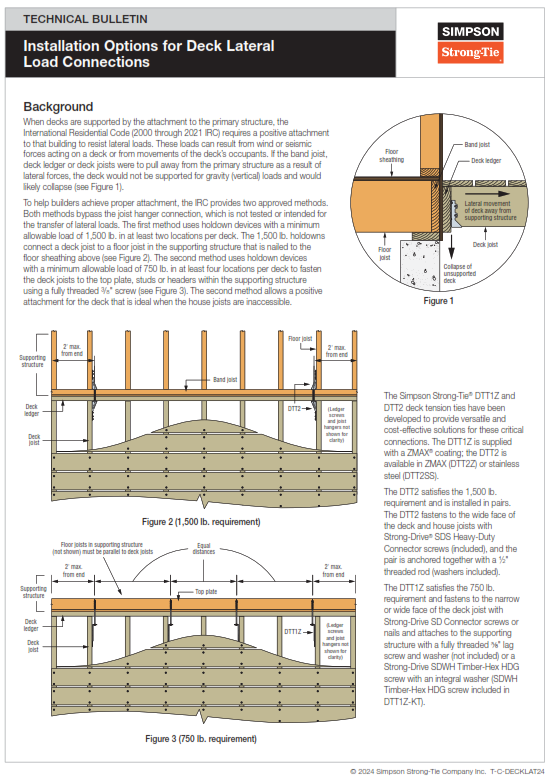
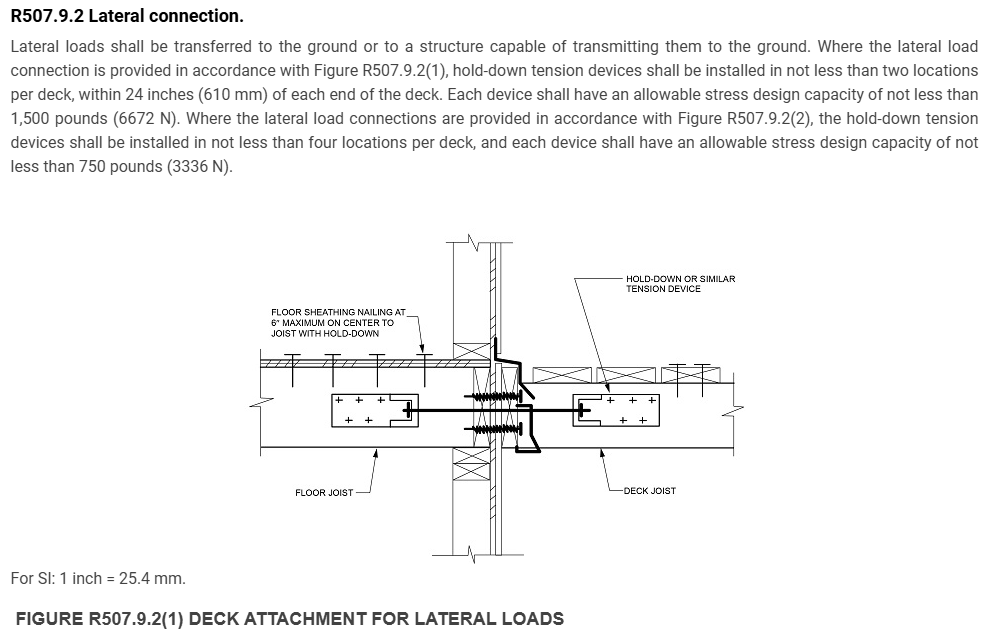
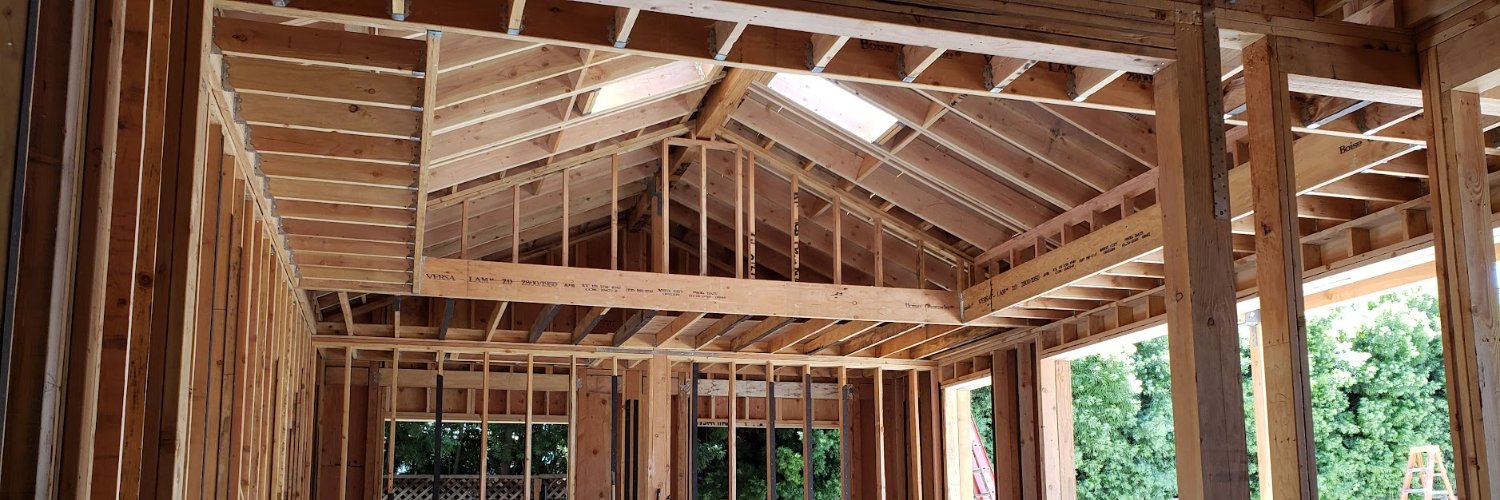
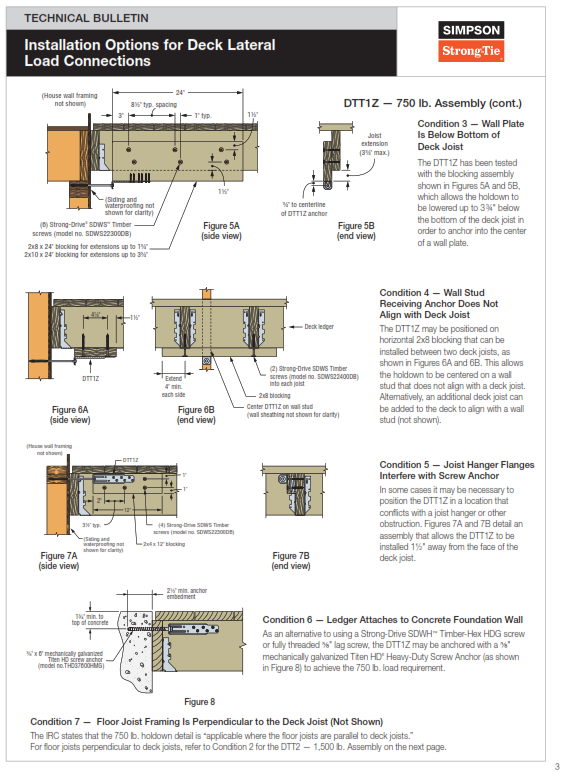
Simpson Strong-Tie @strongtie has a technical bulletin (T-C-DECKLAT24) that goes into more detail and provides practical solutions to satisfy the deck lateral load connection. While a 4.0 to 5.0 magnitude earthquake may be considered light, for larger decks that aren’t laterally connected appropriately, even light earthquakes can cause the deck to separate from the main structure. This separation can be considered potentially catastrophic because it is a single point of failure that could lead to a deck collapse and bodily injury. (Photo 2 through 4)
I can only speak for the structural engineering aspect. But we have come a long way and learned a lot from past earthquakes and other structural disasters and that is what primarily influences the evolution of the structural portion of the building code in CA. The structural code isn't some over regulated redundant code that gets in the way. Go look up past significant earthquakes in CA and how many deaths occurred. He wants to opine about a foundation system that isn't even for his house and thinks there is some grand agenda behind the scene.
But specific to what can be seen in the video. My best guess is, there are specific drilled piers that are the more critical ones. They design and size and reinforce those critical drilled piers first based on a D/C = 0.85 maximum. They will most likely size the other less critical drilled piers the same as the most critical ones because of constructability. It might not makes sense to have three or four different drilled pier sizes because it could lead to confusion and more time and labor to have different drilling equipment. Therefore the less critical drilled piers may have a D/C = 0.5 (or less) or a factor of safety of 2 or even greater.
For example, for many of the critical structural elements, we will design the element so that the demand to capacity ratio is between 85% to 90% and therefore this is as efficient of a design while leaving some margin of safety factor. Maybe some engineers prefer to have the demand to capacity ratio closer to 60% to 70% but engineers don't make any more or less money by being conservative. But conservative or over engineered designs will eat into the profit of those on the build side and over time, these engineers may not be able to stay in business.
@dbssteeler29754@adamcarolla Find me a General Contractor that will put their livelihood and business on the line to build like in the 1900's. Building science and building codes have evolved. Because as I stated before, be serious.
While we are at it, let's do surgery like they did in 1900.
I was making the distinction between Builders and Engineers. Let me clarify what happens when you factor in time into this discussion.
Many Builder's profit and overhead is a percentage of the overall construction cost. Builders like to build as much as possible which leads to more profit and this is fair.
Engineers work off a lump sum and usually it is not a consistent fixed percentage of the overall construction cost from project to project. We often time do not know the cost of construction for the project at the beginning during engineering. Engineering is sort of a race to the bottom. If engineers start over engineering things with no justification, Architects and Builders will not use them for future projects.
@dbssteeler29754@adamcarolla I can deduce that this project is permitted and the foundation design is therefore engineered. How does anyone know a foundation system as shown is not necessary from a photo or video? Be serious.