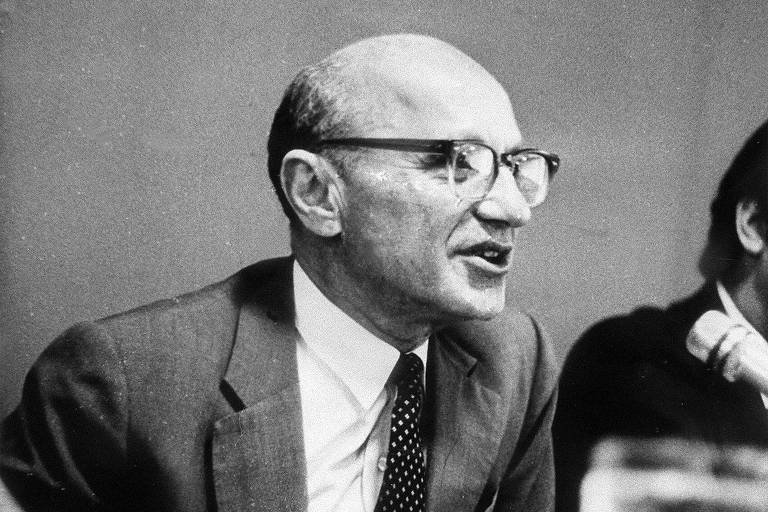
Milton Friedman on 4 ways to spend money:
1) Your money on yourself (you’re careful about both cost and quality)
2) Your money on others (you care about cost, less about quality)
3) Someone else’s money on yourself (you care about quality, not cost)
4) Someone else’s money on others (you care about neither)
The last one is how government spending works.
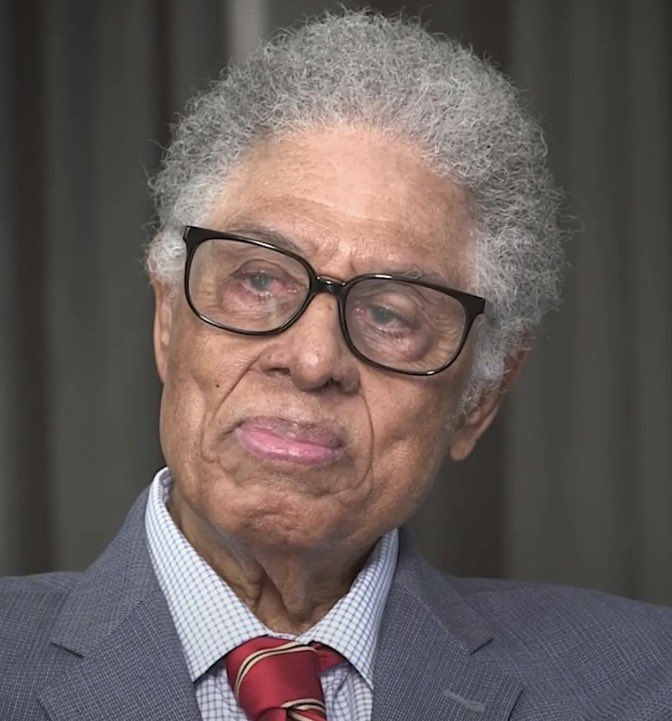
Thomas Sowell is 95 years old.
Let that number sit with you.
Ninety-five years on this earth, and in all of them, he has never held public office, never had a viral moment, never begged for anyone’s attention.
What he has done is write 30 books and spend 50 years of patient research building a body of work that has outlasted every fashionable idea his critics tried to bury him with.
While the loudest voices in Washington were chasing polls and the cleverest minds on campus were chasing grants, Sowell was in the library reading the data, tracking the outcomes, and dismantling one bad idea after another.
He doesn’t argue feelings.
He measures results.
He isn’t selling anything.
His whole approach boils down to one line that every politician and activist in this country should be forced to recite before they open their mouths:
“There are no solutions. There are only trade-offs.”
Sit with that, too.
Every federal program, every mandate, every well-meaning crusade carries a cost, and somebody pays it.
Sowell’s life work has been the simple act of asking who.
Listen to him on the “help” our communities have been promised for two generations:
“I’ve been doing studies now for 20 years of programs designed to increase equality. They increase inequality.”
“Even when the programs are designed for disadvantaged groups, they help the affluent members of the disadvantaged groups, while the lower members of those groups fall further behind than ever before.”
That is the whole affirmative action racket laid out in two sentences.
The kids from the same zip codes as the Harvard faculty get the slot, while the kids from the neighborhoods that actually need a ladder are told to wait their turn.
Sowell says it plain:
“The vast majority of blacks who go to places like Harvard, Cornell, and Stanford are not blacks from the ghetto. They’re from the same neighborhoods as the whites there.”
The race hustlers don’t want you to know that, because they need the grievance to stay in business.
Sowell’s advice to young people cuts right through the hustle:
“Stay away from the race hustlers.”
“Equip yourself with skills that people are willing to pay for.”
That is the whole ball game right there, a matter of skills, work, and accountability rather than slogans, hashtags, or another federal program designed to pad a consultant’s salary while leaving the South Side worse off than before.
Here is the line I want every young person in Cincinnati, Cleveland, Columbus, and every other corner of America to read tonight:
“Much of the social history of the Western world over the past three decades has involved replacing what worked with what sounded good.”
That one sentence explains our schools, our cities, and why the neighborhoods the War on Poverty was supposed to save are in worse shape now than they were before the checks started flowing.
Sowell has pushed a whole generation of us to stop reacting and start asking harder questions.
What are the incentives?
Who actually benefits from this policy?
What do the numbers look like five, ten, twenty years later?
Ask those questions honestly, and the illusion falls apart.
The most dangerous man in America right now isn’t the one shouting on television.
He is the 95-year-old professor in Palo Alto who doesn’t need you to agree with him, because he has the data on his side.
Ninety-five years of telling the truth.
Thank you, Dr. Sowell.
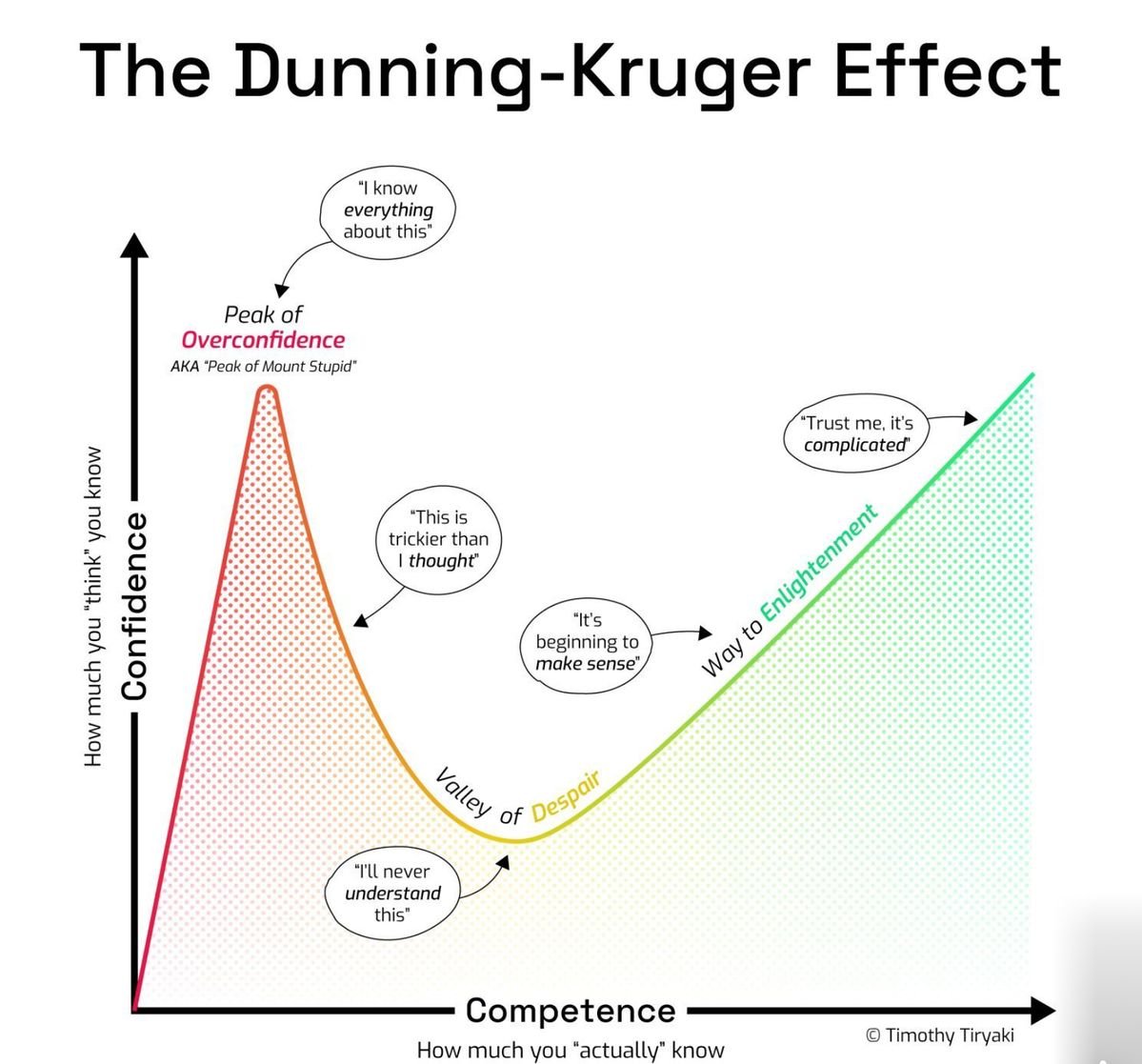
The Dunning-Kruger effect is a cognitive bias in which people with limited knowledge or competence in a specific area greatly overestimate their own abilities. Conversely, highly skilled individuals often underestimate their relative competence, assuming tasks that are easy for them are similarly easy for others.
As redes sociais não foram apenas inspiradas pelos cassinos — elas foram reconstruídas com base em seu truque mais sombrio.
Andrew Huberman relata a revelação de Mike Easter: a grande sacada aconteceu quando engenheiros observaram crianças jogando videogames sem parar... não para ganhar, mas pela pura novidade.
Eles redesenharam as máquinas caça-níqueis com base nisso: infinitas combinações novas, quase-acertos que dão a sensação de quase-vitórias. O cérebro é enganado para buscar a dopamina do "estou prestes a ganhar" — mesmo perdendo muito.
As máquinas caça-níqueis explodiram, passando de 10-20% para 80% da receita dos cassinos.
Agora, os feeds fazem exatamente a mesma coisa: estímulos novos infinitos, recompensas variáveis, doses constantes de dopamina que dão a sensação de quase-acertos. Rolamos a tela enquanto perdemos horas, foco, trabalho profundo — convencidos de que algo recompensador está a apenas uma atualização de distância.
O antídoto de Huberman inverte a lógica: mergulhar nas "trincheiras do pensamento". O foco sustentado (ler, escrever, criar) cria estados de atração neural — como uma esfera afundando em um vale profundo. Uma vez lá dentro, é difícil escapar... e esse é o objetivo. Blocos de 90 minutos sem interrupções geram um impulso real.
Na economia da distração de 2026, a habilidade mais rara (e mais poderosa) não é a multitarefa — é proteger a atenção ininterrupta.
A vantagem injusta hoje? Faça o que quase ninguém faz mais: permaneça imerso na tarefa tempo suficiente para produzir algo excepcional.
Qual é a atividade que te leva a esse vale de foco profundo — e qual é a maior coisa que te tira de lá?
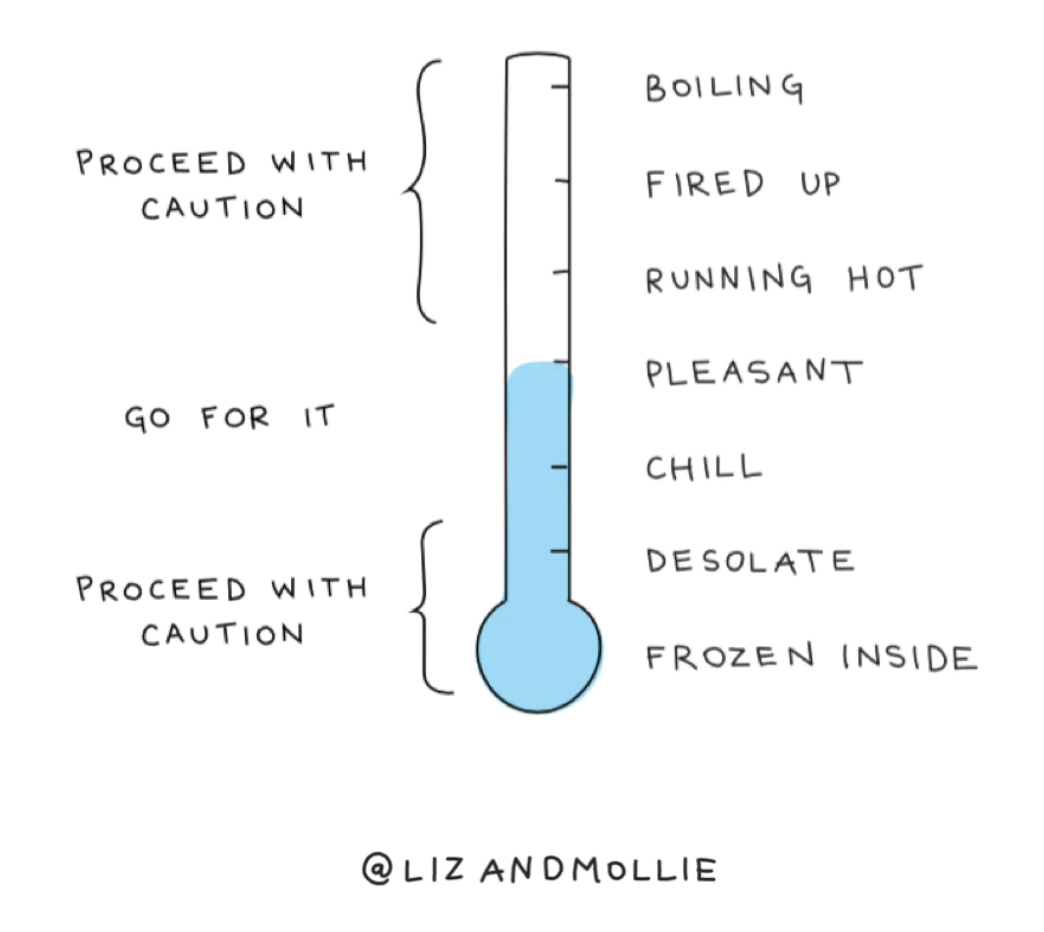
A sign of emotional intelligence is refusing to let feelings dictate decisions.
Feelings are electrical signals in the brain. We don't choose every sensation, but we are responsible for how we react.
Emotions are rarely calls to action. They're usually cause for reflection.
https://t.co/qEUjMN0b1Z
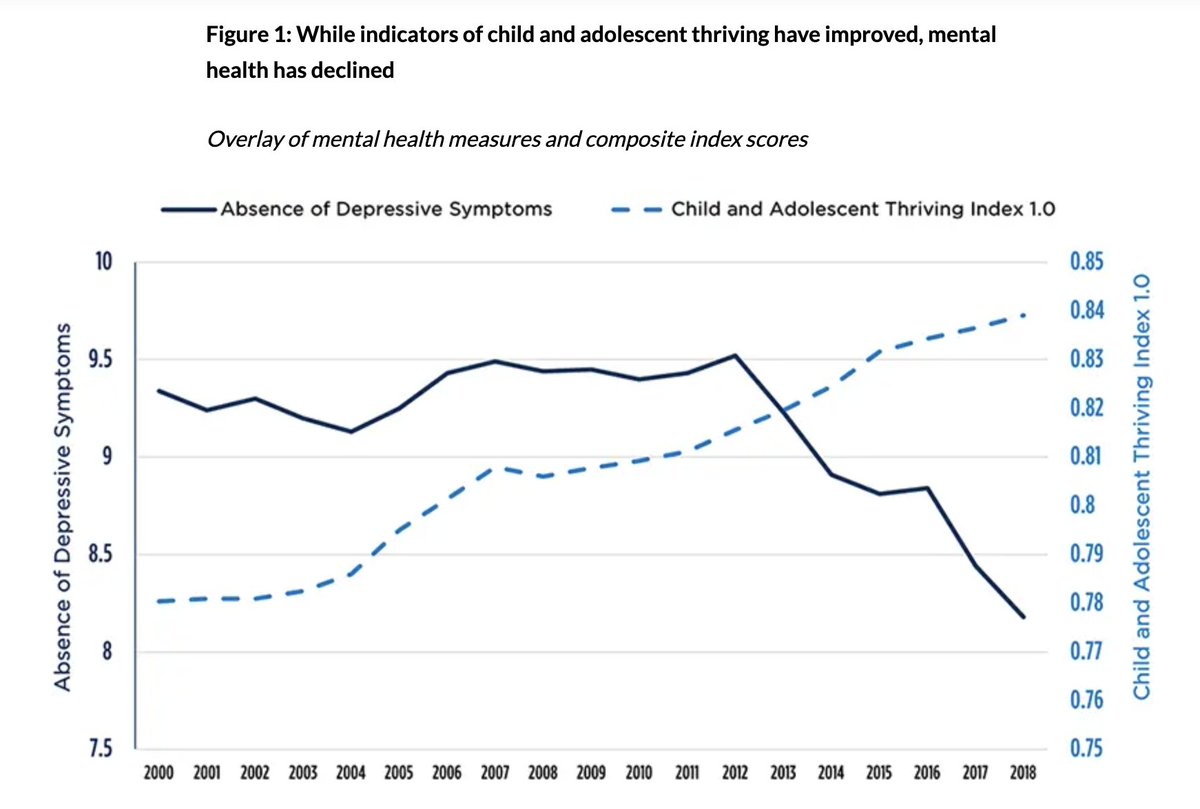
The teen mental health crisis was not caused by reality getting worse around 2012. Their material and physical health improved steadily. To paraphrase Epictetus: "It is not events which disturb teens. It is the device through which they interpret all events."
https://t.co/4DtBYu7wK7
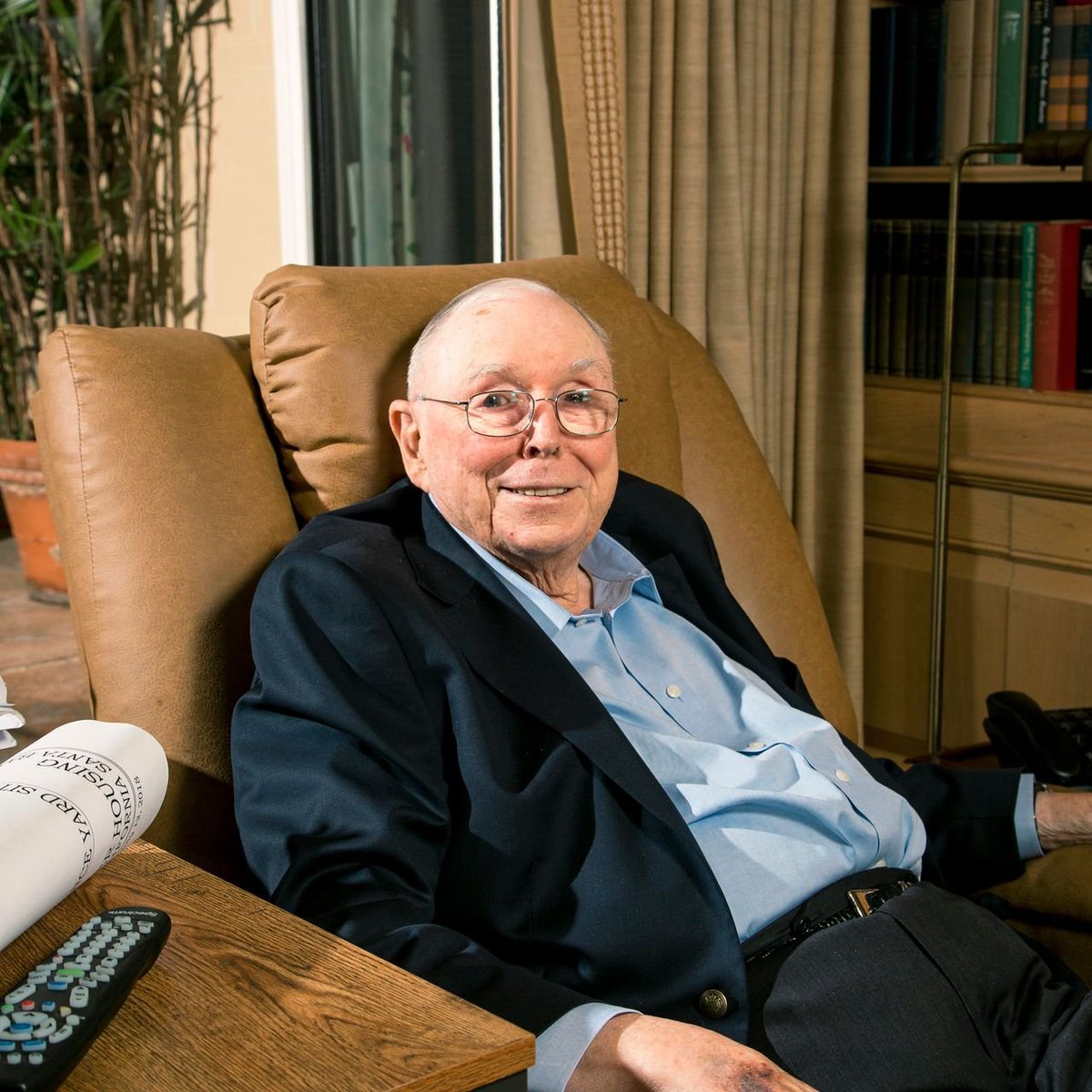
My favorite Charlie Munger story:
In 1953, Munger was 29 years old.
Recently divorced. Lost the house. Huge social stigma of divorce back then.
His 8-year-old son, Teddy, was diagnosed with cancer.
The leukemia was incurable.
No medical insurance - Munger paid for all his medical care.
Charlie would visit Teddy in the hospital every day -- and then walk the streets crying.
Teddy died at the age of 9.
Charlie was broke, divorced and just lost his child.
99.9% of people would've turned to alcohol, drugs, or suicide. (And you'd understand why)
Munger never did.
Fast forward to 52 years old, a failed surgery left him blind in one eye with the potential of going fully blind one day.
Charlie was an obsessive learner who read every book he could get his hands on.
When confronted with the possibility of going blind and no longer being able to read he said:
"It's time for me to learn braille!"
The only thing that might be more impressive than his intellect was his actions.
RIP.
---------
Munger on Self-Pity:
"Generally speaking, envy, resentment, revenge, and self-pity are disastrous modes of thought.
Self-pity gets pretty close to paranoia…
Every time you find your drifting into self-pity, I don’t care what the cause, your child could be dying from cancer, self-pity is not going to improve the situation. It’s a ridiculous way to behave.
Life will have terrible blows, horrible blows, unfair blows, it doesn’t matter. Some people recover and others don’t.
There I think the attitude of Epictetus is the best. He thought that every mischance in life was an opportunity to behave well. Every mischance in life was an opportunity to learn something and that your duty was not to be immersed in self-pity, but to utilize the terrible blow in a constructive fashion. That is a very good idea."
If you cannot achieve equality of performance among people born to the same parents and raised under the same roof, how realistic is it to expect to achieve it across broader and deeper social divisions?
There seems to be a growing number of people who think that the world should adjust to them, while they don't have to show any consideration to anyone.