Someone built a self-hosted AI app that scans your receipts, invoices, and PDFs and auto-extracts every detail you need for tax filing.
100% open-source and private.
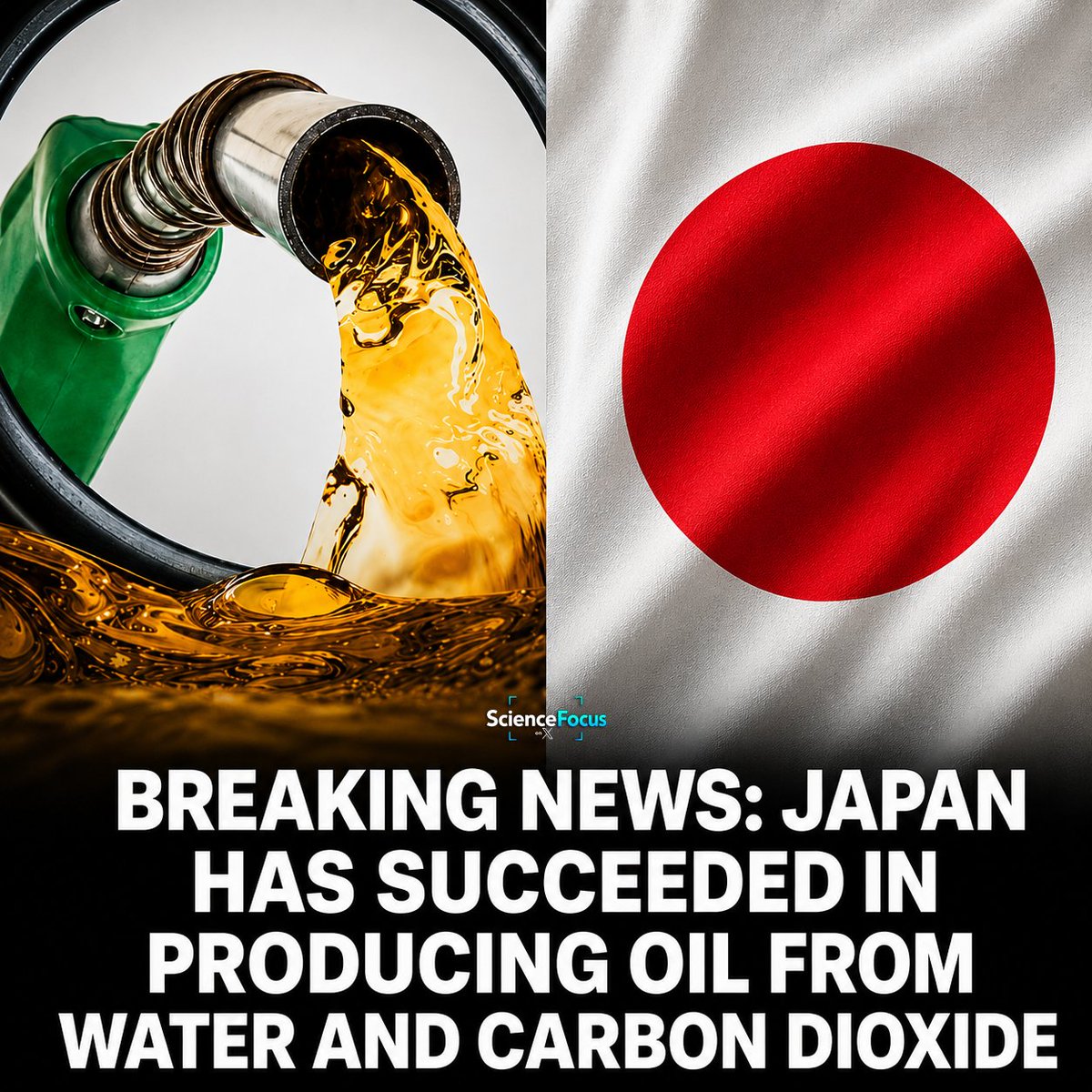
Japan just turned thin air into fuel.
No oil rigs. No drilling. No pipelines stretching across oceans.
Just water, CO₂, and a process that flips combustion on its head.
ENEOS Corporation, Japan's biggest oil refiner, pulled it off at their Yokohama lab.
They built a demo plant that sucks carbon dioxide straight from the atmosphere, splits hydrogen out of water using renewable energy, then fuses them through Fischer-Tropsch synthesis into liquid hydrocarbons.
The result? Real, usable synthetic petroleum.
The kicker: this fuel is "drop-in ready." That means it works in the cars you already drive, the planes already in the sky, the pipelines already in the ground. Zero modifications.
They didn't just brew it in a beaker either. They ran actual vehicles on it. It works.
Think about what that unlocks. Countries with no oil reserves could manufacture their own fuel using nothing but sunlight, wind, and the air around them.
The geopolitical chessboard would flip overnight.
Sectors that electrification can't easily touch, like aviation and heavy shipping, suddenly have a clean fuel path.
There's a catch, though. The process is hungry. The same electricity it takes to brew one liter of synthetic fuel could push an EV about 200 km down the road. ENEOS quietly shelved the project in 2025 because the economics didn't math out yet.
But the science? Proven. The blueprint exists. Someone, somewhere, will crack the cost problem.
And the day they do, the oil map of the planet gets redrawn.
Source: ENEOS Corporation / TheTownHall(.)News
She is a Cognitive neuroscientist who claims that consciousness can ‘jump’ into the future, suggesting that time is not strictly linear and that gut feelings may sometimes be information ‘leaking’ from the future.
Julia Mossbridge has collected many stories of such experiences and also had them herself since childhood.
One story is about a four‑year‑old girl in 1989 who suddenly felt she would never see her father alive again when he left on a trip, and later that night he died in a car crash.
Mossbridge says her own dreams sometimes matched real events that happened later, and keeping a dream journal helped her see that some details were too specific to be a simple coincidence.
Because of this, Mossbridge started to question the usual picture of time as a straight line: past, present, future in one direction only. She suggests the future might already exist in some form, and that people can sometimes “remember” future events the way they remember past ones.
She gues that there is both experimental evidence for precognition and support from physics ideas like “retrocausality,” where something in the future can influence the past. For her, the difficulty is not understanding the concept, but getting people to accept it, because it conflicts with their belief that time must be linear.