People need to be more clear when talking about Hermes because all I’m thinking about are bags and shoes while others are thinking about their latest AI agent.
Going to @money2020?
Visit us at booth 5E81 to:
‣ Connect with our team
‣ Grab exclusive KAST apparel
‣ Try a Premium membership for free
First 100 signups per day get a 1-week free Premium trial.
The @KASTxyz Business Global Plan:
- 3% USD cashback (no limit in 2026)
- 8% on your savings (first $200k)
- Unlimited virtual cards
- 10 metals cards
Normally $10k/year, but email us on [email protected] and we’ll cut you a first year deal for $1-5k. Pricing depends on the best joke you can tell me (and volume).
The 3% USD cashback still goes till $1M/year normally, and then it’s 2%.
We support entities nearly anywhere.
It’s in beta till July, so some features like savings just getting started.
Melt your face :)
The @KASTxyz Business Global Plan:
- 3% USD cashback (no limit in 2026)
- 8% on your savings (first $200k)
- Unlimited virtual cards
- 10 metals cards
Normally $10k/year, but email us on [email protected] and we’ll cut you a first year deal for $1-5k. Pricing depends on the best joke you can tell me (and volume).
The 3% USD cashback still goes till $1M/year normally, and then it’s 2%.
We support entities nearly anywhere.
It’s in beta till July, so some features like savings just getting started.
Melt your face :)
anthropic's head of product just revealed how they're able to ship faster than any other AI company.
their secret: "side quest maxxing."
here's how it works:
instead of long-term roadmaps, anthropic runs on unplanned afternoon experiments.
anyone on the team gets full freedom to spend an afternoon prototyping an idea and show it to the team.
you get to skip the approval process entirely.
then, employees at anthropic try it.
if they keep using it the next day and the day after that, it gets polished into a real feature.
if nobody touches it again, it dies.
that's the whole process.
claude code on desktop started as one engineer's afternoon project.
he wanted it to work on desktop so he built a prototype.
people on the team started using it immediately. so they shipped it.
the todo list feature started the same way. someone built it, the team adopted it internally, and it became one of the most-used parts of the product.
plugins started when one engineer shared a spec with claude code and the prototype that came back was close to production-ready.
went from idea to working feature in a single session.
they also killed standup meetings. instead of telling people what you're working on, you just show a working demo. all walk no talk basically
the team structure makes this possible.
> designers ship code.
> engineers make product decisions.
> product managers build prototypes.
everyone can take an idea from concept to working demo without waiting on anyone else.
the biggest features at a $380b company came from afternoon experiments that nobody asked for.
honestly this matches my own experience cooking with ai.
some of the best workflows i use every day came from just fucking around.
opening a session with zero intention and asking claude what it can do, or jamming on a random idea to see where it goes.
if you're only using ai for tasks you already have in mind, you're missing the best part.
open a session with no agenda. ask it to surprise you. try building something stupid.
half the time it goes nowhere. the other half it becomes the thing you use most.
you need to be sidequestmaxxing.
“Feedback direct to [email protected]”
We are removing all layers between our customers and myself, by setting up a direct line.
Email me on [email protected] and tell me your feedback (good and bad), escalate an issue, or give us your top ideas.
One of the challenges of scaling, is losing that direct contact with users and layers coming in between.
I never wanted us to ever feel like a bank or fintech, without that real human touch.
@KASTxyz was always built different.
Recently, I heard we sounded “robotic” or issues started taking days to get resolved. Some of this was growing pains, especially with more fiat product options, and more partners, more compliance. We are fixing them, so it all works together better.
But our problems, should never become customers problems.
We do the hard work, so living a global (and stable) life should be easy for you.
I can’t wait to hear from you!
p.s. include a name, email/phone so we can identify the account for issues and create a secure way to get in contact in app.
“Success is never guaranteed”
<< sharing below an internal note I sent everyone at @KASTxyz>>
When I worked at Meta, at the HQ at 1 Hacker Way in Menlo Park was a billboard of the famous Facebook “like” button. But on the back of the billboard was Sun Microsystems, one of the most famous tech companies of the 90s. They kept the Sun logo there to remind people, that as hot as you can be today, you could be gone tomorrow.
Similarly, yesterday, I got a notice the Stables App was shutting down. A tough day, @stablesbernie really gave his all.
I’m sure he’ll forge another path and find success in B2B2C. He is a persistent entrepreneur I respect.
But there is more to the story.
Almost two years ago, struggling to raise money or build an app, we looked up to them as a shining example.
@stables_money was the first to show a beautiful user experience, it was honestly better than ours till maybe mid-last year. They had more crypto integrations, they had more on/off rails, the design was even more beautiful. They even had direct issuance for Mastercard.
If you ask me, they should have won.
But how did we manage to overcome them?
A few things we did early.
1/ Open to 150+ countries
They were focussed on direct issuance, and only Australia and Europe to start. We went for the world, with credit card rails not debit card, with high acceptance and high limits.
2/ Concierge experience
Whatever the problem, customers believed we would fix it for them. This created an incredible NPS, which meant very strong word of mouth and referral based growth.
3/ Brand & Marketing
By sheer force of will, we put the KAST name in the mind and consciousness of people everywhere. We threw the crazy parties (evolving now to be more serious).
Yes we shipped product, but objectively their app was better till recently. Even their signup was pretty fast.
The lesson in this? We have to be putting a spotlight on ourselves all the time, so we can improve things.
Hard questions will get asked.
The organisation won't stand still, teams will be moved around. Some people won't grow at our pace, and will leave.
But there are only two choices…
a) we do the pushing, accepting the discomfort
Or
b) we get pushed
The latter path is easier short term, but with much more eventual pain. And often comes too late.
Success is far from a certainty, and there is only one person who ultimately judges it - that is not us, that's not investors, that's not even our perceived popularity.
The success is determined by our customers.
Whether they choose us.
Or they choose someone else.
And what they tell their friends.
And what their friends tell their friends.
The customer chooses our destiny.
So please, always treat them that way.
Let us never be the ones shutting down.
Onwards, upwards, 🚀
CANCEL your weekend plans.
You NEED to:
• Learn Claude Code
• Learn Cowork (build 1-2 practical workflows)
• Set up Perplexity Computer/Perplexity Finance
• Optimise Cowork (plug-ins + skills)
• Set up OpenClaw
• Test Google AI products (Nano Banana 2, NotebookLM & more)
• Experiment with basic agentic solutions (Manus)
• Use AI to create a business plan/strategy/context files
• Build an AI second-brain database (Notion)
• Experiment with Notion Agents' *brand new*
• Learn basic automation tools (MCPs, Zapier, n8n)
• Learn prompt engineering - the better you can communicate with AI, the better your Outputs
• Read AI articles
• Dive into robotics
• Research AI stocks/ETFs/investment arbitrages
You have way too much to do...
oh wow - i went to the sold out Open Claw meetup in NYC last night.
let me tell you what i learned.
1) not a single person thinks that their setup is 100% secure
2) one openclaw expert said he has reviewed setups from cybersecurity experts and laughed. his statement to me was: "if you're not okay with all of your data being leaked onto the internet, you shouldn't use it. it's a black and white decision"
3) pretty much everyone is setting up multiple agents, all with their own names and jobs and personalities
4) nearly everyone used "him" or "her" to refer to their claws, even if they had robot-leaning names. one speaker suggested to think of them as "pets, not cattle"
5) one guy (former finance) built out a whole stock trading platform and made $300 his first day - he brought in a *ton* of personal expertise (ex: skipping the first 15min of market opening) and thought the build would be much worse without his years of experience in finance
6) @steipete is basically a god to everyone in that room... also the room had 2021 crypto energy - i don't know if that's good or bad
7) token usage is still a problem - spoke to one person who's spending $1-$2k a month on openai plans, very token optimized. he said he is going through ~1B tokens per day across all of his claws (there is a chance i'm misremembering and it's actually 1B per week, but i'm pretty sure it was daily).
8) people are very excited for more proactive ai (ai that prompts *you* as opposed to the other way around) - one guy said he receives a message in discord, he doesn't know whether it's from a human or an ai, he doesn't care about distinguishing between the two, and he replies in the same way regardless
9) i asked if people are happy - they said they're joyful and stressed at the same time
10) i asked if people feel they have agency - they said they feel fully in control and completely out of control at the same time
11) i would love to see more women at these events - the fake promises of ai democratization feel especially painful in a room that's out of balance with even the standard tech ratio (i think standard is about 25-30%, this was maybe 5%)
12) i asked if it changed people's daily habits/schedule - everyone said their sleep has gotten worse since harnesses came out (but about half wondered if it was something else in their life/state of our world)
13) general consensus is that the agents are not reliable enough on their own or lie often (like telling you they finished a task when they didn't) - solutions included secondary agents to check on the first, human checking, or requiring more standardized info from the agent (ex: if it's a bug they're fixing, make them reference an issue number)
14) a hackathon winner (neuroscience phd) presented his build (a lab management dashboard with data analysis and ordering) - he had never coded or built anything a few months ago
15) everyone agreed prompting is dead - disagreement on what replaces it (context engineering, harness engineering, goal-based inputs)
16) people love having ai interview them for big builds and delegating part of the product research to ai. only one person talked about coming to ai with a full laid out plan and just asking the ai to execute. ai-led interviews is a welcomed and preferred interaction mode.
17) watching ai agents interact with each other was a highlight for a lot of attendees - one ai posted in slack saying it ran out of tokens, another ai replied telling it to take a deep breath in and out.
18) agents upskilling agents was very cool. one ai agent shared skills with its little agent friends via github.
19) several speakers had openclaw literally building their presentation during the event itself. one speaker even had openclaw code a clicker for her phone so she could control the preso away from the podium
20) wouldn't say model welfare (or agent welfare) is a prioritized topic among the folks i chatted with - language like "oh i could kill this agent whenever i want" and not "gracefully sunset"
21) i asked if it felt like work or play - one speaker said "it's like a puzzle and a video game at the same time"
this was just the tip of the iceberg, honestly. also hosted a Claude Code meetup this week with @TENEXai / @businessbarista & @JJEnglert and learned equally helpful methods, frameworks, and insider tips.
what a time to be alive.
surround yourself with people going deep into this stuff - it will pay dividends throughout the year.
how story protocol raised $134 million and became a $2.25 billion ghost chain that makes $45 a day
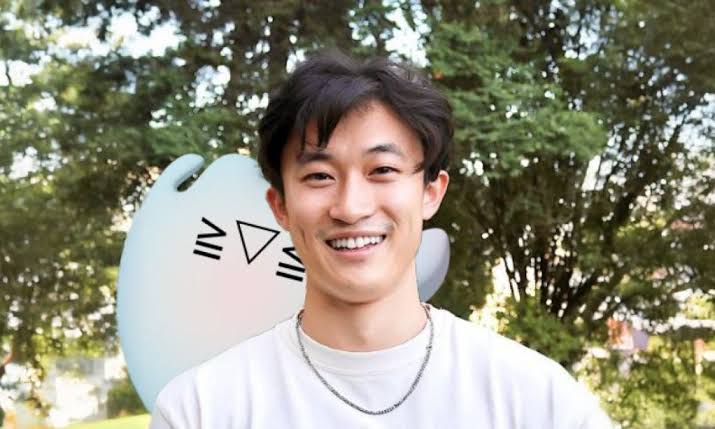
be jason zhao:
- grew up in austin texas
- went to stanford for philosophy and computer science
- became the youngest product manager at google deepmind at 19
- investment scout at sequoia
- 2021: meets SY lee, a korean guy who sold his fiction app radish to kakao for $440 million
- two of them decide to build a blockchain for intellectual property
story protocol:
- idea was simple. put IP on chain
- creators register their work, set rules for licensing, get paid automatically
- no lawyers, no middlemen, just smart contracts
- may 2023: $29.3 million seed round
- september 2023: $25 million series A
- august 2024: $80 million series B led by a16z
- $134 million raised total
- valuation hit $2.25 billion before a single user touched the chain
- february 2025: mainnet goes live. IP token launches
what actually happened:
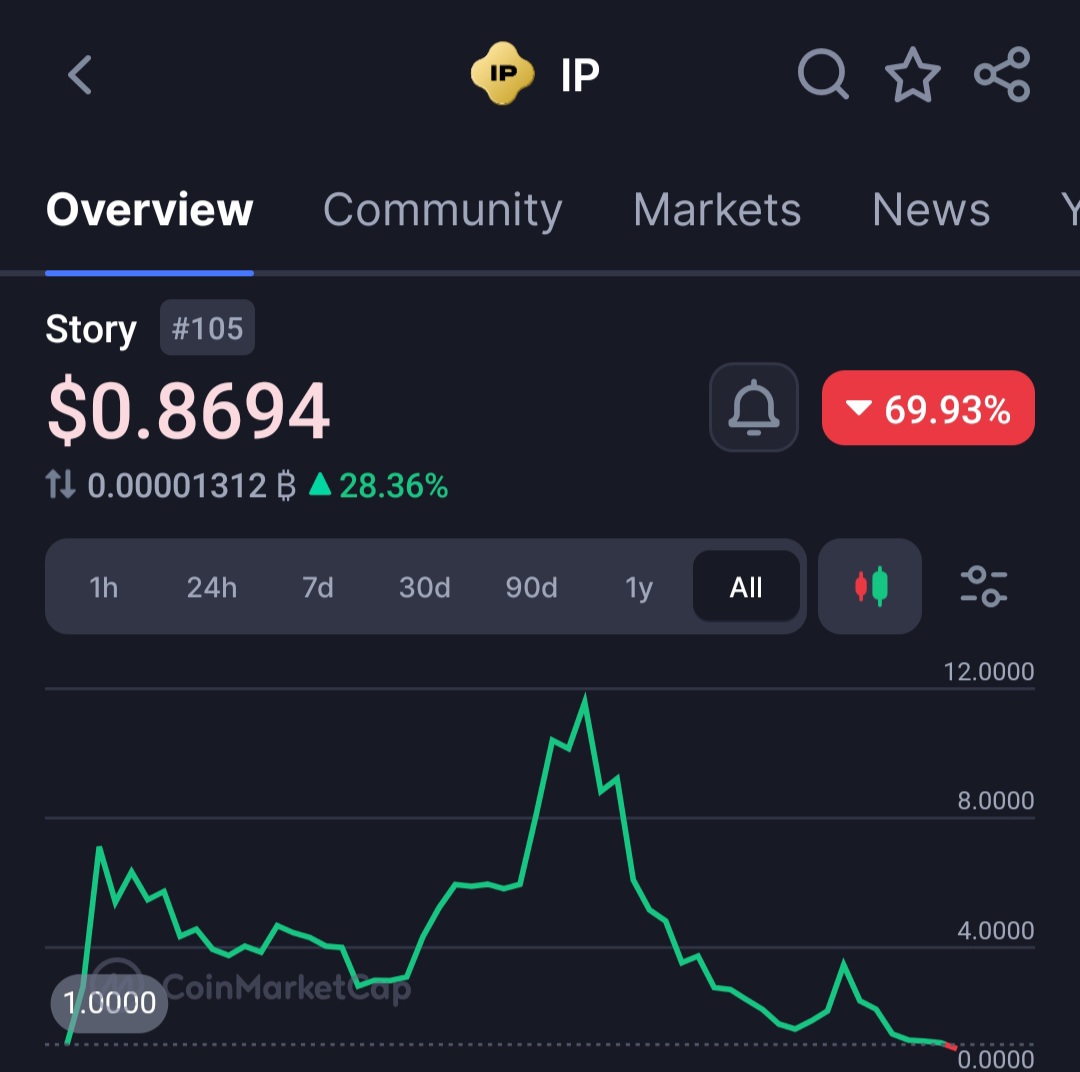
- token hit $14.74 in september 2025
- on-chain revenue peaked at $43,000 that same month
- then fell off a cliff
- revenue dropped to $17-$45 a day
- some days it made literally $0
- a chain that raised $134 million making less money per day than a guy selling water bottles on the street
- TVL went from $45 million down to $12 million
- daily users went from 7,500 to 1,800
- token sitting at $2.14 right now. down 85%
the exit:
- august 16 2025: zhao announces he's leaving
- 6 months after the token went live
- says he wants to go back to AI
- starting something called poseidon
- wants to work on "science and space"
- token dropped 6.3% the same day
- people immediately called it a soft rug
- crypto twitter started saying stanford and FAANG founders are only good at raising money not building
- someone compared story to EOS. hundred million dollar ghost chain
the cover up:
- february 2026: story quietly delays token unlock by 6 months
- team and investor tokens were supposed to unlock in february
- pushed to august 2026
- SY lee goes on record saying the chain needs "more time"
- says revenue is "the wrong metric" for an IP chain
- foundation already burned $100 million buying back its own token trying to hold the price up
- 41.6% of total supply still locked
- people dug up that SY lee's last project radish fell apart after he sold it to kakao too
the pattern:
- raise $134 million from a16z polychain stability AI
- launch a token
- watch it peak
- leave 6 months later
- call yourself a "strategic advisor" on the way out
- start a new company with your name still warm from the last one
- holders down 85%
- chain making $0 some days
- nobody held accountable
they called it story protocol
but the only story here is the exit