We are excited to announce that our book on "Efficient Processing of Deep Neural Networks" has officially been published! Check it out at https://t.co/egGOT5wglj
#DeepLearning#hardware#accelerators#NeuralNetworks
Efficient processing of sparse tensors is key to enabling many high-performance computing tasks (graph analytics and DNNs). A key challenge is handling varying sparsity across tensors and within the tensor itself. Our recent work addresses this challenge. https://t.co/r64wV0hlZH
Check out the 14th installment of the Computer Architecture Podcast, featuring Prof. Vivienne Sze on energy efficiency, teaching classes about ML hardware, and the video compression work that won her an Emmy. https://t.co/SVV6vFbdrK
If you're interested in sparse tensor accelerators for efficient Deep Neural Network (DNN) inference, check out Nellie's thesis defense on "Systematic Modeling and Design of Sparse Tensor Accelerators". #accelerators#tensor#sparse#neuralnetworks#ai https://t.co/nii2FNmPHN
Join Dr. Vivienne Sze on campus for her intensive two-day Designing Efficient Deep Learning Systems course. In this timely program, you will explore trends in #Efficient processing #Techniques and learn to build custom #Hardware. Learn more: https://t.co/x3Dx8EmxwD.
.@MIT Associate Professor Vivienne Sze works on computing systems that enable energy-efficient #ML, computer vision, and video processing for various applications, including autonomous navigation, digital health, and the Internet of Things.
Learn more: https://t.co/i00cC8o5pf
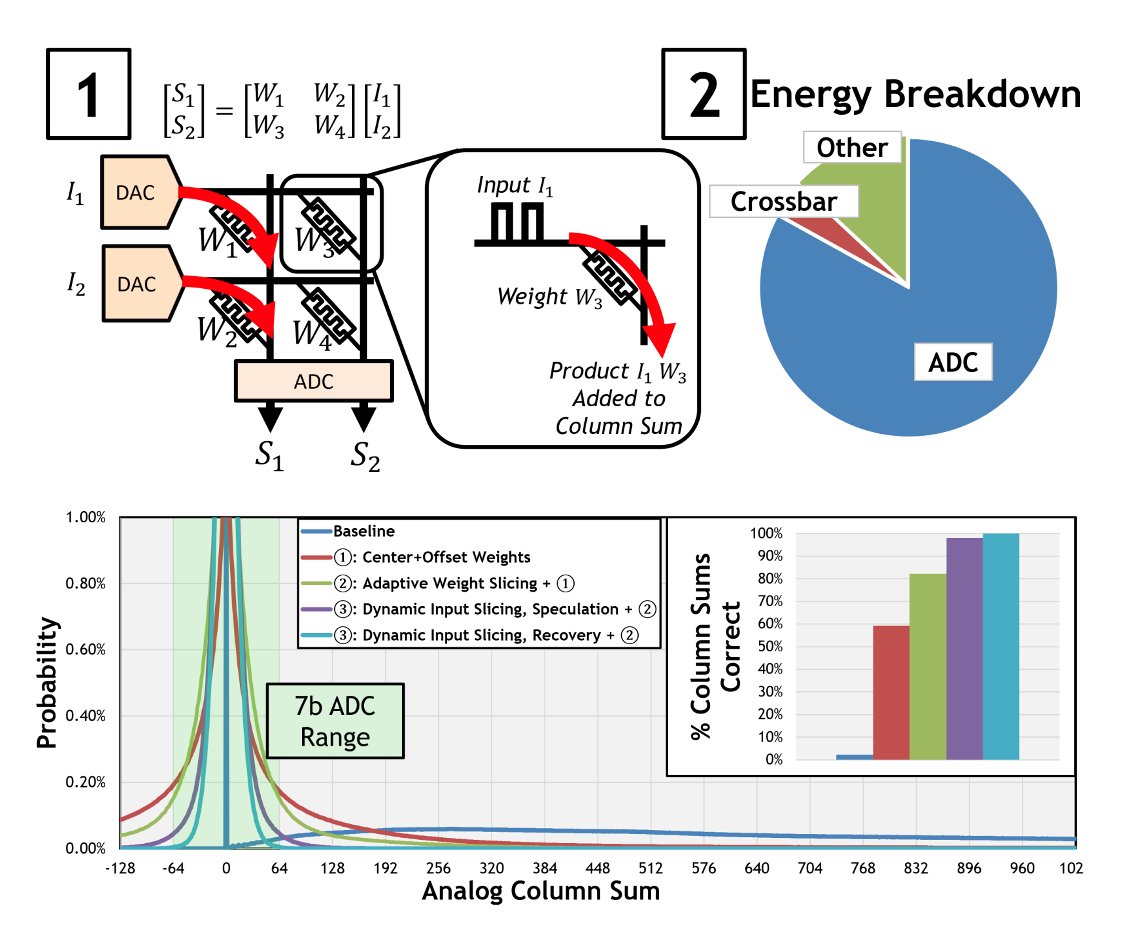
PIM accelerators have the potential to efficiently process DNNs but are limited by energy-intensive ADCs. Existing strategies to reduce ADC cost harm accuracy or require costly retraining. RAELLA adapts to each DNN enabling high efficiency w/o retraining https://t.co/6WnYu5chSb
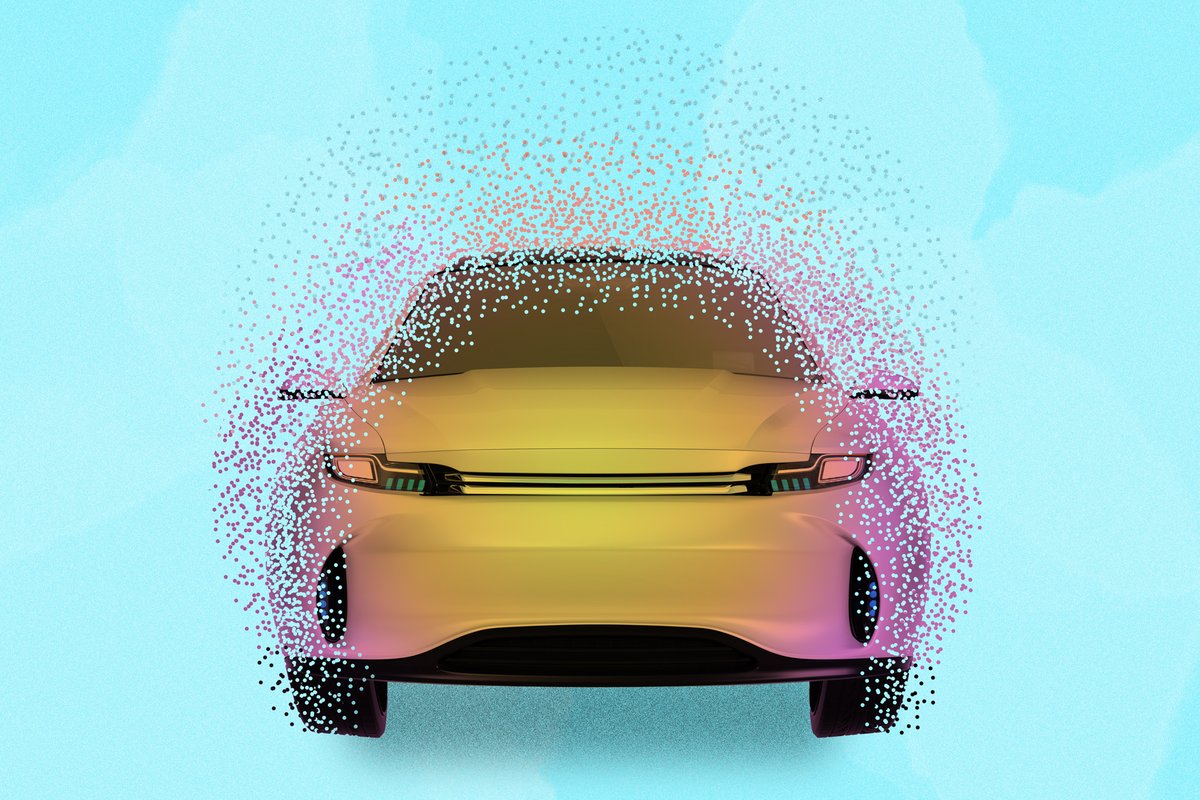
Can the carbon emissions of the computers on board autonomous vehicles rival that of data centers?
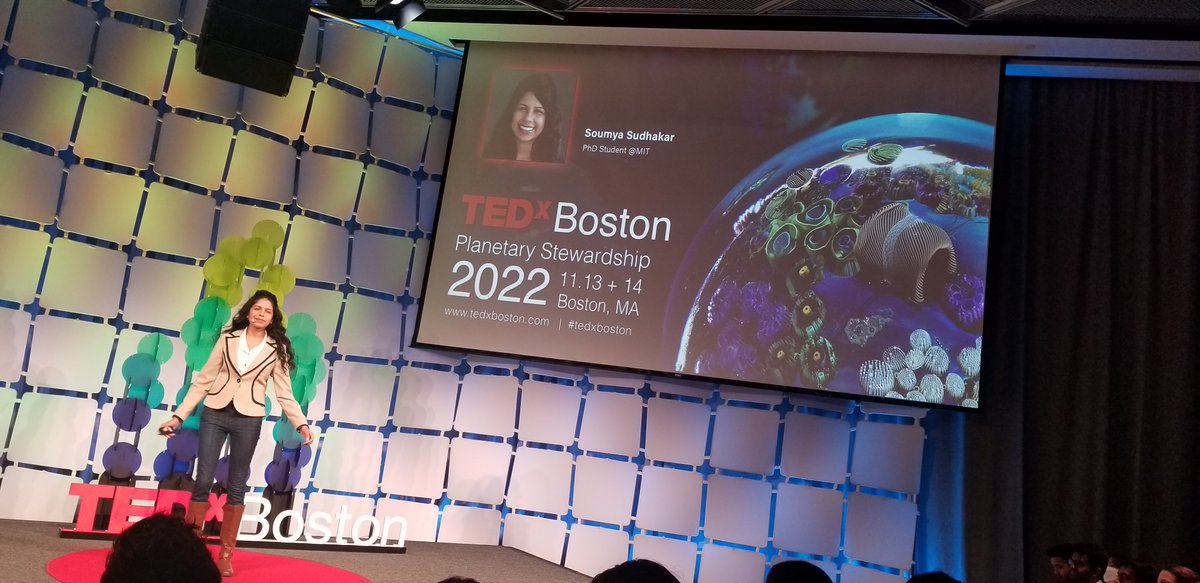
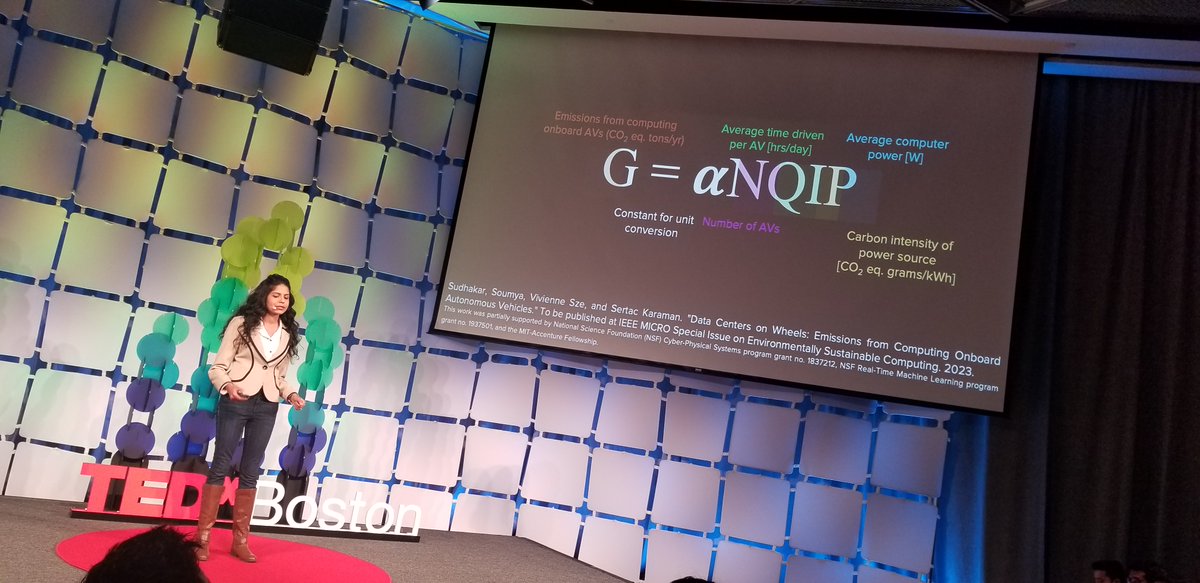
@soumya_sudhakar discussed this @TEDxBoston and in her paper "Data Centers on Wheels: Emissions from Computing Onboard Autonomous Vehicles" #Sustainability https://t.co/2MGnflFMhA
Our recent work emphasizes the importance of energy-efficient computing to reduce the carbon footprint for sustainable large-scale deployment of autonomous vehicles. This work was done by @soumya_sudhakar with @SertacKaraman. More on efficient autonomy @ https://t.co/gOqA9Wu2Mb.
The computers that power self-driving cars could become a huge driver of carbon emissions, a new study has found. Researchers say that if these vehicles are widely adopted, increased hardware efficiency will be needed to keep emissions in check. https://t.co/tPQySuOXEA
Can the carbon emissions of the computers on board autonomous vehicles rival that of data centers? @soumya_sudhakar discussed this @TEDxBoston and in her paper "Data Centers on Wheels: Emissions from Computing Onboard Autonomous Vehicles"
https://t.co/2uopQFSNEj #Sustainability
Getting robots to reduce their computing carbon footprint by not "thinking too hard"
A new model for computational power and emissions.
Soumya Sudhakar @soumya_sudhakar
PhD Student, @MIT#TedXBoston#PlanetaryStewardship
Nellie received the MICRO 2022 Distinguished Artifact Award for her open-source code for "Sparseloop: An Analytical Approach to Sparse Tensor Accelerator Modeling" available at https://t.co/PH2PN4OrWA
@MicroArchConf#MICRO55#MICRO2022#Reproducibility
Want to design/evaluate/compare accelerators for sparse tensor algebra applications? Check out Sparseloop, a fast, accurate, and flexible analytical modeling framework for early-stage evaluation and exploration of sparse tensor accelerators https://t.co/PH2PN4wQy0 @MicroArchConf
Want to design/evaluate/compare accelerators for sparse tensor algebra applications? Check out Sparseloop, a fast, accurate, and flexible analytical modeling framework for early-stage evaluation and exploration of sparse tensor accelerators https://t.co/PH2PN4wQy0 @MicroArchConf
Interested in learning about design considerations for deep learning systems, and how to evaluate existing solutions and recent trends? We will be giving a two-day short course on Designing Efficient Deep Learning Systems at MIT on June 21-22. More info @ https://t.co/5DhN2SEu8D
Enabling efficient computing is critical for making autonomy ubiquitous. It was great to have the opportunity to discuss this in our talk @UofTRobotics today. #Robotics (joint work w/ @SertacKaraman & @Joel_Emer)
Slides: https://t.co/IVECG7thTi
Video: https://t.co/eBoPZNpweE
Join us TODAY at 1 PM EST for a seminar by Vivienne Sze on Efficient Computing for Autonomy and Navigation.
The seminar will be live at: https://t.co/lNNpI0cslT
We hope to see you there!
Learn about the latest breakthroughs in #AI applications with smart devices. MIT Prof. Vivienne Sze's course Designing Efficient #DeepLearning Systems starts on June 28th. Register by June 17th to save your spot!
Learn more: https://t.co/iFUL7sGdWe
Timeloop, the popular open-source tool for modeling and exploring mappings for dense tensor accelerators, can now model sparse tensor accelerators. Come to our ISCA tutorial on June 19 to learn more - see https://t.co/brm8D24rbD. #isca21#timeloop
Vivienne Sze's research focuses on more-efficient deep neural networks to process video, and more-efficient hardware to run applications. https://t.co/1yRSPcS2Rt
Understand the basics of #DeepLearning in how it is applied in Vivienne Sze’s MIT short course “Designing Efficient Deep Learning Systems.” Register here: https://t.co/TfEk8KcOoA
Watch the video introduction: https://t.co/lSeoyfQysF