Thought-provoking!
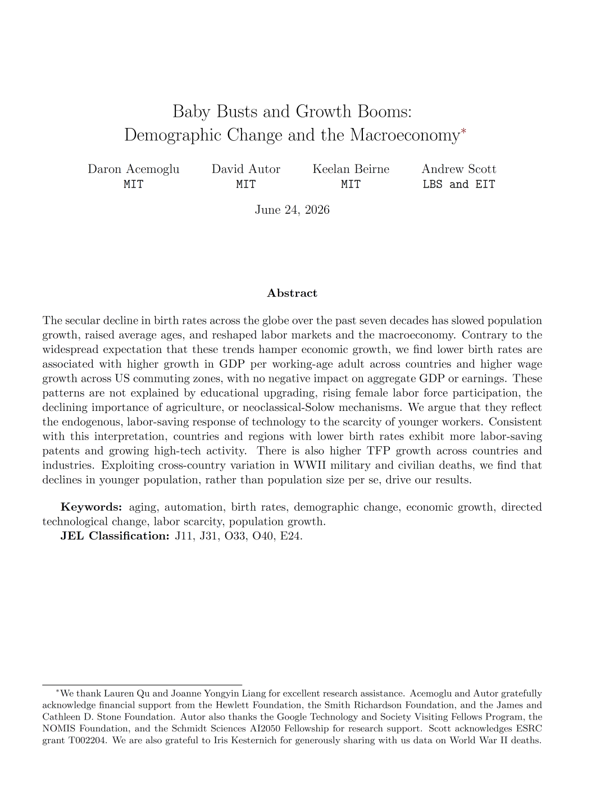
"Baby Busts and Growth Booms: Demographic Change and the Macroeconomy" by Daron Acemoglu, David Autor, Keelan Beirne, and Andrew Scott.
"The secular decline in birth rates across the globe over the past seven decades has slowed population growth, raised average ages, and reshaped labor markets and the macroeconomy. Contrary to the widespread expectation that these trends hamper economic growth, we find lower birth rates are associated with higher growth in GDP per working-age adult across countries and higher wage growth across US commuting zones, with no negative impact on aggregate GDP or earnings. These patterns are not explained by educational upgrading, rising female labor force participation, the declining importance of agriculture, or neoclassical-Solow mechanisms. We argue that they reflect the endogenous, labor-saving response of technology to the scarcity of younger workers. Consistent with this interpretation, countries and regions with lower birth rates exhibit more labor-saving patents and growing high-tech activity. There is also higher TFP growth across countries and industries. Exploiting cross-country variation in WWII military and civilian deaths, we find that declines in younger population, rather than population size per se, drive our results."
https://t.co/WNa0TIDPVS
After the so-called pink wave(s) and the blue one (which all mostly lasted one term), is this the orange wave? It too will probably not last unless—as some fear—they roll back democratic institutions. For me the greater danger, @ least for now, is the absence of a centre.
La sociedad libre
En este libro, el politólogo Angelo Panebianco considera las causas de la sociedad libre. Combina la discusión de cuestiones de filosofía política, en la tradición liberal, y lecciones de la sociología política.
Descarga libre: https://t.co/vwHRvJzBfv
En esta nota que salió hoy en @RevistaSeul hablo de una oleada anti-oficialismos antes que un giro a la derecha. https://t.co/jqEn4gwhbH ¿Cuándo arrancó la ola de derrotas de partidos gobernantes? Mediados de la década pasada.
No estoy dispuesto a salir 5 años más a hablar solo de lo que estos políticos destruyen.
A veces, como sucedió en esta entrevista, la prensa y amigos varios se sorprenden de mi entusiasmo y optimismo. Perdonen. Pero salgo a renegar de la crisis con el pensamiento de lo posible.
Public Opinion Quarterlyから論文が出ました。国際比較調査では共通の左右イデオロギー尺度が使われますが、各国の文脈に合わせた尺度の方が、より安定的で、有権者に理解されやすく、投票行動や民主主義への態度をより適切に捉えられることを7か国比較データで示しました。https://t.co/ukkR9psJKb
Síntoma aberrante de época: criticar a la gente que se interesa en una disciplina y decide profundizar en ella en lugar de quedarse toda su vida viendo Shrek e Interestellar.
Yesterday I had the privilege of attending Marc Bloch's reburial ceremony at the Panthéon – Paris' monument to the most outstanding citizens of France. Bloch was honored not only as one of the greatest French historians, but also as a man who chose resistance over safety when his country fell into darkness.
Bloch fought in two World Wars, and received multiple awards for bravery. By the time the pro-Nazi Vichy regime came to power in 1940, Bloch was already recognized as perhaps the preeminent historian of medieval France. He continued to teach history, and during that time wrote 'Strange Defeat', a book explaining the French defeat in 1940, and 'The Historian’s Craft', a meditation on history and historiography. Bloch also joined the Résistance and became one of its leaders.
On March 8, 1944 Bloch was captured during a crackdown on the Résistance by the Nazis and their French collaborators. At the time, collaborationist French newspapers celebrated Bloch’s capture. They highlighted his Jewish identity, and referred to the historian as a traitor to France, describing the Résistance as a Jewish-Bolshevik terrorist organization. Bloch was imprisoned and tortured at the Gestapo headquarters in Lyon, and was executed on June 16, 1944, ten days after the Allied landing in Normandy.
I am a medievalist by training, and have been deeply influenced by Bloch. What moved me most about Bloch is his uncompromising commitment to truth. For him, history was never nostalgia or mythmaking, but a discipline of honesty – a way of resisting propaganda, prejudice, and the comfort of convenient fictions. For Bloch, truth was not just an intellectual position, but a spiritual practice. Anticipating his death at the hands of the Gestapo and the Vichy regime, the Jewish historian and freedom fighter left behind detailed instructions for his burial. He wrote:
“I have not asked to have read above my body those Jewish prayers to the cadence of which so many of my ancestors, including my father, were laid to rest. All my life I have striven to achieve complete sincerity in word and thought. I hold that any compromise with untruth, no matter what the pretext, is the mark of a human soul’s ultimate corruption. […] That is why I find it impossible, at this moment of my last farewell, when, if ever, a man should be true to himself, to authorize any use of those formulae of an orthodoxy to the beliefs of which I have ever refused to subscribe.
But I should hate to think that anyone might read into this statement of personal integrity even the remotest approximation to a coward’s denial. I am prepared, therefore, if necessary, to affirm here, in the face of death, that I was born a Jew: that I have never denied it, nor ever been tempted to do so. […] A stranger to all credal dogmas, as to all pretended community of life and spirit based on race, I have, through life, felt that I was above all, and quite simply, a Frenchman. A family tradition, already of long date, has bound me firmly to my country. I have found nourishment in her spiritual heritage and in her history. I can, indeed, think of no other land whose air I could have breathed with such a sense of ease and freedom. I have loved her greatly, and served her with all my strength. I have never found that the fact of being a Jew has at all hindered these sentiments. Though I have fought in two wars, it has not fallen to my lot to die for France. But I can, at least, in all sincerity, declare that I die now, as I have lived, a good Frenchman.”
By his request, a Latin epitaph was carved on Bloch’s grave: dilexi veritatem (“I have loved the truth”).
Watching Bloch's memory honored at the Panthéon yesterday did not feel like a tribute to the past as much as a challenge to the present. As dark clouds gather once again, how many of us today can demonstrate Bloch's level of integrity and fearlessness?
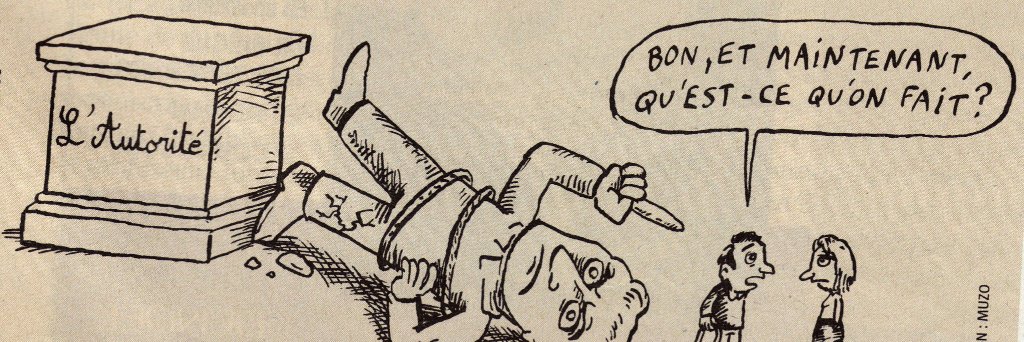
Latin America still the land of caudillos. Too much focus on the pendular shift (from left to right) and I simply marvel at the continuity of neocaudillismo. See thread.
Hace 5 años.
A la democracia se la defendió entonces de un intento segregacionista de extirparle el voto a miles de peruanos en mesas rurales. Y se la debe defender siempre, independientemente de quien haya ganado
Ni Keiko se atrevió a tanto. Fue mala perdedora las tres veces anteriores, pero terminó aceptando a regañadientes sus derrotas en 2da vuelta. A estas alturas, Roberto Sánchez demuestra ser incluso peor candidato que esa nefasta autoritaria.
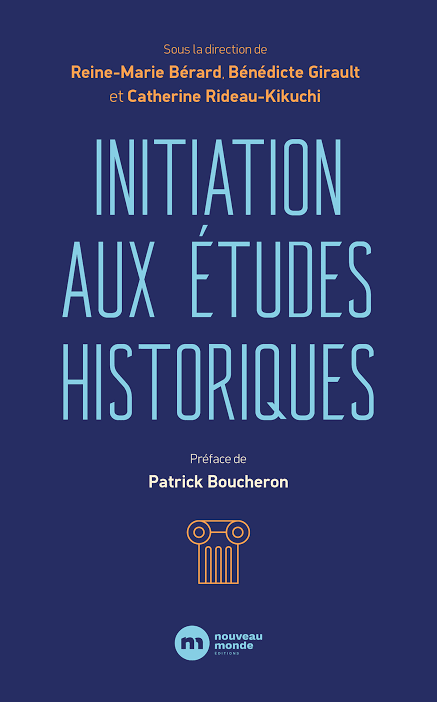
Comme chaque année, je conseille à tous les élèves qui se destinent à des études d'histoire (prépa, université) ce magnifique ouvrage, disponible gratuitement en ligne : https://t.co/IDRaNycMbD
Tres autocríticas que, a mi juicio, tendrá que hacer la campaña de Iván Cepeda:
1) Aída Quilcué no generó entusiasmo ni logró ampliar la base electoral. Por el contrario, produjo rechazo en algunos sectores.
2) La insistencia en una constituyente terminó generando un profundo problema de credibilidad. Aunque la campaña intentó tomar distancia de esa idea al final, para muchos colombianos Cepeda ya había quedado asociado a la posibilidad de una constituyente.
3) La presencia de Gustavo Petro no le hizo ningún favor a la campaña. Sus declaraciones incendiarias, su tono confrontacional y la permanente radicalización del debate mantuvieron viva la polarización y dificultaron que Cepeda conquistara a los sectores moderados e indecisos.
Las derrotas también exigen autocrítica. Y gran parte de las razones de la derrota de hoy se explican por decisiones tomadas dentro de la propia campaña.
Si la IA hace la tarea de tu hijo, el cerebro de tu hijo no participó en eso. Y ese uso de la IA es un problema. Un estudio de Stromberg, Lei y Wu (https://t.co/8QHcVapdup) siguió a 26,000 estudiantes de secundaria en China durante 30 meses. Muestran que el uso de IA elevó las notas de las tareas en 18% y redujo el tiempo que dedicaban a esas tareas en 30%. Al mismo tiempo, las notas en los exámenes a libro cerrado cayeron 20% luego de seis meses. Analizando un efecto de largo plazo, las notas en los exámenes de ingreso a la universidad cayeron hasta 24%. Como se ve en la figura, mas eficiencia para hacer las tareas, pero menos menos aprendizaje. Por otro lado, los estudiantes que usaron IA pero igualmente dedicaron el mismo tiempo que sus compañeros sin IA obtuvieron en los exámenes notas casi idénticas a las de quienes no usaron IA. Pero los que "externalizaron" su tarea completamente, terminando más rápido y posiblemente poniendo menos esfuerzo, que cualquier estudiante sin IA, solo sacaron notas altas en los ejercicios. La diferencia fue el esfuerzo cognitivo: si el cerebro hizo el trabajo, o simplemente observó cómo la IA lo hacía en su lugar.
La IA es una herramienta. Un bisturí en manos de un cirujano salva vidas. El mismo bisturí en las manos equivocadas hace daño. La misma IA que puede ser un tutor efectivo, desafiando al estudiante a pensar, explicar, luchar productivamente con el problema, se vuelve dañina si elimina el esfuerzo que el aprendizaje requiere. Esto no es grave si le pasa a pocos estudinates. Pero cerca del 80% de los estudiantes que usaban IA cayeron en lo que el estudio llama "tercerización de tareas" (homework outsourcing).
Esto conecta directamente con la clasificación que hacíamos con mis colegas Ezequiel Molina y Maria Barron, (https://t.co/ygsaXKPVfR) de tres grupos de estudiantes, los Empoderados por la IA, que la usan para pensar con más profundidad; los Dependientes de la IA, que la usan para evitar pensar; y los Excluidos de la IA, que no tienen acceso. Nos preocupaba que el grupo de los Dependientes pudiera crecer. Ya creció. Es, con mucho, el grupo más numeroso en este estudio. Completar una tarea no es lo mismo que aprender. El cerebro no construye conocimiento observando cómo trabaja la IA sino equivocándose, esforzándose y resolviendo las cosas por sí mismo. Ese esfuerzo cognitivo es esencial para el aprendizaje .
Ha vencido el plazo para la inscripción de listas de candidatos para las elecciones regionales y municipales de 2026. Al cierre de la medianoche establecido por el JNE, solo se ha inscrito el 74,86 % de las listas previstas.
Según los datos reportados por el JNE, los partidos Buen Gobierno y Obras estarían perdiendo su inscripción. Si bien es probable que se otorguen ampliaciones de plazo, se admitan excepciones o se registren inscripciones extemporáneas, esta es la situación al cierre oficial del período de inscripción.
Según El País, Cuba se abre al capitalismo y aprueba un paquete de 176 medidas que autorizan la creación de bancos privados, abren las empresas estatales a accionistas particulares, desmantelan los subsidios universales, devalúan la moneda nacional, etcétera. Ojalá les resulte.
Escribió obras imprescindibles. Descubrió historias a partir de huellas, recuperó voces perseguidas, habló de la vida de hombres y mujeres comunes. Si su inteligencia era deslumbrante, su humildad lo era todavía más. Chau, querido Carlo Ginzburg. Gracias, de corazón.
Me desconcierta de verdad, que hay toda una generación de televidentes que no se tomen ni un minuto para analizar la historia del cine.
NO, una serie no se puede ver como Barry Lyndon de Stanley Kubrik. No importa el presupuesto. Lo que hacía verse ASÍ a la película fue la óptica y el trabajo milimétrico de observación sobre la iluminación.





![harari_yuval's tweet photo. Yesterday I had the privilege of attending Marc Bloch's reburial ceremony at the Panthéon – Paris' monument to the most outstanding citizens of France. Bloch was honored not only as one of the greatest French historians, but also as a man who chose resistance over safety when his country fell into darkness.
Bloch fought in two World Wars, and received multiple awards for bravery. By the time the pro-Nazi Vichy regime came to power in 1940, Bloch was already recognized as perhaps the preeminent historian of medieval France. He continued to teach history, and during that time wrote 'Strange Defeat', a book explaining the French defeat in 1940, and 'The Historian’s Craft', a meditation on history and historiography. Bloch also joined the Résistance and became one of its leaders.
On March 8, 1944 Bloch was captured during a crackdown on the Résistance by the Nazis and their French collaborators. At the time, collaborationist French newspapers celebrated Bloch’s capture. They highlighted his Jewish identity, and referred to the historian as a traitor to France, describing the Résistance as a Jewish-Bolshevik terrorist organization. Bloch was imprisoned and tortured at the Gestapo headquarters in Lyon, and was executed on June 16, 1944, ten days after the Allied landing in Normandy.
I am a medievalist by training, and have been deeply influenced by Bloch. What moved me most about Bloch is his uncompromising commitment to truth. For him, history was never nostalgia or mythmaking, but a discipline of honesty – a way of resisting propaganda, prejudice, and the comfort of convenient fictions. For Bloch, truth was not just an intellectual position, but a spiritual practice. Anticipating his death at the hands of the Gestapo and the Vichy regime, the Jewish historian and freedom fighter left behind detailed instructions for his burial. He wrote:
“I have not asked to have read above my body those Jewish prayers to the cadence of which so many of my ancestors, including my father, were laid to rest. All my life I have striven to achieve complete sincerity in word and thought. I hold that any compromise with untruth, no matter what the pretext, is the mark of a human soul’s ultimate corruption. […] That is why I find it impossible, at this moment of my last farewell, when, if ever, a man should be true to himself, to authorize any use of those formulae of an orthodoxy to the beliefs of which I have ever refused to subscribe.
But I should hate to think that anyone might read into this statement of personal integrity even the remotest approximation to a coward’s denial. I am prepared, therefore, if necessary, to affirm here, in the face of death, that I was born a Jew: that I have never denied it, nor ever been tempted to do so. […] A stranger to all credal dogmas, as to all pretended community of life and spirit based on race, I have, through life, felt that I was above all, and quite simply, a Frenchman. A family tradition, already of long date, has bound me firmly to my country. I have found nourishment in her spiritual heritage and in her history. I can, indeed, think of no other land whose air I could have breathed with such a sense of ease and freedom. I have loved her greatly, and served her with all my strength. I have never found that the fact of being a Jew has at all hindered these sentiments. Though I have fought in two wars, it has not fallen to my lot to die for France. But I can, at least, in all sincerity, declare that I die now, as I have lived, a good Frenchman.”
By his request, a Latin epitaph was carved on Bloch’s grave: dilexi veritatem (“I have loved the truth”).
Watching Bloch's memory honored at the Panthéon yesterday did not feel like a tribute to the past as much as a challenge to the present. As dark clouds gather once again, how many of us today can demonstrate Bloch's level of integrity and fearlessness?](https://pbs.twimg.com/media/HLliH6MWUAAvbZS.jpg)