@PeretzLange I think this advice sets terrible expectations for the role of your work in your life. I love doing science but it’s one of many things I care deeply about. The idea that we aren’t good scientists unless our work is our entire world is so limiting.
@helenrottier Yep! Spending a couple years on a project is generally long enough for me to figure out what I wish I’d done instead. I’d say it shows you’re really familiar with your area now and understand all the pros and cons of your approach 🙃
@melxpiper I really like the "snowflake method", originally for writing fiction. Start with a single sentence, summarizing the point of your thesis. Then expand that sentence into a paragraph. Then use each sentence from the paragraph to write a topic sentence for each section, etc.
@SonyaLegg In my favorite virtual poster session, presenters gave a 2 minute poster summary in a main room, then each presenter went to a breakout room. The rest of us navigated between the breakouts. Posters were available through the conference website so we could come w/questions ready.
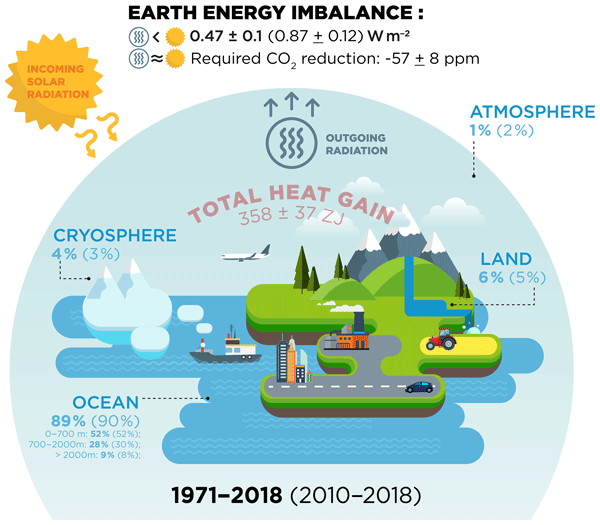
Just struck again by how wild it is that we so often think simply of global warming=increasing air temp while looking at this heat inventory of energy imbalance (from Schuckmann++, 2020). Only ~1% (!) over the last ~50 yr accounted for by the atmo! 1%!! https://t.co/hS0PZwfQ4r
@theyogidoc_ Give yourself permission to write a really bad first draft. Measure progress by time spent writing, not words. Take breaks before you feel like you need them. Know you’ve already done nearly all the work to get that degree, now it’s just a question of sharing it with the world.
Researchers using sophisticated tech found masses of warm Pacific Ocean water dubbed ‘heat bombs’ that enter the Arctic Ocean. These eddies, with microorganisms in tow, can linger for months, accelerating the melt of Arctic sea ice. Read more: https://t.co/EKW1gU4OGy