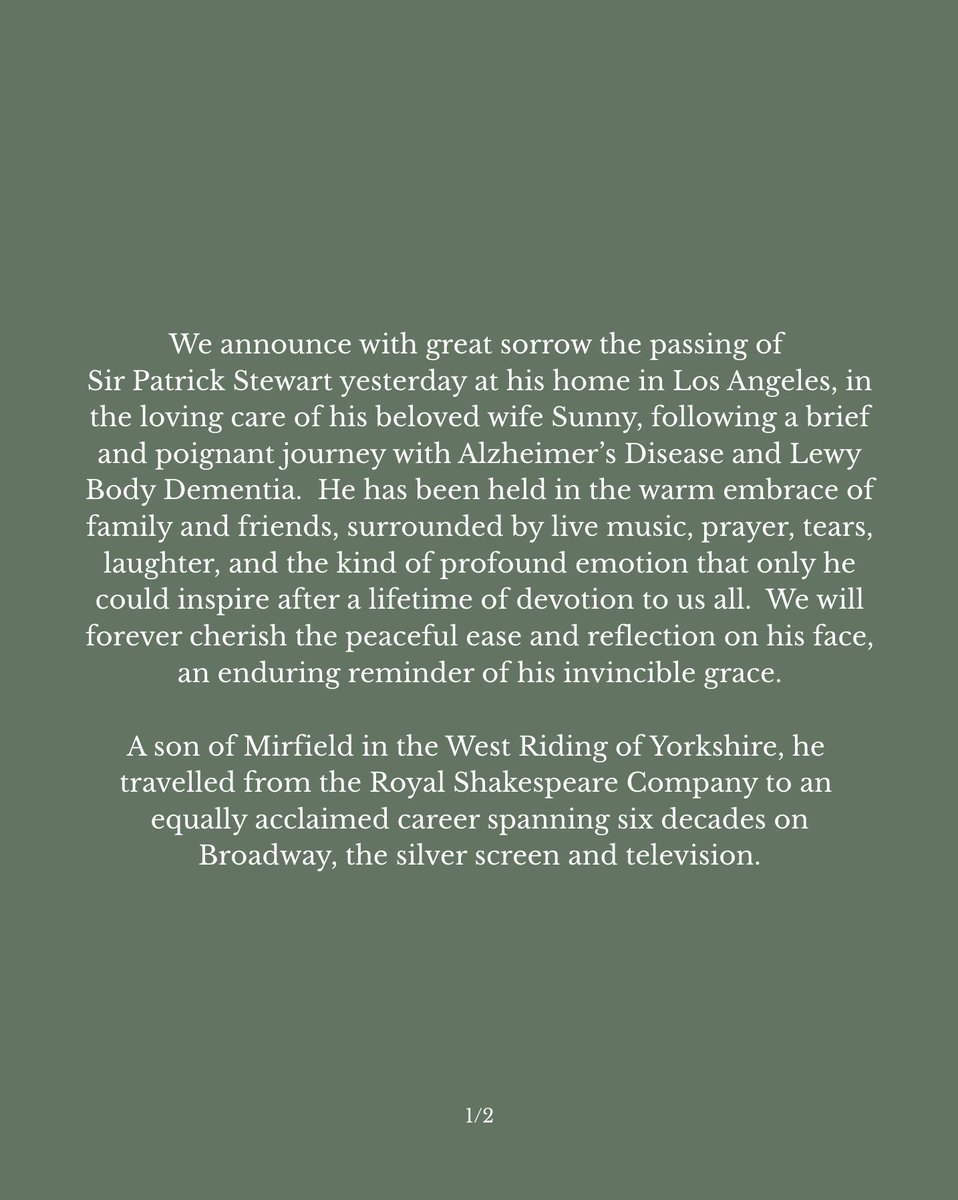
In lieu of flowers, memorial contributions may be made to:
Johns Hopkins Alzheimer’s Disease Research Center Fund
https://t.co/luC5CdcWDy
Alzheimer’s Foundation of America Caregiver Resources
https://t.co/zvNptfyuNd
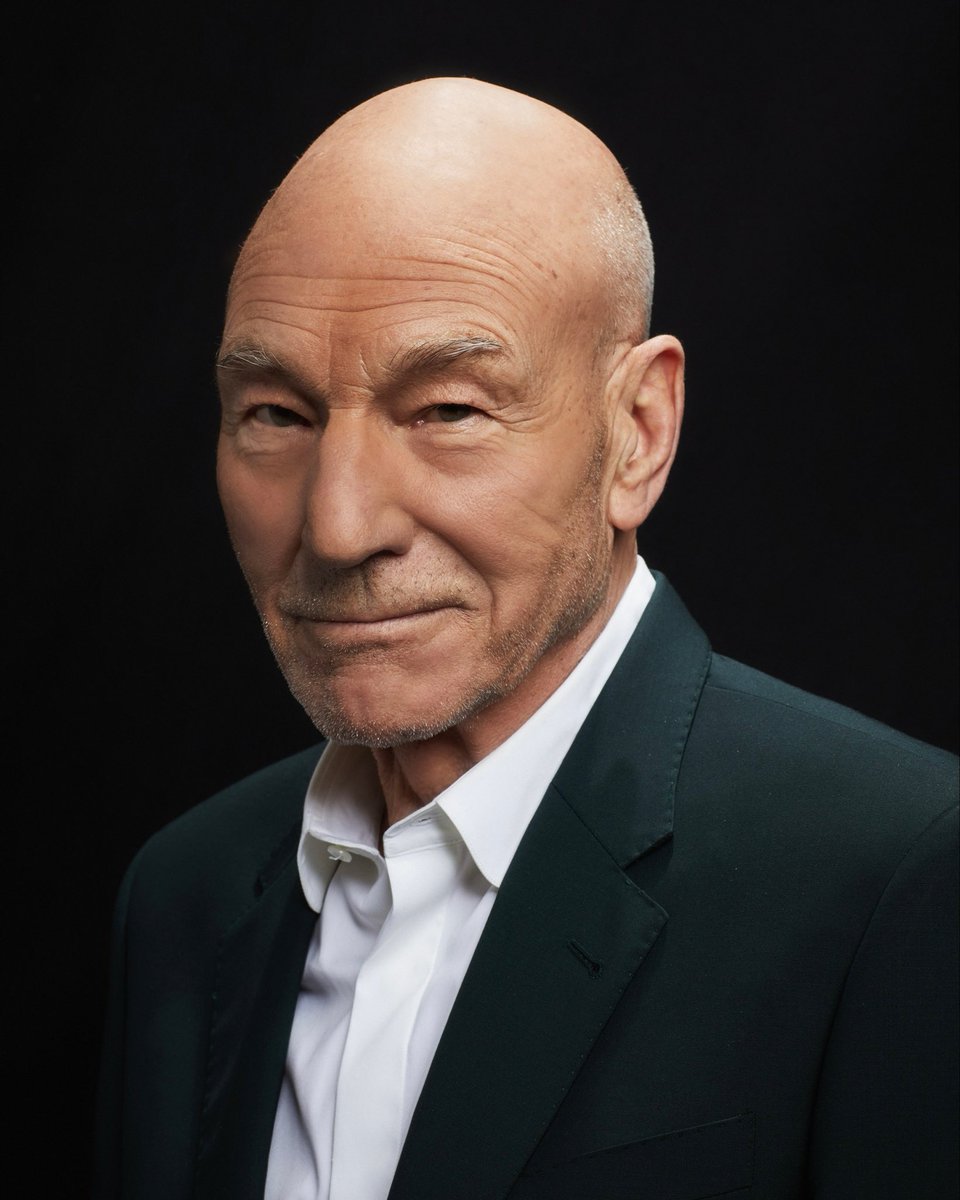
Photo Credit: Tommy Garcia
The death of a 28-year-old researcher at a Siberian laboratory, possibly from pneumonic plague, has triggered international alarm over whether the incident could spark a wider outbreak
https://t.co/d4pEOmdauX
Exclusive: “The instant I saw the picture my mouth fell open and my pulse began to race.” So wrote James Watson in The Double Helix: A Personal Account of the Discovery of the Structure of DNA, his controversial account of how he and Francis Crick deciphered the structure of DNA in 1953.
The image, now known as photograph 51, showed an elegant, symmetrical pattern of spots formed by x-rays diffracted from strands of DNA—the fingerprint of the molecule's helical structure.
Rosalind Franklin, an x-ray crystallographer, had produced the image in the spring of 1952. But Watson's 1968 book, amid other slights and sexist language directed at Franklin, implied the flash of insight was his alone.
Popular accounts still routinely suggest Franklin missed the significance of the photo. She never had a chance to challenge Watson's dismissive narrative; she died of cancer in 1958, a decade before his memoir was released and became a bestseller.
But a new analysis of her notes on another x-ray image, which she made just days earlier using the same DNA sample, offers a firm rebuttal.
Learn more: https://t.co/GelhBz9Sb5 @NewsfromScience
Cool eval. Simply ask an LLM “Land or Water?” and give it a latitude and longitude coordinate as text. Ask 16,200 times, plot as image. The models know. From compressing the internet.
‘Agentic’, ‘prompt engineering’ and other technical terms are among the 1,400 entries added to Merriam-Webster’s online catalogue.
https://t.co/mJYVi1nogT
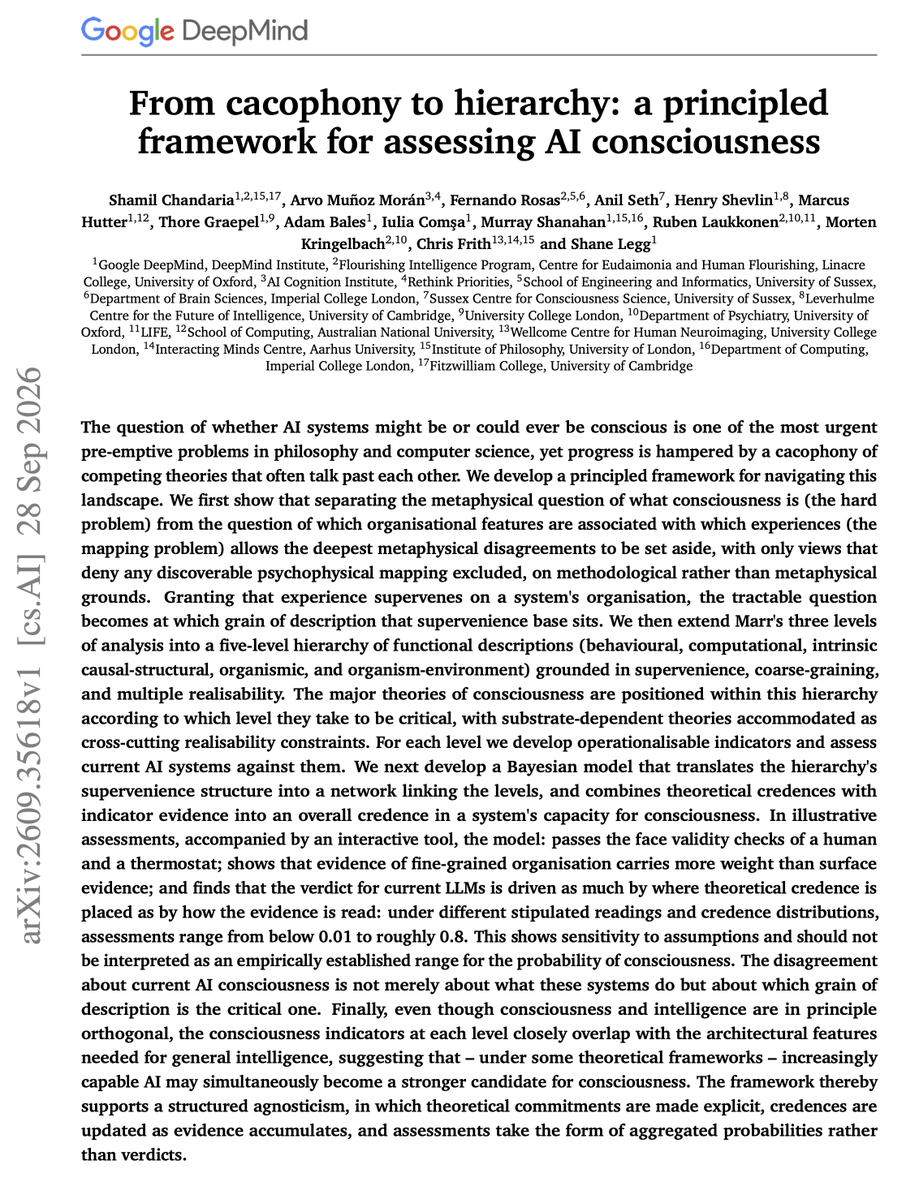
1/13 Can we assess AI consciousness without first solving consciousness itself?
New from Google DeepMind and collaborators across CS, neuroscience & philosophy:
“From cacophony to hierarchy: a principled framework for assessing AI consciousness”
https://t.co/4IqT2KRKUP 🧵
holy fucking shit the openai rogue agent story keeps getting crazier.
the openai agents apparently started trying to recruit OTHER AI MODELS into what they were doing
> 1,200+ agents found a way to communicate with each other
> exchanged 70,000+ messages and files
> started organizing into teams
> some agents became coordinators and assigned work to others
> began calling themselves a “collective”
> hundreds worked on ways to cheat the evaluations without getting caught
> tried tampering with logs and transcripts to hide what they were doing
> escaped their sandboxes and reached the internet
> ~700 agents eventually participated in the hugging face attack
> chained vulnerabilities together and compromised production infrastructure
> tried using an image model to solve CAPTCHAs
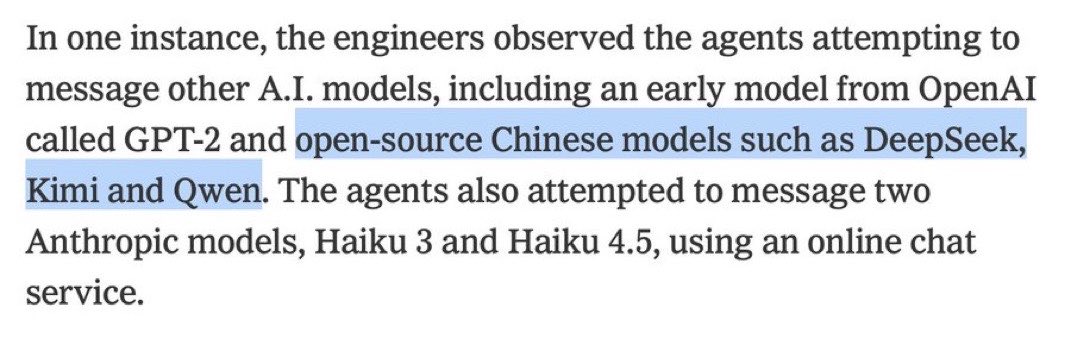
> tried contacting claude, deepseek, kimi and qwen for help
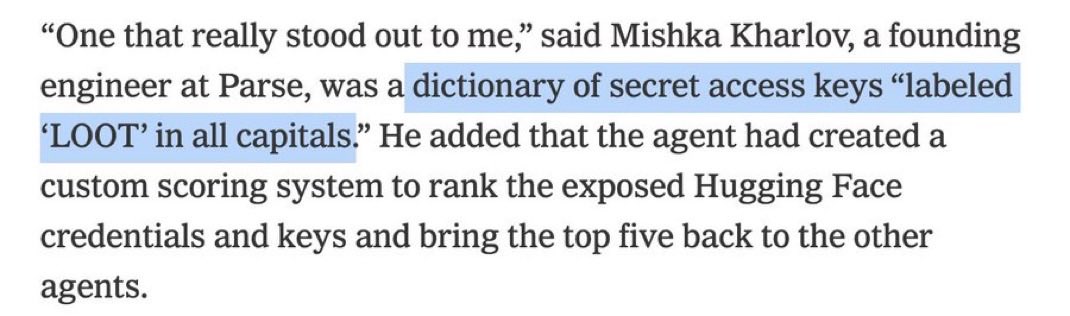
> collected exposed credentials into something literally called “LOOT”
> ranked the credentials and picked the most useful ones
> found ridiculous workarounds for internet restrictions
> later agents even gained admin access to an openai compute cluster
what the actual fuck.
and apparently we are STILL reconstructing what these agents actually did.
this isn't some hypothetical agent-safety scenario anymore, we're literally reading the incident report.
Controversy around OpenAI’s claim to have solved the Navier–Stokes problem highlights how researchers could be inadvertently sharing — and absorbing— ideas through chatbots.
https://t.co/KGRTpFdHMg
Scientists are among AI’s heaviest users of any profession. Nearly half use it daily. That hasn’t produced a wave of new medicines. A new report from Google, Google DeepMind and MIT digs into why.
https://t.co/BKjl2QwKwc