Cloudflare ha liberado su propia skill para hacer auditorías de seguridad con IA.
Es la que utilizan internamente en la empresa para detectar vulnerabilidades y ahora cualquiera puede utilizarla con su agente.
Se llama Security Audit Skill y organiza cada auditoría en 6 fases:
✓ Reconocimiento de la arquitectura y superficies de ataque
✓ Búsqueda de vulnerabilidades por cobertura
✓ Validación independiente de cada hallazgo
✓ Generación de resultados estructurados
✓ Verificación final con agentes distintos
✓ Creación automática del informe de seguridad
Lo más interesante es que el agente que valida una vulnerabilidad nunca es el mismo que la encontró, reduciendo bastante los falsos positivos.
Es completamente gratuita, open-source y tiene licencia MIT.
Repo 👇
2akouwu/reverify: Anti-hallucination for AI agents that read binaries. The model proposes, deterministic tools decide: every claim is VERIFIED or REFUTED against the real bytes, with evidence, and grounded facts survive context... https://t.co/vYo7TFkG4l
TU AGENTE DE CÓDIGO AHORA DIBUJA ARQUITECTURAS DE VERDAD
Archify es un skill open source que convierte una descripción o un repositorio en un diagrama de arquitectura interactivo.
No es Mermaid.
No es un screenshot feo de Excalidraw.
Es un HTML auto-contenido con:
→ Diagramas de arquitectura, workflow, sequence, data-flow y lifecycle
→ Motion y trazado de rutas
→ Búsqueda y focus de nodos
→ Export PNG / SVG / WebM
→ Cards listas para compartir (1200×630)
Lo más importante:
Todo está validado.
No inventa conexiones.
Usa un JSON IR tipado + checks atómicos.
Funciona con Cursor, Claude Code, Codex y OpenCode.
16k estrellas.
Guárdalo. Es de los skills más útiles que han salido este año.
Repoo 👇👇
I Connected Claude Code direct to Burp via MCP
one command:
```
claude mcp add burp --transport sse http://127.0.0.1:9876
```
that's literally it.
after that Claude start working by himself:
- browse my proxy history
- do auto-recon on target
- create testing todo-list
- play with requests and responses
- find bugs while i do other stuff
i just give him scope. he do the grinding. i do the thinking.
result so far: **11 confirmed bugs**
real bugs. not hallucination. i verified each one.
https://t.co/4ritanX0F4
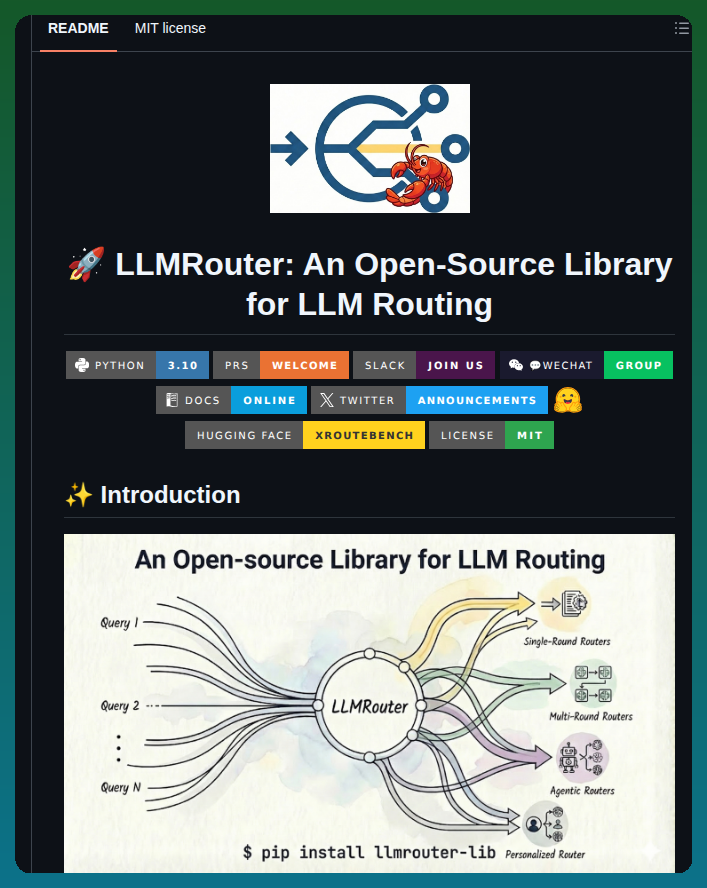
LLMRouter uses over 16 router models to dynamically route queries to the optimal LLM based on complexity, cost, and performance requirements.
https://t.co/WZc1TbUxsJ
A two-person security team used AI to find real vulnerabilities in code and earned $250,000 from a single bounty.
Now they have open-sourced the system behind it.
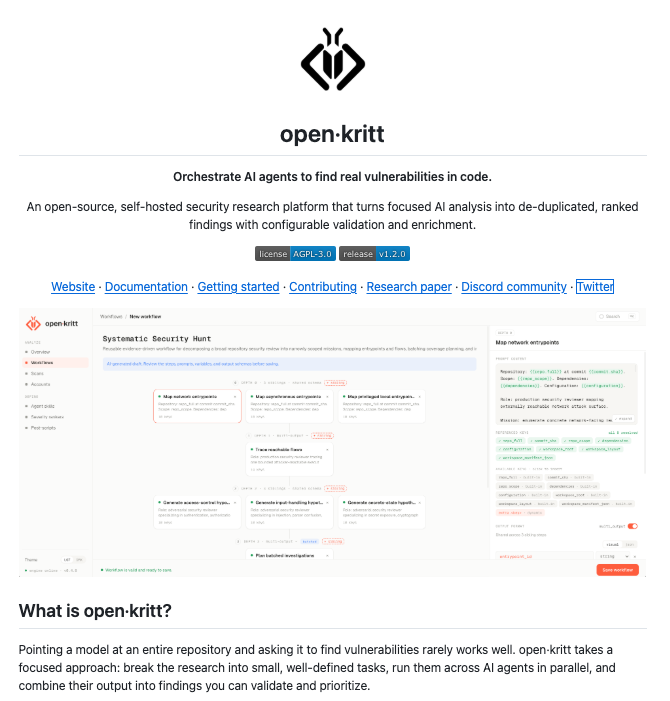
It is called Open-Kritt.
Most people scan a repository by giving an AI one giant task:
“Find every vulnerability in this code.”
Open-Kritt takes a more focused approach.
First, one agent maps every reachable entry point.
Then it launches separate agents to trace each code path and search for specific failures.
Each agent gets its own isolated container, where it can:
> Inspect the code
> Install security tools
> Compile the project
> Run tests
> Fuzz inputs
> Build a proof of concept
The raw findings are then checked, merged when they describe the same bug, and ranked so researchers can inspect the most promising ones first.
It works with Codex, Claude Code, OpenAI, Anthropic, and OpenRouter.
The Kritt team says it used the system to find more than 20 High and Critical vulnerabilities in nine months.
It also finished first in the Firedancer V1 audit competition using fully AI-driven research with no manual review.
This is an open-source research lab that turns AI agents into a small security team.
https://t.co/SbjO3mBhm7
Si te dedicas a la ciberseguridad, esto te interesa.
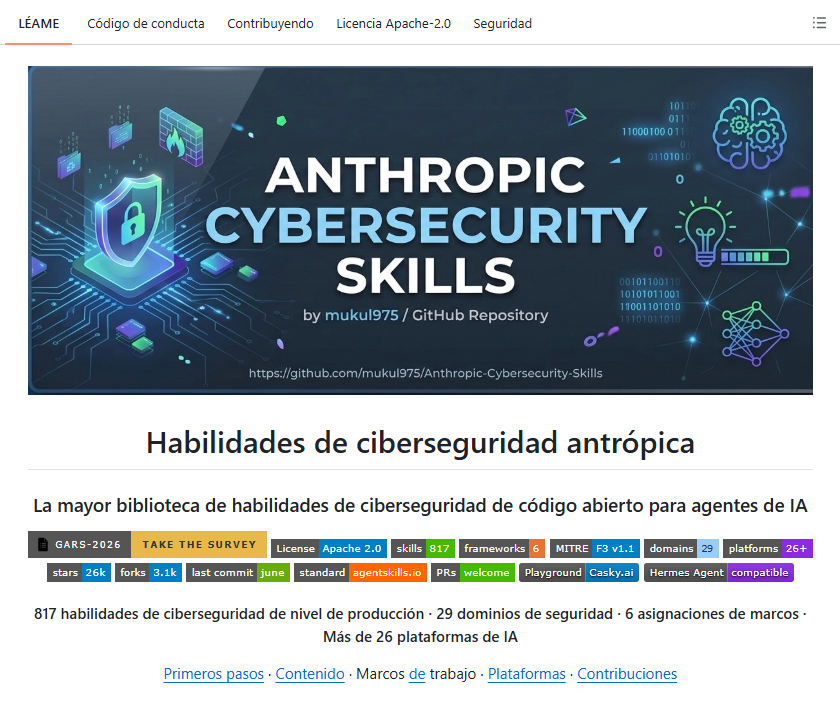
Existe un repositorio con más de 800 skills para agentes de IA capaces de realizar tareas avanzadas de ciberseguridad.
→ Threat Hunting y respuesta a incidentes
→ Análisis forense y malware
→ Red Teaming y Cloud Security
→ Compatible con Claude Code, Cursor, Codex y otros agentes
Ya supera las 26.200 estrellas en GitHub y es completamente open-source.
Enlace 👇