Missed our #Swifters meetup last week? Rewatch @egyes from @TeamSupercharge talking about the Supercharging project health check, and check out his slides too 🙌🏼
🎥 https://t.co/cc5cJRJ1Gb
💻 https://t.co/Yhoph2Nfu4
For those looking to integrate Siri and Apple Intelligence into your app, Apple has released ALL the 12 app Intent domains.
Here is the list and the documentation related to it:
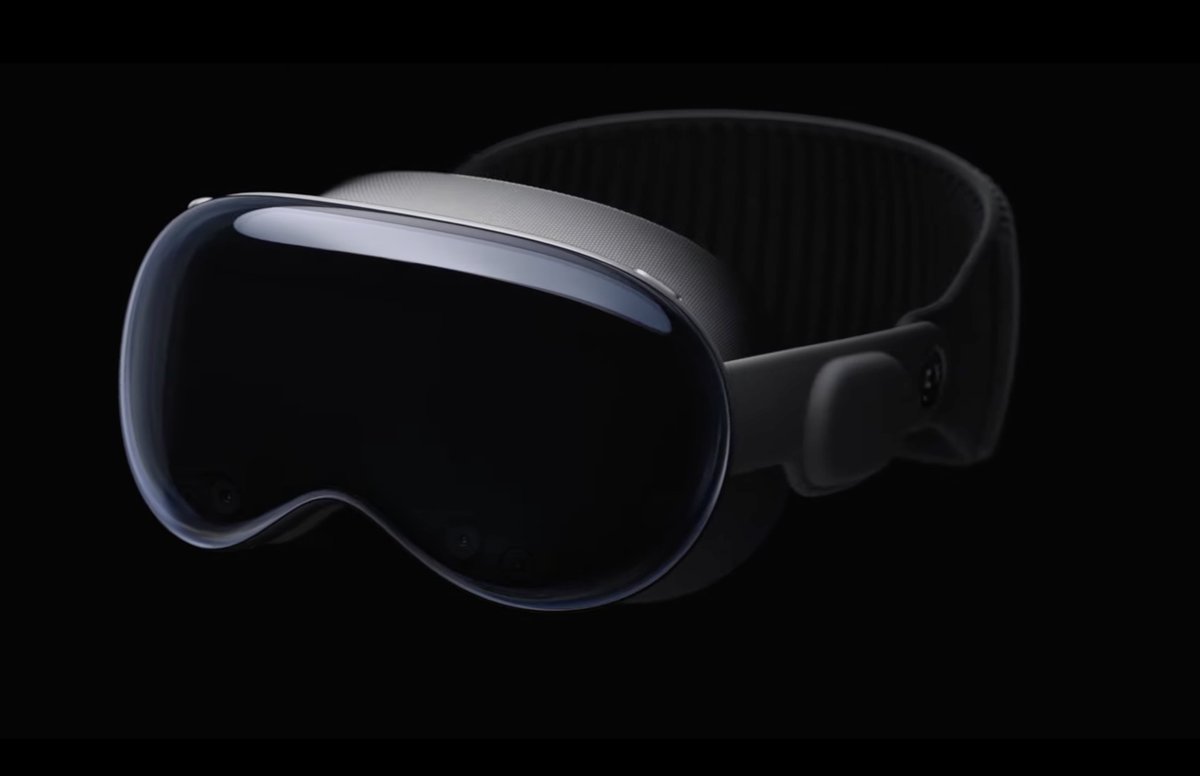
I spent 10% of my life contributing to the development of the #VisionPro while I worked at Apple as a Neurotechnology Prototyping Researcher in the Technology Development Group. It’s the longest I’ve ever worked on a single effort. I’m proud and relieved that it’s finally announced. I’ve been working on AR and VR for ten years, and in many ways, this is a culmination of the whole industry into a single product. I’m thankful I helped make it real, and I’m open to consulting and taking calls if you’re looking to enter the space or refine your strategy.
The work I did supported the foundational development of Vision Pro, the mindfulness experiences, ▇▇▇▇▇▇ products, and also more ambitious moonshot research with neurotechnology. Like, predicting you’ll click on something before you do, basically mind reading. I was there for 3.5 years and left at the end of 2021, so I’m excited to experience how the last two years brought everything together. I’m really curious what made the cut and what will be released later on.
Specifically, I’m proud of contributing to the initial vision, strategy and direction of the ▇▇▇▇▇▇ program for Vision Pro. The work I did on a small team helped green light that product category, and I think it could have significant global impact one day.
The large majority of work I did at Apple is under NDA, and was spread across a wide range of topics and approaches. But a few things have become public through patents which I can cite and paraphrase below.
Generally as a whole, a lot of the work I did involved detecting the mental state of users based on data from their body and brain when they were in immersive experiences.
So, a user is in a mixed reality or virtual reality experience, and AI models are trying to predict if you are feeling curious, mind wandering, scared, paying attention, remembering a past experience, or some other cognitive state. And these may be inferred through measurements like eye tracking, electrical activity in the brain, heart beats and rhythms, muscle activity, blood density in the brain, blood pressure, skin conductance etc.
There were a lot of tricks involved to make specific predictions possible, which the handful of patents I’m named on go into detail about. One of the coolest results involved predicting a user was going to click on something before they actually did. That was a ton of work and something I’m proud of. Your pupil reacts before you click in part because you expect something will happen after you click. So you can create biofeedback with a user's brain by monitoring their eye behavior, and redesigning the UI in real time to create more of this anticipatory pupil response. It’s a crude brain computer interface via the eyes, but very cool. And I’d take that over invasive brain surgery any day.
Other tricks to infer cognitive state involved quickly flashing visuals or sounds to a user in ways they may not perceive, and then measuring their reaction to it.
Another patent goes into details about using machine learning and signals from the body and brain to predict how focused, or relaxed you are, or how well you are learning. And then updating virtual environments to enhance those states. So, imagine an adaptive immersive environment that helps you learn, or work, or relax by changing what you’re seeing and hearing in the background.
All of these details are publicly available in patents, and were carefully written to not leak anything. There was a ton of other stuff I was involved with, and hopefully more of it will see the light of day eventually.
A lot of people have waited a long time for this product. But it’s still one step forward on the road to VR. And it’s going to take until the end of this decade for the industry to fully catch up to the grand vision for this tech.
Again, I’m open to consulting work and taking calls if your business is looking to enter the space or refine your strategy. Mostly, I’m proud and relieved this has finally been announced. It’s been over five years since I started working on this, and I spent a significant portion of my life on it, as did an army of other designers and engineers. I hope the whole is greater than the sum of the parts and Vision Pro blows your mind.
So you wanna learn how to design for Apple Vision Pro? 👀
We just dropped 3 must-watch #WWDC23 videos that go over it all
Principles of spatial design
https://t.co/Z6IFqBRr0j
Design for spatial interfaces
https://t.co/0JkklnGZlF
Design for spatial input
https://t.co/nmrVm73xcP
In my survey about Copilot and ChatGPT, the most frequent comment / "wish" mentioned is to have an "enterprise" Copilot / ChatGPT that is internal to a company does not "leak" code outside (eg to MS or OpenAI), and is trained on the company code & docs.
Who is building this?
Why I don't use Scrum to manage my Remote Teams?
TL;DR: It adds at least 8 hours of meetings per Sprint. That's 2 full days of lost productivity, per team member, per month!
This is what I do instead 👇
@steipete Also keep in mind that Telegram for macOS is open-sourced, and it seems like there is only one developer working on it: https://t.co/tZN1pa44Jo
As of Swift 5.9, we'll be able to make network requests from Swift package plugins with a single permission and without having to disable sandboxing 🎉
Read more 👉 https://t.co/8BLF5qKbm0
#iosdev#swiftlang
Netflix is really big on metrics and AB testing, and this was a really significant win across the board.
Don’t let anyone try telling you craft and quality doesn’t matter to the business.
When the calculator was invented, some mathematicians were put out of jobs.
But the best mathematicians used the calculator to solve problems faster.
Same will happen with AI tools.
This SwiftUI behavior surprised me twice: first, I didn't expect the overlay state to be reset after the `id` change. Second, I absolutely didn't expect the state to be restored after changing the id back...
When we use relative, offset or timer style with a date inside a Text view in SwiftUI, the time keeps updating automatically.
To prevent the UI from jittering in such cases, we can apply monospacedDigit() modifier to Text, so that it uses fixed-width numeric characters.