Can AI really detect AI?
Currently, universities, journals, and various educational institutions are using AI detectors to identify AI-generated writing.
However, a recently published study has challenged this widely held assumption.
In a study titled "AI Detecting AI in Academic Writing: Why Most AI Detector Findings Are False," published in Elsevier's Elsevier journal Next Research, researchers argue that most results produced by current AI detectors are not reliable and can often lead to incorrect conclusions.
The reason is that modern Large Language Models (LLMs), such as ChatGPT, have become so advanced that even experts often find it difficult to accurately distinguish between human-written and AI-generated text.
Nevertheless, many institutions are treating AI detector reports as if they were definitive evidence.
The study also shows that AI detectors frequently misclassify human-written content as AI-generated.
One of the study's most important findings is that when the actual prevalence of AI-generated writing is low, the false-positive rate of AI detectors increases dramatically.
In other words, if AI use is relatively limited in practice, an innocent author may face a much higher risk of being wrongly accused of using AI.
The researchers further note that authors who do use AI can often evade detection simply by modifying, editing, or rewriting portions of the generated text.
This means that a writer who never used AI may still be accused of doing so, while someone who did use AI may not be detected at all.
According to the researchers, AI detector results should not be used as the sole or definitive evidence of AI usage.
"Dicho esto, las ferias del libro sirven para vender muchos libros horribles y algunos buenos, muy buenos." 👏🏼👏🏼👏🏼
@Newcastleedic pasaré esta tarde por allí a ver si hay suerte. https://t.co/51FpZbFYad.
Trump on his presidential library:
"I don't believe in building libraries or museums... It's going to be most likely a hotel, this concept. Could be office, but it's most likely going to be a hotel with a beautiful building underneath and a 747 Air Force One in the lobby"
✅ España se incorpora a @OpenResearch_EU, la plataforma pública de publicación científica en acceso abierto impulsada por la Comisión Europea.
📖 @cienciagob representará a nuestro país en la plataforma a través de la @FECYT_Ciencia.
https://t.co/8nTbydNRn6
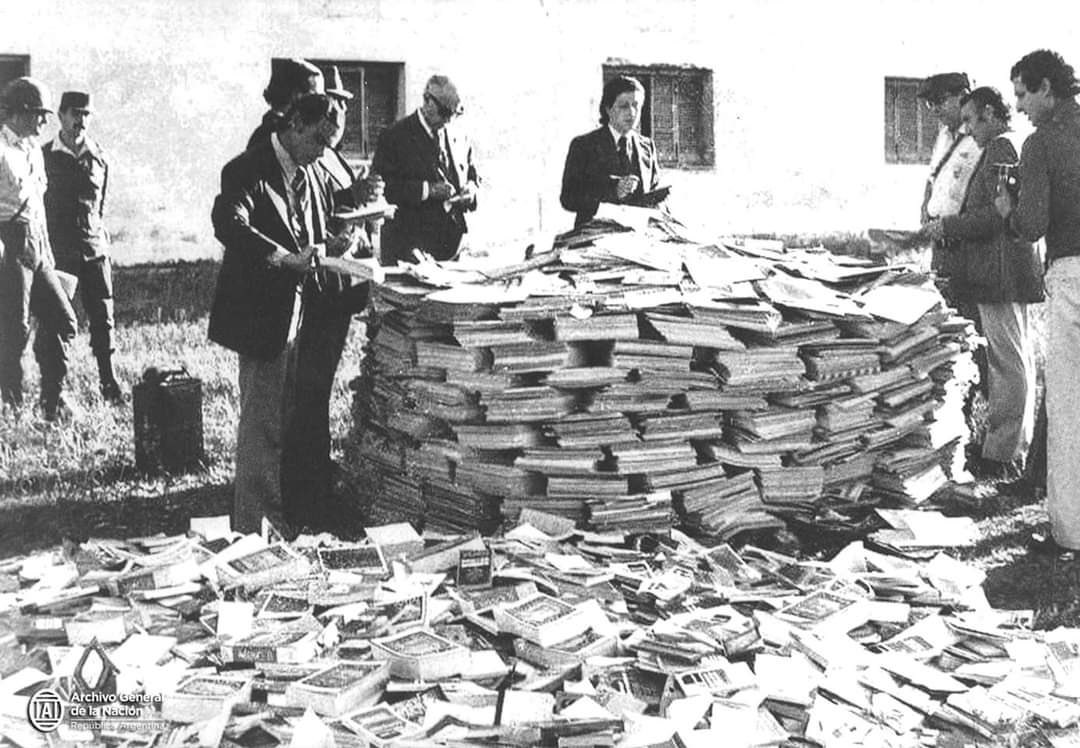
El 24 de Marzo de 1976 los militares entraron a la Universidad Nacional de Luján. Lo primero que hizo el Coronel Marícola fue interrogar al Rector, Emilio Mignone. ¿Dónde están las armas?, preguntó. Mignone le dijo "en la biblioteca", pero el militar no entendió la ironía. (...)
La IA va a ocupar naturalmente el espacio de los influencers. Es la hora de la curación de contenidos y de la creación de contextos. Del "content creator" al "content curator" y el "context creator". Mi nueva columna en La Vanguardia: https://t.co/R430h7K4Q8
Desde ABADIB, entidad miembro de FESABID, se ha publicado un comunicado en el que se manifiesta una repulsa firme a la moción presentada por VOX sobre el análisis de los fondos de las #bibliotecas municipales de Palma.
Comunicado completo: https://t.co/5S5GcI34R8
Gloria Fuertes creó en los años 50 el primer servicio móvil de lectura infantil en España
Circulaba por los pueblos de la sierra de Madrid con su vespa llevando libros a los niños de las zonas rurales donde las instituciones no llegaban
🖌@mdesamotracia
https://t.co/JIboozrTUd
Redacción de titulares culturales ¿qué es insólito, que sea la biblioteca moderna, o que sea luminosa? El jardín ¿era secreto de verdad, en 400 años nadie lo vio? 🥸