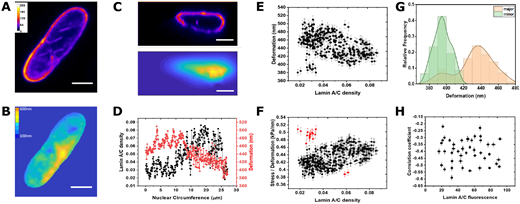
Happy to announce that our article describing how nuclear curvature determines stem cell fate is featured on the cover of the current edition of Biophysical Journal!
https://t.co/qYJY9QXnl8
Check out the video of Prof. Allen Ehrlicher (@ehrlicherlab) and his McGill Innovation Fund (@McGill_VPRI) project PaCS, offering new ways to measure cell forces for research in academia and drug discovery in industry.
https://t.co/jhSET22Ts2
Delighted to publish a free #OA paper in @J_Cell_Sci from Allen Ehrlicher @ehrlicherlab via our #ReadandPublish agreement with McGill Library @mcgillu@McGillLib
Read Allen's paper at https://t.co/vBILZ2byZT
See if your institution is also eligible https://t.co/AX7G9a98Vi
Our paper on the mechanobiology of the intestinal epithelium is now out @NatureCellBio. We report high-resolution time-evolving maps of 3D traction forces in intestinal organoids.
https://t.co/9Tj3lzhFN2
@icreacommunity@IBECBarcelona
@Po_Strale@mcgillu Thanks! two key differences in our study are a) quantification of total work rather than stress or force and b) the use of PDMS as an elastomeric improvement over PAA.
Proud to announce the first PRIMO installation in Canada at Pr. Erlicher Lab (Mc Gill). All the team was eager to continue the work started last year in the bioengineering department. Let's continue studying focal adhesion on soft substrates
#bioengineering#cellbiology#invitro
We are pleased to announce that three of our professors have been promoted by McGill’s Board of Governors this summer. Prof. Allen Ehrlicher and Prof. J. Matt Kinsella have been promoted to the rank of Associate Professor, and Prof. Yu (Brandon) Xia to the rank of Full Professor.
@ManuelTHERY@Franze_Lab Speed comes from 96 well format – we can quantify many biochemically distinct samples in 1 dish; using PDMS (vs PAA) radically simplifies fabrication, robustness, and longevity of multiwell plate (now extending to 384-well too). Excited to apply in screening challenges w/ @Amgen!
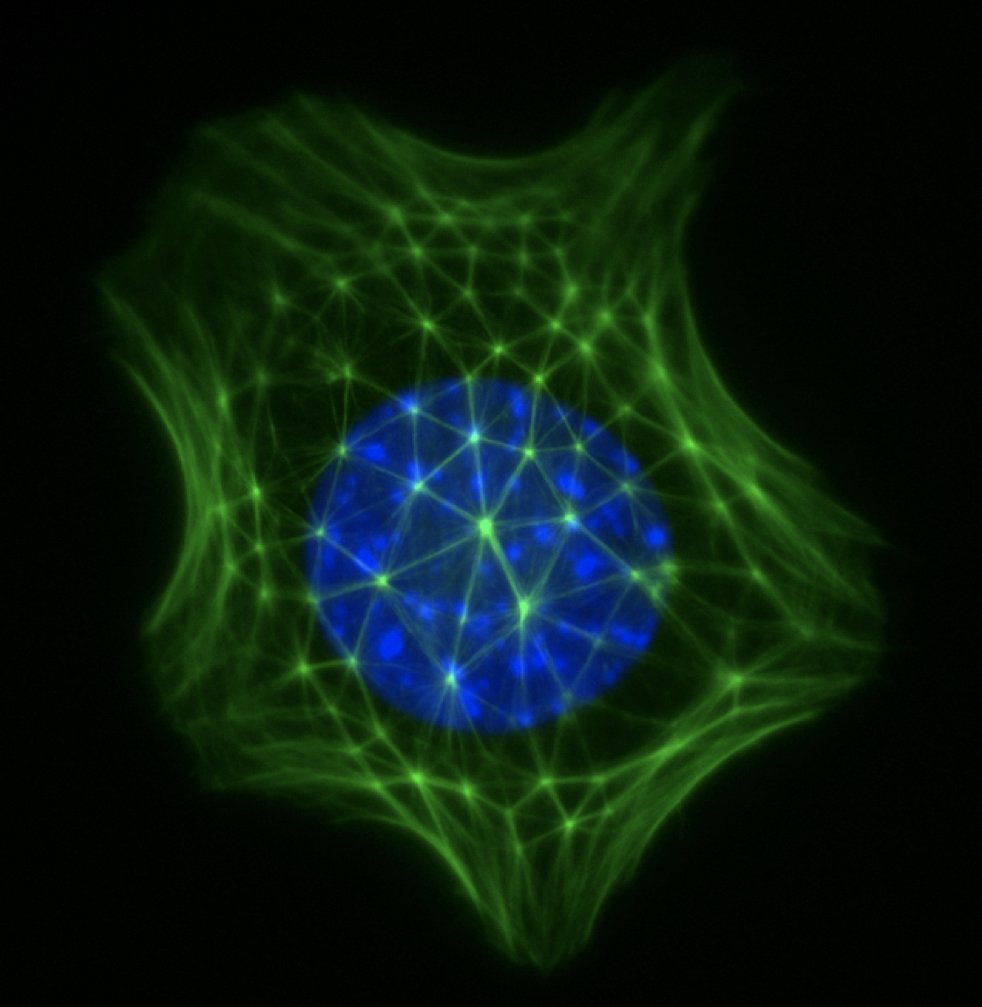
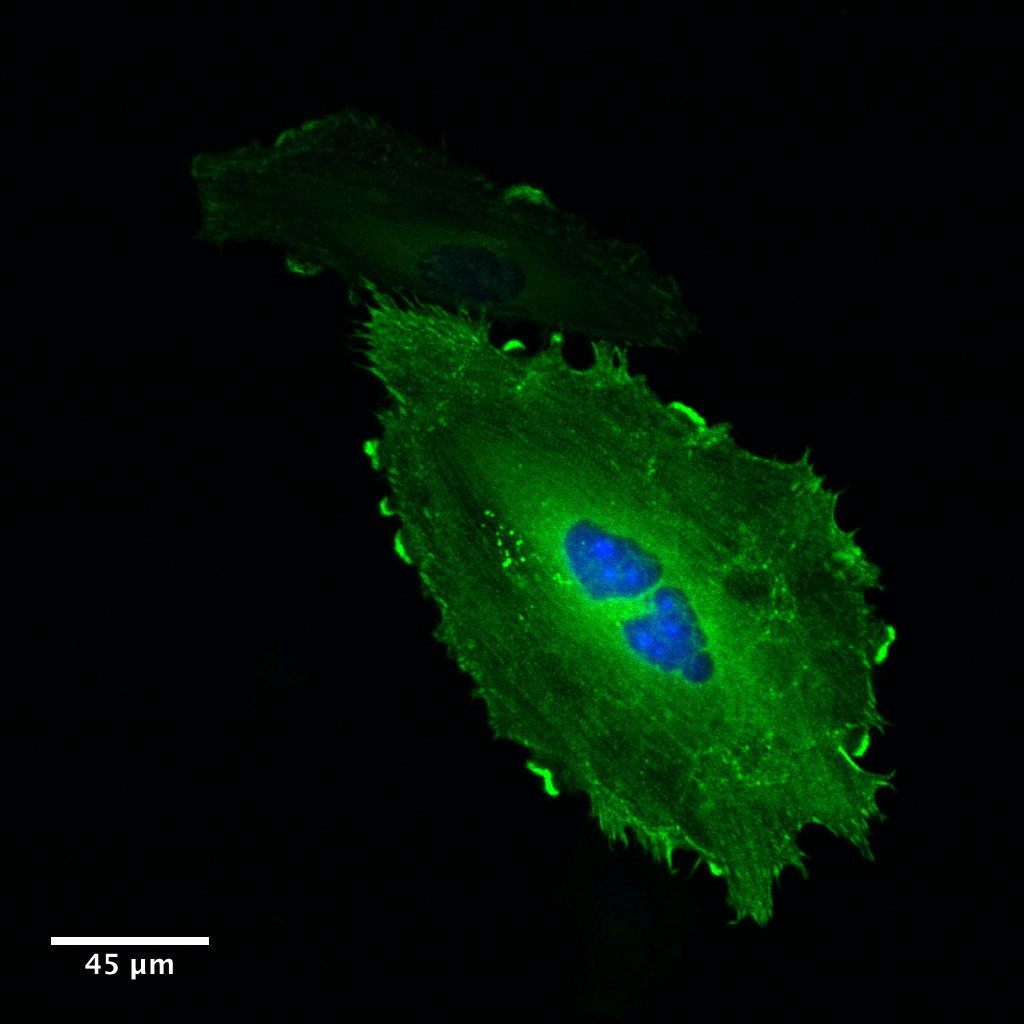
absolute unit – this HEK cell transfected with ACTN4-EGFP and NLS-EBFP is 215.91 µm end-to-end. In comparison, the diameter of a human hair ranges from 17-181 µm #SciArt