Founder & CEO, EHS Concepts | Navy veteran, 19+ years in safety. I build safety systems people will run on Monday. IIOCSMG · Maxwell Coach, Speaker, Trainer.
Natalie Pryde: "that worker is exposed to it for 365 days, right? And you just measured it for maybe one day."
One shift above or below a limit doesn't tell you the cumulative effect on the person.
https://t.co/0q2XxBrkrT
Natalie Pryde on where corporate wellness usually sits:
"We put it in the lane that does the hiring and the firing, right? And the promoting."
"you're never going to build trust there. Ever."
https://t.co/0q2XxBrShr
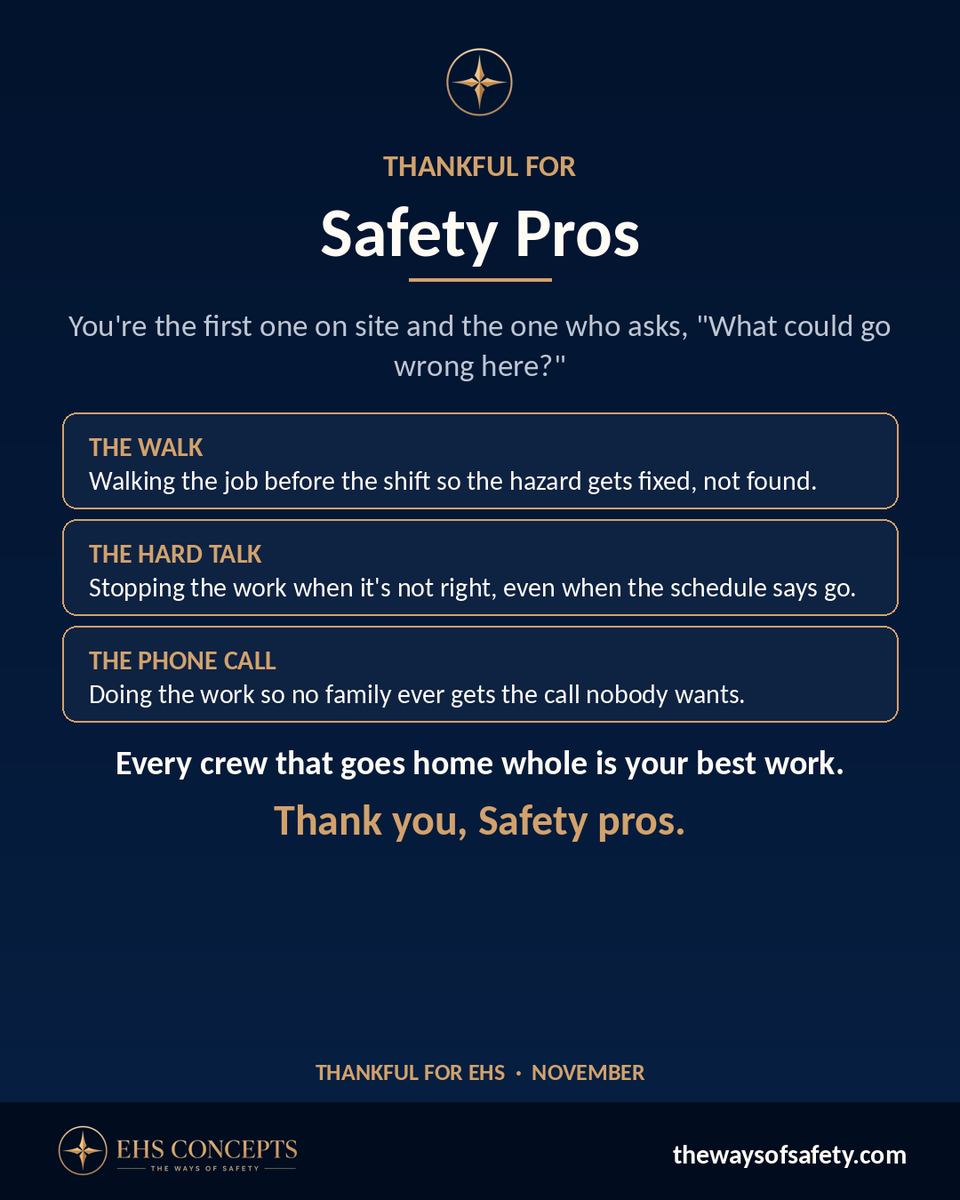
Thankful for Safety pros: first on site, willing to stop the job, working so no family gets the call. Tag one 👇 https://t.co/Vct4SKiipH #ThankfulForEHS
@OSHA_DOL Good reminder. A game plan only works if the players helped write it. Ask your crew what slows them down or tempts a shortcut, then fix one thing they named this week. That builds more trust than any binder review.
@ProActSafety Low near miss reporting usually traces back to what happened the last time someone reported. Blame or silence, and people stop. Close the loop fast: tell the reporter what changed, by name, within a week. Reporting follows trust.
@valuetainment 178 organizations, and I'd bet most had a security policy that said this couldn't happen. The gap between policy and practice is where losses live. Fix: test your weakest outside link, not your strongest wall. Same rule keeps workers and customers safe.
@patrickbetdavid Three outages in 5 days is a free fire drill for every business. Ask your team: if the bank, the cloud, or the vendor goes dark tomorrow, what do we do first? If nobody knows, you don't have a plan, you have paperwork. Safety and strategy start in the same place.
@valuetainment Feels like nobody is safe online this month. In safety we call it contractor management: you own the risk of whoever you let in. Most firms collect the paperwork and stop there. Map every outside party with access, ask what they can break, and limit it.
@patrickbetdavid Cause matters less than this: how long can you run when the system you trust disappears? I've seen emergency plans that list phone trees for phones that don't work. Test the plan for real, write down what breaks, fix it. Readiness is a habit, not a document.
@valuetainment Big names, same lesson I've seen on job sites for years: the biggest risk often walks in with a vendor. Companies vet contractors on paper and never check what they actually do on site. Know who touches your systems, verify it, and review it every year.
@patrickbetdavid My first thought was every small business owner who couldn't send a payment Monday. Whatever the cause, most companies have a continuity plan in a binder nobody has opened. Pick your one system that can't go down and run a 15-minute drill without it this week.
Ryan L. Rinehart's tactic for the senior anti-safety guy on every crew:
Ask him, "What's the worst thing that you've ever seen on a job site?"
"He's selling safety, and I don't have to do a thing."
https://t.co/0q2XxBrkrT
@valuetainment That vote is a leadership scorecard. Most companies measure output and ignore trust. Ask your team one question every quarter: would you bring a problem to me? The answer predicts your safety record and your retention better than any binder.
@patrickbetdavid Felt for everyone stuck at the gate Friday. One new device, 3,500 flights stopped. Your business has its own router swap coming: a new hire, a new vendor, a new process. Test it small, have a rollback, then scale. That's safety and strategy.
@valuetainment Employees vote long before they get a ballot. In safety it shows up as near misses that never get reported. If people don't trust leadership, problems stay hidden. Make it safe to speak up, then fix what they raise fast. That's culture as a system.
@patrickbetdavid Every plant I've worked with has a Management of Change form. Few use it for the "easy" jobs, and that's where it bites. Fix: a 5-minute what-could-go-wrong check on every change, plus a rollback plan. Systems that can't fail safe will fail loud.
@valuetainment 88% is a number every leader should want. I've walked sites where the poster said "safety first" and the crew said "nobody listens." Trust is the gap between what's written and what's lived. Close it by asking crews and acting on what they tell you.
@patrickbetdavid Spent years watching "small" changes cause the biggest messes. A routine router swap grounded the country. Most companies have a change process on paper and skip it for anything that looks minor. Ask what this could break before you touch it. Same in business.
The podcast is now on Apple Podcasts.
EHS Concepts – The Ways of Safety. We talk about the gap between the program on paper and how the work actually gets done.
Apple: https://t.co/EDXYCqRUr9
More listen links in the replies.