@anat_kamm זו לא תמונה שלה בדמות אלא יום שהתלבשה צנוע כי עשתה סיור בשכונה חרדית. אבל זה קליקבייט, ברור שזה מרושע, אין לי ציפיות מהתת ערוץ הזה בחיאת זה ערוץ 14 ממתי אוכלים את הפייק שלהם חוץ מכאשר זה נוח ומשרת אג׳נדה
@ycwest This is awesome. You've truly earned the trust of your business customers with a LOT of hard work and dedication, it's inspiring to watch, and a privilege to partner with you through this journey.
Here’s everything I learned recently about Bill Pay (or Accounts Payable) in Vertical SaaS.
If you’re a software company looking at offering AP / AR to your customers, I’d love to help you think through your use case. Drop me a line at [email protected], or leave your details on our website.
WHAT IS BILL PAY? (AP)
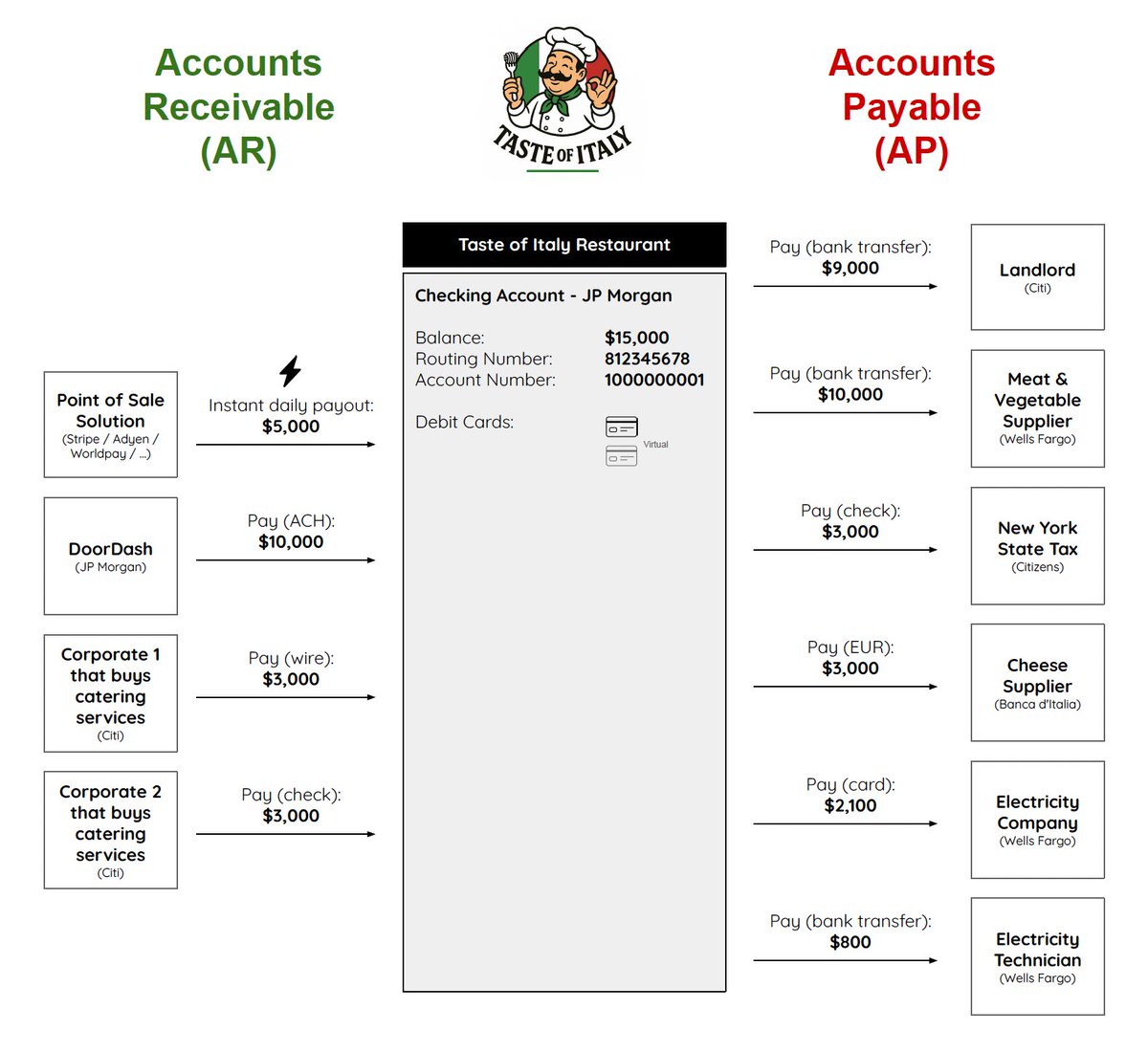
Let’s use an example: a restaurant called Taste of Italy 🇮🇹, with a checking account at JP Morgan. See diagram.
Every business pays third parties routinely: suppliers, landlords, service providers, utilities, tax (state / federal) & more.
The owner at Taste of Italy might log into their bank account and send payments manually. Or they may write and send checks. Some businesses use Bill Pay software like BILL or Quickbooks, which make those payments on their behalf. The adoption of software varies across industries. In some industries (like restaurants), there are vertical Bill Pay solutions.
Bill Pay isn’t that simple. It requires:
- Tracking invoices and which one(s) have been paid
- Paying in different methods (checks, wires, international) and different arrangements (example: net 30)
- Internal approvals (example: for large amounts)
- Producing tax forms to the payees (sometimes)
- Reporting back to accounting / ERP systems (Quickbooks / Netsuite)
WHY DOES IT BELONG IN VERTICAL SAAS?
Bill Pay (AP) tools are already used by millions. A rule of thumb I follow: every tool that millions of small businesses use will make its way into vertical SaaS in an embedded form. Why?
Reason #1: delivering convenience & value. Vertical SaaS platforms have CONTEXT. They facilitate events that might require a payment, and could easily automate payments for these events. Example: a vertical SaaS platform that helps real estate brokers close transactions might “know” that a transaction closed and a broker needs to pay $2,000 to 2 agents as commissions. It’s easy for the platform to schedule & automate these payments.
Reason #2: revenues. When you give value, you can capture value. Platforms can choose to charge software fees for such services, or transaction fees. See monetization section below.
FEATURE SET FOR THE SMALL BUSINESS
Vertical SaaS and generic Bill Pay systems (like BILL) generally offer these features to their users:
- Intake: users are able to upload, import, or forward an email with an invoice
- Parsing: when a PDF is uploaded, the invoice details are extracted automatically from it
- Payment methods: ACH, wires, checks, utility companies, cards, international
- Approval workflows: for example, multiple people need to approve a certain bill above $X
- Recurring payments
- Tax forms: collect info & issue tax forms to payees under certain conditions
- Edge cases: partial payments, returns and retries
- Integration with accounting systems & ERPs: Quickbooks, Xero, Netsuite & more
- Fees: Bill Pay solutions need to charge fees transparently and show fees to the customer
MONETIZATION + REVENUES
I’ve seen companies monetizing Bill Pay in 2 ways:
- Software fees. Example: companies can charge $200 / month for a Bill Pay module.
- Transaction fees. Example: companies can charge $0.10 for bank transfers and $5 for wires.
Both of these are optional- some companies charge $0 for this service, because it makes their product more sticky. The most sophisticated companies have multiple “tiers” and programs around Bill Pay. Example: if you’re a premium user, maybe you don’t pay software fees for Bill Pay.
FEATURE SET FOR THE VERTICAL SAAS PLATFORM
Vertical SaaS platforms are often interested in two-way communication with bill pay solutions, if they use an external solution. They want to be able to “push” an invoice or invoice PDF into a bill pay system. They want to get notified via webhook when a payment is sent.
CASH FLOW: BILL PAY + OTHER EMBEDDED FINANCE PRODUCTS
There’s a lot of power in combining Bill Pay with Banking + Capital.
Banking: platforms that “know” the current balance + future payouts can show a cashflow projection, which is the holy grail for small businesses. These platforms also have a wedge in reducing fraud- they can initiate the payments from accounts within their ecosystem.
The bigger unlock: payer & payee both have bank accounts on the platform. In these cases, money movement can be internal and therefore instant, free and 24/7.
Capital: platforms that layer Capital solutions on top are able to actually HELP businesses with cash flow.
Thanks @mattbrown for inspiring a lot of these insights with a great post: “B2B payments aren’t payments, they’re workflows” - https://t.co/gK6aQVz5Y9
My next post will be on Accounts Receivable (AR). Let me know if you have any questions?
@therealnirs@FinancialEduX העמלה אמנם יותר גבוהה, אבל לא 3%. רובינהוד (שלמיטב ידיעתי הם היחידים שמשלמים 3%, בקמפיין שעשה הרבה מאוד רעש ובכרטיס שלא זמין לכולם), מפסידים כסף על רוב מוחלט של הלקוחות שמחזירים את החוב בזמן ולא מגלגלים אותו (ומשלמים ריבית).
זה פשוט לוס לידר.
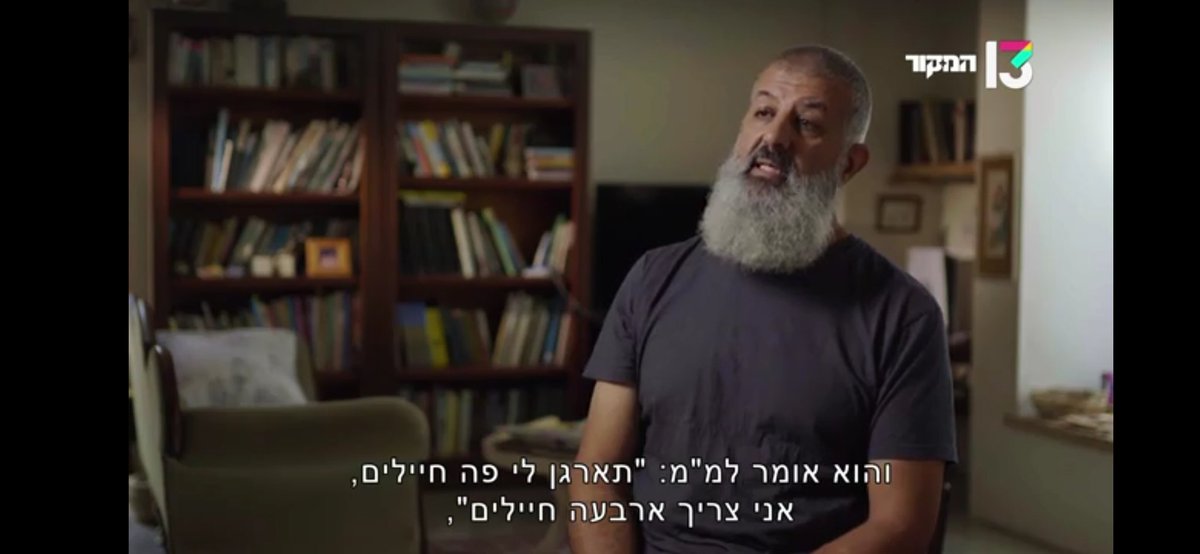
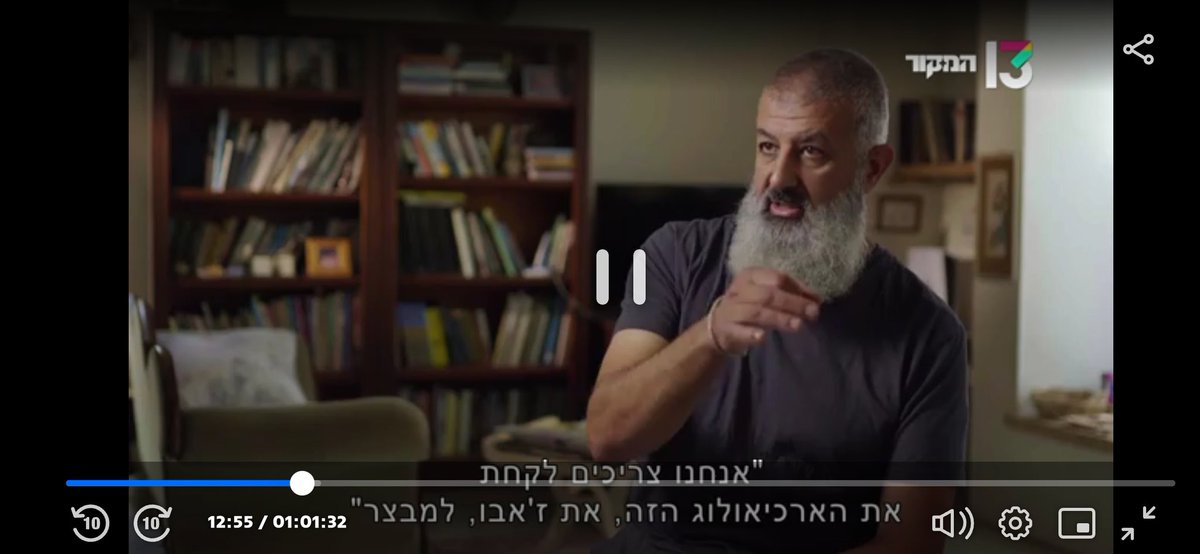
צפיתי בתחקיר של @RavivDrucker על התקרית שבה נהרגו גור קהתי וז'אבו ארליך, ומה אתם יודעים, החיילים שהיו שם מספרים - בניגוד למה שכל הדתיים בפיד ידעו לומר בביטחון דקה אחרי האירוע - שארליך הוא זה שביקש להיכנס ללבנון, והמטרה היתה סיור במבצר ולא שום צורך מבצעי.
טקסט מבהיל של חברי הטוב יותם ברגר, דוקטורנט במשפטים באוניברסיטת סטנפורד.
*קריאת חובה*
חמישה שיעורים מסטנפורד, קליפורניה
שנת הלימודים האקדמית בארצות הברית הולכת ומתקרבת לסיומה. עוד כמה שבועות יעמדו תלמידי האוניברסיטאות המסיימים את לימודיהם על הדשא, בגלימות וכובעים. הם יצטלמו בהתרגשות, ילחצו ידיים לדיקנים, ואז יתעופפו מ��אן, מפנים את מקומם לדור חדש של בני דמותם.
לקראת טקסי הסיום הולכות ומתגברות גם מחאות הסטודנטים האנטי ישראליות באוניברסיטאות האמריקאיות. אפשר לפתוח בצפירת הרגעה. כאן בסטנפורד, לפחות, הסטודנטים שישנים על מדשאות הקמפוסים וקוראים לפצוח ב״אינתיפאדה גלובלית״ הם – ככלל – לא מסוכנים במובן הפיזי של המילה. אבל הם מסוכנים מאוד בטווח הבינוני והארוך, בכל הנוגע לדמותה של מנהיגת העולם החופשי.
זו השנה השנייה שלי בסטנפורד. כשחזרנו לכאן בספטמבר אחרי חופשת הקיץ, התכוונתי לסיים את השנה עם הצעת מחקר מאושרת ושליש דוקטורט כתוב. קשה לתאר כמה אני רחוק משם. להתרשמותי, אני לא ממש יוצא דופן. מאז אוקטובר, מצאו את עצמם ישראלים רבים מאוד בחו״ל נאלצים לבחור בין שתי אופציות – להוריד את הראש או להפוך לשגרירים ��לית ברירה. מי יכול בכלל לכתוב מאמר כששני אחיו נלחמים בעזה. במקום, מצאתי את עצמי מכלה חלק ניכר מזמני על פעילויות ״הסברה״ שלא היו לי שום כוונות לקחת בהן חלק.
למרות זאת, למדתי השנה כמה שיעורים חשובים מאוד שלא אשכח בחיים. עם סיום שנת הלימודים, ונוכח גל השאלות המודאגות מהארץ לאור הסבב הנוכחי של טירוף הקמפוסים, חשבתי לשתף את חמשת השיעורים החשובים ביותר שלמדתי בשנה האחרונה בסטנפורד, קליפורניה.
1. אם נרצה זאת ואם לא, אנחנו תמיד – בראש ובראשונה – היהודים.
השנה הראשונה כאן הייתה חוויה אקדמית חזקה מאין כמוה. הרגשתי מוקף בחברים בינלאומיים. קיבלתי גישה מלאה למוחות המשפ��יים המבריקים ביותר בעולם. התחושה הייתה שמונחות לפני אינסוף הזדמנויות. חברים מהארץ, ששאלו כבר בשנה שעברה אם אנחנו סובלים מאנטי-ישראליות היו נראים לי מצחיקים. מה פתאום? אני ישראלי ליברל. כתבתי בעיתון השמאלני ביותר בישראל. התמחיתי באחד מבתי המשפט הליברלים בעולם המערבי. למה שלמישהו תהיה בעיה איתי? התהלכתי בין מי שחשבתי לחברים כשווה בין שווים. יכולתי לדבר על ישראל בחופשיות, לבקר אותה ולאהוב אותה, לנהל דיונים שחשבתי שהם טובים ומורכבים על הנושאים הרגישים ביותר גם עם מי שהיה ברור שלא מסכימים איתי. הרגשתי אזרח העולם.
זו הייתה אשליה. אין ממש דבר כזה, מתברר, ״יהודי אזרח העולם״, כל עוד היהודי מתעקש על זכותו לקיום לאומי. בשביל רבים ממי שראיתי בהם חברים, התברר, הייתי בראש ובראשונה היהודי. ברגע האמת, מעטים מהם עמדו לצידי ברמה האישית. כמעט אף אחד מהם לא עמד לצידי ברמה הלאומית. הנורמות הכפולות שלהם אפשרו לסטודנטים שונאי ישראל להגיד עלי ועל החברים שלי דברים איומים, אך השתיקו כל ניסיון שלנו להתנגד לכך. במקומות מסוימים, נאלצתי לבחור בין להתנצל על ישראלותי לבין דחיה. לא הייתה שאלה.
בחוויה פוקחת העיניים הזו יש גם יתרונות. היא נייר לקמוס לאיכותם האנושית של הסובבים אותנו. חלק מהאנשים סביבי יצאו מגדרם כדי לתת גב, או כדי להפגין מחוות של אנושיות. מצאתי את עצמי מוקף בקשרים חזקים ועמידים. את החברים האלה לא אשכח בקלות.
2. אמריקה ראויה לדונלד טראמפ.
חבר ישראלי התבדח בפניי שאם טראמפ ייבחר לנשיאות שוב בנובמבר, הוא ילך בחצרות סטנפורד ויחלק בקלאוות. זו בדיחה מצחיקה מאוד רק כי היא לא לגמרי דמיונית.
9 בנובמבר 2016 היה יום שהכה אותי בתדהמה. כמו רבים בכל רחבי העולם, העובדה שארצות הברית של אמריקה בחרה בדונלד טראמפ לנשיאה הייתה בלתי נתפסת. במובן עמוק מאוד, לא משנה כמה פרשנויות קראתי, בכמה סרטים וסדרות ��וקומנטריות צפיתי – מינויו של האיש הזה היה נראה לי בלתי מוסבר. דמיוני. בלתי אפשרי. גם שנים אחר כך, כשהמילים ״הנשיא טראמפ״ הפסיקו להרגיש מוזרות על הלשון, הבחירה בו הייתה נראית לי לא מוסברת. גליץ׳ במטריקס. לא יכולתי להבין איך יכול להיות שהקמפיין שלו הצליח.
השנה נפל לי האסימון. לא, לו הייתי אמריקאי עדיין לא הייתי מצביע לטראמפ. אבל אני מבין כעת את אלה שמצביעים לו. דונלד טראמפ הוא המענה של אמריקאים מסוימים לטירוף שמנגד, טירוף שלא הבחנתי בו עד שהוא הפנה את פרצופו לכיווני. טירוף לא פחות גרוע. לא, לו הייתה לי זכות הבחירה, לא הייתי בוחר בדונלד טראמפ. אבל אמריקה ראויה לו.
This week, @unit_co_ held its best product demo to date! Kudos to our amazing team members: Ehud, Sai, Sarah and Louise.
100+ companies joined us and saw new releases in action:
- White label apps: banking + charge cards
- Capital + underwriting: white label UI components & APIs
- Instant account funding via card
- Automated card reissuance
- Visa Signature Cards
- A fan favorite: video of platform manager Alex successfully testing cash deposit through Green Dot at a Walgreen's point of sale :)
- A preview of our new Application Form
Watch the full demo here: https://t.co/6JBDzwLN1W
Unit is hiring a Head of New Bank Partnerships!
We're looking for a bright, dynamic leader who is passionate about embedded finance and empowering community banks.
Apply here: https://t.co/u8sXrWnPLa
חברים בדקות האחרונות מכונת הרעל מנסה לטשטש את חומרת פיגוע הדריסה בתל אביב עם פייק על שוטרת שחטפה אגרוף ממפגין. הינה תיעוד של האירוע, רואים בבירור שהמפגין נדחף על ידי שוטר ונפל עליה. תפיצו לכל עבר, אסור לתת לפייק הזה לרוץ
סרטון: לירי בורק שביט המלכה
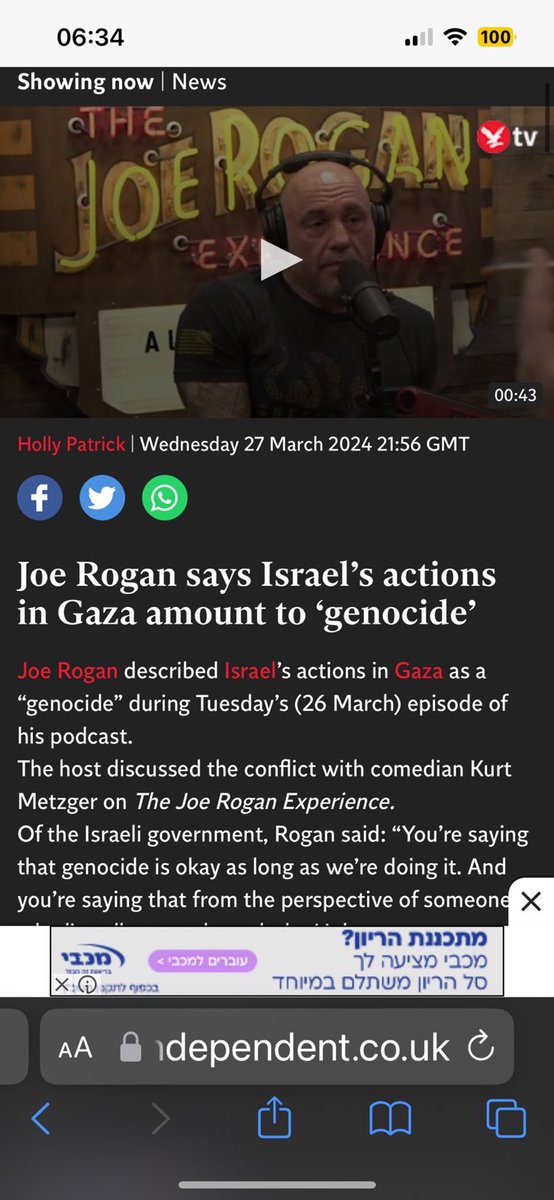
.@joerogan you are very wrong on Israel and how the war is going in Gaza. I just got back from Gaza. I am one of the world’s leading experts on urban warfare. Let’s have a conversation about the facts, opinions, disinformation, myths about it and the history of warfare.
Including below the entirety of the response we shared with @mikulaja since he chose to omit the first part.
Privately to him and publicly we have explained what we mean by direct relationships and how we support banks and the companies they partner with. We’ve acknowledged how we can and will evolve, both in the language we use and in the way we serve the industry.
I'm incredibly proud of the @unit_co_ team for the humility, positivity, and integrity they bring to our work each day.
* * *
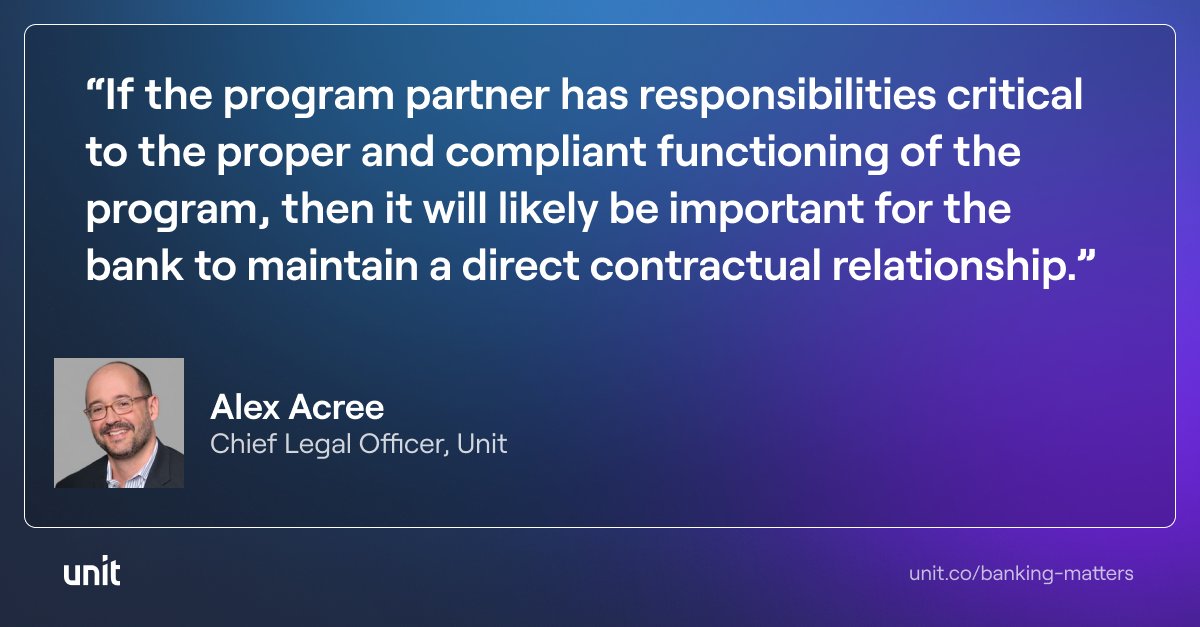
From the beginning, all banks and their technology company clients using the Unit platform have had direct relationships. Banks and technology companies have always mutually decided whether to work together. Banks have always contracted directly with their partners. Banks have complete authority over all programs. They vet and approve partners, program structure, funds flows, attributes, and vendors for each third-party program before launch, and they must approve important post-launch actions, such as releasing partner marketing and changing program features or limits.
To us, this is what direct means. But we recognize that this label may mean different things to different people. In the past we haven’t been as precise as we could have been about describing ourselves. We have taken steps to correct that in our public-facing materials. We have started using more consistent definitions that we describe here. https://t.co/ZbxgkUSnRq
We appreciate the opportunity to clarify the work we do with banks in support of our mission: expanding access to high-quality financial services.
We’re deepening our commitment to banks 🤝
The last few years have brought robust growth and important learnings for our platform. In this blog post, Unit CEO @itaidamti outlines what we’ve learned, how we operate today, and how we’re evolving.
https://t.co/faL9bAwEc6
@unit_co_ is changing.
We've made several important decisions recently:
1. Designing for banks as key customers 🏦
2. Doubling down on direct relationships 🤝
3. Investing more in our bank oversight product 🖥
We have a view that hasn't changed from the beginning: to serve our mission in 20+ years, we need to make sure that our ecosystem operates responsibly and sustainably. What HAS changed is the regulatory attention to partnerships between banks and technology companies. We are taking note ✔
Our ecosystem serves 1,405,807 small businesses, independent workers, and consumers: freight businesses, restaurants, homeowners, property managers, retirees, and healthcare clinics and more. Being here in 20+ years for them - and many others - is a responsibility that we take seriously. I'm incredibly proud of our team and customers - both banks and technology companies - for the work that we continue to do for them.
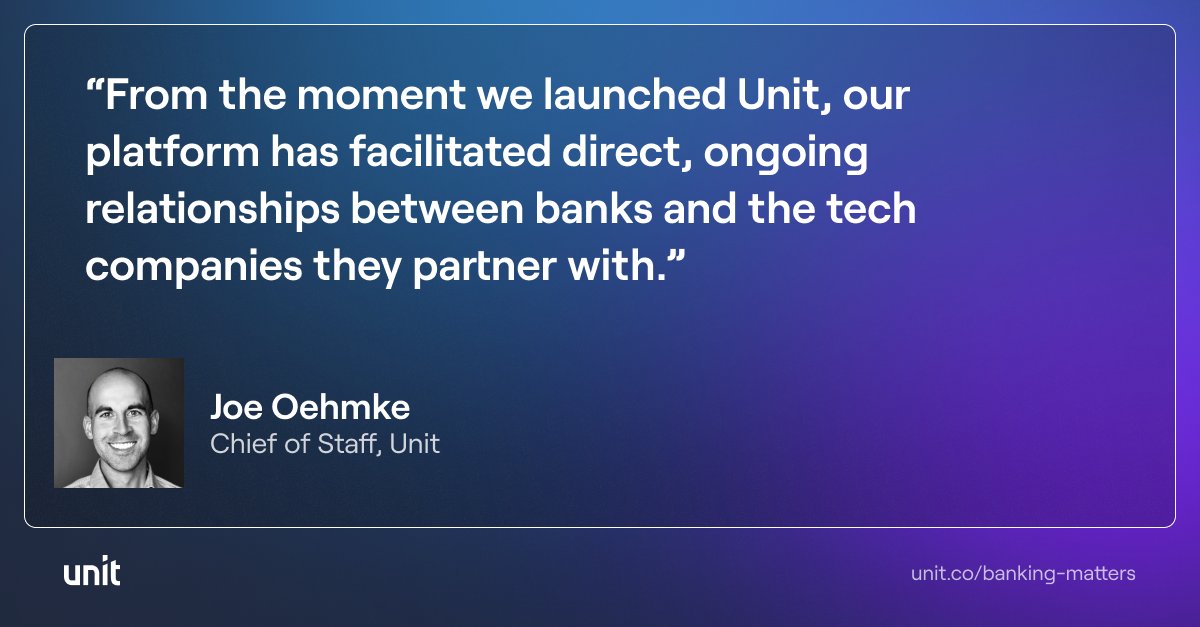
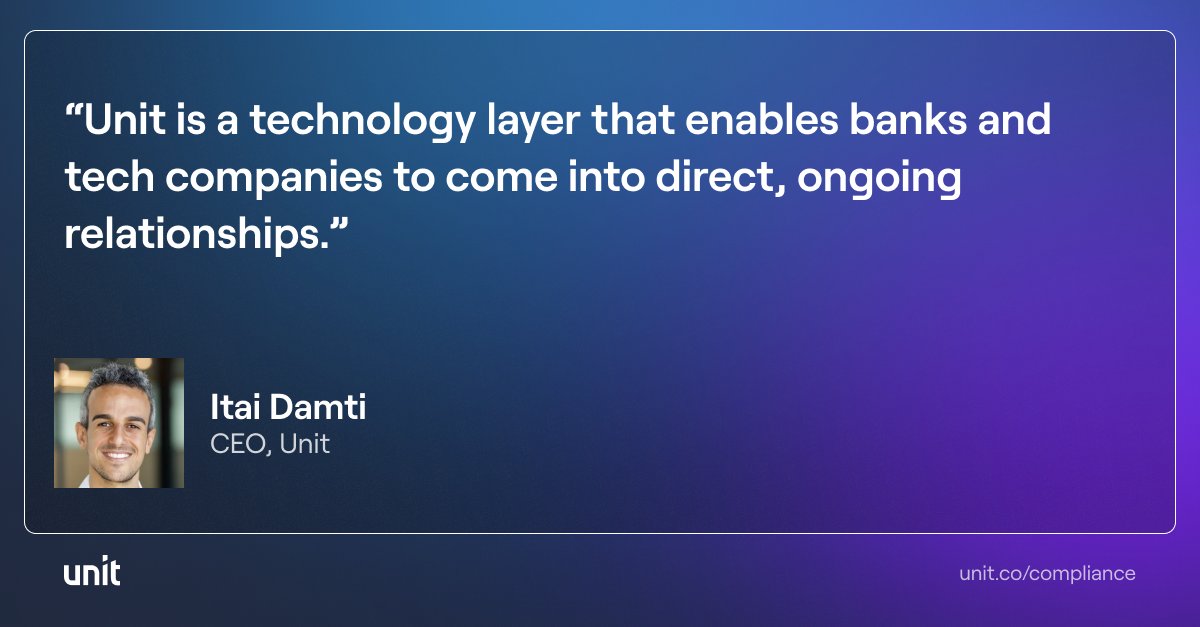
Our platform facilitates direct, ongoing relationships between banks and the tech companies they partner with 🏦
Learn more about how these relationships are structured.
https://t.co/y8c1tjXAqd
Thanks @contrary for the deep dive. We're happy to be a thought partner and shed some much-needed light on our space 📷
* Recent advances in technology have enabled vertical SaaS companies like Toast and Shopify to offer their customers financial services as a part of their platform.
* Realizing this opportunity has led to the development of several different models for partnerships between banks, tech companies, and embedded-finance platforms.
* It's increasingly clear that a direct, ongoing relationship between the bank and their fintech partners (like the ones that Unit support) is the only sustainable way to enable embedded finance.
https://t.co/QEUpEl95kd
Today we’re launching a new series called “Banking Matters.” 🔭👀
It’s written for banks and companies that want to work with them. The goal is to share best practices about how to build a compliant, scalable digital financial services ecosystem.
https://t.co/DC0cJ8niT8
התקפי חרדה, וחרדה בכלל, קורים הרבה פעמים בסביבה שבה צריך לקבל החלטות משמעותיות בתנאי אי ודאות, תחת שינוי מתמיד. סטארט אפ בשלב מוקדם, וגם בשלבים מאוחרים יותר של צמיחה מהירה, הוא סביבה סופר מאתגרת, בה בגדול ממציאים מחדש את המוצר, התהליכים, והרבה פעמים את הגדרות התפקיד, ואת עצמך כאדם.
התקפי חרדה הם חוויה קשה ולא נעימה, שמצריכה התייחסות וטיפול.
היא גם נפוצה בטירוף, אפילו יותר בתפקידים בכירים עם הרבה לחץ, וחבל שלא מדברים על זה מספיק, כי אנשים מרגישים שהם לבד בזה, וזה רק מעצים.
Why do companies with major resources & distribution often make mediocre products that don’t reach their potential?
There are a handful of reasons, many of which you already know.
But there is one under-discussed reason:
Operators Optimizing for Optics
To understand this, let’s start with a story.
START OF STORY
Acme Inc has brilliant, visionary founders (Alice & Bob), amazing culture, has built a well-loved product, and thereby created a business much larger than the early people (including the founders) had ever imagined.
--
With this growth, they’ve had to hire a bunch of Operators: leaders who are skilled in scaling process, teams, operations, and overall execution. So far so good. As the business & the customer-base grows, it is a no-brainer for Acme to tackle adjacent areas of opportunity.
--
So, during 2024 annual planning, Alice, Bob, and the exec team identify & present to the company a couple of key “strategic priorities” in these adjacent areas. One of these is especially vital to get going in H1 2024 because it poses a long-term risk to Acme’s position & growth.
--
Thing is that this is a brand new initiative that is targeting the kind of user that Acme thus far has not really been built for.
(some examples: normally serves SMBs, new initiative is for midsize corps. Or, company normally serves consumers, new initiative serves businesses)
--
Anyway, the basis for investing in this strategic priority is very sound.
Sophisticated customers and industry analysts are already asking Acme to do this.
It would be playing both offense (big revenue opportunity) & defense (avoids long-term disruption & disintermediation).
--
Alice & Bob know that it is critical to hire the right leader for this new initiative. The executive team agrees. So, after considerable thought and exploration, they choose Dan.
Dan joined Acme 2 years ago and has absolutely crushed it: he has taken his division from $20M to $100M.
--
Dan is ambitious and was starting to get restless anyway. He wanted a new challenge at Acme before he felt ready to start the next chapter of his career (ideally as CEO of a midsized company).
The exec team is bought in on this, Alice & Bob are excited, this feels like a win-win.
--
Alice & Bob (henceforth, A&B) give Dan ownership of the new initiative.
To signal to everyone how important the new initiative is, Dan will report directly to Alice, who mainly looks after the product side of Acme.
Everyone, including Dan, really wants this to work out great.
--
The first task is to create a codename for the initiative (of course!).
They pick “Zeus” (supreme Greek god). Dan begins forming a core team that will work with him on Zeus.
Alice, Bob & Dan set up thrice weekly check-ins to brainstorm, review progress/blockers for Zeus.
--
A bunch of research had already been done in 2022 & 2023 on the customer problems, the market landscape, competitor positioning, etc., so the team is not starting from scratch - they have some useful hypotheses to work off of.
A&B agree that’s a good starting point.
--
It is important to Dan that expectations are clearly set w.r.t. 2024 plans for Zeus: milestones, success criteria, core metrics, dependencies, etc.
In his early meetings with A&B, Dan is careful to set very realistic expectations.
The “Under promise and over deliver” mantra has served him very well in his career.
Remember: Dan plays the corporate game at the Olympic level.
--
A&B feel a tad uncomfortable discussing milestones, success criteria, quarterly metrics targets, etc. this early on, but they see Dan’s energy, they know his track record at Acme & before, and they recognize that they are first-time founders, so they sincerely support him in setting these expectations.
--
Everybody at the company knows Zeus is an important initiative, they’ve heard Dan speak at all-hands (and think he’s great).
So some of the most talented designers, PMs, EMs, engineers, etc. want to work on Zeus. So Dan has now put together a small but mighty core team.
--
Dan views his main job as understanding A&B’s vision for Zeus (especially Alice’s since she is the product visionary [0]), translating that vision to concrete product milestones, building a great team & process to execute quickly towards these milestones, and moving the KPIs.
[0] Dan is also well-aware that Alice will be writing his performance review & he has over the years gotten very good at managing expectations & perception with whoever will be mainly responsible for assessing his performance.
It is no accident that Dan’s rise in the corporate world has been meteoric
--
As a leader & manager, Dan steadfastly believes in clarity, transparency & alignment. A useful tool for him here is the Executive Product Review: a great way to raise important questions/proposals, get execs’ opinions/surface divergence, and give his team members face-time with the execs.
--
So, in addition to his thrice-weekly 2:1s with A&B, Dan sets up a fortnightly Zeus Exec Product Review, which includes the key company execs + A&B.
This being Dan, these meetings are clinically run: pre-reads, key updates, metrics, anecdotes, major blockers/asks, decisions, etc.
--
The exec team is impressed and feels very happy that their input is being solicited for Zeus. Some of them were concerned that they'd be left out of the loop after Dan started reporting directly to Alice, but now they think Dan has done a splendid job of keeping everyone involved.
--
On the other side, a few months in, A&B are starting to get nervous. But they can’t quite find the words to express their nervousness in rational terms.
“Something” feels off about the way Zeus is progressing:
Dan & team haven’t quite arrived at a core differentiator for Zeus.
--
Meanwhile, Jessie, a Designer reporting to Dan, is feeling similarly. While potential Zeus users are saying that they’d be willing to try Zeus when it is launched (they love Acme after all), they are also saying that they are reasonably happy with Zeus’s competitive product.
--
It is the first week of March, and Dan has 2 tense conversations on successive days.
The 1st one with A&B, where they express their concerns about lack of clear differentiation.
The 2nd with Jessie, who shares the tentativeness behind some users’ actual commitment toward Zeus.
--
While Dan was caught off-guard by these conversations, he makes sure to keep a cool, calm, composed facade (a skill he developed early on in his career as a consultant).
He pushes back a bit on A&B regd differentiation (“We have the distribution! But I will mull this over & get back to you” )
And he pushes back a bit more on Jessie (“We have a plan, let’s not re-litigate things we’ve already decided in our Jan/Feb Zeus Product Reviews. We need to hit Q1 OKRs too!” )
--
In his next 2:1 with A&B, Dan dutifully follows up on the differentiation question:
“I've talked to Tim about how Zeus needs to be integrated such & such with our core Acme product. Users have asked about that since day 1. I think this is going to be a big differentiator for us”
--
Dan shares supporting user feedback quotes.
Alice’s spidey sense tells her that this isn’t enough, but she remembers her executive coach saying that she must learn to trust her most talented people.
“I am not close-enough to this user segment, so I could be wrong”, she thinks.
--
Fast-forward, in July, Zeus v0.5 launches to a select set of customers. Dan is great at coordinating launches and making sure that they create buzz. Analysts/press/Twitter are largely positive. Dan shares an impressive launch impact update with execs.
Lots of charts & numbers! So what if the Y-axis shows tiny numbers. If it is up & to the right, it qualifies.
--
In August, Dan subtly brings up the issue of Acme's upcoming company perf cycle.
He asks A&B for feedback on what he can do better, but in the process reminds them how he & his team launched 4 days before schedule (unheard of at Acme), the positive press, early quotes, etc.
--
During the September promo cycle, Dan gets promoted. This was not an easy promotion, but almost everyone on the exec team (except Dan’s previous manager) agrees that Dan has done a spectacular job with leading Zeus thus far.
“We need more projects to run like Dan has run Zeus”
--
Fast-forward 6 more months, Jessie has now left Acme, although 2 new Designers have joined.
Zeus operations are still excellent: superb monthly status updates, well-run product reviews, pretty dashboards, hitting all quarterly OKRs, high approval rating for Dan as a leader.
--
But the actual business is doing just okay, and is well below where A&B had instinctively expected to be in Jan 2025.
Meanwhile, Zeus’s competitive product is growing like crazy in the market.
It is beating Zeus on almost every metric: number of customers, features, margin, ARR, retention, etc. etc.
--
Obviously, A&B have discussed this ad nauseum with Dan over H2 2022.
From Dan’s POV, he is doing his best to translate A&B’s vision to a winning product.
From A&B’s POV, the product & its positioning is just not compelling enough, lacks creativity & deep user understanding.
--
Dan is not stupid. He gets that Zeus is behind.
But he has good “reasons” why that’s the case:
- There isn’t adequate integration with Acme’s core product
- Zeus go-to-market isn’t strong (GTM team doesn’t report to him)
- A&B’s vision is still fuzzy, even to them
etc. etc.
--
Anyway, after 6 more months of trying to steer the ship in the right direction, Dan says enough is enough.
He’s already been at Acme for 3.5 years, has worked on both scaling a business & a zero-to-one story (Zeus), and he believes his resumé now has what’s needed for the CEO job.
--
Dan finds a CEO role at a company in an adjacent vertical to Acme (whose founders want their company to be more like Acme).
At Acme, after 1 more year of trying, A&B make the hard decision to sunset most of Zeus and integrate the remnants of it into their core product & team.
--
Lastly, Jessie is now a co-founder of a YC startup that is absolutely crushing it.
And to fast-forward a few more years, this startup will take over a large part of Acme’s core business by 2028.
END OF STORY
--
While the details surely vary, stories of this shape are, at any given time, playing out in most tech companies I know.
Mind you, this is not just at “bad companies”. Some of the very best tech companies in the world have their share of Operators like Dan and projects like Zeus.
--
And while there is never just one reason for such a failure, I want to call your attention to an insidious, under-discussed root cause of Zeus-like failures:
The tendency of many (not all!) ambitious leaders to manage new initiatives for Optics rather than for Impact, and get rewarded for it.
--
And frankly Dan isn’t the only culpable party here.
Everyone, from Alice & Bob at the top, to Acme’s broader executive team, to perhaps folks on Dan’s team — everyone (except Jessie) played a non-trivial role in the debacle that was Zeus.
--
What might have prevented this debacle?
Several things actually:
1) Dan should not have been appointed as the leader for Zeus.
Operators are great for scaling, at the right time, but they often bring premature optimization to projects, and that can kill its prospects very early on. Even if most folks can’t see that readily, the project is dead before it was ever alive.
--
2) Things could have gone better even with Dan as leader. If Dan were more self-aware, he would have seen his role differently.
He could have hired great Craftspeople like Jessie on his team, and then *listened to those Craftspeople* to translate A&B’s vision to a winning product.
--
3) A&B (& the broader exec team) should have understood that a lot of what seemed like “great operations & management” actually hurts early-stage bold initiatives like Zeus.
Premature operational optimization can be a very bad thing for early-stage projects in startups & large companies.
--
4) Last, but by no means the least, A&B should have had the leadership maturity to see through (and candidly call out) what Dan was doing: managing for Optics, instead of
a) actually understanding users
b) iterating towards differentiation
c) instilling a drive to win
d) optimizing for major business impact
--
This post is already quite long, so I will end it with an observation about this last point:
Operators are everywhere in tech companies.
They are extremely valuable.
But, assigning an Operator who is not self-aware to the certain projects can be fatal for that project & your team.
--
You see, many Operators, even if they have good intentions, do not understand the role of a leader of an early stage initiative.
Through years of experience with at-scale products & teams, and through years of sub-par training, they feel comfortable with “running the process”.
--
Operators like Dan legit think that their job is to understand what the CEO wants, orchestrate actions across the org based on that, and set up processes, structures & accountability checks to ensure that those actions are performed efficiently.
What is their big miss here?
--
For any early stage product initiative, its leader ought to deeply understand the user & business problems to be solved, build a small, energetic team that is inspired to solve them, build product to test informed hypotheses, with the most basic process to support these actions.
--
Yes, it does matter what the Founder/CEO thinks. Yes, the Founder’s vision is to be understood & taken seriously.
But every Founder worth their salt knows that real product work isn’t just about transcribing his/her vision.
New product work is messy, and it requires enormous creativity.
--
What should Operators who want to get better at leading early stage products do?
Chiefly, it requires unlearning some “truths” and playing with some new truths
So let me conclude this post with my prescription of what such Operators should do less of, and start doing more of:
That’s it.
Congrats on making it this far, and I wish you my very best 🙌🏾👍🏾
--




![shreyas's tweet photo. Why do companies with major resources & distribution often make mediocre products that don’t reach their potential?
There are a handful of reasons, many of which you already know.
But there is one under-discussed reason:
Operators Optimizing for Optics
To understand this, let’s start with a story.
START OF STORY
Acme Inc has brilliant, visionary founders (Alice & Bob), amazing culture, has built a well-loved product, and thereby created a business much larger than the early people (including the founders) had ever imagined.
--
With this growth, they’ve had to hire a bunch of Operators: leaders who are skilled in scaling process, teams, operations, and overall execution. So far so good. As the business & the customer-base grows, it is a no-brainer for Acme to tackle adjacent areas of opportunity.
--
So, during 2024 annual planning, Alice, Bob, and the exec team identify & present to the company a couple of key “strategic priorities” in these adjacent areas. One of these is especially vital to get going in H1 2024 because it poses a long-term risk to Acme’s position & growth.
--
Thing is that this is a brand new initiative that is targeting the kind of user that Acme thus far has not really been built for.
(some examples: normally serves SMBs, new initiative is for midsize corps. Or, company normally serves consumers, new initiative serves businesses)
--
Anyway, the basis for investing in this strategic priority is very sound.
Sophisticated customers and industry analysts are already asking Acme to do this.
It would be playing both offense (big revenue opportunity) & defense (avoids long-term disruption & disintermediation).
--
Alice & Bob know that it is critical to hire the right leader for this new initiative. The executive team agrees. So, after considerable thought and exploration, they choose Dan.
Dan joined Acme 2 years ago and has absolutely crushed it: he has taken his division from $20M to $100M.
--
Dan is ambitious and was starting to get restless anyway. He wanted a new challenge at Acme before he felt ready to start the next chapter of his career (ideally as CEO of a midsized company).
The exec team is bought in on this, Alice & Bob are excited, this feels like a win-win.
--
Alice & Bob (henceforth, A&B) give Dan ownership of the new initiative.
To signal to everyone how important the new initiative is, Dan will report directly to Alice, who mainly looks after the product side of Acme.
Everyone, including Dan, really wants this to work out great.
--
The first task is to create a codename for the initiative (of course!).
They pick “Zeus” (supreme Greek god). Dan begins forming a core team that will work with him on Zeus.
Alice, Bob & Dan set up thrice weekly check-ins to brainstorm, review progress/blockers for Zeus.
--
A bunch of research had already been done in 2022 & 2023 on the customer problems, the market landscape, competitor positioning, etc., so the team is not starting from scratch - they have some useful hypotheses to work off of.
A&B agree that’s a good starting point.
--
It is important to Dan that expectations are clearly set w.r.t. 2024 plans for Zeus: milestones, success criteria, core metrics, dependencies, etc.
In his early meetings with A&B, Dan is careful to set very realistic expectations.
The “Under promise and over deliver” mantra has served him very well in his career.
Remember: Dan plays the corporate game at the Olympic level.
--
A&B feel a tad uncomfortable discussing milestones, success criteria, quarterly metrics targets, etc. this early on, but they see Dan’s energy, they know his track record at Acme & before, and they recognize that they are first-time founders, so they sincerely support him in setting these expectations.
--
Everybody at the company knows Zeus is an important initiative, they’ve heard Dan speak at all-hands (and think he’s great).
So some of the most talented designers, PMs, EMs, engineers, etc. want to work on Zeus. So Dan has now put together a small but mighty core team.
--
Dan views his main job as understanding A&B’s vision for Zeus (especially Alice’s since she is the product visionary [0]), translating that vision to concrete product milestones, building a great team & process to execute quickly towards these milestones, and moving the KPIs.
[0] Dan is also well-aware that Alice will be writing his performance review & he has over the years gotten very good at managing expectations & perception with whoever will be mainly responsible for assessing his performance.
It is no accident that Dan’s rise in the corporate world has been meteoric
--
As a leader & manager, Dan steadfastly believes in clarity, transparency & alignment. A useful tool for him here is the Executive Product Review: a great way to raise important questions/proposals, get execs’ opinions/surface divergence, and give his team members face-time with the execs.
--
So, in addition to his thrice-weekly 2:1s with A&B, Dan sets up a fortnightly Zeus Exec Product Review, which includes the key company execs + A&B.
This being Dan, these meetings are clinically run: pre-reads, key updates, metrics, anecdotes, major blockers/asks, decisions, etc.
--
The exec team is impressed and feels very happy that their input is being solicited for Zeus. Some of them were concerned that they'd be left out of the loop after Dan started reporting directly to Alice, but now they think Dan has done a splendid job of keeping everyone involved.
--
On the other side, a few months in, A&B are starting to get nervous. But they can’t quite find the words to express their nervousness in rational terms.
“Something” feels off about the way Zeus is progressing:
Dan & team haven’t quite arrived at a core differentiator for Zeus.
--
Meanwhile, Jessie, a Designer reporting to Dan, is feeling similarly. While potential Zeus users are saying that they’d be willing to try Zeus when it is launched (they love Acme after all), they are also saying that they are reasonably happy with Zeus’s competitive product.
--
It is the first week of March, and Dan has 2 tense conversations on successive days.
The 1st one with A&B, where they express their concerns about lack of clear differentiation.
The 2nd with Jessie, who shares the tentativeness behind some users’ actual commitment toward Zeus.
--
While Dan was caught off-guard by these conversations, he makes sure to keep a cool, calm, composed facade (a skill he developed early on in his career as a consultant).
He pushes back a bit on A&B regd differentiation (“We have the distribution! But I will mull this over & get back to you” )
And he pushes back a bit more on Jessie (“We have a plan, let’s not re-litigate things we’ve already decided in our Jan/Feb Zeus Product Reviews. We need to hit Q1 OKRs too!” )
--
In his next 2:1 with A&B, Dan dutifully follows up on the differentiation question:
“I've talked to Tim about how Zeus needs to be integrated such & such with our core Acme product. Users have asked about that since day 1. I think this is going to be a big differentiator for us”
--
Dan shares supporting user feedback quotes.
Alice’s spidey sense tells her that this isn’t enough, but she remembers her executive coach saying that she must learn to trust her most talented people.
“I am not close-enough to this user segment, so I could be wrong”, she thinks.
--
Fast-forward, in July, Zeus v0.5 launches to a select set of customers. Dan is great at coordinating launches and making sure that they create buzz. Analysts/press/Twitter are largely positive. Dan shares an impressive launch impact update with execs.
Lots of charts & numbers! So what if the Y-axis shows tiny numbers. If it is up & to the right, it qualifies.
--
In August, Dan subtly brings up the issue of Acme's upcoming company perf cycle.
He asks A&B for feedback on what he can do better, but in the process reminds them how he & his team launched 4 days before schedule (unheard of at Acme), the positive press, early quotes, etc.
--
During the September promo cycle, Dan gets promoted. This was not an easy promotion, but almost everyone on the exec team (except Dan’s previous manager) agrees that Dan has done a spectacular job with leading Zeus thus far.
“We need more projects to run like Dan has run Zeus”
--
Fast-forward 6 more months, Jessie has now left Acme, although 2 new Designers have joined.
Zeus operations are still excellent: superb monthly status updates, well-run product reviews, pretty dashboards, hitting all quarterly OKRs, high approval rating for Dan as a leader.
--
But the actual business is doing just okay, and is well below where A&B had instinctively expected to be in Jan 2025.
Meanwhile, Zeus’s competitive product is growing like crazy in the market.
It is beating Zeus on almost every metric: number of customers, features, margin, ARR, retention, etc. etc.
--
Obviously, A&B have discussed this ad nauseum with Dan over H2 2022.
From Dan’s POV, he is doing his best to translate A&B’s vision to a winning product.
From A&B’s POV, the product & its positioning is just not compelling enough, lacks creativity & deep user understanding.
--
Dan is not stupid. He gets that Zeus is behind.
But he has good “reasons” why that’s the case:
- There isn’t adequate integration with Acme’s core product
- Zeus go-to-market isn’t strong (GTM team doesn’t report to him)
- A&B’s vision is still fuzzy, even to them
etc. etc.
--
Anyway, after 6 more months of trying to steer the ship in the right direction, Dan says enough is enough.
He’s already been at Acme for 3.5 years, has worked on both scaling a business & a zero-to-one story (Zeus), and he believes his resumé now has what’s needed for the CEO job.
--
Dan finds a CEO role at a company in an adjacent vertical to Acme (whose founders want their company to be more like Acme).
At Acme, after 1 more year of trying, A&B make the hard decision to sunset most of Zeus and integrate the remnants of it into their core product & team.
--
Lastly, Jessie is now a co-founder of a YC startup that is absolutely crushing it.
And to fast-forward a few more years, this startup will take over a large part of Acme’s core business by 2028.
END OF STORY
--
While the details surely vary, stories of this shape are, at any given time, playing out in most tech companies I know.
Mind you, this is not just at “bad companies”. Some of the very best tech companies in the world have their share of Operators like Dan and projects like Zeus.
--
And while there is never just one reason for such a failure, I want to call your attention to an insidious, under-discussed root cause of Zeus-like failures:
The tendency of many (not all!) ambitious leaders to manage new initiatives for Optics rather than for Impact, and get rewarded for it.
--
And frankly Dan isn’t the only culpable party here.
Everyone, from Alice & Bob at the top, to Acme’s broader executive team, to perhaps folks on Dan’s team — everyone (except Jessie) played a non-trivial role in the debacle that was Zeus.
--
What might have prevented this debacle?
Several things actually:
1) Dan should not have been appointed as the leader for Zeus.
Operators are great for scaling, at the right time, but they often bring premature optimization to projects, and that can kill its prospects very early on. Even if most folks can’t see that readily, the project is dead before it was ever alive.
--
2) Things could have gone better even with Dan as leader. If Dan were more self-aware, he would have seen his role differently.
He could have hired great Craftspeople like Jessie on his team, and then *listened to those Craftspeople* to translate A&B’s vision to a winning product.
--
3) A&B (& the broader exec team) should have understood that a lot of what seemed like “great operations & management” actually hurts early-stage bold initiatives like Zeus.
Premature operational optimization can be a very bad thing for early-stage projects in startups & large companies.
--
4) Last, but by no means the least, A&B should have had the leadership maturity to see through (and candidly call out) what Dan was doing: managing for Optics, instead of
a) actually understanding users
b) iterating towards differentiation
c) instilling a drive to win
d) optimizing for major business impact
--
This post is already quite long, so I will end it with an observation about this last point:
Operators are everywhere in tech companies.
They are extremely valuable.
But, assigning an Operator who is not self-aware to the certain projects can be fatal for that project & your team.
--
You see, many Operators, even if they have good intentions, do not understand the role of a leader of an early stage initiative.
Through years of experience with at-scale products & teams, and through years of sub-par training, they feel comfortable with “running the process”.
--
Operators like Dan legit think that their job is to understand what the CEO wants, orchestrate actions across the org based on that, and set up processes, structures & accountability checks to ensure that those actions are performed efficiently.
What is their big miss here?
--
For any early stage product initiative, its leader ought to deeply understand the user & business problems to be solved, build a small, energetic team that is inspired to solve them, build product to test informed hypotheses, with the most basic process to support these actions.
--
Yes, it does matter what the Founder/CEO thinks. Yes, the Founder’s vision is to be understood & taken seriously.
But every Founder worth their salt knows that real product work isn’t just about transcribing his/her vision.
New product work is messy, and it requires enormous creativity.
--
What should Operators who want to get better at leading early stage products do?
Chiefly, it requires unlearning some “truths” and playing with some new truths
So let me conclude this post with my prescription of what such Operators should do less of, and start doing more of:
That’s it.
Congrats on making it this far, and I wish you my very best 🙌🏾👍🏾
--](https://pbs.twimg.com/media/GEk0DciaoAA_AkP.png)
![shreyas's tweet photo. Why do companies with major resources & distribution often make mediocre products that don’t reach their potential?
There are a handful of reasons, many of which you already know.
But there is one under-discussed reason:
Operators Optimizing for Optics
To understand this, let’s start with a story.
START OF STORY
Acme Inc has brilliant, visionary founders (Alice & Bob), amazing culture, has built a well-loved product, and thereby created a business much larger than the early people (including the founders) had ever imagined.
--
With this growth, they’ve had to hire a bunch of Operators: leaders who are skilled in scaling process, teams, operations, and overall execution. So far so good. As the business & the customer-base grows, it is a no-brainer for Acme to tackle adjacent areas of opportunity.
--
So, during 2024 annual planning, Alice, Bob, and the exec team identify & present to the company a couple of key “strategic priorities” in these adjacent areas. One of these is especially vital to get going in H1 2024 because it poses a long-term risk to Acme’s position & growth.
--
Thing is that this is a brand new initiative that is targeting the kind of user that Acme thus far has not really been built for.
(some examples: normally serves SMBs, new initiative is for midsize corps. Or, company normally serves consumers, new initiative serves businesses)
--
Anyway, the basis for investing in this strategic priority is very sound.
Sophisticated customers and industry analysts are already asking Acme to do this.
It would be playing both offense (big revenue opportunity) & defense (avoids long-term disruption & disintermediation).
--
Alice & Bob know that it is critical to hire the right leader for this new initiative. The executive team agrees. So, after considerable thought and exploration, they choose Dan.
Dan joined Acme 2 years ago and has absolutely crushed it: he has taken his division from $20M to $100M.
--
Dan is ambitious and was starting to get restless anyway. He wanted a new challenge at Acme before he felt ready to start the next chapter of his career (ideally as CEO of a midsized company).
The exec team is bought in on this, Alice & Bob are excited, this feels like a win-win.
--
Alice & Bob (henceforth, A&B) give Dan ownership of the new initiative.
To signal to everyone how important the new initiative is, Dan will report directly to Alice, who mainly looks after the product side of Acme.
Everyone, including Dan, really wants this to work out great.
--
The first task is to create a codename for the initiative (of course!).
They pick “Zeus” (supreme Greek god). Dan begins forming a core team that will work with him on Zeus.
Alice, Bob & Dan set up thrice weekly check-ins to brainstorm, review progress/blockers for Zeus.
--
A bunch of research had already been done in 2022 & 2023 on the customer problems, the market landscape, competitor positioning, etc., so the team is not starting from scratch - they have some useful hypotheses to work off of.
A&B agree that’s a good starting point.
--
It is important to Dan that expectations are clearly set w.r.t. 2024 plans for Zeus: milestones, success criteria, core metrics, dependencies, etc.
In his early meetings with A&B, Dan is careful to set very realistic expectations.
The “Under promise and over deliver” mantra has served him very well in his career.
Remember: Dan plays the corporate game at the Olympic level.
--
A&B feel a tad uncomfortable discussing milestones, success criteria, quarterly metrics targets, etc. this early on, but they see Dan’s energy, they know his track record at Acme & before, and they recognize that they are first-time founders, so they sincerely support him in setting these expectations.
--
Everybody at the company knows Zeus is an important initiative, they’ve heard Dan speak at all-hands (and think he’s great).
So some of the most talented designers, PMs, EMs, engineers, etc. want to work on Zeus. So Dan has now put together a small but mighty core team.
--
Dan views his main job as understanding A&B’s vision for Zeus (especially Alice’s since she is the product visionary [0]), translating that vision to concrete product milestones, building a great team & process to execute quickly towards these milestones, and moving the KPIs.
[0] Dan is also well-aware that Alice will be writing his performance review & he has over the years gotten very good at managing expectations & perception with whoever will be mainly responsible for assessing his performance.
It is no accident that Dan’s rise in the corporate world has been meteoric
--
As a leader & manager, Dan steadfastly believes in clarity, transparency & alignment. A useful tool for him here is the Executive Product Review: a great way to raise important questions/proposals, get execs’ opinions/surface divergence, and give his team members face-time with the execs.
--
So, in addition to his thrice-weekly 2:1s with A&B, Dan sets up a fortnightly Zeus Exec Product Review, which includes the key company execs + A&B.
This being Dan, these meetings are clinically run: pre-reads, key updates, metrics, anecdotes, major blockers/asks, decisions, etc.
--
The exec team is impressed and feels very happy that their input is being solicited for Zeus. Some of them were concerned that they'd be left out of the loop after Dan started reporting directly to Alice, but now they think Dan has done a splendid job of keeping everyone involved.
--
On the other side, a few months in, A&B are starting to get nervous. But they can’t quite find the words to express their nervousness in rational terms.
“Something” feels off about the way Zeus is progressing:
Dan & team haven’t quite arrived at a core differentiator for Zeus.
--
Meanwhile, Jessie, a Designer reporting to Dan, is feeling similarly. While potential Zeus users are saying that they’d be willing to try Zeus when it is launched (they love Acme after all), they are also saying that they are reasonably happy with Zeus’s competitive product.
--
It is the first week of March, and Dan has 2 tense conversations on successive days.
The 1st one with A&B, where they express their concerns about lack of clear differentiation.
The 2nd with Jessie, who shares the tentativeness behind some users’ actual commitment toward Zeus.
--
While Dan was caught off-guard by these conversations, he makes sure to keep a cool, calm, composed facade (a skill he developed early on in his career as a consultant).
He pushes back a bit on A&B regd differentiation (“We have the distribution! But I will mull this over & get back to you” )
And he pushes back a bit more on Jessie (“We have a plan, let’s not re-litigate things we’ve already decided in our Jan/Feb Zeus Product Reviews. We need to hit Q1 OKRs too!” )
--
In his next 2:1 with A&B, Dan dutifully follows up on the differentiation question:
“I've talked to Tim about how Zeus needs to be integrated such & such with our core Acme product. Users have asked about that since day 1. I think this is going to be a big differentiator for us”
--
Dan shares supporting user feedback quotes.
Alice’s spidey sense tells her that this isn’t enough, but she remembers her executive coach saying that she must learn to trust her most talented people.
“I am not close-enough to this user segment, so I could be wrong”, she thinks.
--
Fast-forward, in July, Zeus v0.5 launches to a select set of customers. Dan is great at coordinating launches and making sure that they create buzz. Analysts/press/Twitter are largely positive. Dan shares an impressive launch impact update with execs.
Lots of charts & numbers! So what if the Y-axis shows tiny numbers. If it is up & to the right, it qualifies.
--
In August, Dan subtly brings up the issue of Acme's upcoming company perf cycle.
He asks A&B for feedback on what he can do better, but in the process reminds them how he & his team launched 4 days before schedule (unheard of at Acme), the positive press, early quotes, etc.
--
During the September promo cycle, Dan gets promoted. This was not an easy promotion, but almost everyone on the exec team (except Dan’s previous manager) agrees that Dan has done a spectacular job with leading Zeus thus far.
“We need more projects to run like Dan has run Zeus”
--
Fast-forward 6 more months, Jessie has now left Acme, although 2 new Designers have joined.
Zeus operations are still excellent: superb monthly status updates, well-run product reviews, pretty dashboards, hitting all quarterly OKRs, high approval rating for Dan as a leader.
--
But the actual business is doing just okay, and is well below where A&B had instinctively expected to be in Jan 2025.
Meanwhile, Zeus’s competitive product is growing like crazy in the market.
It is beating Zeus on almost every metric: number of customers, features, margin, ARR, retention, etc. etc.
--
Obviously, A&B have discussed this ad nauseum with Dan over H2 2022.
From Dan’s POV, he is doing his best to translate A&B’s vision to a winning product.
From A&B’s POV, the product & its positioning is just not compelling enough, lacks creativity & deep user understanding.
--
Dan is not stupid. He gets that Zeus is behind.
But he has good “reasons” why that’s the case:
- There isn’t adequate integration with Acme’s core product
- Zeus go-to-market isn’t strong (GTM team doesn’t report to him)
- A&B’s vision is still fuzzy, even to them
etc. etc.
--
Anyway, after 6 more months of trying to steer the ship in the right direction, Dan says enough is enough.
He’s already been at Acme for 3.5 years, has worked on both scaling a business & a zero-to-one story (Zeus), and he believes his resumé now has what’s needed for the CEO job.
--
Dan finds a CEO role at a company in an adjacent vertical to Acme (whose founders want their company to be more like Acme).
At Acme, after 1 more year of trying, A&B make the hard decision to sunset most of Zeus and integrate the remnants of it into their core product & team.
--
Lastly, Jessie is now a co-founder of a YC startup that is absolutely crushing it.
And to fast-forward a few more years, this startup will take over a large part of Acme’s core business by 2028.
END OF STORY
--
While the details surely vary, stories of this shape are, at any given time, playing out in most tech companies I know.
Mind you, this is not just at “bad companies”. Some of the very best tech companies in the world have their share of Operators like Dan and projects like Zeus.
--
And while there is never just one reason for such a failure, I want to call your attention to an insidious, under-discussed root cause of Zeus-like failures:
The tendency of many (not all!) ambitious leaders to manage new initiatives for Optics rather than for Impact, and get rewarded for it.
--
And frankly Dan isn’t the only culpable party here.
Everyone, from Alice & Bob at the top, to Acme’s broader executive team, to perhaps folks on Dan’s team — everyone (except Jessie) played a non-trivial role in the debacle that was Zeus.
--
What might have prevented this debacle?
Several things actually:
1) Dan should not have been appointed as the leader for Zeus.
Operators are great for scaling, at the right time, but they often bring premature optimization to projects, and that can kill its prospects very early on. Even if most folks can’t see that readily, the project is dead before it was ever alive.
--
2) Things could have gone better even with Dan as leader. If Dan were more self-aware, he would have seen his role differently.
He could have hired great Craftspeople like Jessie on his team, and then *listened to those Craftspeople* to translate A&B’s vision to a winning product.
--
3) A&B (& the broader exec team) should have understood that a lot of what seemed like “great operations & management” actually hurts early-stage bold initiatives like Zeus.
Premature operational optimization can be a very bad thing for early-stage projects in startups & large companies.
--
4) Last, but by no means the least, A&B should have had the leadership maturity to see through (and candidly call out) what Dan was doing: managing for Optics, instead of
a) actually understanding users
b) iterating towards differentiation
c) instilling a drive to win
d) optimizing for major business impact
--
This post is already quite long, so I will end it with an observation about this last point:
Operators are everywhere in tech companies.
They are extremely valuable.
But, assigning an Operator who is not self-aware to the certain projects can be fatal for that project & your team.
--
You see, many Operators, even if they have good intentions, do not understand the role of a leader of an early stage initiative.
Through years of experience with at-scale products & teams, and through years of sub-par training, they feel comfortable with “running the process”.
--
Operators like Dan legit think that their job is to understand what the CEO wants, orchestrate actions across the org based on that, and set up processes, structures & accountability checks to ensure that those actions are performed efficiently.
What is their big miss here?
--
For any early stage product initiative, its leader ought to deeply understand the user & business problems to be solved, build a small, energetic team that is inspired to solve them, build product to test informed hypotheses, with the most basic process to support these actions.
--
Yes, it does matter what the Founder/CEO thinks. Yes, the Founder’s vision is to be understood & taken seriously.
But every Founder worth their salt knows that real product work isn’t just about transcribing his/her vision.
New product work is messy, and it requires enormous creativity.
--
What should Operators who want to get better at leading early stage products do?
Chiefly, it requires unlearning some “truths” and playing with some new truths
So let me conclude this post with my prescription of what such Operators should do less of, and start doing more of:
That’s it.
Congrats on making it this far, and I wish you my very best 🙌🏾👍🏾
--](https://pbs.twimg.com/media/GEkzZh-bUAAd4Kx.png)
![shreyas's tweet photo. Why do companies with major resources & distribution often make mediocre products that don’t reach their potential?
There are a handful of reasons, many of which you already know.
But there is one under-discussed reason:
Operators Optimizing for Optics
To understand this, let’s start with a story.
START OF STORY
Acme Inc has brilliant, visionary founders (Alice & Bob), amazing culture, has built a well-loved product, and thereby created a business much larger than the early people (including the founders) had ever imagined.
--
With this growth, they’ve had to hire a bunch of Operators: leaders who are skilled in scaling process, teams, operations, and overall execution. So far so good. As the business & the customer-base grows, it is a no-brainer for Acme to tackle adjacent areas of opportunity.
--
So, during 2024 annual planning, Alice, Bob, and the exec team identify & present to the company a couple of key “strategic priorities” in these adjacent areas. One of these is especially vital to get going in H1 2024 because it poses a long-term risk to Acme’s position & growth.
--
Thing is that this is a brand new initiative that is targeting the kind of user that Acme thus far has not really been built for.
(some examples: normally serves SMBs, new initiative is for midsize corps. Or, company normally serves consumers, new initiative serves businesses)
--
Anyway, the basis for investing in this strategic priority is very sound.
Sophisticated customers and industry analysts are already asking Acme to do this.
It would be playing both offense (big revenue opportunity) & defense (avoids long-term disruption & disintermediation).
--
Alice & Bob know that it is critical to hire the right leader for this new initiative. The executive team agrees. So, after considerable thought and exploration, they choose Dan.
Dan joined Acme 2 years ago and has absolutely crushed it: he has taken his division from $20M to $100M.
--
Dan is ambitious and was starting to get restless anyway. He wanted a new challenge at Acme before he felt ready to start the next chapter of his career (ideally as CEO of a midsized company).
The exec team is bought in on this, Alice & Bob are excited, this feels like a win-win.
--
Alice & Bob (henceforth, A&B) give Dan ownership of the new initiative.
To signal to everyone how important the new initiative is, Dan will report directly to Alice, who mainly looks after the product side of Acme.
Everyone, including Dan, really wants this to work out great.
--
The first task is to create a codename for the initiative (of course!).
They pick “Zeus” (supreme Greek god). Dan begins forming a core team that will work with him on Zeus.
Alice, Bob & Dan set up thrice weekly check-ins to brainstorm, review progress/blockers for Zeus.
--
A bunch of research had already been done in 2022 & 2023 on the customer problems, the market landscape, competitor positioning, etc., so the team is not starting from scratch - they have some useful hypotheses to work off of.
A&B agree that’s a good starting point.
--
It is important to Dan that expectations are clearly set w.r.t. 2024 plans for Zeus: milestones, success criteria, core metrics, dependencies, etc.
In his early meetings with A&B, Dan is careful to set very realistic expectations.
The “Under promise and over deliver” mantra has served him very well in his career.
Remember: Dan plays the corporate game at the Olympic level.
--
A&B feel a tad uncomfortable discussing milestones, success criteria, quarterly metrics targets, etc. this early on, but they see Dan’s energy, they know his track record at Acme & before, and they recognize that they are first-time founders, so they sincerely support him in setting these expectations.
--
Everybody at the company knows Zeus is an important initiative, they’ve heard Dan speak at all-hands (and think he’s great).
So some of the most talented designers, PMs, EMs, engineers, etc. want to work on Zeus. So Dan has now put together a small but mighty core team.
--
Dan views his main job as understanding A&B’s vision for Zeus (especially Alice’s since she is the product visionary [0]), translating that vision to concrete product milestones, building a great team & process to execute quickly towards these milestones, and moving the KPIs.
[0] Dan is also well-aware that Alice will be writing his performance review & he has over the years gotten very good at managing expectations & perception with whoever will be mainly responsible for assessing his performance.
It is no accident that Dan’s rise in the corporate world has been meteoric
--
As a leader & manager, Dan steadfastly believes in clarity, transparency & alignment. A useful tool for him here is the Executive Product Review: a great way to raise important questions/proposals, get execs’ opinions/surface divergence, and give his team members face-time with the execs.
--
So, in addition to his thrice-weekly 2:1s with A&B, Dan sets up a fortnightly Zeus Exec Product Review, which includes the key company execs + A&B.
This being Dan, these meetings are clinically run: pre-reads, key updates, metrics, anecdotes, major blockers/asks, decisions, etc.
--
The exec team is impressed and feels very happy that their input is being solicited for Zeus. Some of them were concerned that they'd be left out of the loop after Dan started reporting directly to Alice, but now they think Dan has done a splendid job of keeping everyone involved.
--
On the other side, a few months in, A&B are starting to get nervous. But they can’t quite find the words to express their nervousness in rational terms.
“Something” feels off about the way Zeus is progressing:
Dan & team haven’t quite arrived at a core differentiator for Zeus.
--
Meanwhile, Jessie, a Designer reporting to Dan, is feeling similarly. While potential Zeus users are saying that they’d be willing to try Zeus when it is launched (they love Acme after all), they are also saying that they are reasonably happy with Zeus’s competitive product.
--
It is the first week of March, and Dan has 2 tense conversations on successive days.
The 1st one with A&B, where they express their concerns about lack of clear differentiation.
The 2nd with Jessie, who shares the tentativeness behind some users’ actual commitment toward Zeus.
--
While Dan was caught off-guard by these conversations, he makes sure to keep a cool, calm, composed facade (a skill he developed early on in his career as a consultant).
He pushes back a bit on A&B regd differentiation (“We have the distribution! But I will mull this over & get back to you” )
And he pushes back a bit more on Jessie (“We have a plan, let’s not re-litigate things we’ve already decided in our Jan/Feb Zeus Product Reviews. We need to hit Q1 OKRs too!” )
--
In his next 2:1 with A&B, Dan dutifully follows up on the differentiation question:
“I've talked to Tim about how Zeus needs to be integrated such & such with our core Acme product. Users have asked about that since day 1. I think this is going to be a big differentiator for us”
--
Dan shares supporting user feedback quotes.
Alice’s spidey sense tells her that this isn’t enough, but she remembers her executive coach saying that she must learn to trust her most talented people.
“I am not close-enough to this user segment, so I could be wrong”, she thinks.
--
Fast-forward, in July, Zeus v0.5 launches to a select set of customers. Dan is great at coordinating launches and making sure that they create buzz. Analysts/press/Twitter are largely positive. Dan shares an impressive launch impact update with execs.
Lots of charts & numbers! So what if the Y-axis shows tiny numbers. If it is up & to the right, it qualifies.
--
In August, Dan subtly brings up the issue of Acme's upcoming company perf cycle.
He asks A&B for feedback on what he can do better, but in the process reminds them how he & his team launched 4 days before schedule (unheard of at Acme), the positive press, early quotes, etc.
--
During the September promo cycle, Dan gets promoted. This was not an easy promotion, but almost everyone on the exec team (except Dan’s previous manager) agrees that Dan has done a spectacular job with leading Zeus thus far.
“We need more projects to run like Dan has run Zeus”
--
Fast-forward 6 more months, Jessie has now left Acme, although 2 new Designers have joined.
Zeus operations are still excellent: superb monthly status updates, well-run product reviews, pretty dashboards, hitting all quarterly OKRs, high approval rating for Dan as a leader.
--
But the actual business is doing just okay, and is well below where A&B had instinctively expected to be in Jan 2025.
Meanwhile, Zeus’s competitive product is growing like crazy in the market.
It is beating Zeus on almost every metric: number of customers, features, margin, ARR, retention, etc. etc.
--
Obviously, A&B have discussed this ad nauseum with Dan over H2 2022.
From Dan’s POV, he is doing his best to translate A&B’s vision to a winning product.
From A&B’s POV, the product & its positioning is just not compelling enough, lacks creativity & deep user understanding.
--
Dan is not stupid. He gets that Zeus is behind.
But he has good “reasons” why that’s the case:
- There isn’t adequate integration with Acme’s core product
- Zeus go-to-market isn’t strong (GTM team doesn’t report to him)
- A&B’s vision is still fuzzy, even to them
etc. etc.
--
Anyway, after 6 more months of trying to steer the ship in the right direction, Dan says enough is enough.
He’s already been at Acme for 3.5 years, has worked on both scaling a business & a zero-to-one story (Zeus), and he believes his resumé now has what’s needed for the CEO job.
--
Dan finds a CEO role at a company in an adjacent vertical to Acme (whose founders want their company to be more like Acme).
At Acme, after 1 more year of trying, A&B make the hard decision to sunset most of Zeus and integrate the remnants of it into their core product & team.
--
Lastly, Jessie is now a co-founder of a YC startup that is absolutely crushing it.
And to fast-forward a few more years, this startup will take over a large part of Acme’s core business by 2028.
END OF STORY
--
While the details surely vary, stories of this shape are, at any given time, playing out in most tech companies I know.
Mind you, this is not just at “bad companies”. Some of the very best tech companies in the world have their share of Operators like Dan and projects like Zeus.
--
And while there is never just one reason for such a failure, I want to call your attention to an insidious, under-discussed root cause of Zeus-like failures:
The tendency of many (not all!) ambitious leaders to manage new initiatives for Optics rather than for Impact, and get rewarded for it.
--
And frankly Dan isn’t the only culpable party here.
Everyone, from Alice & Bob at the top, to Acme’s broader executive team, to perhaps folks on Dan’s team — everyone (except Jessie) played a non-trivial role in the debacle that was Zeus.
--
What might have prevented this debacle?
Several things actually:
1) Dan should not have been appointed as the leader for Zeus.
Operators are great for scaling, at the right time, but they often bring premature optimization to projects, and that can kill its prospects very early on. Even if most folks can’t see that readily, the project is dead before it was ever alive.
--
2) Things could have gone better even with Dan as leader. If Dan were more self-aware, he would have seen his role differently.
He could have hired great Craftspeople like Jessie on his team, and then *listened to those Craftspeople* to translate A&B’s vision to a winning product.
--
3) A&B (& the broader exec team) should have understood that a lot of what seemed like “great operations & management” actually hurts early-stage bold initiatives like Zeus.
Premature operational optimization can be a very bad thing for early-stage projects in startups & large companies.
--
4) Last, but by no means the least, A&B should have had the leadership maturity to see through (and candidly call out) what Dan was doing: managing for Optics, instead of
a) actually understanding users
b) iterating towards differentiation
c) instilling a drive to win
d) optimizing for major business impact
--
This post is already quite long, so I will end it with an observation about this last point:
Operators are everywhere in tech companies.
They are extremely valuable.
But, assigning an Operator who is not self-aware to the certain projects can be fatal for that project & your team.
--
You see, many Operators, even if they have good intentions, do not understand the role of a leader of an early stage initiative.
Through years of experience with at-scale products & teams, and through years of sub-par training, they feel comfortable with “running the process”.
--
Operators like Dan legit think that their job is to understand what the CEO wants, orchestrate actions across the org based on that, and set up processes, structures & accountability checks to ensure that those actions are performed efficiently.
What is their big miss here?
--
For any early stage product initiative, its leader ought to deeply understand the user & business problems to be solved, build a small, energetic team that is inspired to solve them, build product to test informed hypotheses, with the most basic process to support these actions.
--
Yes, it does matter what the Founder/CEO thinks. Yes, the Founder’s vision is to be understood & taken seriously.
But every Founder worth their salt knows that real product work isn’t just about transcribing his/her vision.
New product work is messy, and it requires enormous creativity.
--
What should Operators who want to get better at leading early stage products do?
Chiefly, it requires unlearning some “truths” and playing with some new truths
So let me conclude this post with my prescription of what such Operators should do less of, and start doing more of:
That’s it.
Congrats on making it this far, and I wish you my very best 🙌🏾👍🏾
--](https://pbs.twimg.com/media/GEky-kobsAAxss2.png)






![shreyas's tweet photo. Why do companies with major resources & distribution often make mediocre products that don’t reach their potential?
There are a handful of reasons, many of which you already know.
But there is one under-discussed reason:
Operators Optimizing for Optics
To understand this, let’s start with a story.
START OF STORY
Acme Inc has brilliant, visionary founders (Alice & Bob), amazing culture, has built a well-loved product, and thereby created a business much larger than the early people (including the founders) had ever imagined.
--
With this growth, they’ve had to hire a bunch of Operators: leaders who are skilled in scaling process, teams, operations, and overall execution. So far so good. As the business & the customer-base grows, it is a no-brainer for Acme to tackle adjacent areas of opportunity.
--
So, during 2024 annual planning, Alice, Bob, and the exec team identify & present to the company a couple of key “strategic priorities” in these adjacent areas. One of these is especially vital to get going in H1 2024 because it poses a long-term risk to Acme’s position & growth.
--
Thing is that this is a brand new initiative that is targeting the kind of user that Acme thus far has not really been built for.
(some examples: normally serves SMBs, new initiative is for midsize corps. Or, company normally serves consumers, new initiative serves businesses)
--
Anyway, the basis for investing in this strategic priority is very sound.
Sophisticated customers and industry analysts are already asking Acme to do this.
It would be playing both offense (big revenue opportunity) & defense (avoids long-term disruption & disintermediation).
--
Alice & Bob know that it is critical to hire the right leader for this new initiative. The executive team agrees. So, after considerable thought and exploration, they choose Dan.
Dan joined Acme 2 years ago and has absolutely crushed it: he has taken his division from $20M to $100M.
--
Dan is ambitious and was starting to get restless anyway. He wanted a new challenge at Acme before he felt ready to start the next chapter of his career (ideally as CEO of a midsized company).
The exec team is bought in on this, Alice & Bob are excited, this feels like a win-win.
--
Alice & Bob (henceforth, A&B) give Dan ownership of the new initiative.
To signal to everyone how important the new initiative is, Dan will report directly to Alice, who mainly looks after the product side of Acme.
Everyone, including Dan, really wants this to work out great.
--
The first task is to create a codename for the initiative (of course!).
They pick “Zeus” (supreme Greek god). Dan begins forming a core team that will work with him on Zeus.
Alice, Bob & Dan set up thrice weekly check-ins to brainstorm, review progress/blockers for Zeus.
--
A bunch of research had already been done in 2022 & 2023 on the customer problems, the market landscape, competitor positioning, etc., so the team is not starting from scratch - they have some useful hypotheses to work off of.
A&B agree that’s a good starting point.
--
It is important to Dan that expectations are clearly set w.r.t. 2024 plans for Zeus: milestones, success criteria, core metrics, dependencies, etc.
In his early meetings with A&B, Dan is careful to set very realistic expectations.
The “Under promise and over deliver” mantra has served him very well in his career.
Remember: Dan plays the corporate game at the Olympic level.
--
A&B feel a tad uncomfortable discussing milestones, success criteria, quarterly metrics targets, etc. this early on, but they see Dan’s energy, they know his track record at Acme & before, and they recognize that they are first-time founders, so they sincerely support him in setting these expectations.
--
Everybody at the company knows Zeus is an important initiative, they’ve heard Dan speak at all-hands (and think he’s great).
So some of the most talented designers, PMs, EMs, engineers, etc. want to work on Zeus. So Dan has now put together a small but mighty core team.
--
Dan views his main job as understanding A&B’s vision for Zeus (especially Alice’s since she is the product visionary [0]), translating that vision to concrete product milestones, building a great team & process to execute quickly towards these milestones, and moving the KPIs.
[0] Dan is also well-aware that Alice will be writing his performance review & he has over the years gotten very good at managing expectations & perception with whoever will be mainly responsible for assessing his performance.
It is no accident that Dan’s rise in the corporate world has been meteoric
--
As a leader & manager, Dan steadfastly believes in clarity, transparency & alignment. A useful tool for him here is the Executive Product Review: a great way to raise important questions/proposals, get execs’ opinions/surface divergence, and give his team members face-time with the execs.
--
So, in addition to his thrice-weekly 2:1s with A&B, Dan sets up a fortnightly Zeus Exec Product Review, which includes the key company execs + A&B.
This being Dan, these meetings are clinically run: pre-reads, key updates, metrics, anecdotes, major blockers/asks, decisions, etc.
--
The exec team is impressed and feels very happy that their input is being solicited for Zeus. Some of them were concerned that they'd be left out of the loop after Dan started reporting directly to Alice, but now they think Dan has done a splendid job of keeping everyone involved.
--
On the other side, a few months in, A&B are starting to get nervous. But they can’t quite find the words to express their nervousness in rational terms.
“Something” feels off about the way Zeus is progressing:
Dan & team haven’t quite arrived at a core differentiator for Zeus.
--
Meanwhile, Jessie, a Designer reporting to Dan, is feeling similarly. While potential Zeus users are saying that they’d be willing to try Zeus when it is launched (they love Acme after all), they are also saying that they are reasonably happy with Zeus’s competitive product.
--
It is the first week of March, and Dan has 2 tense conversations on successive days.
The 1st one with A&B, where they express their concerns about lack of clear differentiation.
The 2nd with Jessie, who shares the tentativeness behind some users’ actual commitment toward Zeus.
--
While Dan was caught off-guard by these conversations, he makes sure to keep a cool, calm, composed facade (a skill he developed early on in his career as a consultant).
He pushes back a bit on A&B regd differentiation (“We have the distribution! But I will mull this over & get back to you” )
And he pushes back a bit more on Jessie (“We have a plan, let’s not re-litigate things we’ve already decided in our Jan/Feb Zeus Product Reviews. We need to hit Q1 OKRs too!” )
--
In his next 2:1 with A&B, Dan dutifully follows up on the differentiation question:
“I've talked to Tim about how Zeus needs to be integrated such & such with our core Acme product. Users have asked about that since day 1. I think this is going to be a big differentiator for us”
--
Dan shares supporting user feedback quotes.
Alice’s spidey sense tells her that this isn’t enough, but she remembers her executive coach saying that she must learn to trust her most talented people.
“I am not close-enough to this user segment, so I could be wrong”, she thinks.
--
Fast-forward, in July, Zeus v0.5 launches to a select set of customers. Dan is great at coordinating launches and making sure that they create buzz. Analysts/press/Twitter are largely positive. Dan shares an impressive launch impact update with execs.
Lots of charts & numbers! So what if the Y-axis shows tiny numbers. If it is up & to the right, it qualifies.
--
In August, Dan subtly brings up the issue of Acme's upcoming company perf cycle.
He asks A&B for feedback on what he can do better, but in the process reminds them how he & his team launched 4 days before schedule (unheard of at Acme), the positive press, early quotes, etc.
--
During the September promo cycle, Dan gets promoted. This was not an easy promotion, but almost everyone on the exec team (except Dan’s previous manager) agrees that Dan has done a spectacular job with leading Zeus thus far.
“We need more projects to run like Dan has run Zeus”
--
Fast-forward 6 more months, Jessie has now left Acme, although 2 new Designers have joined.
Zeus operations are still excellent: superb monthly status updates, well-run product reviews, pretty dashboards, hitting all quarterly OKRs, high approval rating for Dan as a leader.
--
But the actual business is doing just okay, and is well below where A&B had instinctively expected to be in Jan 2025.
Meanwhile, Zeus’s competitive product is growing like crazy in the market.
It is beating Zeus on almost every metric: number of customers, features, margin, ARR, retention, etc. etc.
--
Obviously, A&B have discussed this ad nauseum with Dan over H2 2022.
From Dan’s POV, he is doing his best to translate A&B’s vision to a winning product.
From A&B’s POV, the product & its positioning is just not compelling enough, lacks creativity & deep user understanding.
--
Dan is not stupid. He gets that Zeus is behind.
But he has good “reasons” why that’s the case:
- There isn’t adequate integration with Acme’s core product
- Zeus go-to-market isn’t strong (GTM team doesn’t report to him)
- A&B’s vision is still fuzzy, even to them
etc. etc.
--
Anyway, after 6 more months of trying to steer the ship in the right direction, Dan says enough is enough.
He’s already been at Acme for 3.5 years, has worked on both scaling a business & a zero-to-one story (Zeus), and he believes his resumé now has what’s needed for the CEO job.
--
Dan finds a CEO role at a company in an adjacent vertical to Acme (whose founders want their company to be more like Acme).
At Acme, after 1 more year of trying, A&B make the hard decision to sunset most of Zeus and integrate the remnants of it into their core product & team.
--
Lastly, Jessie is now a co-founder of a YC startup that is absolutely crushing it.
And to fast-forward a few more years, this startup will take over a large part of Acme’s core business by 2028.
END OF STORY
--
While the details surely vary, stories of this shape are, at any given time, playing out in most tech companies I know.
Mind you, this is not just at “bad companies”. Some of the very best tech companies in the world have their share of Operators like Dan and projects like Zeus.
--
And while there is never just one reason for such a failure, I want to call your attention to an insidious, under-discussed root cause of Zeus-like failures:
The tendency of many (not all!) ambitious leaders to manage new initiatives for Optics rather than for Impact, and get rewarded for it.
--
And frankly Dan isn’t the only culpable party here.
Everyone, from Alice & Bob at the top, to Acme’s broader executive team, to perhaps folks on Dan’s team — everyone (except Jessie) played a non-trivial role in the debacle that was Zeus.
--
What might have prevented this debacle?
Several things actually:
1) Dan should not have been appointed as the leader for Zeus.
Operators are great for scaling, at the right time, but they often bring premature optimization to projects, and that can kill its prospects very early on. Even if most folks can’t see that readily, the project is dead before it was ever alive.
--
2) Things could have gone better even with Dan as leader. If Dan were more self-aware, he would have seen his role differently.
He could have hired great Craftspeople like Jessie on his team, and then *listened to those Craftspeople* to translate A&B’s vision to a winning product.
--
3) A&B (& the broader exec team) should have understood that a lot of what seemed like “great operations & management” actually hurts early-stage bold initiatives like Zeus.
Premature operational optimization can be a very bad thing for early-stage projects in startups & large companies.
--
4) Last, but by no means the least, A&B should have had the leadership maturity to see through (and candidly call out) what Dan was doing: managing for Optics, instead of
a) actually understanding users
b) iterating towards differentiation
c) instilling a drive to win
d) optimizing for major business impact
--
This post is already quite long, so I will end it with an observation about this last point:
Operators are everywhere in tech companies.
They are extremely valuable.
But, assigning an Operator who is not self-aware to the certain projects can be fatal for that project & your team.
--
You see, many Operators, even if they have good intentions, do not understand the role of a leader of an early stage initiative.
Through years of experience with at-scale products & teams, and through years of sub-par training, they feel comfortable with “running the process”.
--
Operators like Dan legit think that their job is to understand what the CEO wants, orchestrate actions across the org based on that, and set up processes, structures & accountability checks to ensure that those actions are performed efficiently.
What is their big miss here?
--
For any early stage product initiative, its leader ought to deeply understand the user & business problems to be solved, build a small, energetic team that is inspired to solve them, build product to test informed hypotheses, with the most basic process to support these actions.
--
Yes, it does matter what the Founder/CEO thinks. Yes, the Founder’s vision is to be understood & taken seriously.
But every Founder worth their salt knows that real product work isn’t just about transcribing his/her vision.
New product work is messy, and it requires enormous creativity.
--
What should Operators who want to get better at leading early stage products do?
Chiefly, it requires unlearning some “truths” and playing with some new truths
So let me conclude this post with my prescription of what such Operators should do less of, and start doing more of:
That’s it.
Congrats on making it this far, and I wish you my very best 🙌🏾👍🏾
--](https://pbs.twimg.com/media/GEk7Ajta4AEtCk2.jpg)


