DID YOU KNOW??
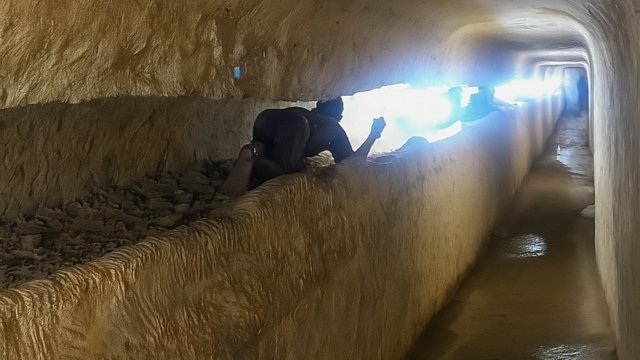
At Phu Quoc Prison (Nhà tù Phú Quốc, also known as the Coconut Tree Prison) in southern Vietnam, dozens of prisoners of war spent nearly eight months secretly digging a 120-meter (394-foot) underground escape tunnel using nothing more than rationed metal spoons, flattened tin cans, and sharpened bamboo.
They hid tons of excavated red laterite dirt inside their clothing, under floorboards, and in latrines until 21 prisoners successfully slipped past armed watchtowers and barbed wire in January 1969!
Originally built by French colonial authorities in 1949–1950 and later expanded into the largest prisoner-of-war camp in South Vietnam, holding up to 40,000 detainees across 12 barbed-wire sectors, Phu Quoc sat on an isolated island, making escape seem doubly impossible even after clearing the perimeter.
To survive oxygen depletion underground and prevent cave-ins, prisoners engineered bamboo air vents disguised beneath grass clumps, used small coconut-oil lamps to monitor oxygen levels, and lined soft sections of soil with salvaged tin cans and wooden scraps, achievements now preserved through life-sized museum mannequins inside the preserved compound. Walk with me 👇🏾👇🏾
How Phu Quoc Prisoners Engineered Their Underground Escape:
1. Improvising Tools From Mess Kits
1968 Secret Planning
Prisoners collect metal spoons, ration tins, and iron wire fragments, flattening tin cans into makeshift trowels and scrapers.
2. Excavating 120 Meters Through Red Soil
Eight Months of Nightly Digging
Working in silent shifts, diggers carve a narrow shaft barely wide enough for one person's shoulders while smuggling soil out in pockets and trouser legs.
3. Concealed Bamboo Ventilation
Air & Collapse Prevention
Teams poke slender bamboo breathing tubes up to the surface under dense brush and track air quality using tiny flickering flames.
4. Breaching the Perimeter Into the Jungle
January 1969 Breakout
Emerging beyond the outer barbed-wire fences under cover of darkness, 21 prisoners slip into Phu Quoc’s dense interior forests.
More Surprising Facts About Phu Quoc Prison
A. Escaping an Island After Escaping the Camp: Clearing the prison fences was only half the challenge, escapees had to cross dense jungle and reach fishing boats on the coast to cross the Gulf of Thailand toward the mainland.
B. Recognized as a Special National Relic: Today, the preserved site, featuring reconstructed barracks, tiger cages, and life-sized mannequin diorama, stands as one of Vietnam’s designated Special National Relics.
SUMMARILY!
Using flattened tin cans, metal spoons, and concealed bamboo air vents, prisoners at Phu Quoc Island carved a 120-meter tunnel beneath armed watchtower, an extraordinary feat of wartime ingenuity now memorialized in life-sized museum reconstructions.
Hopefully you've learnt something new today?
The Medic Who Writes™🌚
Cheers 🥂 🙂
TENHO QUASE CERTEZA DE QUE TODOS AQUELES TROTES QUE FIZEMOS NOS ANOS 90 ESTÃO VOLTANDO COMO LIGAÇÕES DA TIM, CLARO E VIVO NOS NOSSOS CELULARES
O KARMA EXISTE