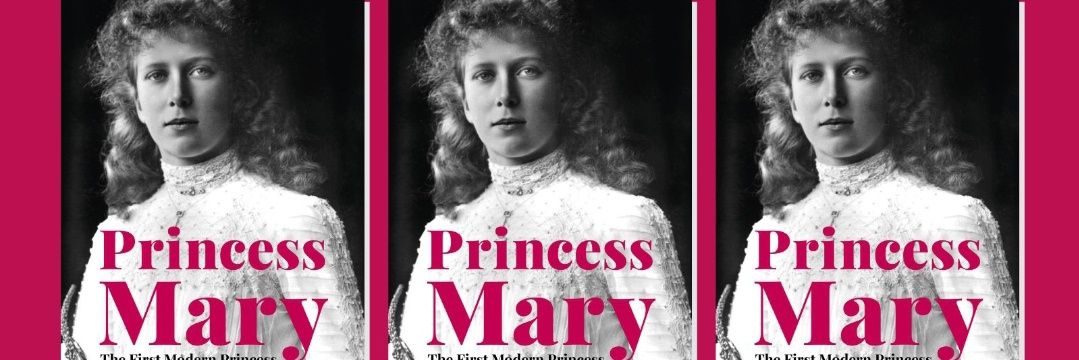
Some stories of royal women have been forgotten, overlooked, or hidden. I spend my days uncovering them.
The first was Princess Mary.
The next… well, you’ll have to wait a little longer.
Follow for history, discoveries, and untold royal stories.
Windsor Castle, 14 June 1937
Five weeks after the Coronation of King George VI, the Order of the Garter procession returned to Windsor for the first time in 23 years.
After the service in St George's Chapel, the Royal Family, including Princess Mary, watched from Windsor Castle.
Princess Mary, The Princess Royal (1897–1965) was the only daughter of King George V and Queen Mary. This 1935 Hammerton colour plate shows her as a senior working royal during George V’s Silver Jubilee year.
Princess Mary, Princess Royal (1897–1965), was the only daughter of King George V and Queen Mary. A nurse, Red Cross leader and founder of the 1914 Christmas Gift Fund, she spent much of her life in Yorkshire.
Born at York Cottage on 25 April 1897, Princess Mary was the only daughter of the future King George V and Queen Mary. Raised alongside her brothers, including the future Edward VIII and George VI, she made her first major public appearance at her parents' coronation in 1911.
1898 The three eldest children of the then Duke and Duchess of York later King George V and Queen Mary.
Prince Edward, Prince Albert and
Princess Mary.
Image from the Calne Collection, Popperfoto via Getty Images.
Princess Mary Adelaide, Duchess of Teck, is often remembered for her social image, but her public role was defined by consistent charitable work.
She supported hospitals, schools, and women’s organisations. Her daughter, Queen Mary, carried this forward.
September 1918 | The Royal Family in The Graphic
King George V, Queen Mary and Princess Mary as published in The Graphic, September 1918. King George V is shown following a visit to the Western Front, and Princess Mary wears the uniform of a VAD Commandant.
22 December 1917 | “Majesty and Munitioneers”
King George V, Queen Mary and Princess Mary visit munitions works in London in this image from The Graphic.
Royal visits helped maintain morale and recognise the vital contribution of factory workers, many of them women.
A vintage “Royal Scions” card depicting Princess Mary, later Princess Royal and Countess of Harewood.
Produced in Austria as part of the early twentieth-century fascination with European royalty, cards such as these were often tucked inside boxes of chocolate, tobacco, or soap.
Princess Mary, Princess Royal and Countess of Harewood, photographed during her 1962 visit to Quebec. The tour formed part of an official Canadian visit carried out on behalf of Queen Elizabeth II and included military, civic and charitable engagements across the country.
A charming postcard featuring the children of the future King George V and Queen Mary: Prince Edward, Princess Mary, Prince Albert, Prince Henry, Prince George and Prince John.
Published by the Rotary Photographic Company before George V became king in 1910.
Princess Mary with the Bramham Moor Hunt, photographed in 1926.
This print comes from The Illustrated Sporting and Dramatic News, a British publication founded in 1874 which covered sporting and theatrical events, alongside news and criticism.
Royal Family Departure for Sandringham, 22 December 1937
King George VI and Queen Elizabeth (later Queen Elizabeth The Queen Mother) departing for Sandringham. They are accompanied by Princess Elizabeth (later Queen Elizabeth II) and Princess Margaret Rose.
Buckingham Palace, 7 May 1938.
King George VI inspects the Yeomen of the Guard and presents new colours. Watching him from the balcony are Queen Mary, Queen Elizabeth (later The Queen Mother), Princess Elizabeth (later Queen Elizabeth II), and Princess Margaret.
Last week I did a wonderful interview with @DailyMirror about Princess Mary. It features online and in print today. I feel so incredibly honored to keep telling her story and sharing her life of outstanding service. And more is thankfully still to come.
30 August 1940, Princess Mary, visited the West Yorkshire Regiment during one of the most difficult stages of the Second World War, only weeks before the height of the Blitz.
Known for her wartime welfare work, she maintained close links with servicemen throughout the conflict.
Princess Mary The, Princess Royal, accompanied by her husband Henry Lascelles, 6th Earl of Harewood, pictured walking with Sheffield’s Lord Mayor, Alderman W. J. Hunter, on the way to the city’s war memorial.
June 1939 Derby Week at Epsom Downs. The Duke and Duchess of Kent, Princess Mary, Princess Royal, and the Duke and Duchess of Gloucester in the paddock before the race. Queen Mary was absent following a motor accident.
Princess Mary inspecting the Nissen huts occupied by VADs at Le Tréport on 26 November 1918.
The Voluntary Aid Detachments, better known as VADs, formed an essential part of Britain’s wartime medical services during the First World War.
Queen Alexandra with Princess Mary and the exiled King Manuel II of Portugal.
Manuel became king in 1908 at 18 after the Lisbon regicide, but lost the throne in 1910 when Portugal became a republic.
He lived in exile in Britain at Fulwell Park, Twickenham.