It’s not even normal to fly commercial for folks in politics again. There was a time one stumbled on a Governor in a commercial flights.
These days almost every party chieftain is on a PJ that retails for $10k per hour. I always assumed PJs are for urgency or luxury for ultra-rich. Crazy times.
I did an experiment in Lagos today. Because I don't like to litter, I decided to hold on to trash till I found a dustbin.
The result? I could only dispose of it properly once I got to my destination, 'cause I didn't see a single dustbin all the way from Ojuelegba to Berger.
Some people are washing their heads in rivers. Others are looking for constituency projects. 🤐
Everybody has a fiscal strategy. 😭
But what happens when the money finally arrives?
Elder Notorious B.I.G (Biggie) warned us. “Mo money, mo problems.”
Nigerians have seen this play out with public money too. States entered 2026 with record-sized budgets. Now, how much of that money is actually translating into projects and services?
Our latest analysis of early 2026 state spending looks at the gap between bigger budgets and actual delivery
Read 👉 https://t.co/obgjyEnHnn
A video has captured personnel of the Ghana National Fire Service attempting to extinguish a fire with sachets of water, highlighting the under-resourced state of the emergency response agency.
[🎥: DunkwaTV]
My mum died of cancer two weeks ago after a one year battle. We were taking her to 2 teaching hospitals in Oghara and Benin.
If anyone tells you they are investing in Roads or healthcare, I can assure you they are lying.
Poverty shapes far more about us in this country than we often acknowledge. You don’t have to be poor yourself to be shaped by poverty; you only have to live in a society where deprivation is widespread, where economic security is fragile, and where you constantly interact with people navigating those conditions.
We encounter scarcity so frequently that some of its psychological and social consequences become normalized. When we interact with societies where material security is more widely distributed, the contrast can become surprisingly obvious.
Outsiders can often recognize these differences, but they frequently misdiagnose them as simply bad character, poor upbringing, cultural peculiarities, or some inherent deficiency. There is certainly individual agency and responsibility, but a society’s material conditions also shape the incentives, anxieties, and behaviours that become widespread within it.
Left to me, what we’re seeing is, in large part, the social consequences of chronic deprivation. Scarcity produces insecurity, insecurity produces survival instincts, and those instincts can become cultural habits long after an individual has escaped actual poverty.
You see it in our relationship with money and status, in the conspicuous consumption and vanity that can accompany sudden economic mobility, and in the almost existential importance attached to “making it.”
You see it in aggression, excessive competitiveness, and the tendency to treat other people’s success as a threat rather than simply as someone else’s success. For some people, these pressures produce selfishness or corruption; for others, they produce an intense drive to accumulate, protect, and display whatever security they have managed to obtain.
It also affects areas we don’t ordinarily associate with economics. It shapes dating and marriage, where financial stability can become disproportionately important because the consequences of choosing badly are so severe.
It shapes career decisions, where people may prioritize income and security over aptitude, fulfilment, or social contribution. It is why some career paths that could benefit the larger society will never be properly explored or developed in this country because people simply want to do what pays. It’s also why careers or businesses that do pay eventually become so saturated.
It even shapes how people relate to one another; generosity becomes harder when everyone feels economically exposed, and status becomes more important when material possessions are among the clearest signals of having escaped deprivation.
And hey, none of this means poverty determines behaviour or excuses bad conduct. Plenty of people experience deprivation without becoming corrupt, vain, or aggressive, just as wealthy people in way more prosperous coubtries can possess all of those qualities.
The point I’m making is that culture does not develop in a vacuum. A society living under the pressure of chronic scarcity will inevitably develop social instincts around that scarcity, and many of the behaviours we casually describe as “Nigerian culture” are, at least partly, adaptations to an environment of economic insecurity and the persistent fear of falling back into it.
We spent months tracking 5,467 bets from Nigeria's biggest sports betting influencers.
The bets were worth ~$4.8 million.
We wanted to answer a simple question:
If you followed their bets exactly, would you make money?
The answer is no.🧵👇
With: @thimmie_onas@temiladeoluwaaa
Driving home, 2011. Checkpoint. Drunk policeman.
3 gun shots, one bullet punched through my car boot into my right hand.
That hand once edit, animated, paid bills and fed my family. Overnight it became dead weight.
Career gone. Marriage cracked. Mind still bleeding daily.I sued the Nigeria Police.
2015: Federal High Court ordered them to fund reconstructive surgery to restore my life.
Eleven years later: zero naira, zero apology, zero accountability.
I still can’t fully use the hand they destroyed. Still begging strangers so I don’t lose it forever.
The Nigeria Police that shot me ignores the court. Who protects the rest of us?
@MobilePunch@TunjiDisu1@UNDP @NhrcNigeria
#NigeriaPoliceNotYourFriend #JusticeForTomori
For you to fully understand what he’s saying…
There was a time we were issuing NYSC ID Cards to corps members. Many of them kept asking us, “How will they fill it?” so we made a prototype of the ID card, filled it with the details of (then) President Muhammadu Buhari, and pasted it on the wall. It was his full name, date of birth, next of kin details, etc., so whenever the corps members ask us how to fill the card, we just point to the sample and tell them to use it as a guide.
Guess what happened?
They started copying Buhari’s details verbatim on their own cards. There’s no day we won’t have at least seven corps members who copy Buhari’s name, date of birth, etc., on their own cards.
It’s worse than you think.
The painful part isn't when money finishes. It's when you can't explain where it went.
Same energy for public money.
Your government is implementing the 2026 budget...
...while still paying contractors for projects captured in 2024.
...and completing projects carried over from 2025.
Three budget cycles. One economy.
Curious to know where some of that money is going?
Start with https://t.co/51yTmXnCA3
You can sum up Nigeria’s problem into three things.
1. A belief that the poor (or that Nigerians) dont deserve good things.
2. A belief that Nigerians will survive anything. (Give them a $50/month minimum wage. They will survive.)
3. ‘Anyhowness’ is normal.
Everything else leans on these three.
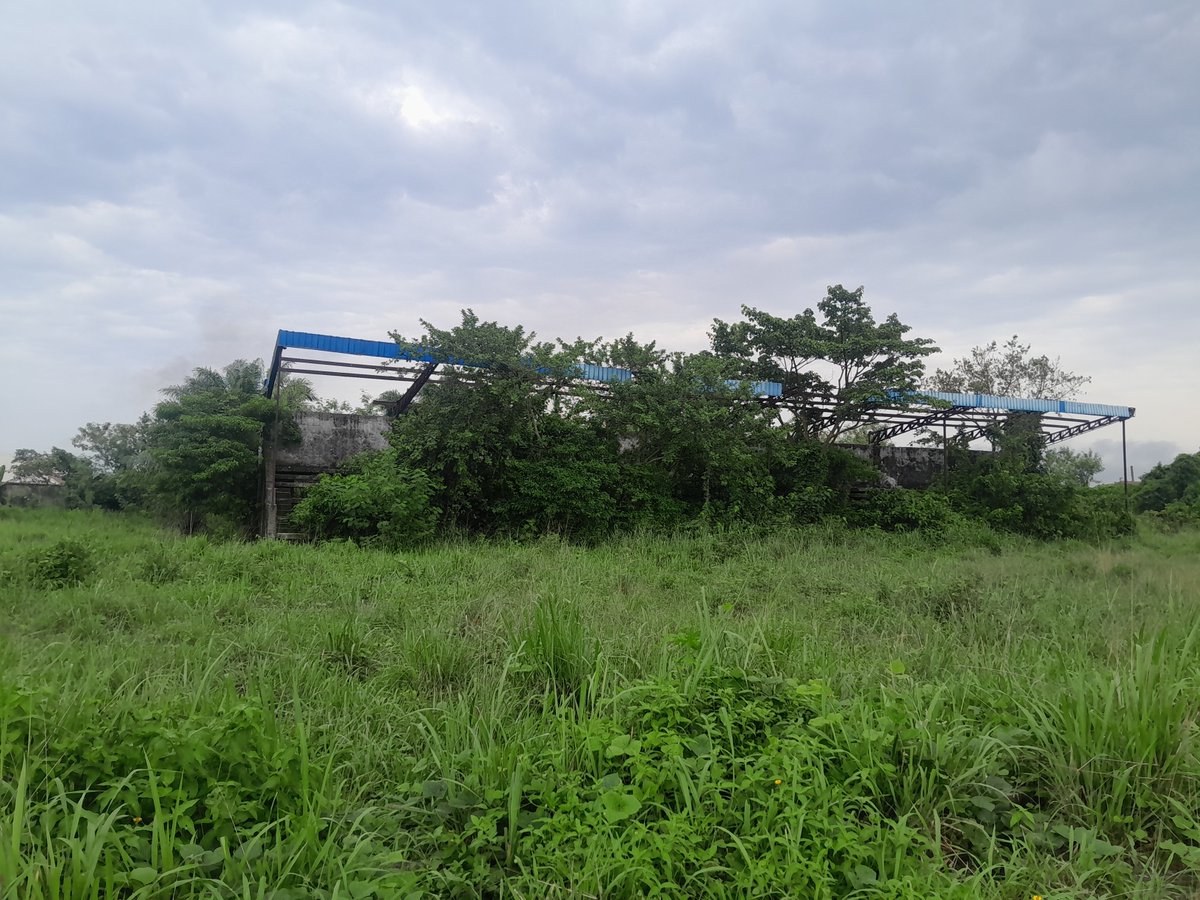
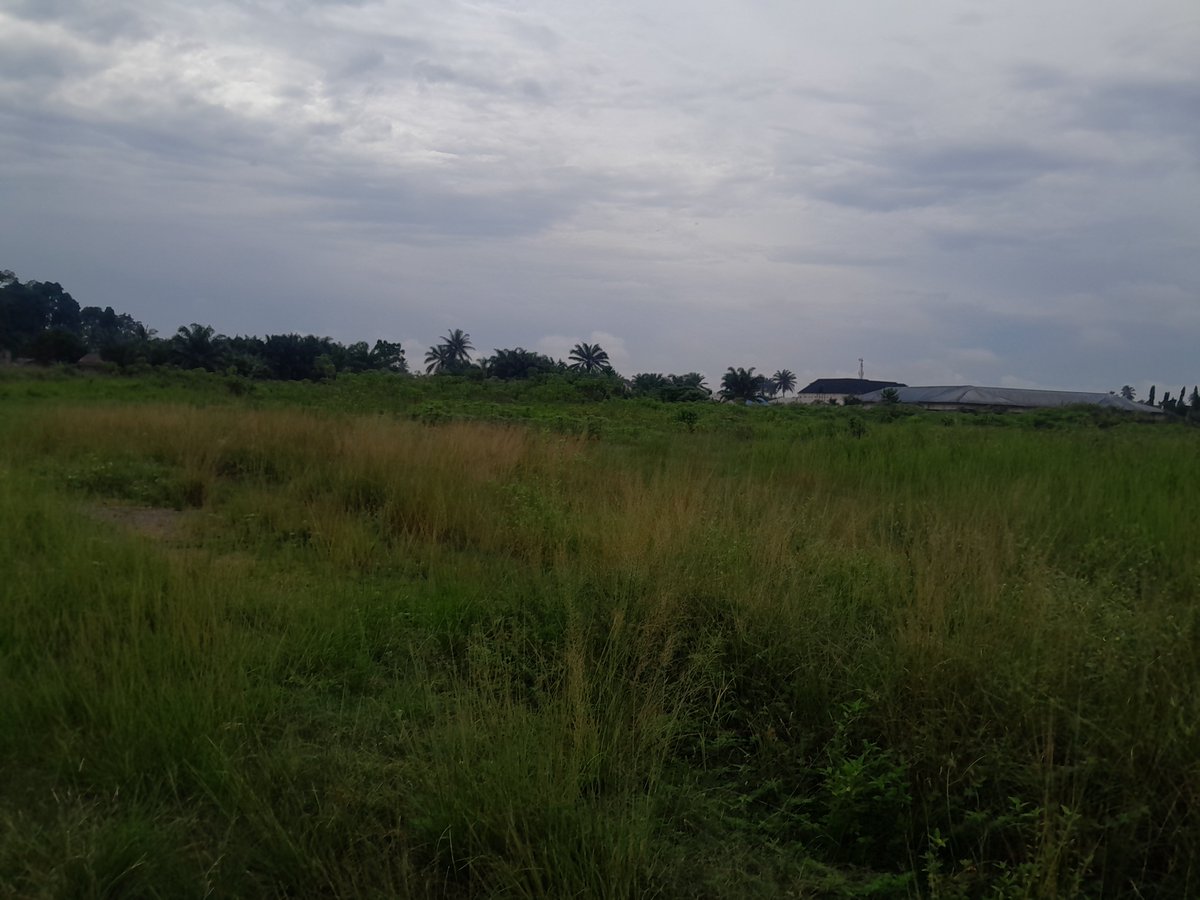
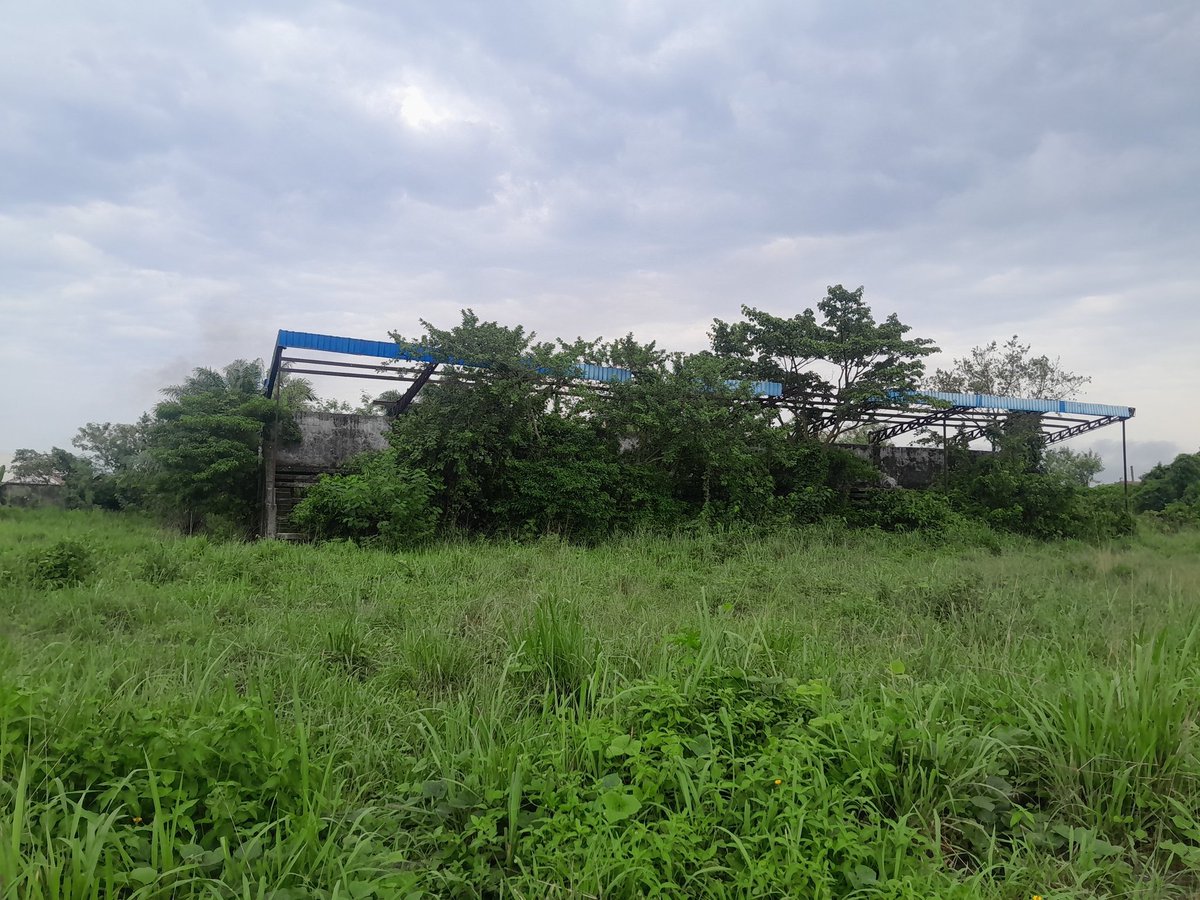
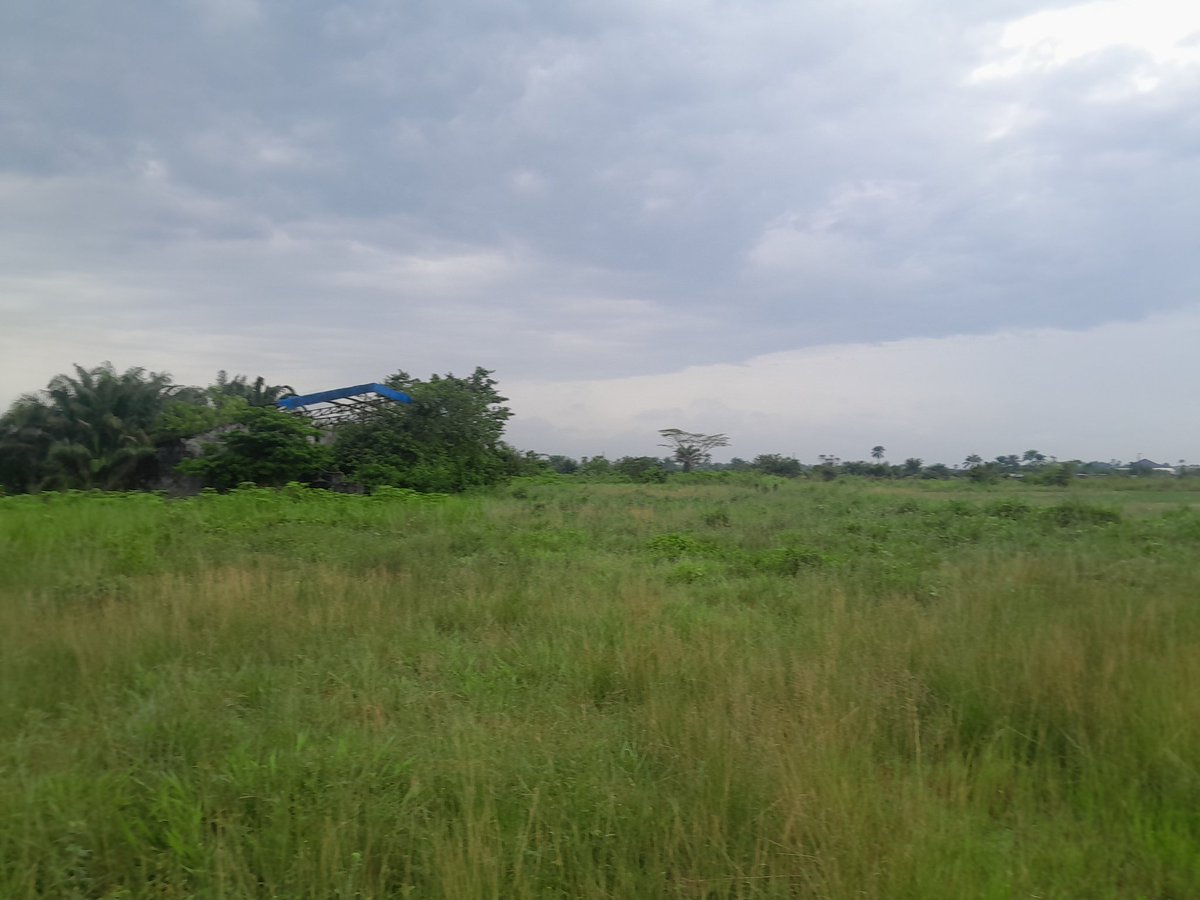
N152m was disbursed for the Construction of Mini Stadium at Orerokpe Okpe LGA, Delta state in the Delta state Q4 Budget Implementation Report.
We tracked and report that this project has not been done.
The stadium looked like abandoned structure, and has been this way for over 5years.
The sitting area has been overgrown with weeds and the roofs are completely damaged.
At the time of reporting, we do not have the contractor’s details, only that over 150million has been paid.
We call on Delta State Sports Commission, the implementing agency to provide the public with details of how funds disbursed to this project was used.
Tracka Nigeria reveals Current state of the abandoned mini stadium project in Orerokpe, Okpe, Delta State, after ₦152 million was disbursed and ₦150 million paid to the contractor. Yet, five years later, it remains a forest and nothing has been done.
🚨 N962.83 Billion for SUVs and Empowerment Projects Exceeds the Combined Budget of Seven Key Federal Ministries in the 2026 Budget
Our review of the 2026 FG Budget uncovered another troubling pattern of opaque spending.
🚙 39 SUVs - N15.13 bn
👥 2,579 Empowerment Projects - N947.7 bn
Total: N962.83 bn
This is more than the combined N960.27bn allocation to seven key Federal Ministries:
🏭 Industry, Trade & Investment - N156.8bn
🏘️ Housing - N145.3bn
👩 Women Affairs - N169.39bn
⚖️ Justice - N150.7bn
🐄 Livestock Development - N177.6bn
✈️ Aviation & Aerospace Development - N87.3bn
🪔 Petroleum Resources - N73.1bn
Yet, only 70 of the 2,579 empowerment projects have clearly identified implementation locations.
This raises serious accountability concerns:
📍 How can citizens track projects with no stated location?
🔍 How can oversight institutions verify implementation?
💰 How can taxpayers know who ultimately benefits from these allocations?
The concerns don't end there, these projects are spread across 184 implementing agencies, many of which have no statutory mandate to execute empowerment programmes. Leading agencies 👇
📌 @fedccojiriver - 393 projects worth N127.1bn
📌 National Agricultural Development Fund - 6 projects worth N89.5bn
📌 @Fchdkgombe - 216 projects worth N88.1bn
📌 @officialfccib - 94 projects worth N36.9bn
Let us be clear, there is nothing inherently wrong with empowerment programmes! When well-designed and transparently implemented, they can improve livelihoods, create economic opportunities, and support vulnerable Nigerians.
However, experience over the years has shown that many poorly defined empowerment projects have become vehicles for political patronage, rewarding loyalists rather than delivering broad-based benefits to citizens. When projects have no clear location, no transparent beneficiary selection process, and are assigned to agencies without the appropriate mandate, public confidence is eroded, and accountability becomes difficult.
This concern is even more pressing given that the 2026 Budget is projected to be financed with a deficit of about 46%. At a time when government is borrowing heavily to fund public expenditure, every naira should be directed toward investments with clear development outcomes, measurable impact, and value for money, not opaque allocations that citizens cannot effectively track.
A budget should not only allocate resources, it should also inspire public confidence. Every budget item should have a clear purpose, a defined location, an implementing agency with the legal mandate to deliver it, identifiable beneficiaries, and measurable outcomes.
📄 The comprehensive list of these allocations is available on our website 👉https://t.co/I2JL8eByF7
#Publicfundsmustworkforthegoodofthepeople
#Askquestions
That's not the question.
Nobody is asking the Budget Office whether the money was spent.
A so-called fake agency made it into Nigeria's 2026 Appropriation Act and got over ₦1.3 billion allocated to it.
The Budget Office says the money was never released because the controls worked.
Fine.
But how did an agency the government now says does not exist get an official budget code, an establishment approval and recruitment waiver, make it into the Executive Budget, pass through the National Assembly and get signed into law?
Who was supposed to catch that?
This is bigger than the ₦1.3 billion.
If the controls worked only after the allocation had already made it into the Appropriation Act, then we need to ask a bigger question about the controls that govern how things get into the budget in the first place.
When we are done making jokes.
Let us remember that a plane crashed in Edo State Nigeria.
There was no emergency evacuation.
There was only 1 fire truck, No ambulances in sight, No airport police, nothing looks like if anyone was hurt with serious injuries they had a chance at survival.
People were seen walking on muddy road paths to get away from the wreckage.
This is Nigeria.
This is our reality.