The US government, citing national security authorities, has issued an export control directive to suspend all access to Fable 5 and Mythos 5 by any foreign national, whether inside or outside the United States, including foreign national Anthropic employees.
The net effect of this order is that we must abruptly disable Fable 5 and Mythos 5 for all our customers to ensure compliance.
Access to all other Claude models is not affected.
We apologize for this disruption to our customers. We believe this is a misunderstanding and are working to restore access as soon as possible.
Read our full statement: https://t.co/bwn0sximKZ
pumped to announce the first AI Scientist hack in LDN!
we're teaming up w @AnthropicAI to help you build out next gen. scientific discovery
provided:
> mansion in central London
> all the tokens and pizza you can eat through
> great vibes + insanely cracked people
link below
New Science Blog: Why has AI advanced faster in coding than in biology?
To agents, bio databases are like cities built before cars—maddening to drive in because they're designed for different traffic.
How do we build infrastructure agents can use?
https://t.co/PQaNQ4GRJZ
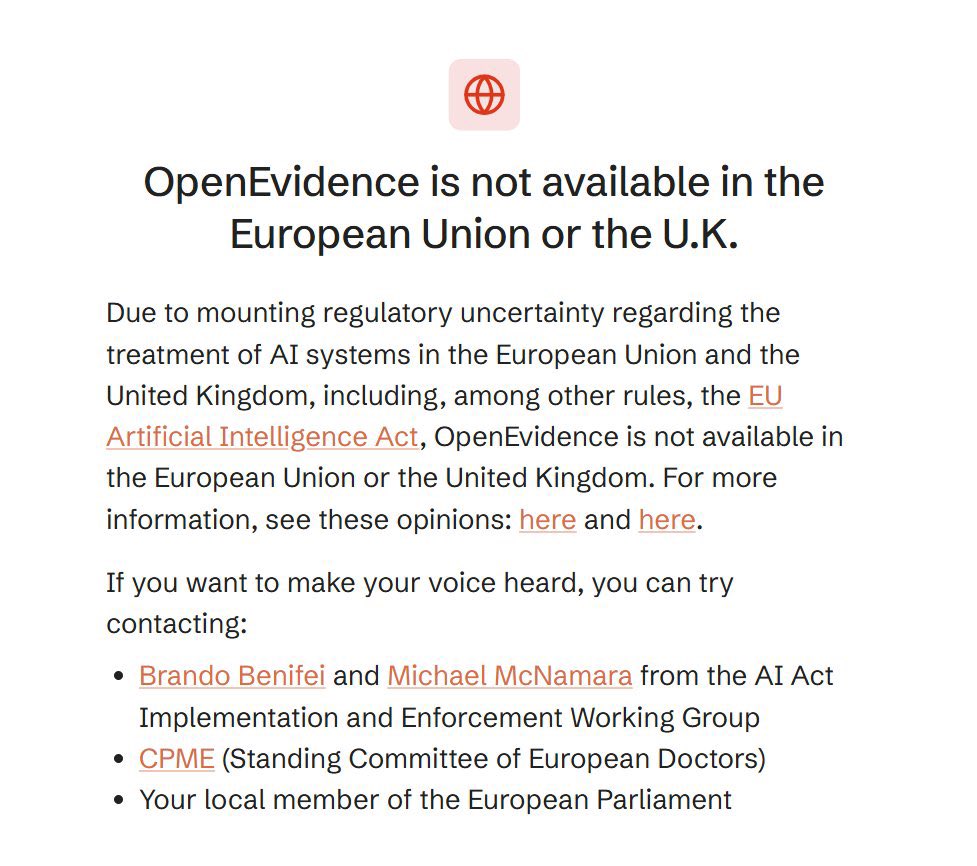
@EvidenceOpen Pls come back to the UK. I was an early daily user from your early days before you pulled this. I really needed to find something today, opened UpToDate and just sighed: scrolling, scrolling, reading, scrolling…
This tube is a library of bacteria with every single-base-pair genome mutation, all DNA-barcoded.🧪Growth + barcode sequencing = data on millions of mutations.
📄 Report: https://t.co/llvs1wUbVk
Retweet if you want more data, and read on if you want to use the library! 🧵
I am happy to introduce AI co-clinician,
@GoogleDeepMind's research initiative to explore how AI could better amplify doctor's expertise and help deliver higher quality care to patients.
We’re excited about our early results, and are taking a phased approach to our research explorations with academic and research collaborators.
Read more in our blog: https://t.co/OVPDordxTw
@cgeorgiaw This is just great, Hugging Science, I just love it. I have many suggestions eg bacterial datasets downloaded paper by paper that have been accumulated on various hard drives.
Have already spotted databases I want to use. Thank you!
🤗🤗🤗introducing Hugging Science -- the home of AI for science 🤗🤗🤗
open models and datasets are the powerhouse of science (see the PDB), but finding the models and data you actually need for your breakthrough is hard af
you shouldn't need to scrape arxiv, own your own wetlab, fight a custom HDF5 parser, build a fusion stellarator, and beg for compute before you've trained a single epoch
so we're changing that
we've put all the best science on @huggingface in one place:
- 78GB of genomics data
- 11TB of PDE simulations
- 100M cell profiles
- 9T DNA base pairs
- 13M molecular trajectories
- 400k medical QA pairs
and much more, all open, and all ready for training (+ you can also now filter and search by domain, task, and keyword)
we've put together all the biggest releases from our partners at NASA, Google, OpenAI, Meta FAIR, Arc Institute, Ginkgo, SandboxAQ, Proxima Fusion, NVIDIA, Ai2, OpenADMET, InstaDeep, Future House, Polymathic AI, LeMaterial, Earth Species Project, Merck, and Eve Bio
if you're not sure where you fit in -- work on open challenges for problems that matter: including fusion stellarator design, ADMET, antibody developability, multilingual medicine, catalysis and materials, and scientific reasoning.
we're already changing how science gets done:
a fusion startup needed a benchmark for stellarator plasma confinement that didn't exist. @proximafusion shipped ConStellaration on Hugging Science: a leaderboard, dataset, and eval metrics, all in one place.
a drug discovery team wanted to predict hPXR induction. OpenADMET put up a blind challenge: 11,000+ compounds assayed at Octant, 513 held out, two tracks (pEC50 + structure). Anyone in the world can train and submit.
an antibody team at @Ginkgo released GDPa1, a developability dataset for stability, manufacturability, and immunogenicity prediction, with a live leaderboard scoring every submission.
if you know a problem the ML community should be working on, let us know. make a challenge! this is about putting all the tools for solving science in one place. so we can hillclimb!
→ https://t.co/T4l4r1lDz0
DHSC needs to give them the political cover to do so. Otherwise the pattern repeats: useful clinical kit quietly switches off UK access, and frontline clinicians pay the cost of regulatory ambiguity we never actually legislated.
OpenEvidence, one of the most useful tools in my clinical week, gone from the UK. And we don’t even have the EU AI Act. We’ve inherited the chilling effect without the rules.
MHRA needs to clarify whether clinical evidence retrieval tools fall inside the device perimeter.
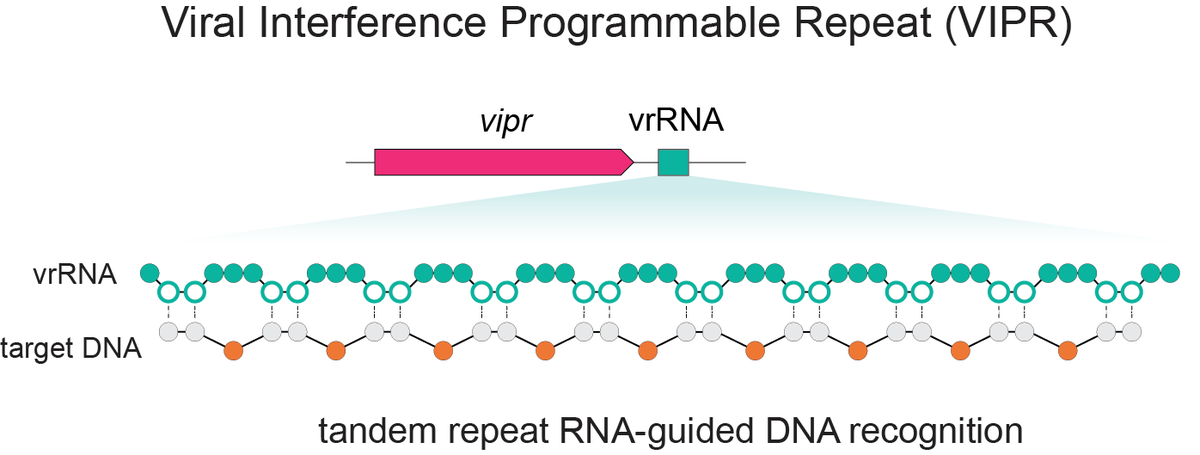
@kenjmloi Really enjoyed this. The structural homology approach via clustered AFDB to find something this divergent is a lovely demo of where discovery biology is heading. And the wobble-position skip rule as anti-escape mechanism is a beautiful piece of evolutionary logic. Congrats to all
Excited to share our discovery of a new programmable RNA-guided DNA-targeting system hiding inside bacteriophages that predates CRISPR.
We call it VIPR (Viral Interference Programmable Repeat), and it uses an entirely new logic to find its targets.
Thread + link below.
Our paper in @Nature today 🥳 We tracked 6,438 mice from puberty to death and mapped the genetics of *when* you die, not just whether a gene associates with lifespan.
https://t.co/EoeexqJoHk
59 loci. Two decades of data. Thread 👇
#Longevity#Aging#Genetics#Healthspan