When you are very young, others ridicule your ideas; the freshness you bring is treated dismissively.
Turn that into your advantage by working very hard, staying fiercely independent and being persistent.
Don't seek acceptance. It is not worth it.
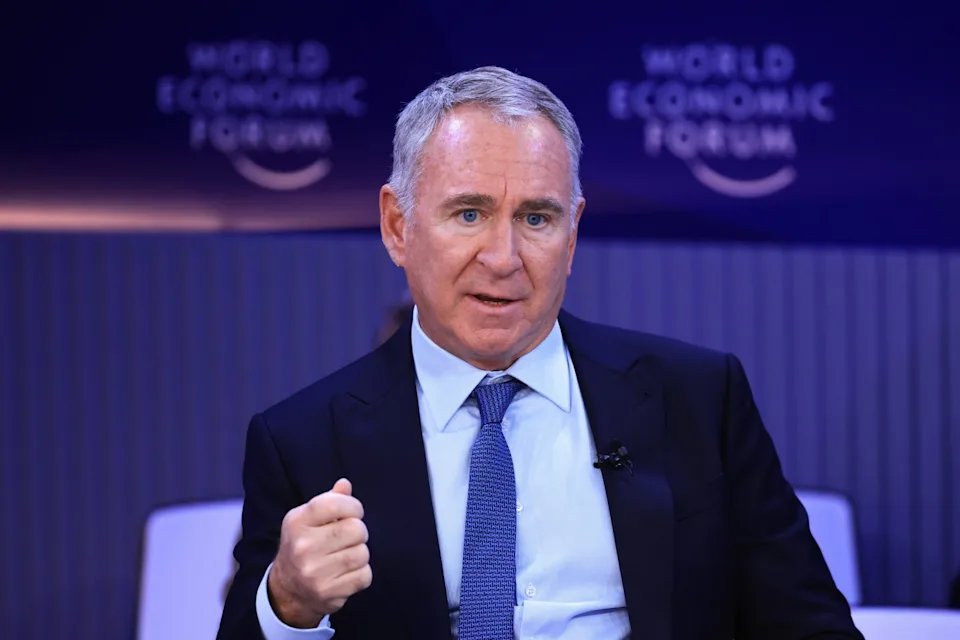
KEN GRIFFIN DESCRIBED THE PORTFOLIO THAT ENDS INVESTING CAREERS. HIS FIRM JUST BOUGHT ONE
In the clip, Griffin lays out why portfolio managers derail. Some are "just not good risk takers," running books that are "extraordinarily highly concentrated" with no clear competitive advantage behind the big positions. Some, he says, "with full information, are unable to help themselves."
This week Citadel bought the bulk of Situational Awareness's stock portfolio, the $20 billion AI fund that fell 67% in July on concentrated, leveraged AI bets and raced to meet margin calls. Citadel took specifically the positions financed with borrowed money.
Griffin's last point in the clip explains which side of that trade his firm was on. Decades of "very bitter lessons," he says, produce "the price paid in losses and pain that converts into wisdom."
The fund paying tuition this week was two years old. The buyer has been collecting forced sellers' books for decades.
The Situational Awareness situation.
It is now being reported that the AI hedge fund has exited its entire public equity portfolio this month.
But, what does this really mean?
As of July 1st, the Net Asset Value (NAV) of the fund is now being reported to have been ~$45 billion.
First, let's put this into perspective.
NAV = (Assets − Liabilities). This is the fund's equity capital, also known as the investors' money after accounting for borrowings.
This is NOT the same as the size of the fund's positions, particularly because the fund has been known for utilizing extreme amounts of leverage. For example:
1. At 2x leverage, a $45 billion NAV supports ~$90 billion of gross market exposure
2. At 3x leverage, that rises to ~$135 billion
3. At 4x leverage, that rises to ~ $180 billion
This means that exiting its "public equity book" does not necessarily imply $45 billion of stock changed hands. It was likely much more.
Depending on the fund's leverage and portfolio construction, the gross amount of securities unwound could have been well in excess of $100 billion.
When considering these facts, the market has actually held up exceptionally well.
There has never been an era of investing like the AI era.
Volatility is the new normal.
BREAKING: Situational Awareness sold "the bulk" of its stock portfolio to Citadel after "big losses in AI," per WSJ.
The hedge fund, which reportedly had a net asset value of $45 billion on July 1st, is now in "crisis mode," WSJ reports.
BREAKING: Citadel Absorbed BILLIONS worth of $SMH from Leo's Situational Awareness Fund on July 27th
Citadel is one of the largest dark-pool and block participants - Retail DOES NOT have access to these markets
This Story just got even Crazier:
In the days leading up to a full-book takeout it is common for the eventual buyer to:
-Test liquidity by absorbing pieces of the book
-Build inventory or hedge its own exposure
-Facilitate the primes’ marketing effort
So the dark-pool activity seems to have been Situational Awareness/primes selling partial exposure → Citadel days before the news was released
Then, yesterday, Citadel announced that they expected the Fed to hike rates, which sent semiconductor stocks spiraling MUCH lower
It is possible that Citadel was aware of Leo's dire situation from previous deals and deliberately slammed the tape lower to completely wipe him out and scoop up his books for cheap
$QCOM Q3 2026 earnings: Automotive Surges, But Core Handset Business is Bleeding
Qualcomm is executing a radical transformation, but the transition is painful. Q3 revenue fell 4% YoY to $9.95B, beating guidance but masking severe underlying divergence. The core Handset business collapsed 20% YoY, battered by ongoing memory shortages and OEM destocking in China. Yet, the diversification strategy is working brilliantly: Automotive revenue rocketed 61% YoY to $1.58B. Margins, however, are compressing due to broad-based input cost inflation across fabrication and packaging. The bottom line result was a 20% drop in Non-GAAP EPS, with guidance suggesting the earnings recession will persist into Q4.
Full article with charts - link in bio
🐂 𝐁𝐮𝐥𝐥 𝐂𝐚𝐬𝐞
• 𝐃𝐢𝐯𝐞𝐫𝐬𝐢𝐟𝐢𝐜𝐚𝐭𝐢𝐨𝐧 𝐢𝐬 𝐖𝐨𝐫𝐤𝐢𝐧𝐠 — Automotive achieved its 23rd consecutive quarter of double-digit growth (+61% YoY). Combined with IoT, non-handset QCT revenue grew 28% YoY, proving Qualcomm is successfully expanding its TAM.
• 𝐀𝐈 & 𝐃𝐚𝐭𝐚 𝐂𝐞𝐧𝐭𝐞𝐫 𝐈𝐧𝐟𝐥𝐞𝐜𝐭𝐢𝐨𝐧 — Management signaled a massive inflection point, projecting non-handset revenues (including Data Center) will accelerate to >60% growth in FY27, backed by the recent Modular Inc acquisition.
🐻 𝐁𝐞𝐚𝐫 𝐂𝐚𝐬𝐞
• 𝐂𝐨𝐫𝐞 𝐌𝐚𝐫𝐤𝐞𝐭 𝐂𝐨𝐧𝐭𝐫𝐚𝐜𝐭𝐢𝐨𝐧 — Handset revenues fell 20% YoY to $5.08B. Whether due to memory constraints or underlying demand weakness in China, the primary cash cow is rapidly shrinking.
• 𝐏𝐫𝐨𝐟𝐢𝐭𝐚𝐛𝐢𝐥𝐢𝐭𝐲 𝐔𝐧𝐝𝐞𝐫 𝐒𝐢𝐞𝐠𝐞 — Gross margins are under pressure from industry-wide increases in input costs (wafer fabrication, assembly, test, memory). QCT EBT margins dropped 400 bps YoY to 26%.
⚖️ 𝐕𝐞𝐫𝐝𝐢𝐜𝐭: ⚪
Neutral. The long-term thesis (Auto/IoT/AI Data Center) is highly compelling and executing ahead of schedule. However, the near-term financials are deteriorating due to handset weakness, inflation, and upcoming Apple modem share losses. The transition phase will remain turbulent.
𝐊𝐞𝐲 𝐓𝐡𝐞𝐦𝐞𝐬
🟢🟢 𝐀𝐮𝐭𝐨𝐦𝐨𝐭𝐢𝐯𝐞 𝐢𝐬 𝐚 𝐉𝐮𝐠𝐠𝐞𝐫𝐧𝐚𝐮𝐭
Automotive is the undisputed star, accelerating its growth trajectory. Sales hit $1.58B, up 61% YoY and up 20% sequentially from an already strong Q2. Driven by 5th-gen Snapdragon Digital Chassis adoption and surging ADAS demand, this segment has completely detached from the cyclicality of the consumer handset market.
🔴🔴 𝐈𝐧𝐩𝐮𝐭 𝐂𝐨𝐬𝐭 𝐈𝐧𝐟𝐥𝐚𝐭𝐢𝐨𝐧 𝐂𝐫𝐮𝐬𝐡𝐢𝐧𝐠 𝐌𝐚𝐫𝐠𝐢𝐧𝐬 [NEW]
A new macroeconomic concern emerged this quarter: broad-based input cost inflation across wafer fabrication, advanced packaging, and memory. Management is taking 'concrete actions' to pass costs along via product pricing, but the lag is evident. QCT EBT margin has decelerated rapidly from 31% in Q1 to 26% in Q3, representing a 400 bps drop YoY.
🔴 𝐇𝐚𝐧𝐝𝐬𝐞𝐭 𝐖𝐞𝐚𝐤𝐧𝐞𝐬𝐬 𝐃𝐞𝐞𝐩𝐞𝐧𝐬
The handset business is reversing sharply. Revenues collapsed 20% YoY to $5.08B. In Q2, management explicitly guided that China handset revenues would 'reach a bottom' in Q3 due to memory shortage-driven OEM destocking. While the ultimate bottom is yet to be confirmed, the absolute dollar value has cratered from $7.8B just two quarters ago.
🟢🟢 𝐀𝐠𝐞𝐧𝐭𝐢𝐜 𝐀𝐈 & 𝐓𝐡𝐞 𝐌𝐨𝐝𝐮𝐥𝐚𝐫 𝐈𝐧𝐜 𝐀𝐜𝐪𝐮𝐢𝐬𝐢𝐭𝐢𝐨𝐧 [NEW]
Qualcomm is heavily leaning into the software layer of edge AI. The acquisition of Modular Inc creates an open software foundation for Generative and Agentic AI on Qualcomm silicon. This bridges the gap between their hardware capabilities (Orion CPUs, NPUs) and developer adoption, which is critical as they expand into Data Center inference and AI PCs.
𝐎𝐭𝐡𝐞𝐫 𝐊𝐏𝐈𝐬
𝐂𝐚𝐩𝐢𝐭𝐚𝐥 𝐑𝐞𝐭𝐮𝐫𝐧𝐬: $2.3 billion
Qualcomm returned robust cash to shareholders in Q3, paying $973M in dividends ($0.92 per share) and executing $1.4B in stock repurchases (8 million shares). This demonstrates strong balance sheet confidence despite near-term EPS compression.
𝐐𝐓𝐋 (𝐋𝐢𝐜𝐞𝐧𝐬𝐢𝐧𝐠) 𝐑𝐞𝐯𝐞𝐧𝐮𝐞: $1.27 billion
Stable. The high-margin licensing business declined 3% YoY, operating at a 69% EBT margin. While slightly down from the 71% margin a year ago, it continues to act as a highly predictable, high-cash-flow anchor.
𝐆𝐮𝐢𝐝𝐚𝐧𝐜𝐞
𝐐𝟒 𝐅𝐘𝟐𝟔 𝐓𝐨𝐭𝐚𝐥 𝐑𝐞𝐯𝐞𝐧𝐮𝐞𝐬: $9.7 - $10.5 billion
Decelerating. At the midpoint ($10.1B), this represents a roughly 10% YoY decline compared to the $11.3B delivered in Q4 FY25. The core handset supply constraints continue to overwhelm the Auto and IoT growth.
𝐐𝟒 𝐅𝐘𝟐𝟔 𝐍𝐨𝐧-𝐆𝐀𝐀𝐏 𝐄𝐏𝐒: $2.05 - $2.25
Decelerating aggressively. The $2.15 midpoint implies a sharp 28% YoY drop compared to Q4 FY25's $3.00 EPS. Input costs and a weaker handset scale are deeply impacting the bottom line.
𝐅𝐘𝟐𝟕 𝐍𝐨𝐧-𝐇𝐚𝐧𝐝𝐬𝐞𝐭 𝐑𝐞𝐯𝐞𝐧𝐮𝐞 𝐆𝐫𝐨𝐰𝐭𝐡: >60%
Accelerating wildly. Management expects YoY growth in non-handset revenues (including Data Center) to jump from 24% in FY26 to over 60% in FY27. This signals the start of material Data Center revenue and the rapid scaling of the automotive pipeline.
𝐊𝐞𝐲 𝐐𝐮𝐞𝐬𝐭𝐢𝐨𝐧𝐬
𝐏𝐫𝐢𝐜𝐢𝐧𝐠 𝐏𝐨𝐰𝐞𝐫 𝐓𝐢𝐦𝐞𝐥𝐢𝐧𝐞𝐬
You noted broad-based input cost inflation and actions to raise product pricing. How many quarters will it take for these pricing changes to fully offset the gross margin headwind?
𝐂𝐡𝐢𝐧𝐚 𝐇𝐚𝐧𝐝𝐬𝐞𝐭 𝐁𝐨𝐭𝐭𝐨𝐦 𝐂𝐨𝐧𝐟𝐢𝐫𝐦𝐚𝐭𝐢𝐨𝐧
Last quarter, you projected China Android revenues would bottom in Q3 and grow sequentially in Q4. Given the massive 20% YoY drop in Handsets this quarter, are you officially calling the bottom, and what does the channel inventory look like today?
𝐃𝐚𝐭𝐚 𝐂𝐞𝐧𝐭𝐞𝐫 𝐅𝐘𝟐𝟕 𝐈𝐧𝐟𝐥𝐞𝐜𝐭𝐢𝐨𝐧
The guidance for >60% growth in non-handset revenues next year is a massive inflection. What proportion of that acceleration is driven by the new Data Center custom silicon versus Automotive converting from backlog?


![Finsee_main's tweet photo. $QCOM Q3 2026 earnings: Automotive Surges, But Core Handset Business is Bleeding
Qualcomm is executing a radical transformation, but the transition is painful. Q3 revenue fell 4% YoY to $9.95B, beating guidance but masking severe underlying divergence. The core Handset business collapsed 20% YoY, battered by ongoing memory shortages and OEM destocking in China. Yet, the diversification strategy is working brilliantly: Automotive revenue rocketed 61% YoY to $1.58B. Margins, however, are compressing due to broad-based input cost inflation across fabrication and packaging. The bottom line result was a 20% drop in Non-GAAP EPS, with guidance suggesting the earnings recession will persist into Q4.
Full article with charts - link in bio
🐂 𝐁𝐮𝐥𝐥 𝐂𝐚𝐬𝐞
• 𝐃𝐢𝐯𝐞𝐫𝐬𝐢𝐟𝐢𝐜𝐚𝐭𝐢𝐨𝐧 𝐢𝐬 𝐖𝐨𝐫𝐤𝐢𝐧𝐠 — Automotive achieved its 23rd consecutive quarter of double-digit growth (+61% YoY). Combined with IoT, non-handset QCT revenue grew 28% YoY, proving Qualcomm is successfully expanding its TAM.
• 𝐀𝐈 & 𝐃𝐚𝐭𝐚 𝐂𝐞𝐧𝐭𝐞𝐫 𝐈𝐧𝐟𝐥𝐞𝐜𝐭𝐢𝐨𝐧 — Management signaled a massive inflection point, projecting non-handset revenues (including Data Center) will accelerate to >60% growth in FY27, backed by the recent Modular Inc acquisition.
🐻 𝐁𝐞𝐚𝐫 𝐂𝐚𝐬𝐞
• 𝐂𝐨𝐫𝐞 𝐌𝐚𝐫𝐤𝐞𝐭 𝐂𝐨𝐧𝐭𝐫𝐚𝐜𝐭𝐢𝐨𝐧 — Handset revenues fell 20% YoY to $5.08B. Whether due to memory constraints or underlying demand weakness in China, the primary cash cow is rapidly shrinking.
• 𝐏𝐫𝐨𝐟𝐢𝐭𝐚𝐛𝐢𝐥𝐢𝐭𝐲 𝐔𝐧𝐝𝐞𝐫 𝐒𝐢𝐞𝐠𝐞 — Gross margins are under pressure from industry-wide increases in input costs (wafer fabrication, assembly, test, memory). QCT EBT margins dropped 400 bps YoY to 26%.
⚖️ 𝐕𝐞𝐫𝐝𝐢𝐜𝐭: ⚪
Neutral. The long-term thesis (Auto/IoT/AI Data Center) is highly compelling and executing ahead of schedule. However, the near-term financials are deteriorating due to handset weakness, inflation, and upcoming Apple modem share losses. The transition phase will remain turbulent.
𝐊𝐞𝐲 𝐓𝐡𝐞𝐦𝐞𝐬
🟢🟢 𝐀𝐮𝐭𝐨𝐦𝐨𝐭𝐢𝐯𝐞 𝐢𝐬 𝐚 𝐉𝐮𝐠𝐠𝐞𝐫𝐧𝐚𝐮𝐭
Automotive is the undisputed star, accelerating its growth trajectory. Sales hit $1.58B, up 61% YoY and up 20% sequentially from an already strong Q2. Driven by 5th-gen Snapdragon Digital Chassis adoption and surging ADAS demand, this segment has completely detached from the cyclicality of the consumer handset market.
🔴🔴 𝐈𝐧𝐩𝐮𝐭 𝐂𝐨𝐬𝐭 𝐈𝐧𝐟𝐥𝐚𝐭𝐢𝐨𝐧 𝐂𝐫𝐮𝐬𝐡𝐢𝐧𝐠 𝐌𝐚𝐫𝐠𝐢𝐧𝐬 [NEW]
A new macroeconomic concern emerged this quarter: broad-based input cost inflation across wafer fabrication, advanced packaging, and memory. Management is taking 'concrete actions' to pass costs along via product pricing, but the lag is evident. QCT EBT margin has decelerated rapidly from 31% in Q1 to 26% in Q3, representing a 400 bps drop YoY.
🔴 𝐇𝐚𝐧𝐝𝐬𝐞𝐭 𝐖𝐞𝐚𝐤𝐧𝐞𝐬𝐬 𝐃𝐞𝐞𝐩𝐞𝐧𝐬
The handset business is reversing sharply. Revenues collapsed 20% YoY to $5.08B. In Q2, management explicitly guided that China handset revenues would 'reach a bottom' in Q3 due to memory shortage-driven OEM destocking. While the ultimate bottom is yet to be confirmed, the absolute dollar value has cratered from $7.8B just two quarters ago.
🟢🟢 𝐀𝐠𝐞𝐧𝐭𝐢𝐜 𝐀𝐈 & 𝐓𝐡𝐞 𝐌𝐨𝐝𝐮𝐥𝐚𝐫 𝐈𝐧𝐜 𝐀𝐜𝐪𝐮𝐢𝐬𝐢𝐭𝐢𝐨𝐧 [NEW]
Qualcomm is heavily leaning into the software layer of edge AI. The acquisition of Modular Inc creates an open software foundation for Generative and Agentic AI on Qualcomm silicon. This bridges the gap between their hardware capabilities (Orion CPUs, NPUs) and developer adoption, which is critical as they expand into Data Center inference and AI PCs.
𝐎𝐭𝐡𝐞𝐫 𝐊𝐏𝐈𝐬
𝐂𝐚𝐩𝐢𝐭𝐚𝐥 𝐑𝐞𝐭𝐮𝐫𝐧𝐬: $2.3 billion
Qualcomm returned robust cash to shareholders in Q3, paying $973M in dividends ($0.92 per share) and executing $1.4B in stock repurchases (8 million shares). This demonstrates strong balance sheet confidence despite near-term EPS compression.
𝐐𝐓𝐋 (𝐋𝐢𝐜𝐞𝐧𝐬𝐢𝐧𝐠) 𝐑𝐞𝐯𝐞𝐧𝐮𝐞: $1.27 billion
Stable. The high-margin licensing business declined 3% YoY, operating at a 69% EBT margin. While slightly down from the 71% margin a year ago, it continues to act as a highly predictable, high-cash-flow anchor.
𝐆𝐮𝐢𝐝𝐚𝐧𝐜𝐞
𝐐𝟒 𝐅𝐘𝟐𝟔 𝐓𝐨𝐭𝐚𝐥 𝐑𝐞𝐯𝐞𝐧𝐮𝐞𝐬: $9.7 - $10.5 billion
Decelerating. At the midpoint ($10.1B), this represents a roughly 10% YoY decline compared to the $11.3B delivered in Q4 FY25. The core handset supply constraints continue to overwhelm the Auto and IoT growth.
𝐐𝟒 𝐅𝐘𝟐𝟔 𝐍𝐨𝐧-𝐆𝐀𝐀𝐏 𝐄𝐏𝐒: $2.05 - $2.25
Decelerating aggressively. The $2.15 midpoint implies a sharp 28% YoY drop compared to Q4 FY25's $3.00 EPS. Input costs and a weaker handset scale are deeply impacting the bottom line.
𝐅𝐘𝟐𝟕 𝐍𝐨𝐧-𝐇𝐚𝐧𝐝𝐬𝐞𝐭 𝐑𝐞𝐯𝐞𝐧𝐮𝐞 𝐆𝐫𝐨𝐰𝐭𝐡: >60%
Accelerating wildly. Management expects YoY growth in non-handset revenues (including Data Center) to jump from 24% in FY26 to over 60% in FY27. This signals the start of material Data Center revenue and the rapid scaling of the automotive pipeline.
𝐊𝐞𝐲 𝐐𝐮𝐞𝐬𝐭𝐢𝐨𝐧𝐬
𝐏𝐫𝐢𝐜𝐢𝐧𝐠 𝐏𝐨𝐰𝐞𝐫 𝐓𝐢𝐦𝐞𝐥𝐢𝐧𝐞𝐬
You noted broad-based input cost inflation and actions to raise product pricing. How many quarters will it take for these pricing changes to fully offset the gross margin headwind?
𝐂𝐡𝐢𝐧𝐚 𝐇𝐚𝐧𝐝𝐬𝐞𝐭 𝐁𝐨𝐭𝐭𝐨𝐦 𝐂𝐨𝐧𝐟𝐢𝐫𝐦𝐚𝐭𝐢𝐨𝐧
Last quarter, you projected China Android revenues would bottom in Q3 and grow sequentially in Q4. Given the massive 20% YoY drop in Handsets this quarter, are you officially calling the bottom, and what does the channel inventory look like today?
𝐃𝐚𝐭𝐚 𝐂𝐞𝐧𝐭𝐞𝐫 𝐅𝐘𝟐𝟕 𝐈𝐧𝐟𝐥𝐞𝐜𝐭𝐢𝐨𝐧
The guidance for >60% growth in non-handset revenues next year is a massive inflection. What proportion of that acceleration is driven by the new Data Center custom silicon versus Automotive converting from backlog?](https://pbs.twimg.com/media/HOa_O6RWcAAccDM.png)