@mikeduncan just finished another re-listen of the French Revolution (and had a blast) I’m in Haiti now. Do you know of any good resources about the Marquis de Condorcet? I know you referenced him, but I would love to track his position throughout the Revolution
For me, Travis Kelce and Ronald from Jury are the same person and I’m just rolling with it—I want everyone to fortunate enough to end up with a Ronald from Jury Duty.
In 1998, archaeologists uncovered an ancient Korean tomb containing the mummified body of a 30-year-old man named Eung-Tae Lee. On his chest was a love letter from his pregnant wife to the father of her unborn child. The translation of the letter is as follows:
"To Won's Father
June 1, 1586
You always said, 'Dear, let's live together until our hair turns gray and die on the same day!' How could you pass away without me? Who should I and our little boy listen to and how should we live? How could you go ahead of me?
How did you bring your heart to me, and how did I bring my heart to you? Whenever we lay down together, you always told me, 'Dear, do other people cherish and love each other like we do? Are they really like us?' How could you leave all that behind and go ahead of me?
I just cannot live without you. I just want to go to you. Please take me to where you are. My feelings toward you I cannot forget in this world, and my sorrow knows no limit. Where would I put my heart in now, and how can I live with the child missing you?
Please look at this letter and tell me in detail in my dreams. Because I want to listen to your saying in detail in my dreams, I write this letter and put it in. Look closely and talk to me.
When I give birth to the child in me, who should it call father? Can anyone fathom how I feel? There is no tragedy like this under the sky.
You are just in another place, and not in such deep grief as I am. There is no limit and end to my sorrows that I write roughly. Please look closely at this letter and come to me in my dreams and show yourself in detail and tell me. I believe I can see you in my dreams.
Come to me secretly and show yourself. There is no limit to what I want to say, and I stop here."
Many countries are experiencing extreme climatic events. I reiterate my appeal to the leaders of Nations, that something more tangible be done to limit polluting emissions: it is an urgent challenge and affects everyone. Let us protect our common home!
Is there a detective job where you are exclusively responsible for the criminal collage on the bulletin board? I can provide my own yarn. During meetings, I can also contribute a variety of aphorisms (ranging from folksy to pseudo-intellectual)
Serious inquiries only.
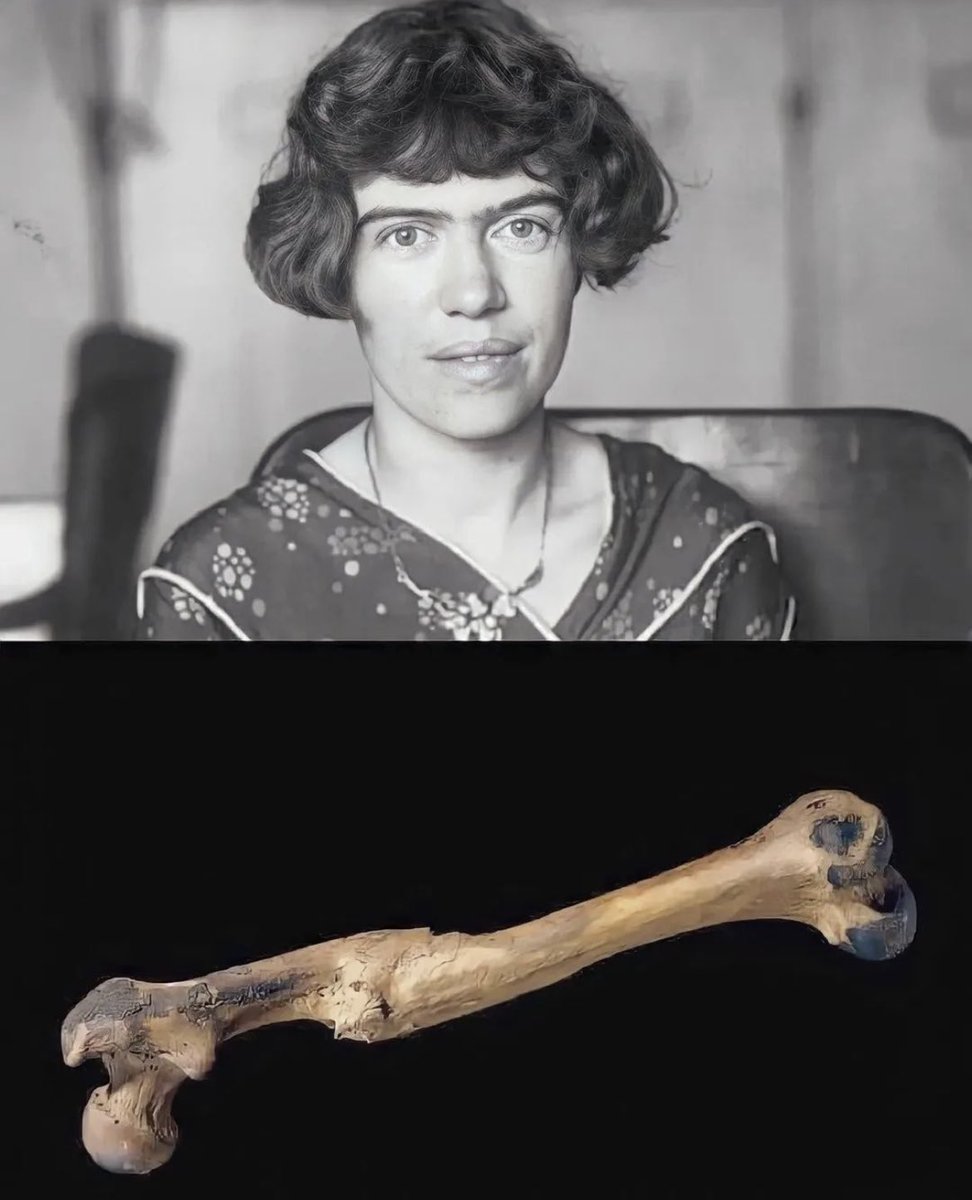
The concept of civilization is often associated with various tangible artifacts and advancements, such as tools, architecture, or systems of governance. However, anthropologist Margaret Mead presented a different perspective when she was asked about the first sign of civilization in a culture. Rather than focusing on material objects, she emphasized the significance of a healed femur bone.
In Mead's view, the animal kingdom provides a stark contrast to human civilization. When an animal breaks its leg, survival becomes nearly impossible. The inability to escape from danger, access water, or procure food renders the injured animal vulnerable to predators. Consequently, no animal lives long enough for a broken leg to heal naturally. Thus, the healing of a femur bone is a profound indication of civilization.
Why is a healed femur bone considered the first sign of civilization? Mead's explanation lies in the collective care and empathy demonstrated by a community. When someone breaks their leg, it is a moment of extreme vulnerability and danger. However, if the injured individual receives aid and support from others, they can overcome this critical period.
The act of caring for someone with a broken leg requires time, compassion, and a sense of responsibility towards others. Mead suggests that the healing process involves multiple steps. First, someone must have witnessed the accident and recognized the injured person's distress. Then, they would have provided immediate assistance, possibly by binding the wound and ensuring the person's safety. Finally, they would have stayed by their side, offering ongoing care and support during the recovery period.
By highlighting the significance of collective care, Mead emphasizes that civilization begins with the recognition of the suffering of others and the willingness to help. It is through acts of compassion and support that a community establishes its foundations of empathy, cooperation, and social cohesion. The healing of a broken femur, symbolizing the survival and recovery of an individual within a community, reflects the values and actions that underpin a civilized society.
Mead's perspective challenges the notion that civilization is solely determined by material progress or technological advancements. While such developments are undoubtedly important, they are built upon a deeper foundation of human connection and mutual aid. The healing of a broken femur bone serves as a metaphor for the care and support that individuals provide to one another, promoting the well-being and progress of society as a whole.
In conclusion, Margaret Mead's unconventional response to the question about the first sign of civilization reminds us of the fundamental importance of collective care. Civilization, she argues, is not solely defined by tangible artifacts or structures but by the empathy and support extended to those in need. The healing of a broken femur bone represents the compassion and responsibility that underpin a civilized society, highlighting the significance of human connection and mutual aid in fostering progress and well-being.
Pete Buttigieg on the homophobic DeSantis video to CNN: "I'm going to leave aside the strangeness of trying to prove your manhood by putting up a video that splices images of you in between oiled-up, shirtless bodybuilders."
"And just get to the bigger issue that is on my mind whenever I see this stuff in the policy space, which is, again: Who are you trying to help? Who are you trying to make better off? And what public policy problems do you get up in the morning thinking about how to solve?"
On top of everything that has been going on in the past couple days, I watched a trailer to movie made in the early 2000s and now I have a Sheryl Crow song in my head.. can’t catch a break.
Justice Jackson, dissenting: "Our country has never been colorblind. Given the lengthy history of state-sponsored race-based preferences in America, to say that anyone is now victimized if a college considers whether that legacy of discrimination has unequally advantaged its applicants fails to acknowledge the well-documented 'intergenerational transmission of inequality'
that still plagues our citizenry.
"It is that inequality that admissions programs such as UNC's help to address, to the benefit of us all. Because the majority's judgment stunts that progress without any basis in law, history, logic, or justice, I dissent."
Affirmative action was never a complete answer in the drive towards a more just society. But for generations of students who had been systematically excluded from most of America’s key institutions—it gave us the chance to show we more than deserved a seat at the table.
In the wake of the Supreme Court’s recent decision, it’s time to redouble our efforts.
Read Michelle Obama's full statement on the Supreme Court's affirmative action decision:
"Back in college, I was one of the few Black students on my campus, and I was proud of getting into such a respected school. I knew I'd worked hard for it. But still, I sometimes wondered if people thought I got there because of affirmative action. It was a shadow that students like me couldn’t shake, whether those doubts came from the outside or inside our own minds.
"But the fact is this: I belonged. And semester after semester, decade after decade, for more than half a century, countless students like me showed they belonged, too. It wasn't just the kids of color who benefitted, either. Every student who heard a perspective they might not have encountered, who had an assumption challenged, who had their minds and their hearts opened gained a lot as well. It wasn't perfect, but there's no doubt that it helped offer new ladders of opportunity for those who, throughout our history, have too often been denied a chance to show how fast they can climb.
"Of course, students on my campus and countless others across the country were — and continue to be — granted special consideration for admissions. Some have parents who graduated from the same school. Others have families who can afford coaches to help them run faster or hit a ball harder. Others go to high schools with lavish resources for tutors and extensive standardized test prep that help them score higher on college entrance exams. We don't usually question if those students belong. So often, we just accept that money, power, and privilege are perfectly justifiable forms of affirmative action, while kids growing up like I did are expected to compete when the ground is anything but level.
"So today, my heart breaks for any young person out there who's wondering what their future holds — and what kinds of chances will be open to them. And while I know the strength and grit that lies inside kids who have always had to sweat a little more to climb the same ladders, I hope and I pray that the rest of us are willing to sweat a little, too.
"Today is a reminder that we've got to do the work not just to enact policies that reflect our values of equity and fairness, but to truly make those values real in all of our schools, workplaces, and neighborhoods."
The Holocaust—the murder of six million Jews—is one of the most well documented crimes in history, made possible by antisemitic conspiracy theories. Invoking those dangerous theories and calling for the mass murder of Jews is an outrage.