📢 Call for Papers – 5th Zurich Workshop in AI & Applied Economics 2026
Hosted by ETH Zürich @ETH_en & University of Zurich @UZH_en
The workshop focuses on two complementary areas:
1. Applied economics using AI tools and methods, including machine learning, natural language processing, computer vision, and generative AI.
2. Economic analysis of AI technologies, including their economic, political, and social impacts.
• Free participation
• Travel & accommodation support available
• Meals
Submission Deadline: May 8, 2026
Read more here: https://t.co/OvZ5AN2E6K
Organizers: Elliott Ash @ellliottt (ETH Zürich), Sergio Galletta @sergalle (Sapienza Università di Roma @SapienzaRoma), Joachim Voth @joachim_voth (University of Zurich @econ_uzh), David Yanagizawa-Drott @YanagizawaD (University of Zurich @econ_uzh).
https://t.co/vAkAbwMoeE AI will give you 200,000 words draft PhD thesis in less than 2 minutes with extensive literature review. A full picture that can help you build your research further, in time.
📢 25th Summer School in International & Development Economics (2026)
An intensive training course focused on development and international economics, with a 2026 emphasis on big data and AI applications in development research.
Organised by Centre for the Study of African Economies @Oxford_CSAE, Centro Studi Luca d'Agliano @LdA_CentroStudi, Collegio Carlo Alberto @CollegioCA , CEPR - Centre for Economic Policy Research @cepr_org , International Growth Centre @The_IGC , and The World Bank Group @WorldBankGroup .
Deadline: 4 May 2026
Read more here: https://t.co/ubQNojRdh9
PhD Students – How to compare 10 research papers in 10 seconds?
1. Go to https://t.co/wIkIVo5eUY
2. Download and install the AI-powered browser
3. Group the 10 research papers into one place
4. Then click on Chat at the top
5. Select the AI model e.g., Claude
6. Enter your prompt for paper comparison
7. E.g., Compare all 10 papers side by side
8. @TabbitBrowser compares the papers for:
- Themes in the papers
- Key findings in the papers
- Methodologies used in the papers
This smart approach will save you hours.
With this, you can 10x your paper reading speed.
Try Tabbit today for smart research
Tabbit Link: https://t.co/wIkIVo5eUY
For a comprehensive collection of the world's best free online courses, all in one place from the world's top universities.
https://t.co/XqdL6Oicuu
https://t.co/Vid76wNXIb
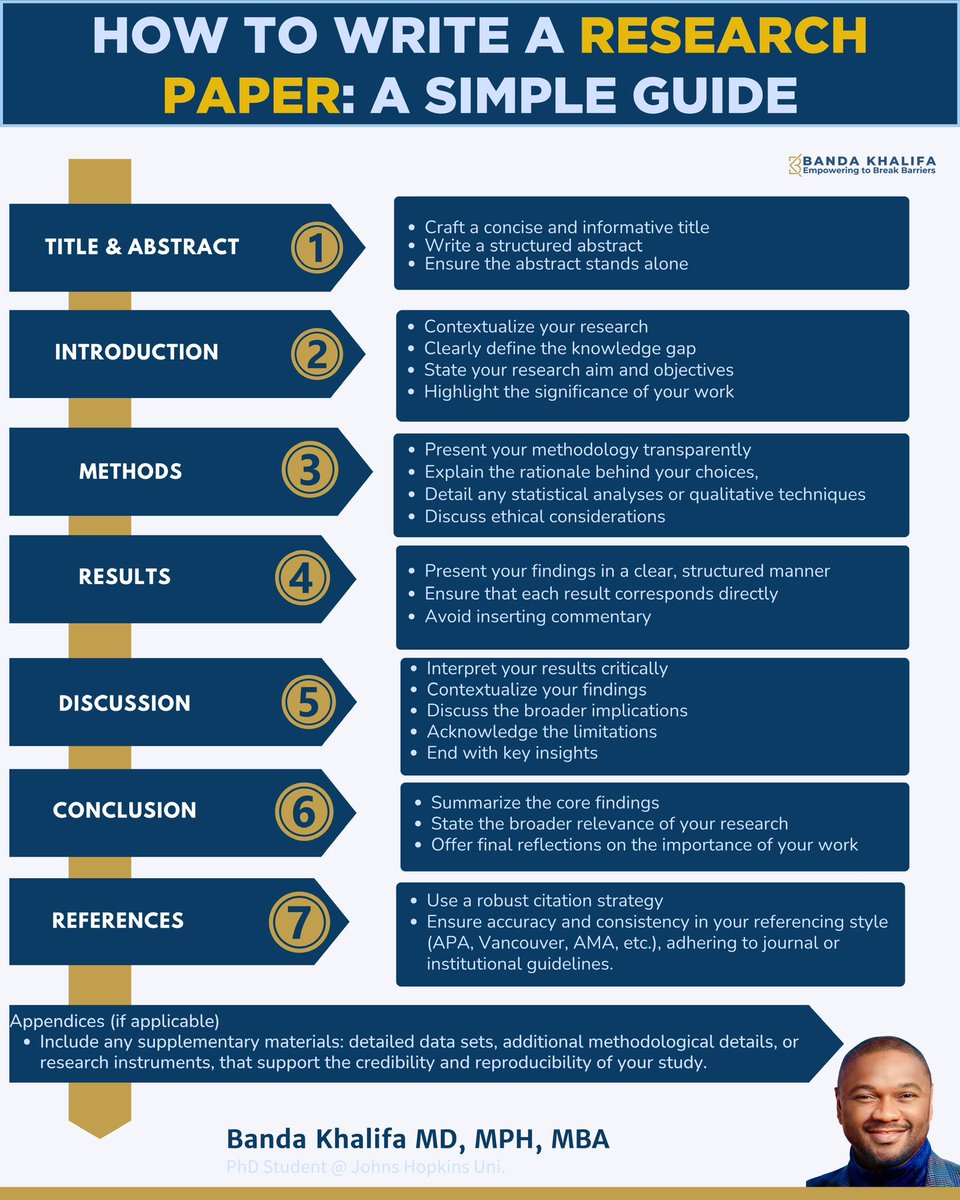
A lot of research writing problems are really structure problems.
A strong research paper is knowing what each section is supposed to do.
And once the structure is right, everything else improves.
A simple way to think about it:
→ Title & Abstract
Tell us what the paper is about
→ Introduction
Define the problem and the gap
→ Methods
Show exactly how the work was done
→ Results
Present the findings clearly
→ Discussion
Explain what the findings mean
→ Conclusion
Leave the reader with the core takeaway
→ References
show the evidence behind the work
———-
When students understand that flow, writing becomes less confusing.
The paper becomes clearer.
The argument becomes stronger.
The message lands better.
📌 Save this before writing your next manuscript, thesis, or dissertation.
💬 Which section do you find hardest to write: Introduction, Methods, Results, or Discussion?
Many Nigerian youths need this golden opportunity but lack the information.
There’s a 3-Month Tech SCHOLARSHIP for Africans I found out and it’s closing in few days.
They’re offering 20 in-demand tech skills accredited by ACTD-USA + Certificate.This opportunity can turn your life around in this 2026, if you take it seriously.
Apply here ASAP before it closes 👇🏽
https://t.co/nYgA2E8A8r
Please share this on your TL, someone might need this rare opportunity before it closes
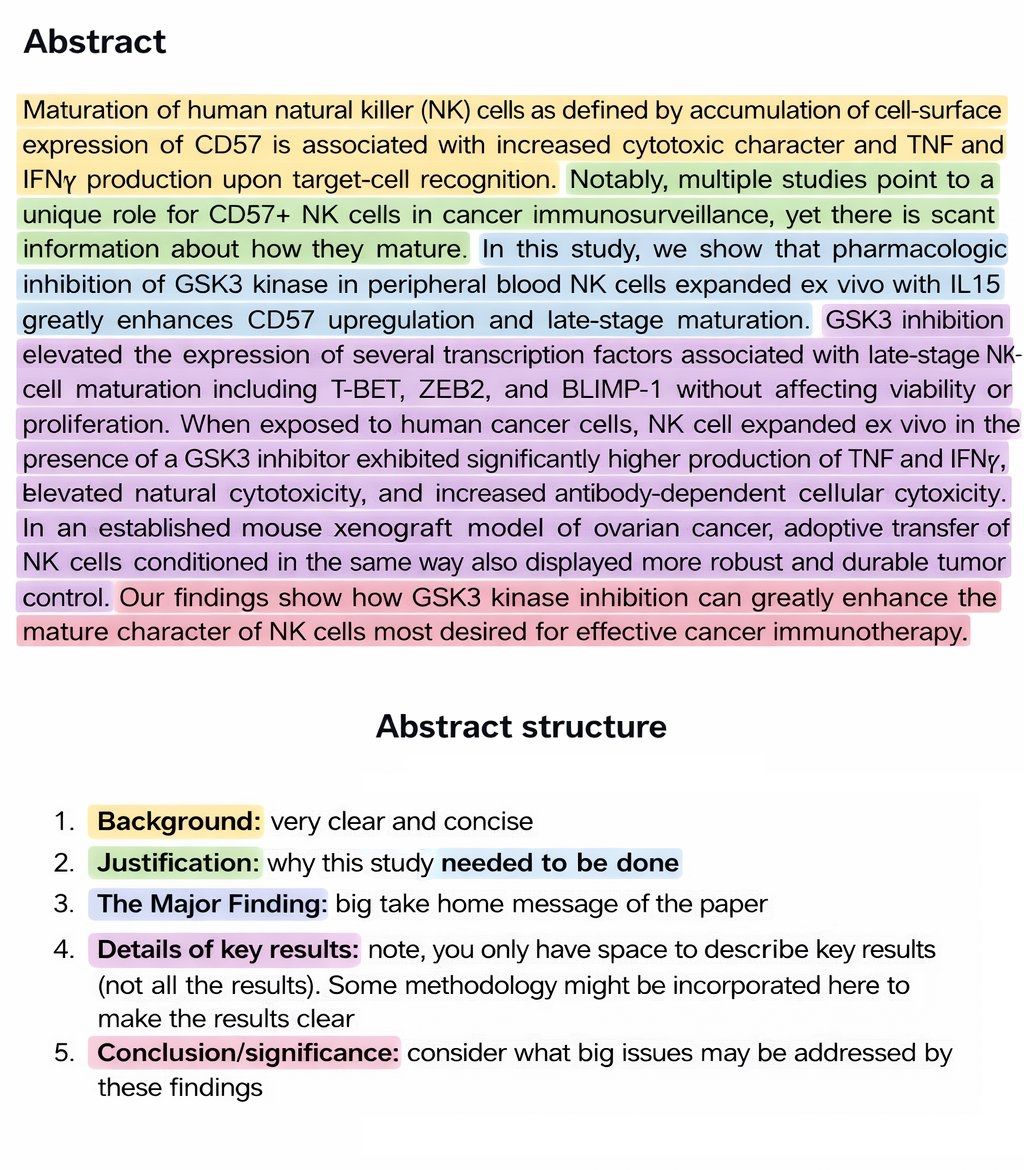
How to write an abstract for your paper.
You can do it in 5 parts:
1. Background
2. Justification
3. Major Finding
4. Key Results
5. Conclusion
The parts may differ for your field.
But these are the basics.
Apply and adjust.
#phd
9 Literature Review Quick Questions
1. What has been done?
2. What were the hypotheses?
3. What were the research questions?
4. How was the work done?
5. When was it done?
6. Who did it?
7. What were the main findings?
8. What were the conclusions?
9. What should be done next?
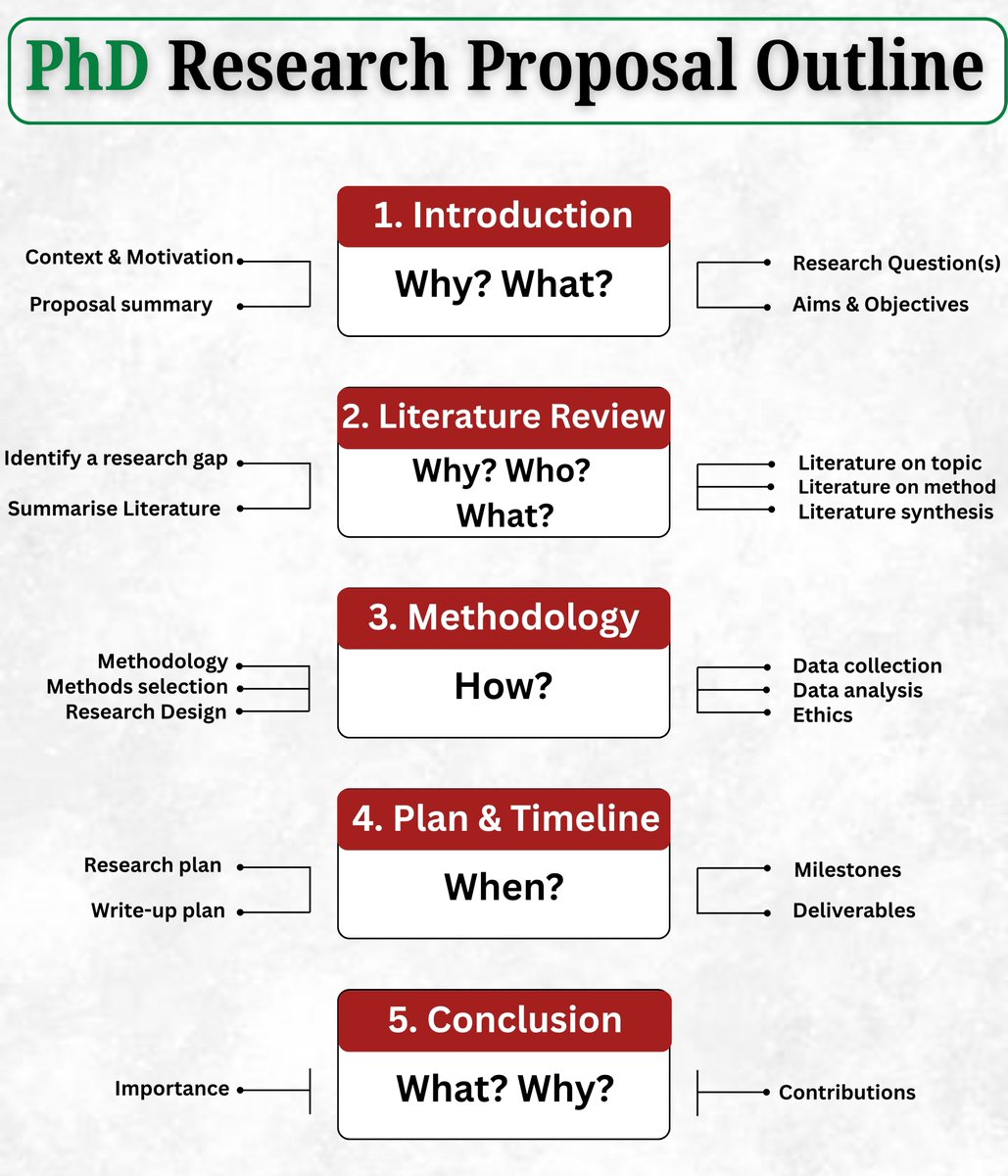
PhD Research Proposal Outline
1. Introduction
- Context and motivation
- Proposal summary
- Research questions
- Aims and objectives
2. Literature review
- Literature on topic
- Literature on methods
- Literature synthesis
- Summarize literature
- Identify a research gap
3. Methodology
- Methods selection
- Research design
- Data collection
- Data analysis
- Ethics
4. Plan and Timeline
- Research plan
- Write-up plan
- Milestones
- Deliverables
5. Conclusion
- Importance
- Contributions
Your PhD motivation letters are rejected in 60 seconds. Not because your profile is weak, but because your research goals never become clear.
Are you making these mistakes, too?
1. You write emotions where clarity is expected
Bad: “I am passionate about public health and want to make an impact.”
Strong: “I want to study why vaccination uptake remains low in urban informal settlements, despite policy availability.”
Clarity gives the reader something concrete to evaluate.
2. You explain the past but avoid committing to a direction
Bad: “I took courses in epidemiology and developed a strong interest in the field.”
Strong: “I now want to examine how health system design affects vaccine uptake, building on my prior work in epidemiology.”
The past matters only if it leads somewhere specific.
3. Your letter could be sent to any program
Bad: “This program is a great fit for my academic goals.”
Strong: “Your program’s work on community health systems aligns with my interest in last-mile delivery failures in urban clinics.”
Specificity signals seriousness.
4. You avoid taking an intellectual position
Bad: “I am interested in exploring different areas within public health.”
Strong: “I am interested in whether centralized health policies fail due to lack of local adaptability in dense urban regions.”
A clear stance makes you memorable.
5. The reader has to work to understand you
Bad: A full page with no clear research problem
Strong: “I want to study how X problem affects Y population using Z approach.”
If they have to search for your point, they move on.
Final truth:
A strong motivation letter reduces friction.
It makes your thinking immediately visible.
If you want to get this right, comment “ML” or send me a message.
Large Datasets: Claude Code for Economists with Paul Goldsmith-Pinkham |... https://t.co/RbWS60LE23 via @YouTube
More on https://t.co/AE52s9awei
Happy Easter!
Old movies every ENTREPRENEUR should watch:
1. Tesla.
2. Minari.
3. Oceans 8.
4. The Banker.
5. Like a Boss.
6. Red Heaven.
7. The Founder.
8. The Assistant.
9. Ford and Ferrari.
10. House of Cardin.
11. Wolf of Wall Street.
12. Dolemite is my name.