Partisan politics is worse than colonialisation. We cannot discuss any national issue without thinking first about how our “party” can benefit from it. Those we trusted as tanks, have stopped thinking. The new slave master is blind loyalty to partisan politics
@Koya_Nkrumah @PatropasN123 @favLabscientist If you claim women/girls are outperforming the males then where is the logic in making such scholarships exclusive to women and more biased towards women?
Any teacher willing to establish a Boys Club in their school, I’m ready to support by bringing mentors and joining them personally to engage with the boys.
We need to be intentional about raising responsible, confident, and well-rounded young men. We’ll have conversations on mental health, personal hygiene, discipline, leadership, self-esteem, and life skills.
Let’s invest in raising a better generation of men. 💙
#BoysLivesMatter
As someone who did Science at Achimota, I can say there was definitely a gender gap. Girls faced real barriers, and the interventions to address that were necessary. But I agree with the point being made.
There was a time when there was a clear and undeniable educational gender gap. Girls faced cultural resistance, limited access to education, domestic responsibilities, early marriage, inadequate support and a general social preference for educating boys. That reality justified deliberate intervention.
And we should acknowledge that those interventions mattered.
For years, governments, NGOs, schools, communities and development organizations deliberately invested in the girl child. Scholarships were created specifically for girls. Mentorship programmes were established. STEM initiatives targeted girls. Sanitary-product interventions were introduced. Campaigns encouraged parents to educate their daughters. Policies were designed to remove barriers that disproportionately affected girls.
There was a reason for all of this was that there was a problem that needed correcting.
But equity has never meant permanently favouring one group. Equity means recognizing disadvantage and providing the support necessary to overcome it.
So “Did girls suffer educational disadvantages in the past?” They did.
And “Where is the educational disadvantage today?”
If the evidence now shows that girls are outperforming boys in important academic indicators and, in some contexts, outnumbering them in educational participation, then we cannot continue designing every gender intervention as though we are still living in the era when girls were systematically excluded from education.
That does not mean we should stop supporting girls but rather our interventions must become evidence-based rather than permanently gender-based.
A girl who struggles because she lacks sanitary products deserves support, one who faces cultural pressure to abandon school deserves support same as the girl who is discouraged from pursuing STEM deserves mentorship and encouragement.
But a boy whose family cannot afford his education also deserves a scholarship, the one struggling academically deserves intervention, a boy without mentorship or career guidance deserves one, a boy growing up in an environment where he is vulnerable to drugs, crime or other destructive influences deserves support too.
We cannot respond to one form of vulnerability by pretending another does not exist.
I also find the argument that historical disadvantage automatically justifies present-day preferential treatment problematic. History should inform policy, but current evidence should determine policy.
If we use historical discrimination to justify present-day inequality indefinitely, then we have misunderstood the purpose of corrective intervention.
The objective of girl-child advocacy was never supposed to be that girls would eventually receive preferential treatment forever. The objective was to create a society where being a girl would no longer be a significant barrier to educational opportunity.
And if we have made substantial progress toward that objective, then that should be celebrated and not used as a reason to ignore emerging problems affecting boys.
This is where we need to understand the difference between equity and equality because equity asks who is disadvantaged, and what support do they need? but equality asks that once we identify that disadvantage, are we giving everyone a fair opportunity?
We need both.
I am not arguing for the abandonment of the girl child. I am arguing against the assumption that every educational problem must still be interpreted through the lens of female disadvantage.
A scholarship should primarily respond to the disadvantage it is intended to address. If it is poverty, let poverty be the criterion. If it is academic excellence, let academic excellence be the criterion. If it is a specific barrier affecting girls, then address that barrier specifically.
If we are genuinely committed to gender equity, then we must have the courage to follow the evidence even when the evidence tells us that the group requiring greater attention has changed.
During my time at university, three scholarships were available to students. Two were exclusively reserved for female students, while the third gave 60% priority to girls. I saw many male students drop out because of financial difficulties. The underlying trend is clear: in the effort to close gender gaps, we are creating a deeper systemic problem by neglecting boys and disproportionately prioritizing girls. There was even a period when the CGPA requirements for scholarships were set lower for female students than for male students. The boy child is being overlooked, and the evidence continues to highlight this imbalance. Many young men are turning to drugs for comfort or engaging in cyber-crime. At the primary-school level, skills workshops and career-guidance programs specifically for boys are virtually nonexistent, yet countless organizations focus exclusively on advancing the girl child. We need balanced interventions if we are serious about addressing gender-based inequalities.
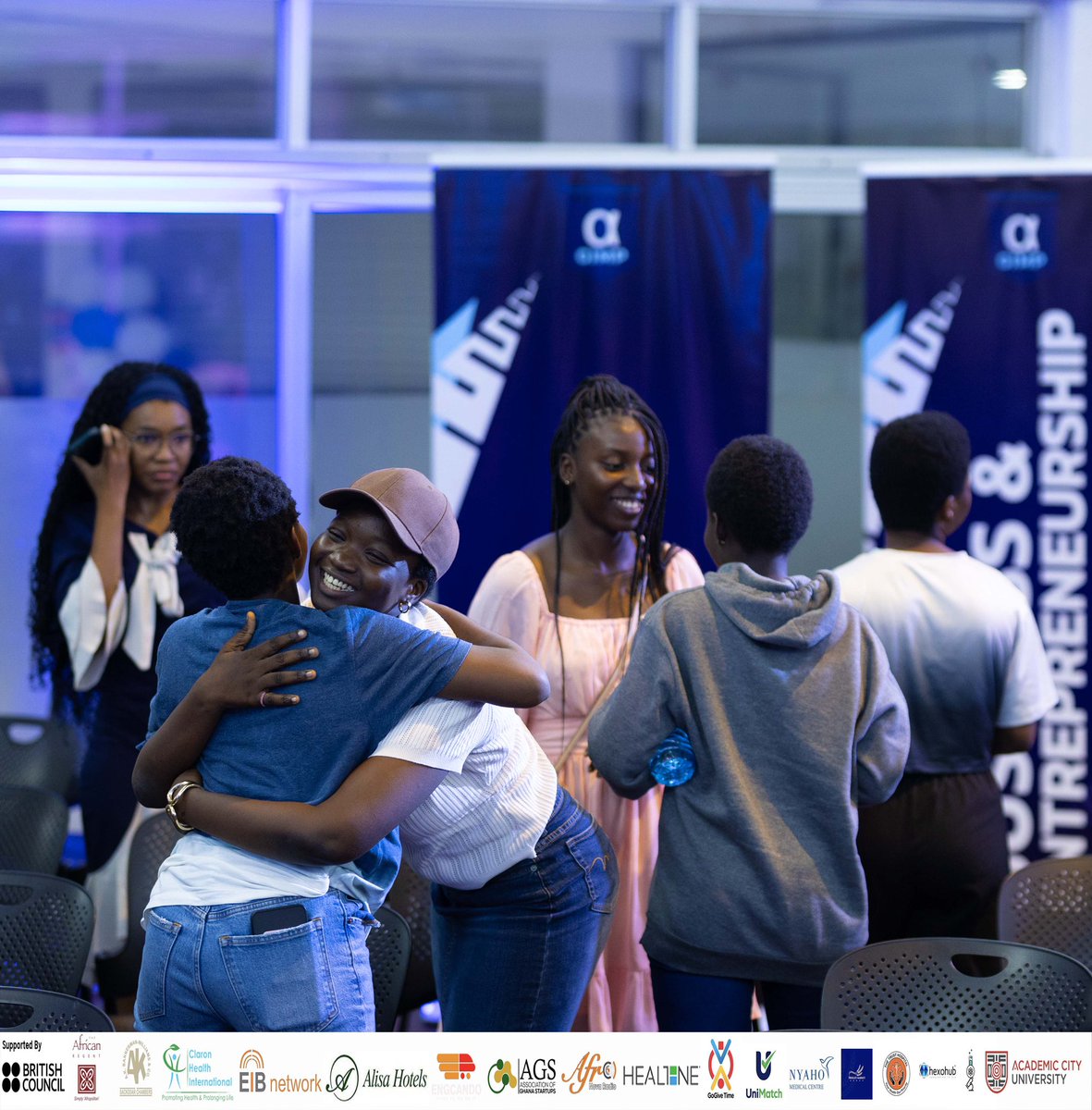
After the sessions, everyone stayed back a little longer
conversations stretched, small groups formed, and people found themselves easing into each other’s space.
That’s the difference GIMP makes building real connections.
NEW LAW ALERT 🔔
The law requires a prosecutor to facilitate an accused person’s defence. So, he is to disclose to the accused person every evidence which investigators found during investigations. So, before a trial begins, a prosecutor must file such disclosures.
The disclosures must include evidence which will show that the accused person is guilty. But that’s not all. It must also include evidence which the prosecutor knows or believes can help the accused person to show that she is not guilty.
Because the prosecutor cannot be trusted to voluntarily file every evidence (especially the one that he knows can show that the accused person is not guilty), the law allows the accused person to ask the court to direct the prosecutor to make further disclosures.
However, the accused person is not allowed to use the opportunity for further disclosures as a ploy to delay the trial or convert the prosecutor into defence counsel. So, there are limits to what the accused person can get from seeking further disclosures.
Before last week, October 29, when the Supreme Court decided The Republic v Adu-Boahene case, there were, by case law and practice direction, two criteria for determining what an accused person may get through further disclosures.
The first criterion is the RELEVANCE Rule. This says that an accused person can, by way of further disclosures, get from the prosecutor only evidence which has a bearing on proving that she is guilty or not guilty. If it is not relevant, it wont be disclosed.
The second is the POSSESSION rule. It says that the evidence which the accused person asks for must be evidence which came into the hands of investigators during the investigation of the offences which the accused person is charged with.
The Adu-Boahene case has changed this law: The RELEVANCE rule no longer applies. That is to say that an accused person doesn’t have to show that the evidence, disclosure of which she seeks, is relevant to proving anything. Relevance will be determined at the trial.
She only has to concern herself with the POSSESSION rule. That is - she just has to show that the evidence she seeks came into the investigators’ hands during the investigations of the offence which she is charged with.