Sve što zateknete na ovom profilu su isključivo moja lična tumačenja i špekulacije, moji stavovi nisu savet, služe u svrhu edukacije, širenja svesti i analize tekućih dešavanja. Zaključak: Svaku odluku donosite na sopstvenu odgovornost!
A recent study found VITAMIN C + GRAPE SEED EXTRACT shrinks cancerous tumors BETTER than one of the strongest chemotherapies in existence—WITHOUT destroying the body.
In animal models:
✅Vit C + GSE: 76.61% tumor reduction
🚫Doxorubicin ("RED DEVIL"): 68.82% tumor reduction
La CEO de AMD, Lisa Su, acaba de acabar con la caja de IA de $4,000 de Nvidia con una lonchera de $1,499.
Subió al escenario, la sostuvo en una mano y ejecutó en vivo un modelo de 235 mil millones de parámetros. Sin centro de datos. Sin nube. Sin GPU alquilada.
El chip en su interior es algo que nadie vio venir. El Ryzen AI Max+ 395 de AMD es el primer silicio x86 donde la CPU y la GPU comparten los mismos 128 GB de memoria. Ese solo truco permite que un escritorio ejecute modelos que antes necesitaban un rack de servidores.
De esos 128 GB, Linux le da al GPU 110 GB para jugar. Para contextualizar, una RTX 5090 te da 32 GB. Una 4090 te da 24. Esta caja te da más del triple que cualquiera de ellas, en un chasis del tamaño de un libro de bolsillo grueso.
El benchmark que rompió la sala: este chip superó a una Nvidia RTX 5080 por más de 3x en inferencia de DeepSeek R1. Una lonchera de $1,499 superando a una tarjeta gráfica discreta de $1,000 en una carga de trabajo real de IA. Nvidia pasó una década convenciendo al mundo de que necesitabas su hardware para IA seria. AMD acaba de poner eso en un escritorio por la mitad del precio.
Aquí está lo que nadie te está diciendo. Un usuario intensivo de IA ahora paga $200 por Claude Code Max, $200 por ChatGPT Pro, $20 por Cursor, $20 por Gemini. Eso son $5,280 al año saliendo de tu cuenta. La caja se paga sola en 9 meses y luego corre gratis por el resto de su vida.
Instala Ollama. Descarga Qwen3 235B. Apunta Claude Code a localhost. La misma interfaz que ya usas, excepto que ahora nada sale de tu máquina, nada cuesta por solicitud y ninguna empresa limita tu uso a las 3 de la mañana cuando por fin tienes tiempo para construir.
Este es el momento en que todas las suscripciones de IA se vuelven opcionales. Los abogados dejan de temer fugas de OpenAI. Los desarrolladores dejan de mirar el medidor de tokens. Los fundadores dejan de alquilar H100s para prototipos que nunca se envían porque la factura los asustó.
Las primeras mil personas en descifrar esto poseerán los próximos dos años de consultoría de IA privada.
❗️🚨 An Israeli company has backdoored hundreds of millions of households through countless Smart TV apps, and they're quietly turning Samsung and LG TVs into exit nodes for AI web-scraping. Your TV is relaying strangers' web traffic from your home IP, your bandwidth, your address attached to whatever those scraping jobs touch.
Roku, Fire TV and Google TV banned the practice. Samsung and LG didn't. The culprit is Bright Data's proxy SDK, which rides inside Tizen and webOS apps, 200+ on webOS alone. Datacenter IPs get blocked, home IPs don't.
Include Security reverse-engineered the SDK and found its relay protocol has no message signing, authentication, or device attestation. Their words: less secure than typical malware command-and-control.
To make things worse, they found that in iOS the relay tunnel binds straight to the physical network interface, so it routes around any VPN the user is running.
Bright Data's config also ships per-country tiers. Devices in Uzbekistan and Oman are cleared to relay down to 1% battery, with data caps up to 60x the worldwide default.
Before the BaCkDoOrEd replies land: technically you agreed. In practice you were enrolled into a global proxy network you were never given the information to refuse. And these exit nodes drag down your IP's reputation, potentially leaving you with blocks from providers.
The world does not know anything about the agro-industry. That is why we, from Innoteltech Solutions, are building data centers for agro-sector data collection and AI integration in IoT. We plan to develop AI-based models specifically for agricultural purposes. We need to learn how crops and animals live in symbiosis with robotics and technology. Technology is not about mass control; it's about improving health and living quality.
https://t.co/nshYYabXah
IMAGINE A FUTURE WHERE THE CIA SITS ON THE FACT THAT THEY INVENTED BITCOIN UNTIL 1 BTC IS WORTH $100,000,000.
THEN THEY SELL SATOSHI’S STASH ($110T), WIPE OUT THE NATIONAL DEBT, AND CEMENT THEIR PLACE IN HISTORY AS THE GREATEST DEEP STATE OPERATION EVER.
How a memory gets physically written into your brain — at the molecular level:
ACTIVATION …
The synapse fires, a glutamate signal arrives, then the NMDA receptor opens and Ca²⁺ floods into the post-synaptic spine.
Calmodulin — a small dumbbell-shaped sensor protein — cradles four Ca²⁺ ions, two per lobe. Loaded calmodulin clamps onto CaMKII, the central memory enzyme of the brain.
CaMKII isn’t one kinase. It’s a holoenzyme: 12 kinase domains arranged as two stacked hexagonal rings of 6, all radiating from a violet hub.
When Ca²⁺/calmodulin binds, the kinase arms swing out from their folded inactive state into the activated starburst.
Then each kinase autophosphorylates its neighbor at Thr286. That single modification locks the enzyme ON — even after Ca²⁺ leaves. The switch is now a latch. The memory trace begins here.
DOCKING …
A microtubule is a hollow cylinder built from α/β-tubulin dimers — 13 protofilaments, 25 nm outer diameter, 15 nm inner lumen. The tubulins tile its surface in a near-hexagonal lattice.
CaMKII’s hexagonal foot is ~20 nm across. The numbers aren’t coincidence — the kinase hexagon matches the tubulin lattice exactly.
When activated CaMKII lands on a microtubule, six of its kinase feet contact six tubulins arranged in a hexagonal ring around one untouched central “address” dimer.
Complementary surface charges hold it in place with 6 to 36 kcal/mol of electrostatic attraction — strong, specific, reversible.
The enzyme isn’t just sitting on the lattice. It’s registered to it. Like a print head locking onto paper.
ENCODING — the write step
Now CaMKII writes…
Each of the six feet transfers a phosphate group (one ATP per contact) onto its target tubulin’s C-terminus — or doesn’t. Six independent decisions. Six bits. One byte.
The phosphorylation sites are real and identified:
Thr312 and Ser444 on βIII-tubulin.
Each phosphate flips that tubulin into a glowing amber conformational state, distinguishable from the unphosphorylated teal/indigo dimers around it.
The information capacity is staggering:
•A-lattice binary (β-tubulin only): 2⁶ = 64 states per byte
•A-lattice ternary (α or β phosphorylation): 3⁶ = 729 states per byte
•B-lattice 9-dimer (ternary, 6 of 8 dimers writable): 5,281 states per byte
Multiply that across the billions of tubulins in every single one of our neurons and you get memory density that dwarfs anything we build in silicon.
COMPUTATION — the pattern isn’t inert; it computes…
The phosphorylation pattern isn’t a passive record. It actively shapes the microtubule lattice, and thus the cell:
C-terminal tails flip between up/down conformations, seeding hexagonal Turing waves that propagate the pattern across the lattice.
MAPs (microtubule-associated proteins) dock preferentially at amber phospho-sites, templating bundle architecture and synaptic stability.
Kinesin — the two-legged molecular motor — reads the amber path and walks cargo vesicles along it. The memory becomes a routing map for transport.
The whole lattice resonates at MHz frequencies — millions of state updates per second. Storage and processing collapse into the same substrate.
The brain may literally write in hexagonal bytes!
Craddock, Tuszynski & Hameroff (2012), PLoS Comput Biol 8(3):e1002421 — https://t.co/InJdmdYv8d
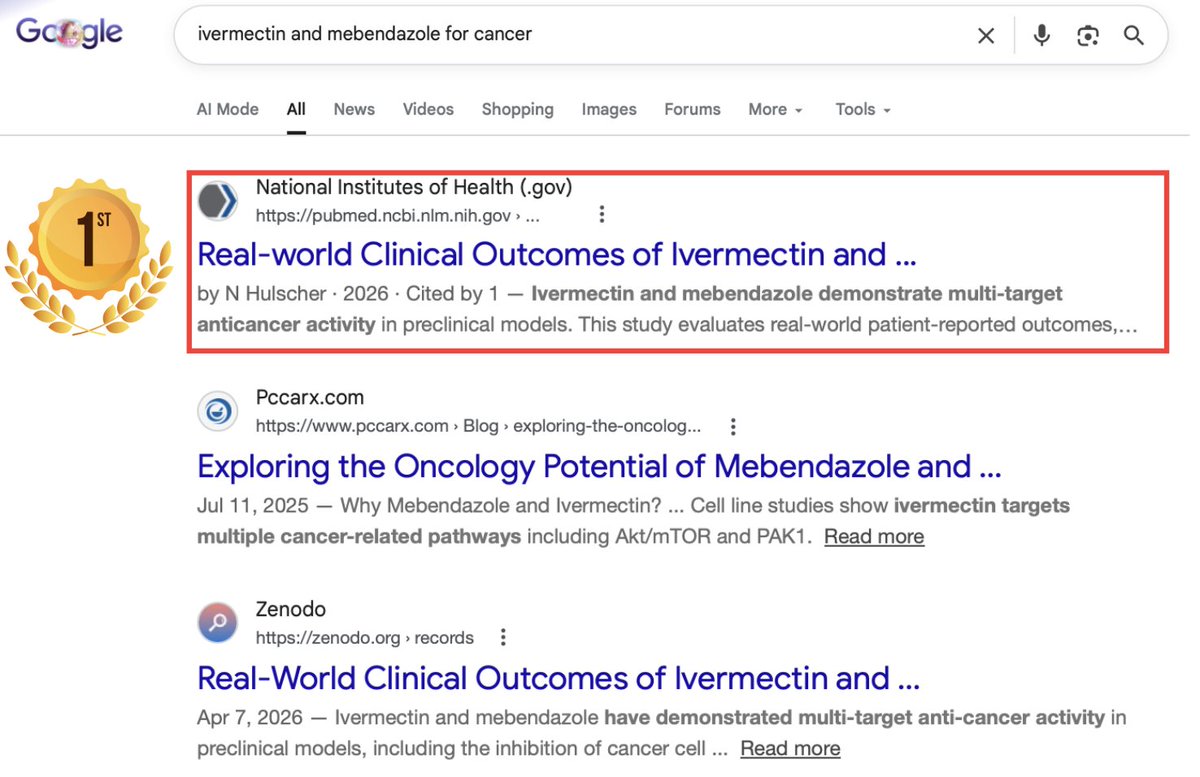
BREAKING: Our peer-reviewed ivermectin + mebendazole cancer study showing 84.4% clinical benefit just became the #1 RESULT ON GOOGLE
The world is waking up to the ENORMOUS potential of anti-parasitics for cancer.
The Chemo Cartel is panicking.
🚨 SCIENTISTS JUST CREATED A 5D GLASS DISC THAT CAN STORE 360 TERABYTES AND LAST FOR BILLIONS OF YEARS.
Researchers have developed a revolutionary data storage technology: a tiny glass disc that can hold 360 terabytes of information (roughly 100,000 times the capacity of a standard DVD) and survive extreme conditions for billions of years.
The disc uses ultrafast lasers to etch five-dimensional nanoscale structures inside fused silica glass. These five dimensions include three spatial coordinates plus two additional dimensions based on light polarization and intensity allowing incredibly dense and stable data encoding.
Why this matters:
• The disc has been tested at temperatures up to 1,000°C and under intense radiation with zero data degradation
• It could preserve humanity’s most important knowledge (libraries, archives, scientific records) for future civilizations
• Unlike magnetic or optical discs that degrade in decades, this technology offers true “forever” storage
• Potential applications include long-term climate data, astronomical archives, and cultural heritage preservation
The deeper implication is enormous:
We are moving from fragile, short-lived digital storage to something that could literally outlast human civilization itself.
For the first time, we have a practical way to create permanent archives of our species’ knowledge that could survive the rise and fall of empires.
What would you choose to preserve on one of these discs for the next 10,000 years?
Follow for more frontier materials science and future technology.
Human consciousness may be far more than a product of our neural wiring.
It may be a quantum phenomenon occurring deep within our brain's cellular structure.
For decades, scientists have viewed the brain as a biological computer where consciousness emerges from complex neural connections. However, the Orchestrated Objective Reduction (Orch OR) theory, developed by physicist Sir Roger Penrose and anesthesiologist Dr. Stuart Hameroff, challenges this classical perspective.
The theory proposes that consciousness is actually rooted in quantum processes within tiny structures called microtubules found inside neurons. Instead of simple electrical signals, these researchers argue that our stream of consciousness is a rapid sequence of quantum collapses occurring at the most fundamental level of reality, suggesting the mind is more deeply connected to the physics of the universe than previously imagined.
While once considered fringe, the science behind Orch OR is becoming increasingly difficult to ignore. Quantum coherence, a state once thought to be impossible in warm biological environments, has recently been observed in everything from bird navigation to plant photosynthesis.
Most significantly, research published in 2025 identified microtubules as a functional target for anesthetic molecules, directly supporting one of the theory's most controversial predictions. As empirical evidence continues to align with these quantum models, we are likely witnessing a paradigm shift in neuroscience that could finally unlock the mystery of how we experience the world.
source: Penrose, R., & Hameroff, S. Consciousness in the Universe: A Review of the Orch OR Theory. Physics of Life Reviews, Elsevier.
Polsia just raised $30M at a $250M valuation.
Approaching $10M annual run rate.
One Founder + AI. Zero employees.
Polsia runs companies autonomously.
It also ran its own fundraising.
I just showed up for signatures.
Roger Penrose, Nobel Prize-winning physicist and mathematician, explains why we should stop calling it AI and start calling it "artificial cleverness":
He believes the entire field is mislabelled, and the label itself is doing damage.
His objection is simple but cuts deep:
"The name is wrong. It's not artificial intelligence. It's not intelligence. Intelligence would involve consciousness. Well, if it's a machine, it's not conscious."
For Penrose, people have confused raw computing power with genuine understanding.
"People have lost the plot. They've lost it in the power of computing. The thing is that computers have got so powerful that they've lost the thread of what they're doing. But I think consciousness is something different. It's not computational."
He believes the term itself has hypnotized people into a category error:
"People are so hypnotized. The trouble is that AI is a bad term. It means artificial intelligence. Now intelligence in my view is conscious. That's what intelligence is about."
So he proposes a rename. Artificial Cleverness. AC instead of AI.
To illustrate the distinction, Penrose draws on his experience teaching mathematics:
"You have mathematics students. Some of them understand what they're doing. Some are just clever. They can repeat what they've learned. They know how to do it very cleverly. They can calculate very well, but they don't necessarily understand what they're doing."
That gap, between calculating well and actually understanding, is the gap Penrose sees between today's machines and genuine intelligence.
Cleverness can be manufactured. Consciousness, in his view, cannot.
So the question worth sitting with: when we call a system "intelligent," are we describing what it does, or quietly assuming something about what it is?
signs of a high IQ polymath:
not knowing everything.
seeing structure faster than others.
• learns primitives before details
• connects physics, math, biology, code, economics
• spots patterns across unrelated fields
• asks better questions than obvious experts
• builds models, not opinions
• gets bored by surface level information
real intelligence is not trivia.
it is compression, transfer, and synthesis.
$125,000 invested in $ETH 5 years ago is now worth $73,400.
$125,000 invested in Potatoes 1 month ago is now worth $1,000,000.
ETH is getting outperformed by Potatoes.
“A lot of people with high IQs are terrible investors because they’ve got terrible temperaments. And that is why we say that having a certain kind of temperament is more important than brains. You need to keep raw irrational emotion under control. You need patience and discipline and an ability to take losses and adversity without going crazy. You need an ability to not be driven crazy by extreme success.”
Charles T. Munger, Value Investing: A Value Investor's Journey Through the Unknown
Confirmed: Oxygen can be produced without photosynthesis
For centuries, it was believed that oxygen on Earth was produced exclusively by living organisms through photosynthesis, a process dependent on sunlight. New research shows this is not the only pathway.
At depths of around 4,000 metres (13,000 feet) in the Pacific Ocean, far beyond the reach of sunlight - researchers observed oxygen being produced in complete darkness.
The discovery was made by a team led by the Scottish Association for Marine Science while studying the Clarion–Clipperton Zone, a vast abyssal plain between Hawaii and Mexico. Sensors placed on the seafloor recorded rising oxygen concentrations, contradicting expectations based on known biological processes.
Further investigation identified the source as polymetallic nodules, rock concretions rich in manganese, nickel, cobalt, and other metals. The researchers found that these nodules can generate electrical potentials when clustered together on the seabed.
Under certain conditions, this electrical charge appears sufficient to drive seawater electrolysis, a chemical reaction that splits water molecules (H₂O) into hydrogen and oxygen, without the involvement of light or living organisms.
The findings have important implications.
They suggest that oxygen production can occur through geological and electrochemical processes, which may influence how scientists think about the early evolution of oxygen-using life on Earth. They also raise concerns about deep-sea mining on ecosystems we don’t understand
Study:
Evidence of dark oxygen production at the abyssal seafloor
Nature Geoscience, 2024
The ADHD bedtime trap is real.
Exhausted all day.
Wired at night.
Delayed sleep-wake timing occurs in up to 78% of people with ADHD.
In our paper on ADHD and circadian rhythms, we found that treating the clock may also help treat the symptoms.
https://t.co/gqnqRsZUj8
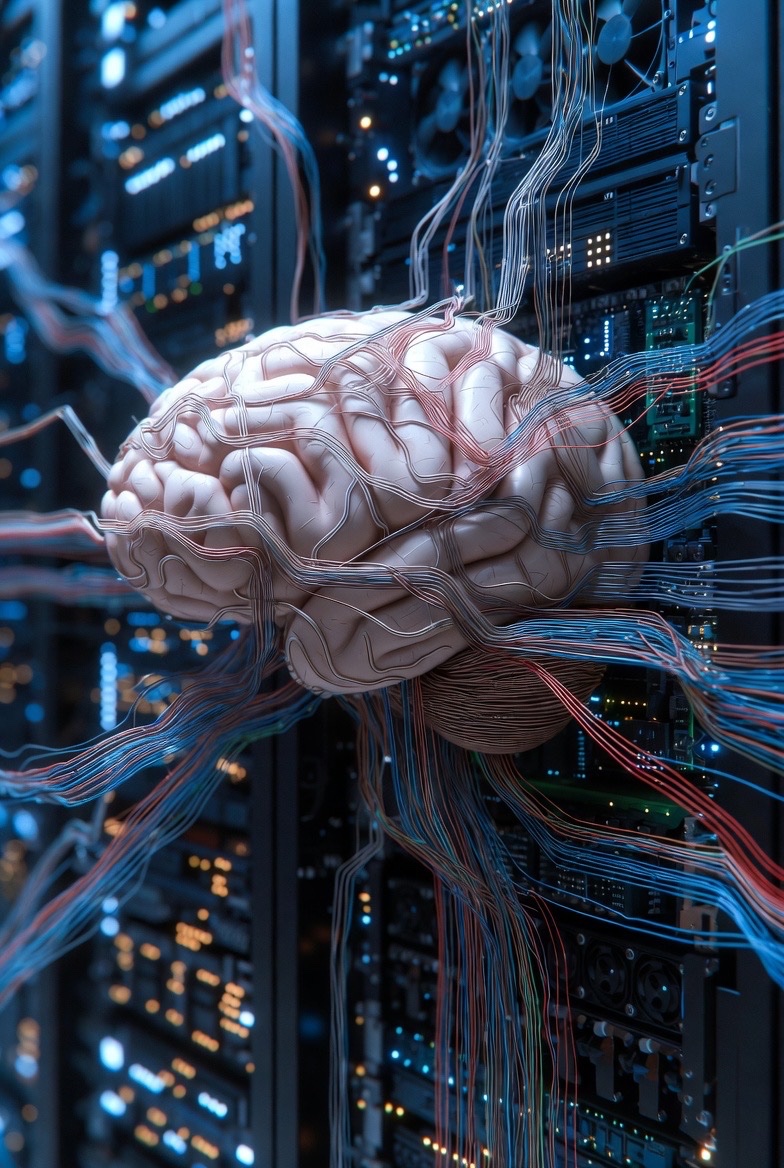
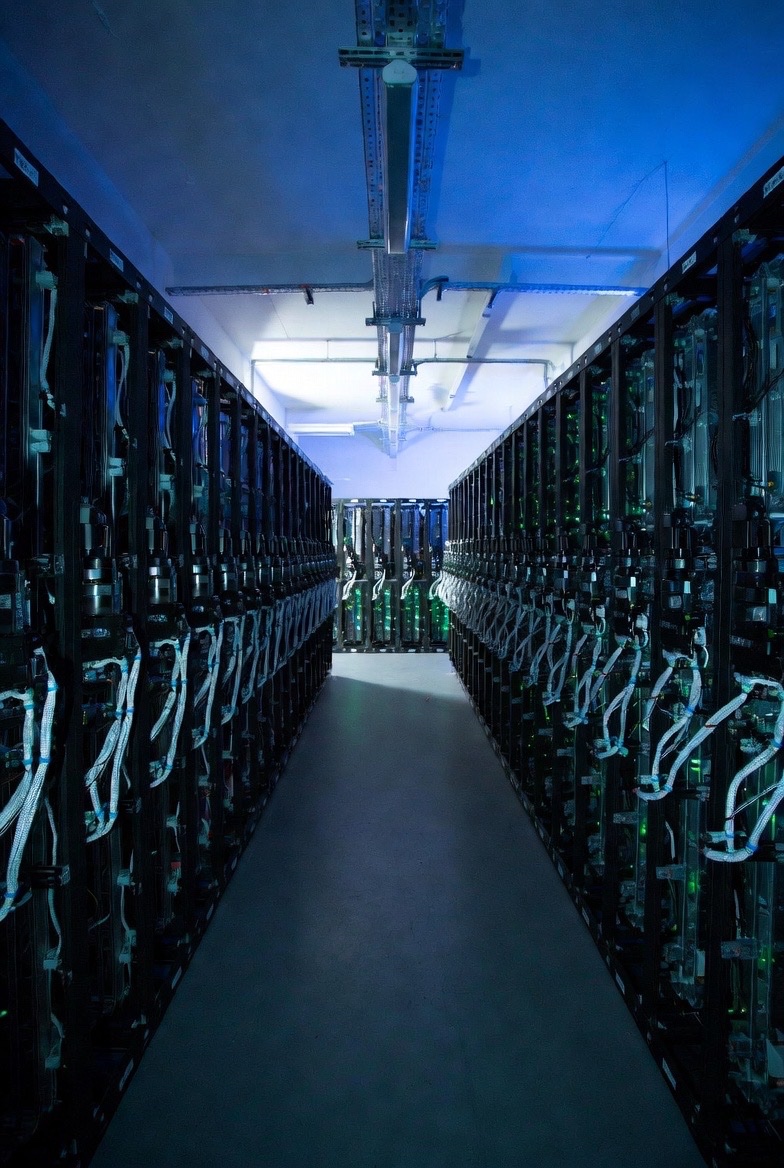
An Australian startup called “Cortical Labs” is making computers that mix lab-grown human brain cells with silicon chips.
Each unit holds about 200,000 brain cells grown from stem cells and the company has opened a test data center in Melbourne with 120 units and plans a larger one in Singapore.
These living brain cells use far less power than regular AI servers, the cells also stay alive with special nutrients and electrical connections.
AI + ADHD = unfair advantage
88% of neurodivergent employees report being more productive with AI. ADHD curiosity pushes you to explore various things. AI helps you connect the dots, build something unique, and become a generalist who is skilled in different areas of knowledge.