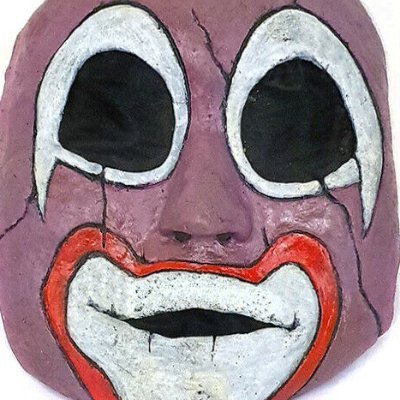
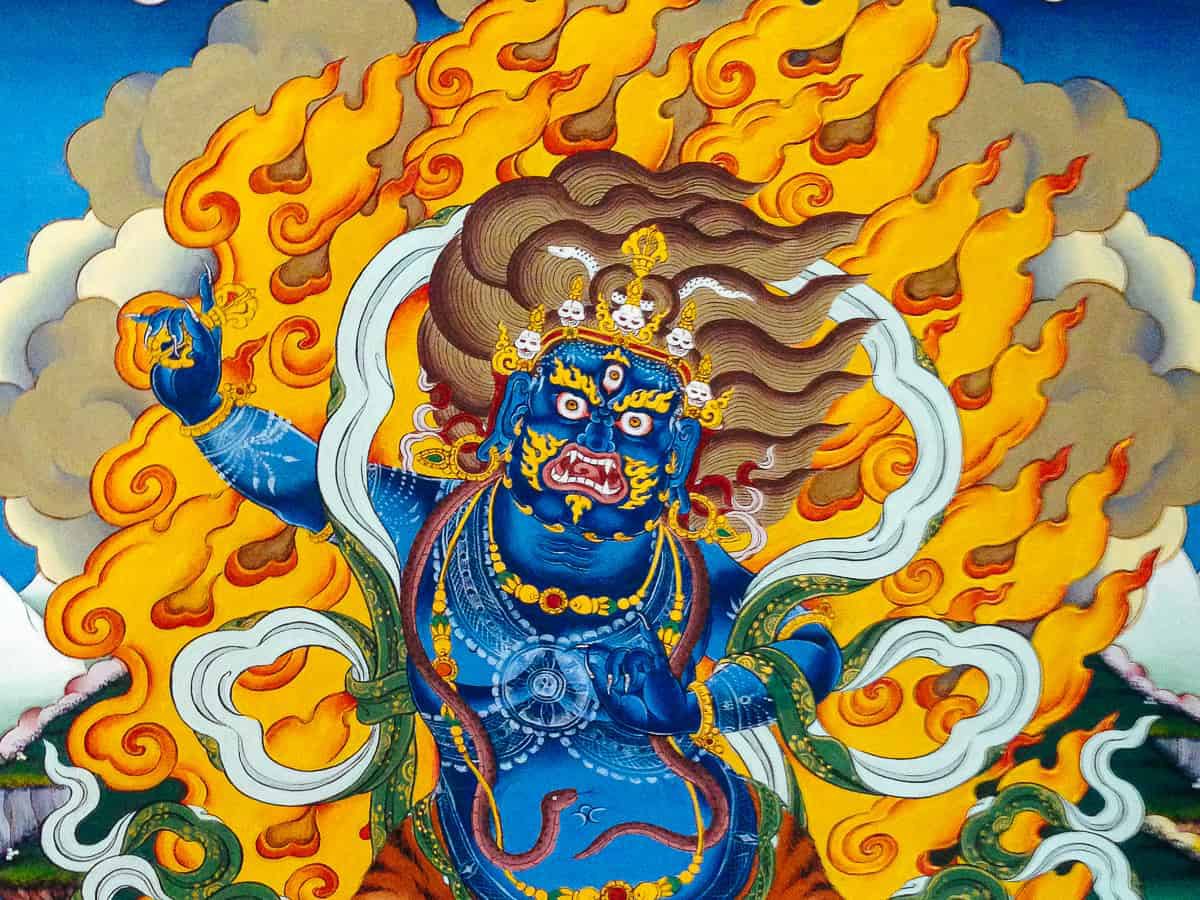
"El ₿athonomics"
Tokens that support space in consciousness by promoting silence from the noise of the outer world to go into the beauty of inner observation.
For simplicity and spiritual hygene, 100% of proceeds from El Batho NFT sales will go toward donations to Vipassana meditation centers around the world.
The only way to discover what kind of flower or fruit an unknown seed will produce is by nurturing it in the dark cold soil, giving it clues about where the sunlight is so it can slowly grow towards it and found its destined form. 🌱
Re-positioning sin within an evolutionary and spiritual anthropology
1. The Classical Doctrine of Sin — A Moral Cosmos
In much of Western Christianity (especially after Augustine of Hippo), sin became strongly linked to the doctrine of Original Sin.
Humanity is understood as:
- fallen once and for all
- marked by inherited guilt
- incapable of true good without divine rescue
The Fall is often read almost historically — as a catastrophe whose stain persists biologically and morally.
From a spiritual-psychological standpoint, this creates a conscience under pressure.
The human being begins life already:
- morally suspect
- spiritually damaged
- dependent on external redemption
This framing had a historical necessity.
It awakened moral seriousness in humanity.
But it also risked producing what we might call:
👉 ontological shame — the feeling that one’s very being is flawed.
2. Steiner’s Shift — From Guilt to Incompleteness
For Rudolf Steiner, the Fall is real — but not primarily a crime.
It is a stage in the birth of freedom.
Human beings could not become free while remaining embedded in divine consciousness.
Separation was necessary.
In this light, what we call “sin” is better understood as:
misalignment during evolution
rather than
transgression against a lawgiver.
Steiner repeatedly points toward a developmental view:
Humanity is not depraved — it is unfinished.
This is a radically different moral atmosphere.
Instead of:
“I am bad.”
The gesture becomes:
“I am becoming.”
3. Why Constant Sin-Consciousness Would Prevent Individualization
A world saturated with sin-consciousness would make individualization impossible.
Why? Because freedom requires inner initiative.
But excessive guilt produces:
- moral paralysis
- dependence on authority
- fear of self-hood
- distrust of inner experience
A being who fundamentally mistrusts itself cannot become an “I”.
One could even say:
👉 Overemphasis on sin protects the group — but delays the individual.
And humanity had to pass through both stages.
4. The Christ Event — Not Primarily a Payment, but a Turning of the Earth
Here anthroposophy makes one of its most decisive contributions.
Christ is not mainly the one who cancels a debt.
Christ is the one who re-configures the structure of human evolution.
Steiner often describes the event of the Mystery of Golgotha as a cosmic turning point.
After this event:
The human being is no longer merely a fallen creature…
but a being into whom a new force can be inwardly born.
Sin therefore changes meaning.
It becomes less a violation and more a failure to grow toward the Christ impulse.
Not damnation — but missed becoming.
5. The Christian Community — Sin as Illness Rather Than Crime
This is why the sacramental language often speaks in medical imagery:
- healing
- medicine
- restoration
- making whole
Instead of courtroom language:
- guilt
- penalty
- acquittal
This is not accidental.
It reflects a profound spiritual anthropology:
👉 The human being is not primarily a criminal.
The human being is a wounded being in-becoming.
And Christ is understood less as judge…
and more as physician of the “I”.
6. Freedom Changes Everything
Here lies the deepest difference.
If sin were simply disobedience, the ideal human would be:
👉 perfectly compliant.
But anthroposophy sees the goal as something far higher:
👉 free moral intuition.
Freedom includes the possibility of error.
In fact — this is crucial —
the capacity to err is the shadow of the capacity to love freely.
A world without the possibility of sin would also be a world without freedom.
And therefore without love.
7. A Subtle but Crucial Reversal
Traditional reflex:
“I sin — therefore I must be saved.”
Anthroposophical gesture:
“I am becoming — therefore I must awaken.”
Sin is no longer the center.
Consciousness is.
Growth is.
Participation in evolution is.
8. A Danger Worth Naming
Every great shift brings a risk.
When sin is no longer emphasized, humanity can drift into:
- moral laziness
- spiritual relativism
- self-justification
Steiner never advocates naïveté.
Freedom demands greater, not lesser, responsibility.
Not fear-based morality…
but awake morality.
One might even say:
👉 The old morality was obedience.
👉 The new morality is spiritual adulthood.
This links directly to the theme of ontological adulthood.
9. The Most Beautiful Anthroposophical Insight In This Regard Perhaps could be expressed in this way:
Christ did not come primarily to make bad humans acceptable.
Christ came to make free humans possible.
Sin then becomes something almost tragic rather than condemnable:
not wickedness…
but unused possibility.
Most people misunderstand immortality because they confuse it with duration or time span. They imagine an endless extension of the same life….more days, more years, more experiences strung together on a longer timeline on some other plane of existence. But every authentic spiritual tradition that promises immortality is pointing to something far more radical. Immortality does not mean surviving forever in time; it means awakening to what exists outside of time altogether. The real chain that binds us is not death, but psychological time - the constant identification with memory and anticipation. Regret constantly binds us to the past. Fear and desire pull us into the future. Caught between these two, we rarely inhabit the only place life ever actually happens….here and now. To step out of that current is to touch what the traditions call eternal life: not endless existence, but timeless being.
This is why mystics speak of the present moment with such reverence. When the mind fully releases its grip on past and future, something is revealed - awareness without age, without history, without projection. The body may still move through time, but consciousness is no longer enslaved by it. In this state, death loses its psychological power, because death only applies to things that exist within time. What is fully present is already beyond birth and decay. This is the immortality hidden in plain sight: not a promise postponed to another world or another lifetime, but a shift in perception available now. When you stand completely here, with nothing pulling you away, you discover what has always been untouched by death.
Finding and owning an NFT that resonates feels like stumbling upon seashells during a walk on the beach; personal treasures from the digital sea, meant to be found and siezed as memory of a beautiful day. 🐚