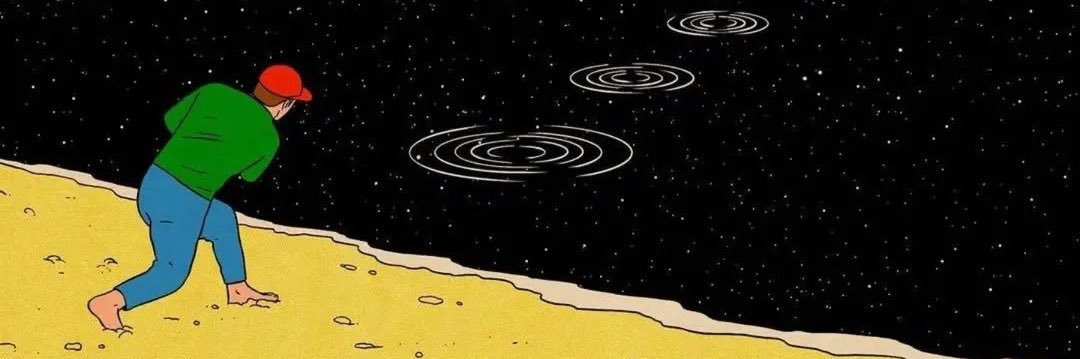
I spent 47 days as one of several thousand African migrants seeking to enter Europe through the Sahara Desert and the Mediterranean Sea.
Story on @fijnigeria tomorrow, Thursday and on Friday.
Manchester United run less and sprint less than the majority of the clubs in the Premier League.
But it's very difficult to find an overall link between these metrics and the probability of winning matches. There’s no evidence that winning teams cover more distance, or sprint more, than their opponents. These metrics are more a measure of style than quality.
So, is United's lack of running under Michael Carrick an issue? Or is this just how he wants his team to play?
📝 @Zonal_Marking
https://t.co/iT8XqKIwWy
@CaxtonJP This is too costly fiscally for us.
Either spent directly by FG at the downstream end or done via forgone revenue at the upstream end.
The entire gross oil revenue the federation earned (FG+SG+LG) in the 9months of 2025 is N14tr.
Can we afford to let go N18tr on PMS alone?
Meanwhile, in Bangkok, Thailand’s prime minister sang “Let It Be” and “Blowin’ in the Wind” as Singapore’s prime minister played guitar.
#Thailand#Singapore
We’ve spent the majority of 2026 with fuel above ₦1,000. Was that on your 2026 bingo card? Thanks, Trump.
The graph shows the prices I’ve paid for fuel since Nov 2025.
No country has sustainably eliminated extreme poverty in recent decades by relying primarily on a welfare system before building the productive economy needed to support it. Sustained poverty reduction comes from reforms that enable people to increase their incomes through better employment opportunities, higher productivity, and more productive enterprises.
A welfare system can alleviate poverty and provide a safety net, but it must ultimately be funded by the productive economy through taxation and other public revenues. This creates an important opportunity cost: money devoted to transfers is money that cannot simultaneously be invested in infrastructure, education, institutions and other conditions that enable people and businesses to generate higher incomes.
For example, if the Nigerian government could set aside $5 billion a year to give the poorest households the equivalent of $1 a day, that would increase their purchasing power but would not necessarily increase the economy's capacity to produce goods and services. If supply is limited, the additional demand could instead put upward pressure on prices. By contrast, investing some of the $5 billion in roads, electricity, irrigation, market access and other productive infrastructure could enable poor households and enterprises to produce more, reach bigger markets and earn higher incomes.
The fundamental challenge is not simply to redistribute existing income but to expand the productive capacity that generates income in the first place. Welfare can provide a safety net, but sustainable poverty reduction ultimately depends on creating the conditions in which more people can earn higher incomes and the economy can generate the revenues needed to sustain that safety net.
Here's an example of what I was talking about yesterday using Google Earth images (https://t.co/0fTAkv0qOS).
For context, Obajana is the largest cement plant in Nigeria. It was commissioned by former President Obasanjo in early 2007 just before he left office, so coming up to 20 years old. It is a giant complex for which Dangote operated it completely tax free for about 10yrs. He abused the government's pioneer status scheme with this plant to such extreme levels that the scheme was scrapped for cement.
Cement has also been completely protected for more than 20yrs in Nigeria - imports are totally banned with clinker only allowed with 50% tariffs.
Image 1 - shows the plant's footprint and scale in the area
Image 2 - from a June 2022 street view. This is what the surrounding area of the plant looks like at street level
Image 3 - is roughly 5 miles from the plant. You can see mud walls (anytime there are heavy rains in Nigeria, you always get stories of people dying because their mud houses collapsed)
Image 4 - You can rubbish heaps with the plant in the background.
This is where the world's richest black man makes his billion dollar fortune. Once you step outside the factory gates, much of the surrounding area remains unpaved shoulders, rudimentary drainage and pedestrians sharing the road with his thousands of cement lorries.
When I say there is zero evidence of cement linked to Nigerian development in any way, this is what I mean. Nigeria has consumed roughly a third of the amount of cement you'd expect because Dangote extracts an unbelievable price for "manufacturing" cement in Nigeria and "stopping imports". His focus on his margins above everything else is almost deranged.
If you had a man like this in Britain in the middle of the nineteenth century, Bazalgette doesn't get the London Sewer built and cholera does not get eliminated (https://t.co/VY2VLRCB7a). If you had him in early 20th century America, Erle Halliburton does not perfect oil well cementing and the world does not benefit from it (https://t.co/i894J3egUm)
But give it a few weeks, there will soon be another article in some reputable foreign media talking about how Dangote is on a journey to industrialise Africa. Meanwhile the man's two-decade record is right there in plain sight for everyone to see.
Yes, the Nigerian government is retarded enough to let this happen so it is not all his fault. But does Dangote himself have no shame? No innovation, no technology mastery, no impact on his immediate doorstep. Just his margins and counting his billions of dollars.
For more on Anty Didi’s works, check out the Intrapreneur project on LinkedIn, Facebook and IG.
Her 3 books on work and career.
1. The Power of Work
2. Career Navigator
3. The Art of Managing Your Boss
The Nigerian stock market has performed well recently.
But there is a generation of Nigerians you probably still cannot convince to put their money in stocks again.
Not because they don't understand investing.
Because they remember what happened the last time everybody was making money.
2008.
A thread
We wrote the full story in Notadeepdive.
We explain the business and economics behind things Nigerians already know, use and argue about.
Twice a week. Free.
Join thousands of curious readers here - https://t.co/UWE43IzHdW
@fccpcnigeria I’m glad you’re continuing the investigation. Please don’t believe this nonsense in particular from them. I will be happy to contribute my time, analysis and data to this effort (if you’re really sincere about it). Completely free of charge. You won’t have to pay me a penny.