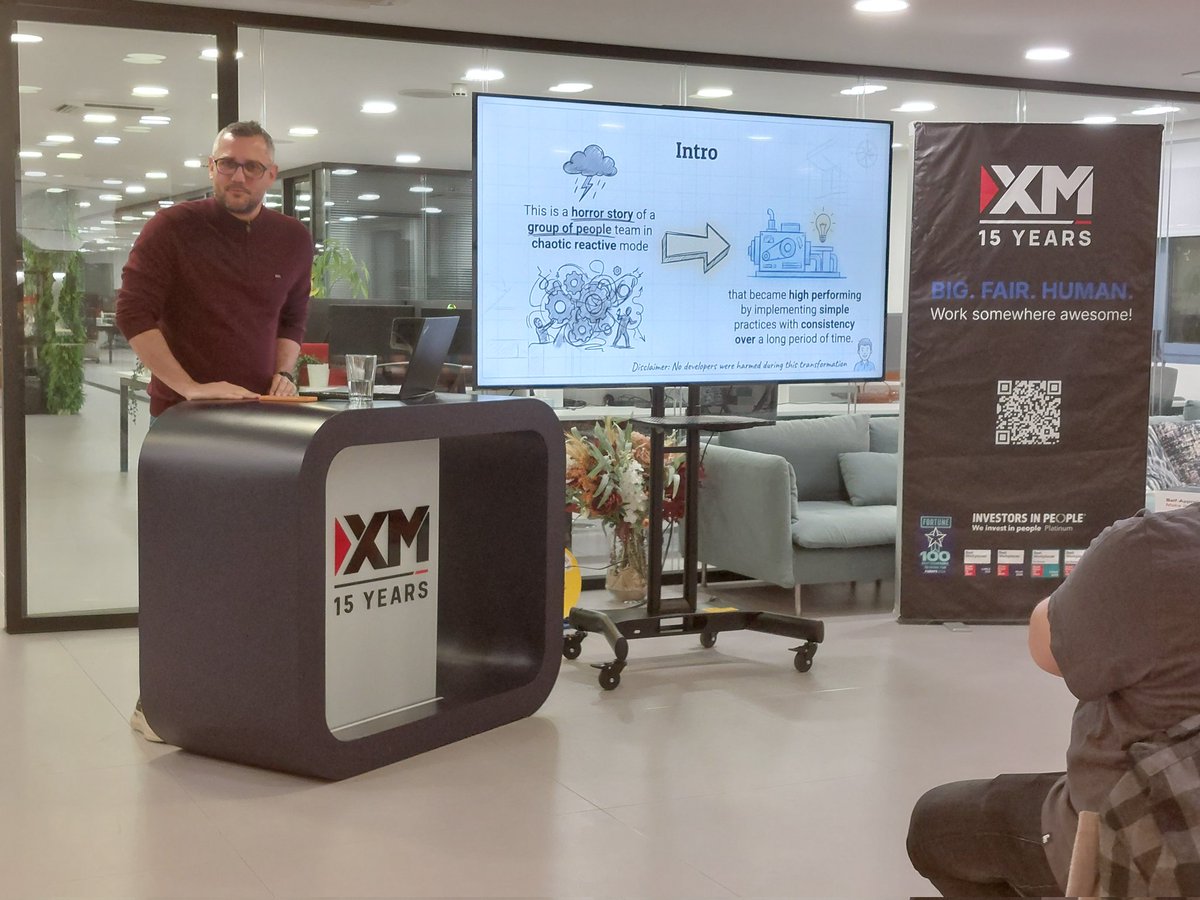
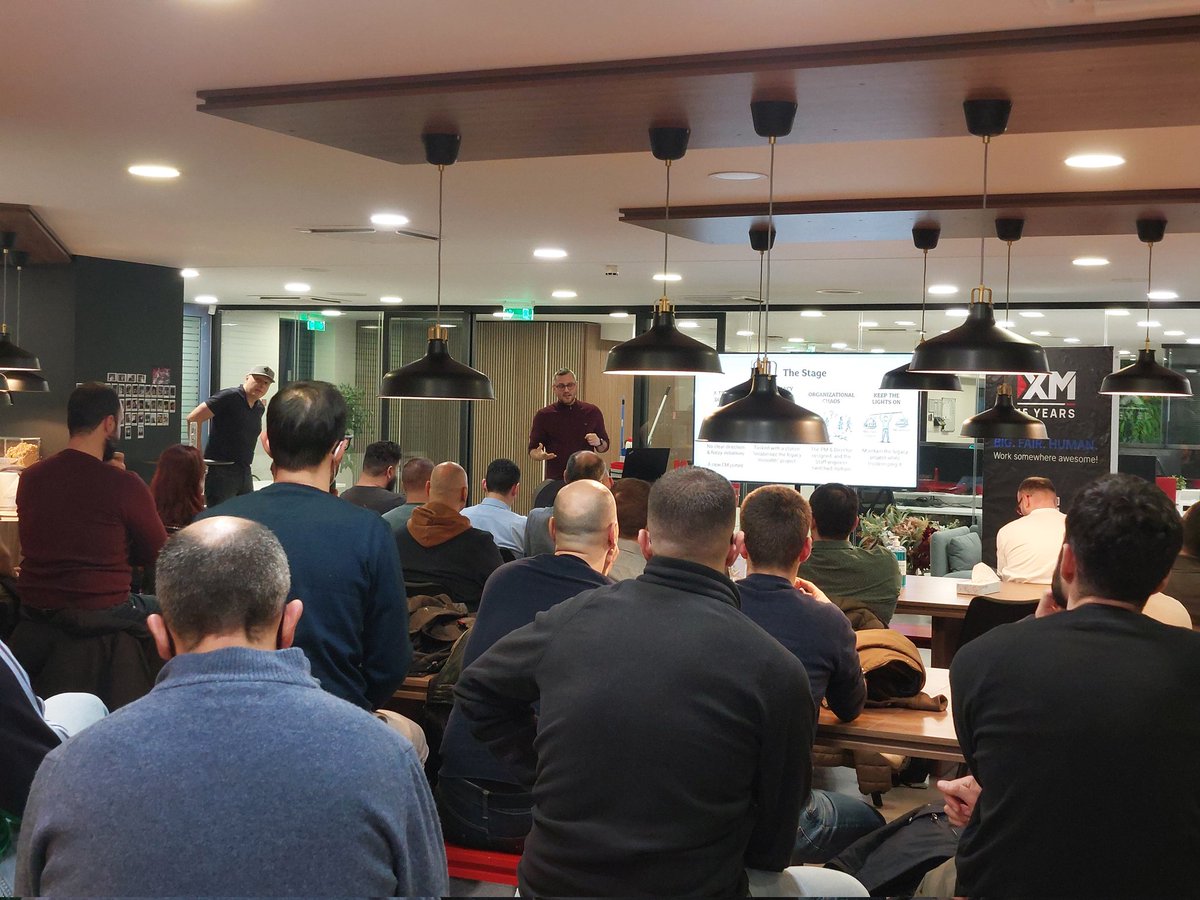
AI assisted domain discovery by @sparcular on the second talk of the day!
Interesting how comparing sources of varying reliability can help us zero in on what's actually trustworthy.
We can use different tools that can give us the high level context from code artifacts.
Let's unlock the synergy of Domain Driven Design and Value Stream Management with Dionysis Svoronos!
🗣️ Talk: "How Domain-Driven Experts Can Leverage Value Stream Management to Optimize End-to-End Delivery"
🍕🍻 Pizza, beers & networking at Moro tech!
https://t.co/3gVVXHAIEx
Let's dive into Data Mesh with AWS Hero Konstantinos Siaterlis!
🗣️ Talk: "#37: Beyond the Hype: Practical Insights on Data Mesh Adoption"
🏆 Win https://t.co/5RqUUd6ZIs tickets! 🎉
🤝 Join us for networking & insights.
📍 Hosted by Orfium.
https://t.co/MNmeShfOTO
📢 Join us for the first DDD GR meetup of 2025! 📅
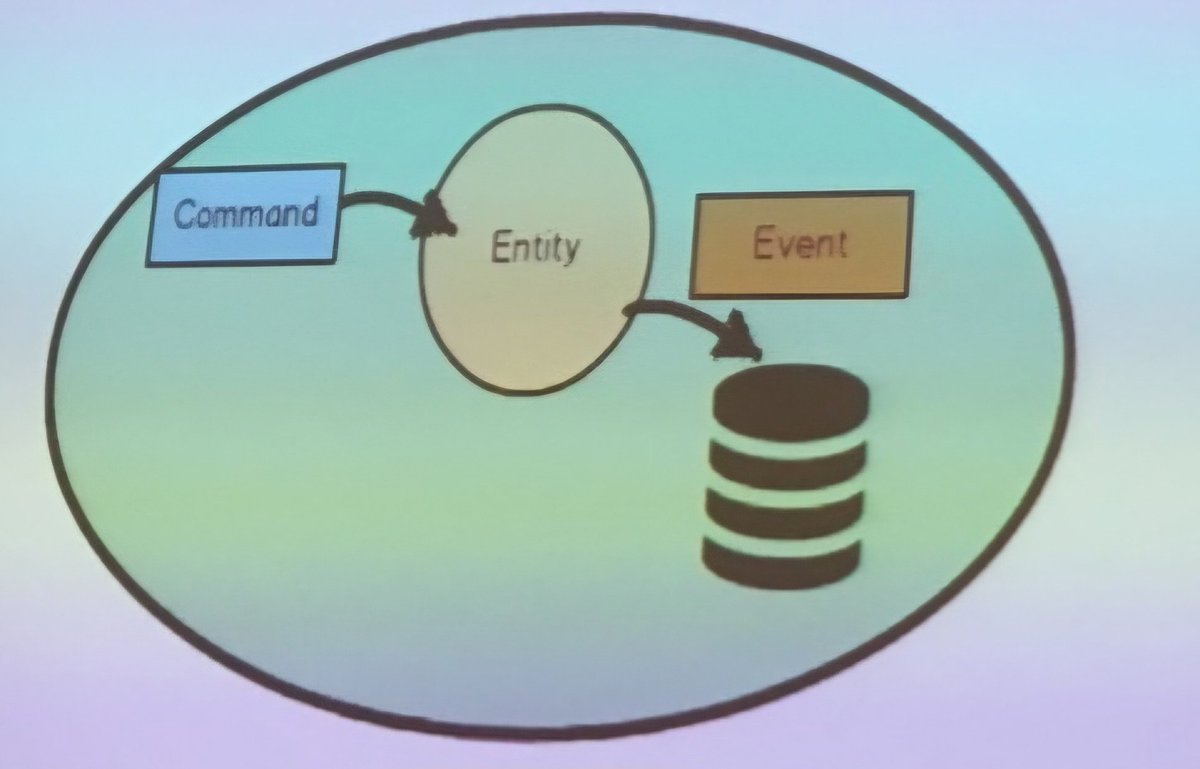
Lets uncover the value of Domain Driven Design and dive into hexagonal architecture, CQRS, and event-driven architecture with TypeScript & Nest.js.
https://t.co/YEHCkvZMHi
Publishing Events from Legacy
Why? To give legacy bragging rights? You know, some of that latent coolness.
The reason events are published out of a legacy system should be to provide a means of integration and to incrementally modernize/transform. The alternative is to jump into the existing legacy code and start teasing apart the tangle for the purpose of modularizing the monolith. I know that's possible because I've done it with very large codebases. Yet picking off small facts of happenings in the legacy is very effective and arguably much simpler. I've used both approaches, spoken and written about, and taught them.
Some claim that using events at all is due to the influence of Kafka. Is that true? It wasn't for me. Although Kafka may be involved in enabling this approach, it has nothing to do with the motivation. Domain Events and my use of them significantly predate Kafka.
Surprisingly, publishing events from legacy can require little to no legacy source code modification. Instead, you use a stream of database changes and reify transaction log entries to events, which then are published via a messaging mechanism. It may or may not be Kafka. If you are interested in learning more about this, see the OSS product Debezium.
This will be the topic of my next Design Accelerator episode.
DDD Athens is back! 🏛️
Join us for a fascinating exploration of Domain-Driven Design, complexity, and the timeless philosophy of Aristotle with seasoned Solutions Architect Niko Kokkinos.
Don't miss the Aitherion field trip!
#DDDesign
https://t.co/fs1TtBeaMa
If I had to sum up
#DDDesign in one sentence, I would say:
"Domain Driven Design is about seeking efficiency when creating software (aligning our solution space with the problem space)"
https://t.co/E075pEvM59
In a recent episode of the adddot podcast, @VaughnVernon speaks with @udidahan about software architecture, touching on SOA, event-driven architecture, and sagas https://t.co/j6uc9g9iVw
Just before we hit the beach for some relaxing time off, we'll wrap up the season with a double presentation & awesome gifts from @BuildStuffConf and #BetterWays2024.
Don't miss it!
https://t.co/0IdfkuJp8K
When you talk about coupling, you should consider what kind of coupling you are referring to. A few thoughts on the many facets of coupling: https://t.co/9VbgyXvX7k