🚨 Official Elastos notice: ELA mainchain is under an active inflation exploit. BPoS is paused. Merge-miners: stop ELA AuxPoW immediately and do not produce or submit new ELA blocks until an official all-clear. Verify only via official channels.
Elastos Smart Chain resumes🛡️
The release freezes exploit-linked accounts and will burn 4.93M unbacked ELA. Normal user balances remain unchanged, and no action is required.
ESC node operators must upgrade before block 37,634,427.
https://t.co/nAYTNAQQDE
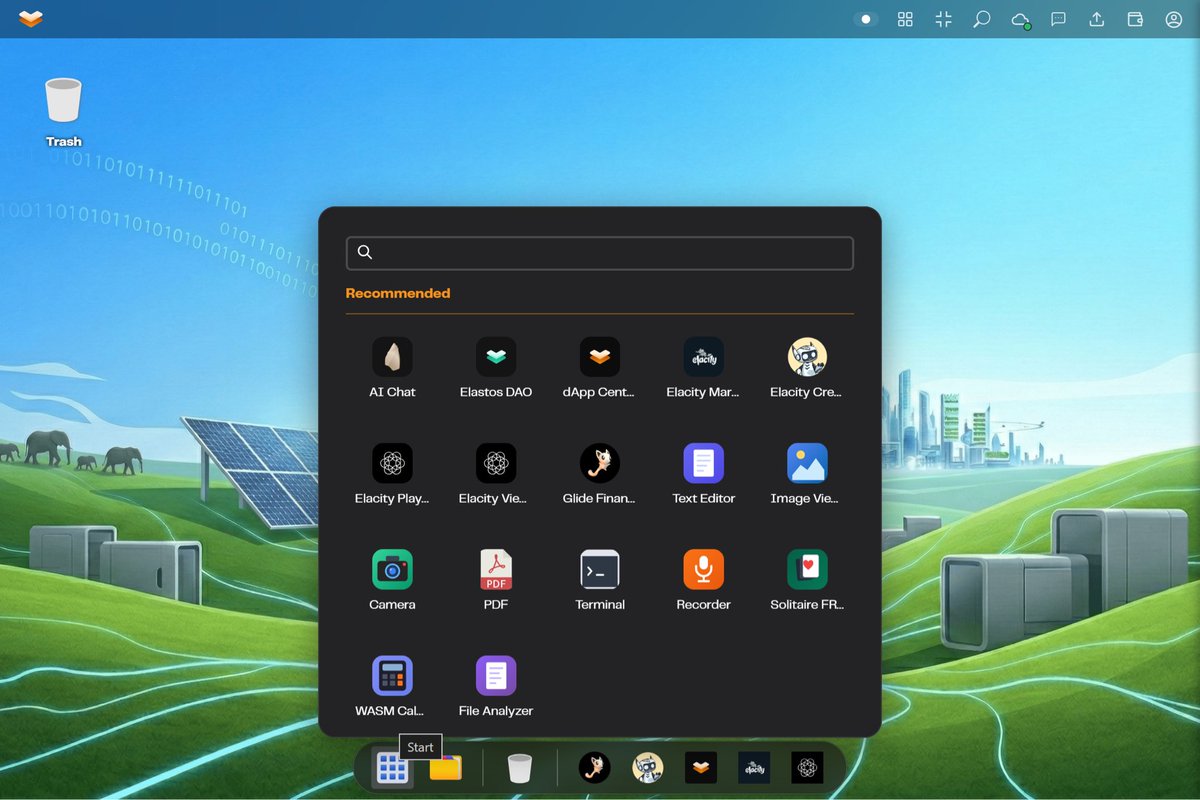
Recently we intergrated the ElastOS shell protocol, meaning you can build and switch out the shell (UI) whilst retaining the same computer backend - eg Apple like-shell, Microsoft like- shell, anyone can build what ever they want (ElastOS shell is primary).
My goal is to build a supporting AI shell, which will just be an agent with the whole world computer system beneath it. It will figure our your hardware, the best local AI model to run, and then operate inside our new computing architecture with all the benefits.
You can flick between classic OS, Agentic developr shell, or whatever, build apps, enjoy personally or tokenize and sell them p2p as tradable capital with buy now models.
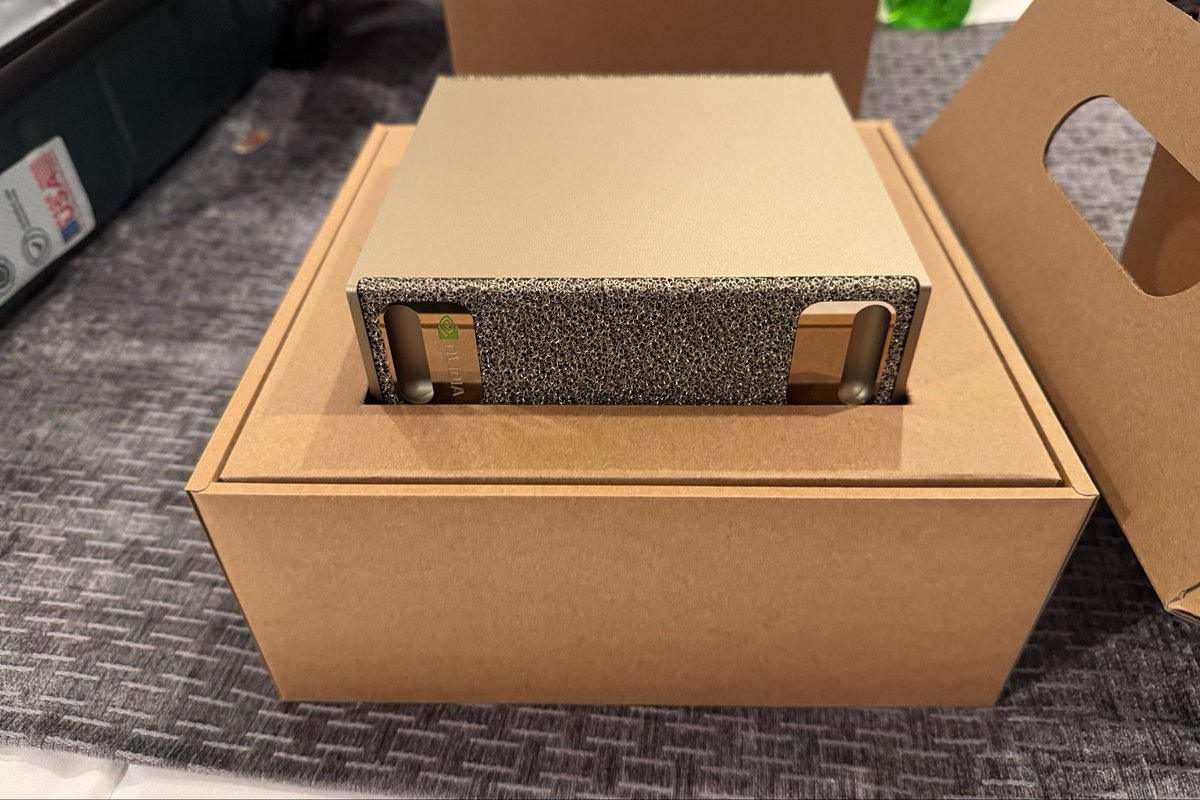
Im really workign towards fully contained and agentic brain in ElastOS sovereign node using my Nvidia Sparks to see how far to the edge (your device) we can push things, this is where the future lies.
Data General Nova Machine
This machine has 64 KB (32K 16-bit words) of core memory. The hard drive was an optional feature with a capacity of 32 MB. Because the room AC unit alone cannot keep it cool, the hard drive is exposed and must be cooled separately with a fan. The upper half of the machine is largely empty, with that space reserved for peripherals such as paper-tape readers or magnetic-tape drives.
You can see 16 light-emitting diodes that display the binary value of each bit in a word. Below these lights are toggle switches for various functions: resetting the machine, running the program, entering a word (one bit at a time), single-stepping the program (incrementing the program counter by one word), and individual bit switches (verified by the lights above).
The reset button clears all core memory to zero. The run button starts execution from address 0. The BIOS consists of 13 instructions (26 bytes) that we had to memorize and then toggle into addresses 0–12. We would then press Run to load the paper-tape reel containing the RTOS (resident/physical-memory operating system). Next, we mounted the BASIC language reel, pressed Run again, and finally mounted the application reel. One final Run command started execution, and we waited for the electric typewriter to begin printing the output.
———
Lessons Learned
WebAssembly sandboxes in the Elastos World Computer should essentially function as virtual Nova-like machines created on demand. Each digital capsule would contain its own RTOS, language runtime, and application—all bundled together.
This approach would turn them into self-contained digital goods capable of running indefinitely, provided they require only minimal memory and CPU instructions (implemented here via WebAssembly).
The key lesson is that the operating system—essentially the Internet OS—should not launch applications. Instead, it should launch virtual machines (VMs), one per user and per application. In other words, the operating system and the Internet should be integral parts of the Elastos World Computer rather than optional components installed on top of it—the model we have followed for the past 50 years of the software industry.
This is why the system was named ElastOS: the everlasting, last and only, elastic OS.
Applications should bring their own language runtime (including an RTOS). This eliminates the need for the VM to support virtual memory, multi-processing, multi-user capabilities, or the traditional separation of hardware peripherals from applications. Those peripherals can simply be implemented as third-party applications, much like digital twins in cyberspace.
Furthermore, as AI agents increasingly generate applications on demand via voice commands, it becomes difficult to justify the continued premium pricing of platforms such as Android, iOS, or Windows.
The Nova machine inspired Steve Wozniak to design the first Apple computer. By contrast, MS-DOS was developed largely by a single individual, Tim Paterson.
I believe the ElastOS Rust core and the various Capsule Runtimes are likewise single-person efforts, and their authenticity can be verified by others.
The implications, however, are profound.
Read the full incident notice, including the fund breakdown, on-chain references, and restoration plan:
https://t.co/wzBxVz8del
Elastos main-chain v0.9.9.6 release and consensus fix:
https://t.co/rYo7y3a7Zn
Elastos cross-chain incident update 🛡️
Between July 13 and July 15, an unauthorised actor exploited a vulnerability in the cross-chain reserve mechanism and moved approximately 7.62 million ELA across 2,309 transactions.
No user wallet, private key, or individual balance was accessed, and no user lost funds. The incident affected the protocol-level cross-chain reserve, not user accounts.
The activity was identified and contained, and the vulnerability has been fixed at the consensus level. The Elastos main chain has been upgraded to v0.9.9.6 and is operating normally.
Approximately 99.96% of the affected ELA remains frozen or contained on Elastos chains.
Of that contained amount, 1,585,252.004 ELA remains frozen on the Elastos main chain at the incident address. These funds cannot be moved and have not yet been returned to the reserve. They will be handled through a separate, narrowly scoped recovery process following final validation and network coordination.
Around 3,000 ELA, about 0.04% of the total, passed through a third-party bridge and became mixed with unrelated liquidity. Recovering this portion through network-level action could affect unrelated liquidity providers.
ESC block production and the cross-chain Arbiter remain temporarily paused while validators test the restart process, freeze the affected ESC balances, and restore full 1:1 reserve backing.
The pause is precautionary and limited to ESC and cross-chain services. Further updates will be published as those services are safely restored..
Elastos development update 🐘
Elacity joined NVIDIA Inception as it tests local AI on user-owned devices.
Runtime added mandates, letting AI agents act within spending limits without holding wallet keys.
The Essentials overhaul is underway.
More on: https://t.co/p8wIIa1eMH
Whether calling it the Internet Computer or the World Computer, a computer is a computer:
Numerous third-party application capsules (apps) and WebSpaces (drives) utilize a unique, verifiable internet operating system to connect apps with drives according to the permissions assigned by users.
When we say we are building an Elastos World Computer, we genuinely mean it— it can perform any and all tasks that a computer can do, and even more.
A computer that answers to you. We are pleased to share that Elacity has been accepted into the NVIDIA Inception program, building sovereign computing on NVIDIA Jetson today, with DGX Spark next.
Own the hardware. Own the AI. Own your work. Learn more here! https://t.co/ACqALlRi43
Three ElastOS releases are out
PC2 v1.4.0 adds background services to the dApp Centre, starting with Node Manager
Runtime v0.5 adds People, Services, remote Browser engines + passkey approval for sensitive actions..
Launcher v1.4.0 improves MacOS setup
https://t.co/6lP3qxEh8c
More of ElastOS is now starting to connect.
Runtime, PC2, Carrier, and Blockchain are coming together around files, identity, wallets, content, apps, and private communication.
Full update
https://t.co/9tv3ajUL8f
A lot moved across Elastos in the past four weeks.
Runtime, PC2, Carrier, and Blockchain are connecting through protected content, node tools, public RPC, cross-platform apps, Essentials, Hyper, and infrastructure behind them.
A look at what has been built last four weeks ⬇️
Hyper, previously named Hey, is Elastos’ post-quantum messaging app built on Carrier.
It uses Carrier for private messaging, peer discovery, and device-to-device communication instead of relying on a public server.
Encrypted call feature added.